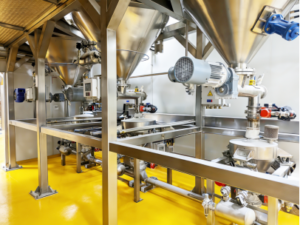
If you’ve ever had a production line stop because a conveying line packed solid at a bend, or watched a batch get scrapped because a manual weighing error slipped through, you already know the real cost of getting powder handling wrong. It’s rarely a single dramatic failure — it’s a pipe that blocks every few shifts, a metering system that drifts just enough to create batch variance, or a dust collector that can’t quite keep up during peak runs. Each of these looks like a maintenance issue on paper, but they’re usually signs that the underlying food powder handling technology wasn’t matched to the material and the layout in the first place.
This post breaks down the core engineering decisions behind a working powder handling system — what actually separates a stable, low-maintenance line from one that keeps generating work orders — from a field engineering perspective rather than a sales brochure.
Background: Common Real-World Production Challenges
Across food manufacturing, it’s common to see highly automated packaging and forming equipment sitting downstream of a powder handling process that’s still running on legacy methods — manual weighing, open feeding, standardized equipment specified without much regard for the material itself. A few conditions make this gap worse:
- Wide material property variance. Flour, sugar, sugar powder, starch, milk powder, and food additives behave very differently in a pipe. Some absorb moisture aggressively, some bridge and arch in storage, and flour and sugar powder both carry a dust explosion classification that many standard conveying setups aren’t designed to handle.
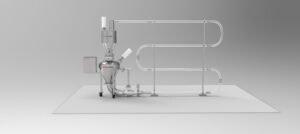
- Layout distances that vary by an order of magnitude. A conveying run might be 10–15 meters in one plant and well over 100 meters, with vertical lift, in another. A system sized for one distance rarely performs well at the other without redesign.
- Frequent SKU and recipe changeovers, which put pressure on both conveying throughput and metering flexibility at the same time.
When standardized conveying equipment is applied without accounting for these variables, the typical failure modes are predictable: pipe blockages, excessive particle breakage, metering drift, and gaps in dust-explosion compliance. In field engineering experience, a large share of these issues trace back to skipping proper material characterization and pipeline simulation before equipment was ever specified — not to the equipment itself being poorly built.
Core Technical Explanation
Material Property Testing & Process Simulation Before Equipment Selection
Before specifying conveying velocity, pipe diameter, or air volume, the material itself needs to be tested — not assumed from a datasheet for a “similar” powder. That typically covers bulk density, angle of repose, hygroscopicity, bridging/arching tendency, explosion characteristics, and electrostatic charging behavior. Sugar powder, for example, needs particular attention to moisture-caking behavior, while flour is evaluated more for bridging inside storage silos.
A full site survey complements the lab data: floor height, pipe routing path, horizontal distance, vertical lift, number of elbows, ambient temperature and humidity range, existing equipment interfaces, peak throughput, changeover frequency, and SKU count. From there, pipeline simulation calculates pressure drop, solid-gas ratio, and optimal conveying velocity, and flags blockage or breakage risk before a single length of pipe is fabricated.
This is also why two plants conveying the same material can end up with very different system configurations. A dense-phase sugar powder installation running roughly 100 meters and a separate dense-phase sugar powder installation running around 70 meters were configured with different parameters entirely — because the layout, environment, and throughput requirements weren’t the same. There’s no universal parameter set that works across every distance and material combination.
Dilute-Phase vs. Dense-Phase Pneumatic Conveying
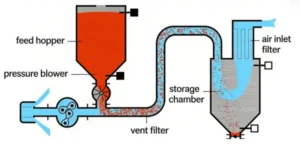
Dilute-phase and dense-phase conveying are the two dominant approaches, and neither is categorically better — the right choice depends on the material’s friability, the distance, and the throughput target.
| Parameter | Dilute-Phase | Dense-Phase (Plug Flow) |
|---|---|---|
| Conveying velocity | 12–25 m/s | 4–10 m/s |
| Solid-gas ratio | 1–15 | 30–60 |
| Particle breakage | Higher — not ideal for friable materials | Lower — suited to brittle, high-value powders |
| Pipe wear | Higher at elbows/reducers over time | Lower, due to reduced velocity |
| Typical fit | Mid-to-short distance, robust bulk powders (e.g., flour) | Long distance, friable or hygroscopic powders (e.g., sugar powder) |
| Equipment cost | Generally lower | Generally higher |
For food-specific applications, both approaches get adapted further: 304/316L stainless steel contact surfaces electropolished to Ra≤0.8μm, large-radius low-wear elbows, deep-dried compressed air for hygroscopic materials, and full pipeline equipotential bonding to control static buildup. A well-designed system also adjusts air pressure and volume dynamically based on real-time pipeline pressure and silo level, and triggers staged back-blow clearing when pressure readings suggest a blockage is forming — catching the problem before it becomes a full stoppage.
Powder Pretreatment: Where Blockages Actually Start
A lot of conveying problems don’t originate in the pipe — they originate before the material ever reaches it. Three pretreatment functions matter most:
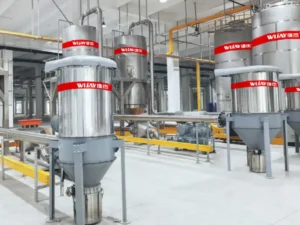
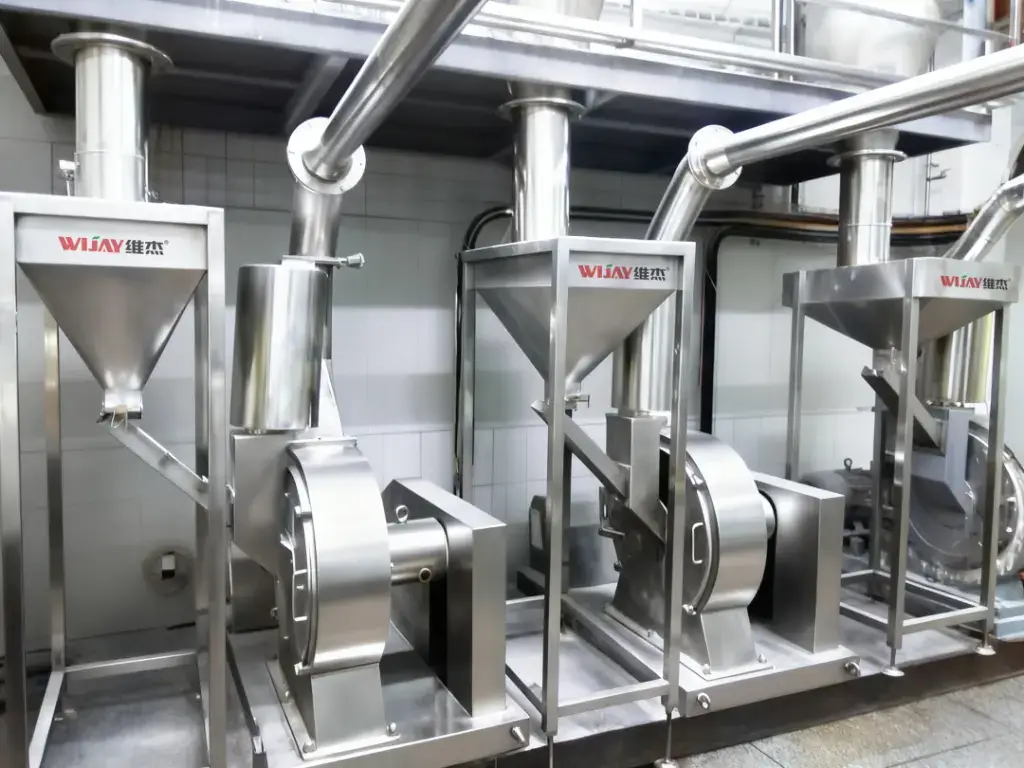
- Grinding and screening integration for materials like granulated sugar, with feed rate following downstream demand so material isn’t sitting in storage long enough to absorb moisture.
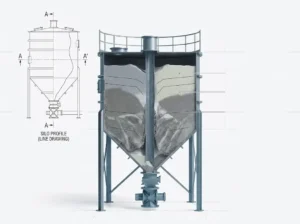
- Anti-bridging and activation hoppers for powders prone to arching in silos — flour, milk powder, and sugar powder all fall into this category — to keep material flowing and avoid unplanned stoppages from a silo that simply won’t discharge.
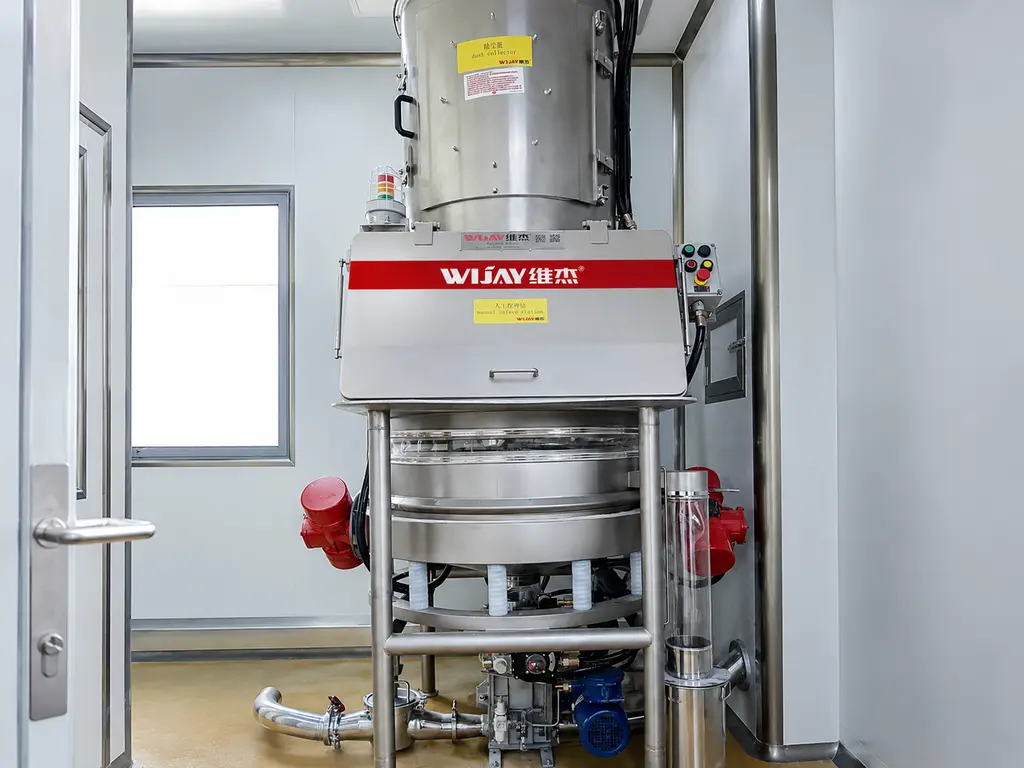
- Front-end screening and magnetic separation to remove oversized particles and metallic contaminants before they reach the conveying system, protecting both pipe integrity and downstream product quality.
Skipping pretreatment is one of the more common reasons a conveying system that tested fine on clean sample material starts blocking once it’s running real production-grade powder.
Tiered Metering Architecture for Bulk vs. Minor Ingredients
Bulk ingredients and minor/micro-dosed ingredients operate at completely different scales and shouldn’t share the same metering architecture.
For bulk materials — flour, sugar — gain-in-weight or loss-in-weight metering can hold accuracy in the range of ±0.2% to ±0.5%, and a single set of storage tanks can supply multiple downstream points. One bulk sugar automation project, for example, used 3 storage tanks and 9 weighing tanks to supply 12 separate mixing stations from a shared source.
For minor ingredients — yeast, improvers, salt, and similar additives dosed in quantities of a few hundred grams per batch — full automation is often not cost-justified given the number of SKUs and the added equipment complexity. A smart-assisted approach — keeping the operator in the loop but adding HMI-guided sequencing, real-time weight verification, deviation alarms, and process lockout — has proven to be a more practical fit in bakery-scale operations, balancing capital cost against dosing accuracy and changeover flexibility.
Hygiene and Dust-Explosion Protection as One Integrated Design
Food-grade hygiene and dust-explosion protection are often treated as two separate purchases — a sanitary conveying system, plus some explosion-protection components bolted on. That approach tends to leave gaps. The two need to be engineered together:
- Hygiene: food-grade stainless steel with mirror-polished, dead-leg-free surfaces (consistent with hygiene codes such as China’s GB 14881 or equivalent international GMP/HACCP frameworks), quick-release sanitary clamps for cleaning access, CIP-ready connections at silos and feeding stations, and cleanable PTFE-membrane filter media that won’t shed fibers into the product stream.
- Dust-explosion protection: for St1-classified powders like flour and sugar powder, this means explosion-rated electrical components at the appropriate zone classification (commonly Zone 21/22, aligned with international frameworks like NFPA 654/61 or ATEX), full-system equipotential grounding, explosion venting on silos and dust collectors, spark detection, and interlocked shutdown logic tied to over-temperature, over-pressure, and abnormal-flow conditions.
Get the sequencing logic wrong — say, a feeder that can still run with the dust collector fan stopped — and the protection scheme has a hole in it regardless of how good the individual components are.
Digital Control Layer That Closes the Data Loop
Automating the hardware without capturing the data behind it leaves a plant still running on paper for quality and compliance purposes. A central control layer that ties conveying, metering, pretreatment, and utility systems together typically needs to handle: tiered, encrypted recipe management with one-click changeover; automatic archiving of operator ID, material batch, dosing time, weighing values, equipment parameters, and fault logs per production run; local redundant backup with exportable reports for audits; and real-time visualization of silo level, pipeline pressure, and flow rate with alarms that shorten fault diagnosis time.
Practical Field Troubleshooting & Decision-Making Guidance
Not every symptom means a system needs to be rebuilt. Use this table to separate what can usually be fixed through operational adjustment from what typically requires a hardware retrofit.
| Symptom | Likely Cause | Adjust Operation First | Retrofit/Replace If Adjustment Doesn’t Resolve It |
|---|---|---|---|
| Frequent blockage at elbows or reducers | Conveying velocity mismatched to moisture content, or air supply too humid | Check air supply dew point; tune air pressure/volume within system limits | Convert to dense-phase conveying, or redesign pipe routing if bend geometry is fundamentally undersized |
| Metering drifts across shifts | Platform scale calibration drift or operator technique variance | Recalibrate scale on a fixed schedule; standardize weighing procedure | Move to automated load-cell metering with digital deviation checks |
| Excessive particle breakage | Conveying velocity too high for a friable material | Lower velocity if the system has margin to do so | Convert from dilute-phase to dense-phase conveying |
| Recurring dust escape at feed points | Worn filter media or door seals | Replace filter media; inspect and reseal doors/hatches | Redesign the feeding station for fully enclosed, dust-free loading |
| Silo won’t discharge consistently | Bridging/arching inside the silo | Check activation hopper cycling; monitor storage humidity | Redesign hopper geometry or add anti-bridging hardware |
| Changeover time keeps growing as SKU count increases | Minor-ingredient dosing still manual and paper-based | Standardize recipe documentation and staging procedure | Add smart-assisted batching with digital recipe management |
Key Design & Operation Best Practices
- Test the actual material — not a “similar” reference powder — before specifying conveying velocity or solid-gas ratio.
- Match conveying phase to material friability and distance; don’t default to dilute-phase purely for lower upfront cost if the material is brittle or the run is long.
- Design pretreatment (screening, anti-bridging, magnetic separation) into the system from the start rather than adding it after blockages start.
- Use a tiered metering architecture — automated for bulk materials, smart-assisted for low-volume/high-SKU minor ingredients — instead of forcing one approach onto both.
- Engineer hygiene and dust-explosion protection together as one design pass, including the control-logic interlocks, not as sequential bolt-on purchases.
- Build digital data capture into the system from day one; retrofitting traceability later is more disruptive than including it up front.
Common Mistakes & Pitfalls to Avoid
- Copying another plant’s conveying parameters without re-running material testing and pipeline simulation for your own layout and material batch.
- Choosing dilute-phase conveying for a friable, hygroscopic powder purely on lower capital cost, then absorbing the ongoing cost of breakage and blockages.
- Treating dust collection and explosion protection as separate line items instead of one integrated system with shared control logic.
- Automating bulk ingredient handling while leaving minor-ingredient dosing on paper records, which caps the overall traceability and OEE gains from the automation investment.
- Skipping factory acceptance testing (FAT) before installation, which shifts problem discovery from the shop floor to the production line.
- Assuming any powder can go straight from bag to pipe without pretreatment, then troubleshooting blockages that pretreatment would have prevented.
Frequently Asked Questions
What’s the practical difference between dilute-phase and dense-phase pneumatic conveying? Dilute-phase moves material fast with a lot of air, which is cost-effective for robust powders over shorter distances but increases particle breakage. Dense-phase moves material slowly in plug form with much less air, protecting friable or hygroscopic powders like sugar over longer distances at a higher equipment cost.
How do I know if my conveying blockages are an operational issue or a design issue? If tuning air pressure, checking the air supply’s dew point, and confirming pipe routing resolves the blockages, it’s usually operational. If blockages persist after those checks and the material is friable or hygroscopic while the system runs dilute-phase, that’s typically a design mismatch requiring a phase conversion.
Does every food powder handling system need dust-explosion protection? Not every powder is dust-explosion classified, but flour and sugar powder commonly are. Checking the material’s explosion characteristics (Kst, MEC, MIE) during material testing determines whether zone-rated electrical equipment, grounding, and venting are required.
Can I automate bulk ingredient handling now and add minor-ingredient automation later? Yes, and it’s a common phased approach. Just be aware that until minor-ingredient dosing is digitized, the plant’s traceability and changeover-time gains will be capped by whichever part of the process is still manual and paper-based.
How much difference does material property testing actually make to a conveying design? It directly determines conveying velocity, solid-gas ratio, and pipe sizing. Two powders that look similar on paper can behave very differently in a pipe — sugar’s moisture-caking tendency versus flour’s bridging behavior is a common example — which is why testing your specific material matters more than referencing a generic material datasheet.
Have a powder handling line generating recurring blockages, breakage, or metering drift? Share your material type, current conveying distance and layout, and throughput target, and our engineering team will review whether the fix is operational or a design-level retrofit. For further reading on material characterization standards, see.