A sugar handling system that blows sugar out of the line, blows rupture panels off the silos and sends maintenance staff out on repeated manual repair calls is not a system with a bad day. It is a system doing exactly what it was designed to do, at a pressure and a velocity the material never asked for. The sugar is not misbehaving. The architecture is.
Sugar is one of those materials that looks simple on a datasheet and behaves badly in a plant. It is crystalline, mildly hygroscopic, prone to caking at dead zones, and — critically — it is a combustible dust. On a confectionery line running high volumes, the difference between a pressure conveying design and a vacuum conveying design is not a preference. It is a dust containment decision, a housekeeping cost decision and, in the worst case, a safety decision.
On a greenfield confectionery facility in North Carolina, the existing plant was living with the consequences of a pressure system: sugar everywhere, rupture panels blowing out of silos, and housekeeping cost that compounded every shift. The new build was the opportunity to re-engineer the scope rather than reproduce it. What came out of that review was a smaller, cleaner, simpler system — and a lower equipment cost than the original specification. This article walks through the engineering logic behind that outcome.
Why Sugar Is Harder to Handle Than It Looks
Sugar is usually classified as free-flowing, which is true at rest and misleading in a conveying line. Four properties drive the design.
Sugar is a combustible dust. Sugar dust has a minimum ignition energy low enough that a static discharge can ignite it, and sugar dust explosions have occurred in refineries, bakeries and confectionery plants. Particle size matters: the finer the fraction, the more violent the hazard, and the fines are exactly what concentrate in filters and settle on overhead surfaces. Any sugar handling system design has to start from that fact, not from throughput.
Sugar is hygroscopic and cakes at dead zones. Adsorbed moisture forms liquid bridges at particle contact points, and cohesion rises sharply. Sugar that sits in a transition, a dead leg or a hopper cone under humid conditions will cake, bridge and then discharge in slugs. This is one of the most common sources of dosing error in confectionery plants, and it is a geometry problem more than an equipment problem.
Sugar crystals are friable. High-velocity conveying generates fines through impact at bends, and those fines change the particle size distribution, increase the dust load on the filter and alter dissolution behavior downstream. In chocolate, fondant and coating applications, the fines fraction is a quality variable, not just a housekeeping nuisance.
Bulk density is moderate but compressibility is real. Granulated sugar is close to incompressible under conveying pressure, which is helpful, but the fines fraction and moisture still change how the bulk behaves in a silo and at a feeder.
Read those four together and the design constraints become obvious: contain the dust, keep velocity down, eliminate dead zones, and weigh the material as close to the point of use as possible.
Why Pressure Conveying Fails on Sugar
A pressure conveying system pushes material from a pressurized source into a receiver that is at a lower pressure. The line is under positive pressure throughout. Every flange, every valve packing, every seal, and every worn clearance is a leak path — and the leak path goes outward, into the plant.
On sugar, that means fugitive dust continuously escapes from the system into the room. Housekeeping cost rises. Dust settles on overhead steel, on cable trays, on equipment surfaces — the exact locations where a secondary dust explosion becomes possible. The rupture panels on the silos are the visible symptom of the same problem: the system is being operated against pressure excursions it cannot absorb, and the relief devices are doing their job by blowing product and air into the atmosphere.
This is not a maintenance failure. It is a design mismatch between a positive-pressure architecture and a material whose primary risk is airborne dust.
Vacuum Conveying Changes the Direction of the Leak
A vacuum conveying system pulls material from a pickup point into a receiver under negative pressure. The line is under vacuum throughout, which reverses the leak direction. Any fugitive dust at a gasket, a flange or a worn valve is drawn back into the system rather than expelled into the room.
That single change has three consequences that all show up in operating cost:
- Dust containment. Airborne sugar dust is reduced at the source, which lowers housekeeping labor and reduces the dust load available for a secondary explosion.
- Cleaner equipment surfaces. Overhead steel, cable trays and structural members stay cleaner, which matters directly for combustible dust housekeeping compliance.
- Fewer pressure excursions at the silo. The silo is no longer the pressure boundary being pushed against. Rupture panel events that were routine on the pressure system stop being routine.
Vacuum conveying is not a universal upgrade. For long distances and very high capacities, pressure dense phase may still be the right architecture, and the choice depends on material properties and line geometry. But for sugar in a confectionery plant, where dust containment and housekeeping are continuous operating costs, the direction of the leak is a design decision worth taking seriously.
The Dust Hazard Analysis Is a Design Document, Not a Compliance Form
On combustible dust projects, the Dust Hazard Analysis (DHA) is often treated as a paperwork requirement completed after the layout is fixed. That is the wrong sequence. The DHA is where the architecture gets tested against the hazard, and it frequently produces equipment reductions rather than additions.
On this project, the DHA changed the conveying technology selection — it was the reason vacuum conveying became the preferred route rather than a like-for-like pressure replacement. It also eliminated equipment that the original scope had specified out of habit.
The original design called for a slide gate valve at the inlet of each of five filter receivers. The DHA review made clear that those valves were not required for the hazard strategy. Removing all five at roughly $20,000 each is a $100,000 reduction in equipment cost from a single engineering decision — and every removed component is also a removed maintenance item, a removed leak path and a removed spare part.
That is the practical value of running the hazard analysis as a design activity rather than a compliance activity.
Cutting Components and Footprint Without Cutting Throughput
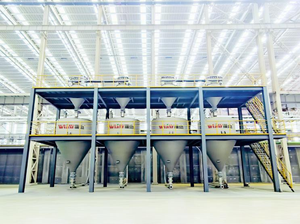
The original scope for the greenfield facility was large. Silos were elevated on support structures with multiple dosing screws and receivers beneath, which drove building height. Four separate conveying lines ran from the silos, each requiring outdoor cabinets to house the piping connections. Five filter receivers each carried an inlet slide gate.
The engineering review challenged three assumptions.
Silo elevation. The silos had been raised on support structures to accommodate the process flow. The review showed that was not necessary. Bringing the silos closer to grade reduced building height without affecting throughput — which meant less structural steel, simpler building engineering and lower construction cost. Building height is one of those costs that is easy to accept at the concept stage and expensive to carry for the life of the plant.
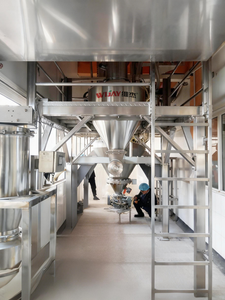
Component count at the silo. Four dosing screws and two receivers were removed from the silo area entirely. Fewer components at the discharge point means fewer things to maintain, fewer places for sugar to cake in a dead zone, and a simpler control sequence.
Conveying line configuration. The four-line arrangement with outdoor piping cabinets was replaced with a single line and diverter valves. One line is easier to keep clean, easier to balance and easier to troubleshoot than four parallel runs.
The result was a system with a smaller footprint, fewer components and a shorter building — on the same throughput target.
Dosing Accuracy Comes From Where You Weigh
The last design change was the one that affects product quality most directly: the scale was moved closer to the point where sugar enters the process, rather than sitting upstream at the silo.
Weighing at the silo measures what left storage. Weighing near the use point measures what actually goes into the batch. In between those two points there is line holdup, residual material in the receiver, and the discharge behavior of a hygroscopic material that may have caked slightly since the last cycle. Moving the scale downstream removes that uncertainty from the measurement. For a confectionery process where recipe accuracy drives yield and consistency, that is a meaningful change.
What the Project Delivered
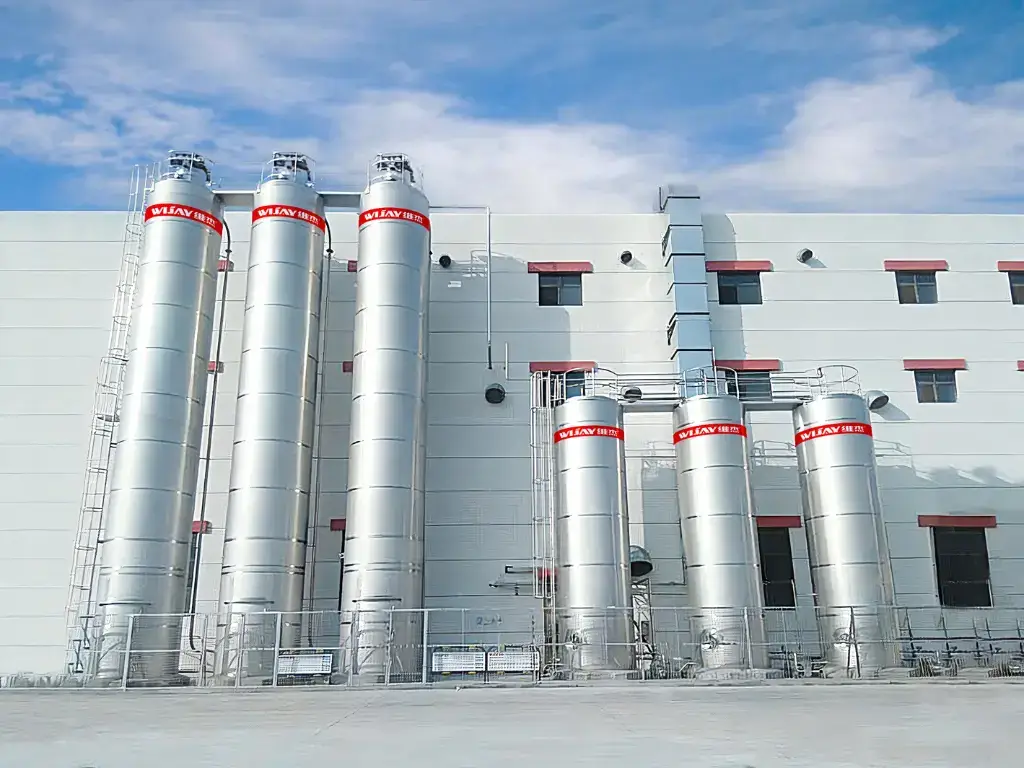
The system transfers 3,500 lb of sugar per hour and can unload a full tanker truck into the silo in under two hours. Testing and commissioning confirmed the transfer rate targets were met. Engineering began in August 2024, equipment arrived from July 2025, and installation ran through approximately April 2026 — a nine-month installation window for a system of this scope.
Field service technicians were on site multiple times during installation to work through installation questions, resolve issues as they surfaced, and validate the system against engineering standards before startup. Maintenance training was part of the handoff, and the customer’s maintenance managers came out of it with a clear picture of day-to-day operation. Their assessment was that the system was simple and straightforward to maintain — which is the outcome that component reduction was supposed to produce.
The facility is also cleaner. Vacuum conveying contains sugar dust rather than dispersing it, which lowers housekeeping cost and improves working conditions in the same move.
How WIJAY Approaches a Sugar Handling System
The lesson from this project is not “vacuum is better than pressure.” The lesson is that the scope has to be challenged against the material before the building is designed around it.
WIJAY approaches a sugar handling system from the material side first: bulk density, particle size distribution, moisture and hygroscopicity, caking tendency, dust explosibility parameters and the plant’s real production profile. The conveying technology — vacuum or pressure, dilute or dense phase — is selected against that data and against the dust hazard strategy, not against a default.
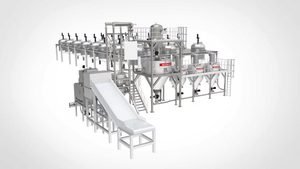
From there, the system is built as one enclosed boundary: dust contained from intake to the point of use, low material loss through correctly sized receivers and filtration, dosing accuracy achieved by weighing close to the process, and automation that ties pickup, conveying, receiver sequencing and batching into one control loop. Component count is kept deliberately low, because every component removed is a leak path and a maintenance item removed with it.
WIJAY builds these systems for confectionery, bakery, beverage and ingredient operations handling sugar, and the same architecture adapts across other hygroscopic and combustible powders without re-engineering the line for every product. Custom layouts accommodate multi-point intake and discharge, and changeover between products is designed into the geometry rather than handled by cleaning labor.
For plants scoping a new sugar handling system, the first step is material characterization and a dust hazard review before the layout is fixed [internal link: WIJAY sugar and ingredient handling system design]. For existing pressure systems blowing dust and rupture panels, the first step is a boundary audit — where the leak paths are and what the DHA actually requires [internal link: WIJAY conveying system audit and service]. Where batching accuracy and dust containment are production requirements, the conveying system and the automation should be specified together [internal link: WIJAY bulk material handling automation].
FAQ
Why does a pressure conveying system blow sugar dust into the plant?
Because the entire line is under positive pressure. Every flange, gasket, valve packing and worn clearance becomes an outward leak path. On a combustible dust like sugar, that means continuous fugitive dust and higher housekeeping load. Vacuum conveying reverses the leak direction, drawing dust back into the system.
Is vacuum conveying always better than pressure conveying for sugar?
Not always. Vacuum is often the better choice where dust containment and housekeeping are continuous costs, as in confectionery plants. For very long distances and very high capacities, pressure dense phase may still be the right architecture. The decision should be made from material properties, line geometry and the dust hazard strategy.
What does a Dust Hazard Analysis actually change in the design?
It tests the architecture against the hazard rather than documenting a fixed layout. On the project described here, the DHA drove the switch to vacuum conveying and eliminated five inlet slide gate valves that were not required — roughly $100,000 in equipment cost, plus the associated maintenance and leak paths.
Why weigh sugar near the point of use instead of at the silo?
Weighing at the silo measures what left storage. Weighing near the process measures what actually enters the batch, after line holdup, receiver residuals and any caking or bridging that occurred in between. For recipe accuracy, the downstream measurement is the meaningful one.
Why does sugar cake and bridge in a conveying system?
Sugar is hygroscopic. Adsorbed moisture forms liquid bridges at particle contact points, and cohesion rises sharply. Dead zones, long transitions and hopper cones under humid conditions are where caking starts. The fix is geometry — eliminating dead zones — combined with moisture control at the air source and sealing.
How many components should a sugar handling system have?
As few as the process allows. Every additional dosing screw, receiver, slide gate and outdoor piping cabinet is a maintenance item, a leak path and a spare part. Reducing component count is one of the most reliable ways to reduce long-term operating cost on a sugar line.
CTA
If your sugar handling system is coating the plant in dust, blowing rupture panels, or requiring manual repairs on a schedule you never budgeted for, the problem is the architecture, not the operators. Send WIJAY the material data, the current layout and the symptoms. We will help determine whether vacuum conveying is the right route, what the dust hazard review should change, and how to design a simpler system that holds dosing accuracy without holding the maintenance burden.