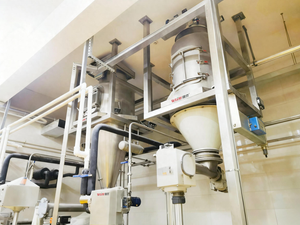
Ask any plant manager who’s been through an equipment sourcing cycle, and they’ll tell you the same thing: on paper, most batching systems look nearly identical. Same general architecture, similar throughput claims, similar promises of automation. The differences don’t show up in the spec sheet — they show up six months into production, when the polishing schedule creeps up because the piping wasn’t sized for a hygroscopic powder, or when a cleaning validation fails because the interior of a hopper has a weld seam nobody accounted for.
That gap exists because a large share of batching equipment on the market is built by generalist manufacturers who serve chemical, construction material, and food processing customers with the same base platform, adapted after the fact for food-grade use. The equipment isn’t necessarily bad — it’s just not designed around the specific behavior of flour, powdered sugar, food additives, and liquid oil from the ground up. And in food production, that difference compounds fast.
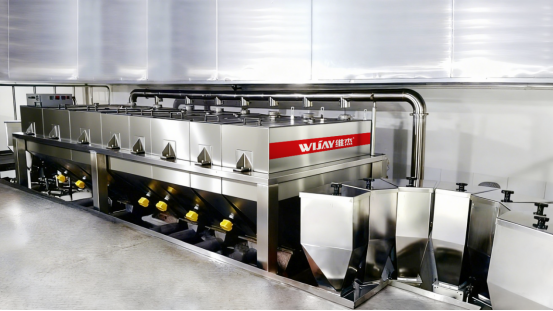
What Generic Batching Equipment Gets Wrong on a Food Line
Powder Behavior Isn’t Generic, and Neither Should the System Be
Flour dusts and clogs differently than construction aggregate. Powdered sugar absorbs moisture and cakes in ways that industrial mineral powders don’t. Food additives require dosing accuracy at a completely different tolerance than bulk chemical dosing typically demands. A system engineered as a general-purpose platform and adapted for food use tends to solve the average case well and the specific case — your actual material — poorly. That mismatch usually surfaces as unplanned downtime from clogging, moisture-related caking, or dosing drift that a food-specific design would have avoided from the start.
Sanitation Design Can’t Be Retrofitted, Only Built In
Food-grade cleaning isn’t a coating or a certificate — it’s a structural property of how piping, hoppers, and joints are shaped. Weld seams, corners, and transition points that are irrelevant in a chemical or construction application become cleaning dead zones in a food environment, and no amount of manual CIP cycling fully compensates for geometry that wasn’t designed to be cleaned in place. Plants running generalist equipment often discover this during a clean-room certification review — well after the equipment is already installed and running.
Modularity Only Works If the Provider Designed for Modularity
Many facilities need a system that fits an existing floor layout rather than a blank-slate build, or that starts with one production line and expands as volume grows. Generalist platforms are frequently built as fixed configurations, which makes later expansion or partial retrofit expensive and disruptive. A system engineered for modularity from the start lets a plant add capacity, add a production line, or reconfigure an existing layout without a full rebuild.
Support After Installation Determines Whether the System Actually Performs
A batching system is only as good as the provider’s ability to troubleshoot clogging, moisture, and calibration drift issues specific to food materials once the equipment is running in production. Generalist suppliers with a broad customer base across unrelated industries typically don’t carry deep, material-specific field experience in food processing — which means diagnosing an issue often takes longer and costs more than it should.
What a Food-Specific Batching System Provider Should Deliver
Plants that have avoided the problems above typically source from providers who meet four criteria a generalist supplier rarely satisfies all at once:
- Engineering built specifically around food-grade materials — flour, powdered sugar, additives, and liquid oil — not adapted from a chemical or construction platform
- Sanitation-first construction, with piping, hoppers, and joints shaped to eliminate cleaning dead zones from the design stage, not the maintenance stage
- True modular architecture that supports phased expansion and partial retrofit, not just a fixed factory configuration
- Full-lifecycle engineering support — from site assessment through installation, training, and ongoing field service — rather than equipment sold and shipped with minimal follow-through
Inside WIJAY’s Approach as a Food-Specific Batching System Provider
WIJAY Systems builds exclusively around food-processing materials — flour, powdered sugar, starch, food additives, and liquid oil — rather than serving as a generalist supplier across unrelated industries. That focus shows up directly in how the system is engineered.
Material-Specific Engineering, Not Adapted Equipment
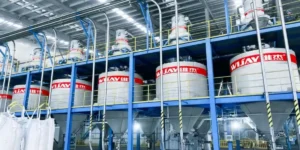
Every component is engineered around the actual behavior of food powders and additives. Piping, storage, and dosing units are built to prevent dust generation and moisture-driven caking rather than compensating for it after installation, and the system runs across positive-pressure, negative-pressure, and dense-phase conveying modes depending on which mode fits a given material and building layout.
Sanitation Built Into the Geometry, Not Added Afterward
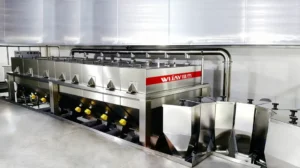
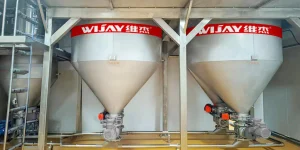
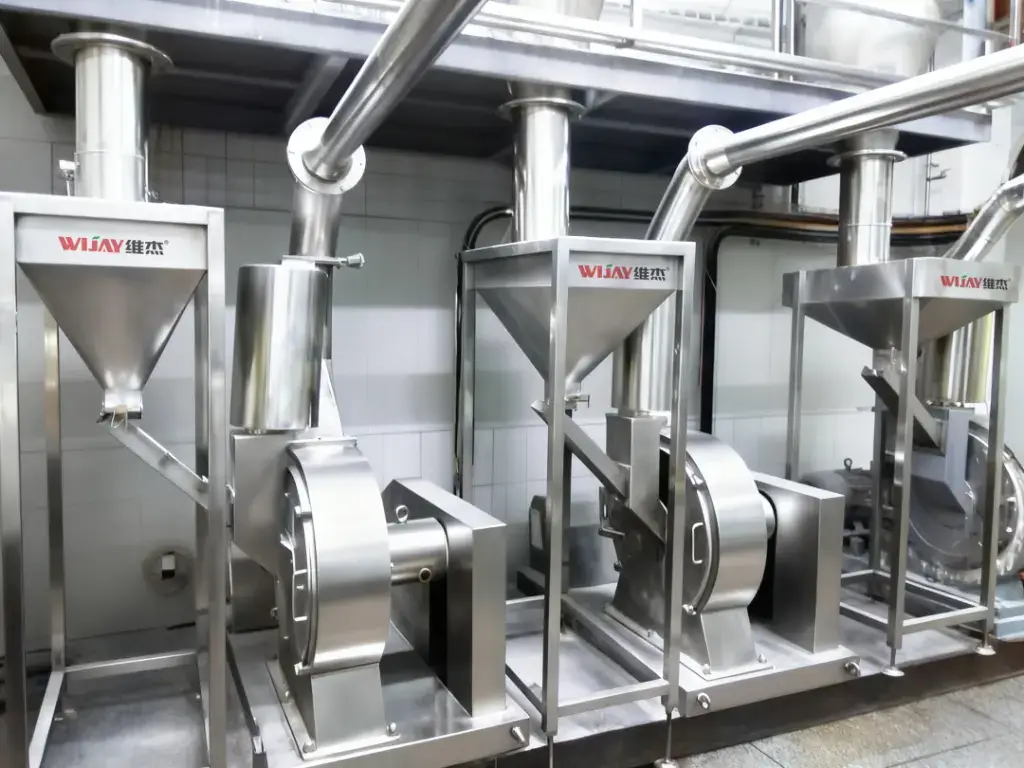
Piping and storage vessels use food-grade polished stainless steel with no seams or corners that create buildup points, paired with a fully automated CIP system that cleans piping and vessels without manual disassembly. That combination directly meets GMP and HACCP clean-room requirements rather than approximating them.
Layered Weighing for Bulk Ingredients and Micro-Dose Additives
WIJAY’s proprietary weighing architecture separates bulk raw material weighing from high-precision additive dosing, with dynamic error compensation built into the control logic. That separation matters because bulk ingredient weighing and additive dosing have fundamentally different accuracy requirements — treating them identically, as many generic systems do, is a common source of formula inconsistency.
Six Independent Modules, Configured to Your Line
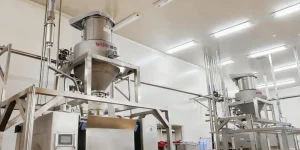
The system is built from six independent units — dust-free intake, enclosed storage, pneumatic conveying, precision weighing, automated mixing, and smart control — each of which can be added, removed, or scaled independently based on a plant’s throughput and number of production lines. That structure supports both large multi-line facilities and lightweight retrofits for smaller, older production floors that can’t accommodate a full rebuild.
Centralized Control With Continuous Data Capture
A proprietary industrial control platform stores an extensive library of production recipes, allowing product changeovers with a single parameter switch, and continuously logs material level, conveying flow, batch weight, and cleaning records around the clock. Data is stored in encrypted, tamper-resistant form, faults trigger automatic alerts, and a complete production record can be exported on demand for food-safety or environmental review.
Full-Lifecycle Engineering, Not Just Equipment Delivery
WIJAY’s process starts with an on-site facility assessment, capacity load calculation, and a 3D process layout proposal, followed by custom manufacturing, on-site installation and commissioning, and operator training. After startup, the relationship continues with scheduled inspections and rapid-response field service. That continuity comes from a team with direct, ongoing experience across bakery, confectionery, snack, and grain-oil production — which means clogging, moisture, and calibration-drift issues are typically anticipated and engineered around at the design stage, rather than discovered after installation.
What This Means for a Sourcing Decision
A batching system is a multi-year capital investment, and the difference between a food-specific provider and a generalist supplier shows up in every year that follows installation — in unplanned downtime, in audit outcomes, and in how quickly a problem gets diagnosed when it does occur. For food manufacturers evaluating equipment providers, the right question isn’t just what the system can do on paper, but whether it was engineered around your materials from the start.
WIJAY Systems designs both full turnkey lines and modular retrofits, matched to your specific product category, floor layout, and production goals.
FAQ
What’s the difference between a food-specific batching system and a generic industrial one? A food-specific system is engineered around the actual behavior of flour, powdered sugar, additives, and liquid oil — dust generation, moisture caking, and dosing tolerance — rather than adapted from a platform built for chemical or construction material handling.
Can a batching system be expanded later if production volume grows? Yes, if it’s built with true modular architecture. WIJAY’s system is structured as six independent units — intake, storage, conveying, weighing, mixing, and control — that can be added or scaled without a full equipment rebuild.
Does a batching system need to be replaced entirely to meet food-grade cleaning standards? Not necessarily. WIJAY offers modular retrofits for existing production floors using food-grade polished stainless steel and automated CIP cleaning, allowing plants to upgrade sanitation compliance without a full facility rebuild.
What kind of support should a plant expect after installation? Beyond equipment delivery, a food-specific provider should offer scheduled inspections and rapid-response field service. WIJAY’s engineering relationship continues after startup, with a team experienced specifically in bakery, confectionery, snack, and grain-oil production.
How does a batching system handle both bulk ingredients and micro-dose additives accurately? WIJAY’s system uses a layered weighing architecture that separates bulk raw material weighing from high-precision additive dosing, with dynamic error compensation to maintain accuracy across both.