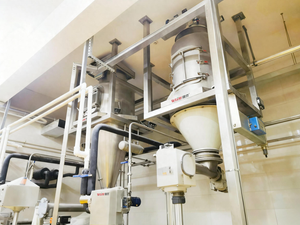
Powdered sugar is one of the few ingredients that punishes a production line for every design shortcut taken elsewhere. It’s fine enough to drift into the air on contact, hygroscopic enough to cake solid inside a pipe overnight, and common enough that most bakery and confectionery plants are running it through the same general-purpose powder handling equipment they use for flour, starch, and glazing sugar — on shared floor space, often through shared or poorly separated conveying lines.
That combination is where most powdered sugar processing problems actually originate. It’s rarely one catastrophic failure. It’s a slow accumulation of clogged sections, moisture-related quality drift, and cross-contamination risk between powders that were never supposed to mix — the kind of operational drag that shows up as scrap rate and downtime long before it shows up as a formal incident report.
A batching system engineered specifically for powdered sugar’s physical behavior — rather than adapted from a general powder-handling platform — is what closes that gap, and it’s worth understanding exactly why generic equipment struggles with this particular material before looking at what a proper solution requires.
Why Powdered Sugar Breaks Generic Powder-Handling Equipment
It Cakes and Clogs in Ways Other Powders Don’t
Powdered sugar’s fine particle size and hygroscopic nature mean it absorbs ambient moisture readily, and once it does, it doesn’t just clump — it bridges inside storage vessels and hardens along pipe walls. Equipment sized and sealed for a less moisture-sensitive powder will develop clogging over time even under normal humidity conditions, and clearing a bridged storage vessel mid-shift is one of the more disruptive, labor-intensive interruptions a production floor can face.
Dust Exposure Compounds Faster With Fine Sugar Particles
Because powdered sugar is milled finer than most other bakery powders, it becomes airborne more readily during transfer and settles more persistently across equipment surfaces. On a line where powdered sugar is handled in open or partially enclosed equipment, dust accumulation isn’t a periodic housekeeping task — it’s a continuous background condition that raises both contamination risk and cleaning labor over time.
Multi-Powder Lines Create Cross-Contamination Exposure
Most bakery and confectionery operations don’t run powdered sugar in isolation — they’re also handling starch, glazing powder, and various flour types on the same floor, sometimes through shared conveying infrastructure. Without independent, physically separated lines for each material, cross-contamination between powders is a structural risk rather than an occasional lapse, and it’s difficult to fully rule out during a food-safety audit if the piping architecture itself doesn’t isolate each material.
Dosing Accuracy Drifts When Equipment Isn’t Purpose-Built
Powdered sugar dosing directly affects finished-product sweetness and texture, and consumer sensitivity to inconsistency in confectionery and bakery products is high. Generic weighing systems calibrated for coarser or less moisture-sensitive powders often can’t hold the accuracy powdered sugar dosing requires, particularly as ambient humidity shifts throughout a production day.
What Standardizing a Powdered Sugar Line Actually Requires
Plants that have solved these problems at scale converge on the same five structural components, integrated into a single process rather than assembled from separate equipment:
- Dust-free intake that contains material from the moment it enters the system
- Temperature- and humidity-controlled storage that prevents caking before it starts, not after
- Enclosed grinding integrated directly into the line rather than handled as a separate manual step
- Dense-phase pneumatic conveying engineered to avoid the moisture pickup and clogging that open or loosely sealed transfer creates
- Multi-channel dynamic weighing that holds accuracy across the specific tolerance powdered sugar dosing demands
A system that automates conveying but leaves grinding as a manual step, or that controls storage humidity but shares piping across multiple powders, still leaves the core risk in place. Closing all five points in a single integrated line is where most generic equipment stops short.
Inside WIJAY’s Batching System for Powdered Sugar Processing
WIJAY Systems, with deep specialization in food powder pneumatic conveying, engineered its powdered sugar batching system around these five requirements as a single zoned, modular process — not a collection of standalone units.
Five Integrated Modules, Each Purpose-Built for Powdered Sugar
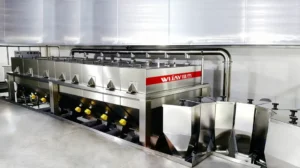
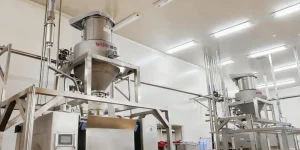
The system is built from a dust-free intake unit, a temperature- and humidity-controlled storage silo, an enclosed grinding assembly, a dense-phase pneumatic conveying line, and a multi-channel dynamic weighing system, all constructed from 304/316 food-grade stainless steel. Interior piping surfaces are polished to eliminate the microscopic roughness that gives powdered sugar somewhere to adhere and cake.
Conveying Engineered for the Building, Not a Fixed Template
Conveying parameters are configured to a plant’s actual floor layout, supporting throughput in the 4 to 6 tons per hour range, horizontal runs up to 100 meters, and vertical lift up to 30 meters — sized for cross-floor and cross-building transfer rather than a single fixed configuration that assumes an ideal layout.
Humidity Control at the Source, Not After the Fact
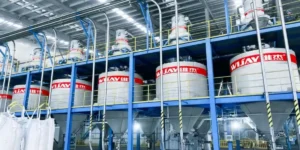
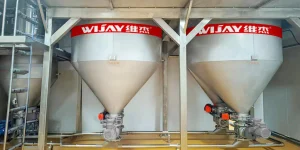
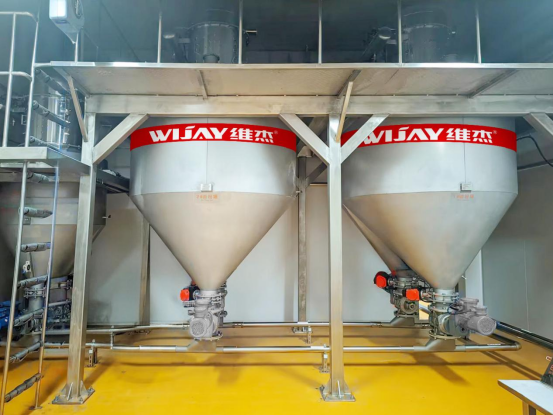
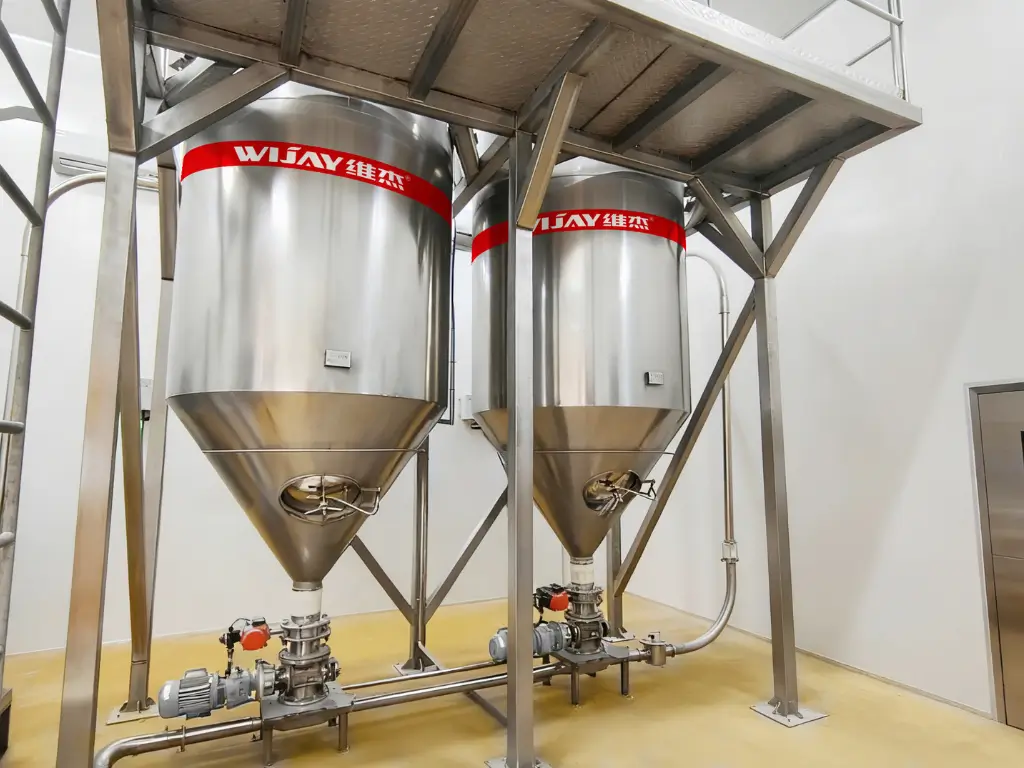
The independent, temperature-controlled storage silo runs a continuous dehumidification cycle that holds internal humidity within a stable range, addressing moisture-driven caking and pipe blockage — the most common root cause of powdered sugar clogging — before it ever reaches the conveying line.
Isolated Multi-Channel Handling for Plants Running Several Powders
For facilities processing powdered sugar alongside starch, glazing powder, or multiple flour grades, the system supports independently isolated conveying channels per material, physically preventing cross-contamination rather than relying on cleaning protocols to catch it after the fact — a configuration that has supported simultaneous handling of nine distinct powder types on a single integrated line.
Combined Grinding, Drying, and Automated Packing
For lines that need grinding and packing handled as part of the same continuous process, WIJAY integrates grinding, drying, and automated packing into one linked unit, supported by staged CIP (clean-in-place) cleaning that allows continuous, multi-batch production without breaking the line for manual cleaning between runs.
Dual-Line Operation From a Single Control Platform
Where a plant needs to run two conveying processes in parallel — for example, sugar and flour moving simultaneously — a single central control system manages both lines’ parameters together, reducing the equipment footprint and capital cost compared to running two fully separate control systems.
Full Data Capture for Audit-Ready Traceability
An industrial-grade smart control platform automatically logs grinding duration, conveying flow rate, batch dosing weight, and equipment cleaning records across every dimension of the process. Data is stored in encrypted, tamper-resistant form, aligned directly with GB 14881 and HACCP traceability requirements.
Engineering Support Beyond the Equipment Itself
Unlike suppliers that provide standalone machines without process-level design work, WIJAY carries out full facility-level engineering before equipment is ever built — 3D floor layout modeling, piping fluid-flow simulation, and capacity load calculation specific to the plant’s actual conditions. For older facilities, WIJAY offers lightweight modular retrofit options that avoid major structural construction, allowing plants to reach automated, standardized powdered sugar handling without a full facility rebuild. After installation, the engagement continues with operator training, scheduled inspection, and rapid-response field service.
Why Standardization Matters More as Product Lines Multiply
As bakery and confectionery manufacturers expand SKU counts and run more powder types through the same facility, the risk profile of unstandardized, generic powder handling compounds — more clogging events, more cross-contamination exposure, and a growing gap between what a plant can demonstrate during an audit and what regulators expect. A batching system engineered specifically around powdered sugar’s physical behavior closes that gap at the process level, rather than relying on manual controls to compensate for equipment that wasn’t built for the material in the first place.
WIJAY Systems designs both full turnkey powdered sugar lines and modular retrofits, configured to your facility’s throughput, layout, and product mix.
FAQ
Why does powdered sugar require different equipment than other bakery powders? Powdered sugar’s fine particle size and hygroscopic nature make it prone to moisture-driven caking and pipe blockage in ways coarser or less moisture-sensitive powders aren’t, which is why equipment built for general powder handling often underperforms specifically on sugar.
Can one batching system handle powdered sugar alongside other powders safely? Yes, if the system uses independently isolated conveying channels per material. WIJAY’s architecture has supported simultaneous handling of nine distinct powder types on a single line without cross-contamination.
What throughput and conveying distance can a powdered sugar batching system support? WIJAY’s system covers 4 to 6 tons per hour, with horizontal conveying up to 100 meters and vertical lift up to 30 meters, configured to the plant’s actual floor layout.
How does the system prevent powdered sugar from caking during storage? An independent, temperature-controlled storage silo runs continuous dehumidification to hold internal humidity within a stable range, addressing moisture pickup at the source before material moves into the conveying line.
Is this system suitable for retrofitting an older production facility? Yes. WIJAY offers lightweight modular retrofit options for existing floor layouts, avoiding major structural construction, in addition to full turnkey installations for new facilities.