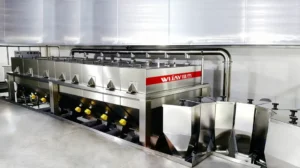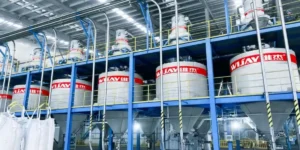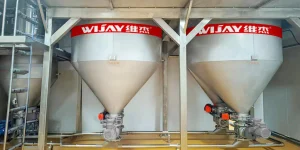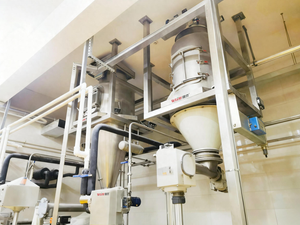
A feeding system gets approved on a clean quote and a tidy spec sheet. Six weeks after startup, the maintenance log tells a different story: a line that plugs every time humidity rises, batch weights that drift, dust at the transfer points, and a control package that can’t talk to the plant’s MES, so someone retypes consumption data every shift. In plastics and fine chemical plants, these failures rarely trace to a bad component. They trace to decisions made at the purchasing stage.
This article walks through eight procurement traps that show up repeatedly in powder feeding projects, explains the mechanism behind each, and gives you a way to tell an operating fix from a design gap.
Background: Why Feeding Systems Fail Right After Startup
Buyers tend to anchor on what is easy to compare. What decides performance is harder to see on a quote.
| Usually Compared at Purchase | What Actually Decides Performance |
|---|---|
| Unit price and catalog throughput | Flowability, bulk density, and moisture content of your powder |
| Motor size and pipe diameter | Hazardous-area fit and pipe routing |
| Delivery date | Software interfaces, commissioning, and service response |
Powders are not pellets. Equipment developed for ordinary granules behaves differently with ultra-fine or moisture-absorbing materials, and a fix after commissioning means reopening piping, valves, and controls already embedded in the line. That rework usually costs far more than the price difference that justified the original choice.
Core Technical Explanation: The Eight Traps and the Mechanisms Behind Them
| # | Trap | What Fails on the Floor | Verify Before the PO |
|---|---|---|---|
| 1 | Generic model, real material ignored | Bridging, caking, pipe deposits, supply interruptions | Supplier’s flowability, bulk density, and moisture data for your powder |
| 2 | Unit price only | More spare parts, more repair hours | Purge, anti-blockage, and dust collection in the scope |
| 3 | Downgraded explosion protection | Compliance rework | Rating documented for motors, valves, and sensors |
| 4 | No room to grow | Large-scale rework for a new line | Flow and station expansion allowance |
| 5 | Simplified piping | Residue and repeat blockages | Routing and elbow count reviewed by simulation |
| 6 | Closed software | Manual re-entry, no MES link | Standard interface specified in writing |
| 7 | Hardware-only delivery | Drift and underperformance | Full-load commissioning with your material |
| 8 | Weak project capability | Gaps between survey, install, and service | Survey, simulation, installation, and service ownership |
Material and Process Fit (Traps 1 and 5)
Standard models are built for ordinary granules. Ultra-fine powders and moisture-absorbing additives bridge, cake, and deposit in piping, which interrupts supply. Flowability, bulk density, and moisture content are the first design inputs, not an afterthought.
Layout is the core of pneumatic conveying. Too many elbows or poorly chosen angles are a leading cause of residue and repeat blockages, so routing should not be left to a vendor’s standard template. Pressure-drop simulation before fabrication catches these problems on paper.
Safety and Compliance (Trap 3)
Some suppliers reduce the explosion-protection rating of motors, valves, or sensing elements to cut cost. Powder areas carry dust explosion risk, and a system that does not match the area classification brings compliance rework. Write the required rating into the contract and ask for documentation on every electrical component.
Lifecycle Cost and Growth (Traps 2 and 4)
Low-priced packages tend to trim purge, anti-blockage, and dust collection. The savings come back as spare parts and downtime. Product mixes also change: without reserved flow and station capacity, a new line means major rework. A margin of 15–25% on flow, plus reserved ports, is a commonly planned allowance.
Integration, Commissioning, and Service (Traps 6, 7, 8)
Closed, single-machine software cannot connect to MES, so consumption and batching records get re-entered by hand and the digital value disappears. Performance is also not set by a static factory test. Air pressure, feed rate, and weighing parameters must be calibrated with the real material on site. Some engineering partners, including our team at WIJAY, run a factory acceptance test with customer material samples first, then repeat calibration under full load on site. Finally, powder automation is systems engineering: survey, simulation, installation, commissioning, and service response together decide the outcome.
Practical Field Troubleshooting & Decision-Making Guidance
Operating Fix or Design Gap?
| Symptom | Operating Fix | Points to a Design Gap (Trap) |
|---|---|---|
| Plugging when humidity rises | Check air dryness and seals, clear the line | Recurs on the same material (1) |
| Repeat blockage at one section | Clear, adjust air-to-material ratio | Returns at the same elbow or run (5) |
| Weight drift after startup | Recalibrate | Persists because calibration never used real material at load (7) |
| Dust at transfer points | Replace seals, service the filter | Recurs because dust control was trimmed from scope (2) |
| Rating questioned during a safety review | Update documentation | Components lack the required rating (3) |
| Consumption data retyped by hand | None | No standard interface (6) |
| New line needs major rework | None | No expansion allowance (4) |
Questions to Ask Before You Order
- What flowability, bulk density, and moisture data was the design based on?
- Which explosion-protection rating applies to each electrical component?
- Who reviewed the pipe routing, and was it simulated?
- What interface does the software offer for MES?
- What is the full-load commissioning and calibration plan?
- How is training structured for operators and maintenance staff?
Key Design & Operation Best Practices
- Start from the material. Test your powder and make those results the design basis.
- Compare scope, not just price. Confirm that purge, anti-blockage, and dust collection are included before ranking quotes.
- Specify hazardous-area requirements in the contract, component by component.
- Reserve capacity early. Leave flow margin and station ports so expansion means adding modules.
- Require an open interface so batching and consumption data flow to MES automatically.
- Define commissioning acceptance in advance: flow, weighing deviation, and pressure stability under full load.
Common Mistakes & Pitfalls To Avoid
- Comparing quotes with unequal scope. A lower price often reflects a smaller package.
- Deciding in purchasing alone. Process, EHS, and IT each own part of the specification.
- Accepting a vendor’s standard pipe layout without a simulation report.
- Skipping written acceptance criteria, which leaves commissioning open to interpretation.
- Treating training and service as optional extras. Operators and maintenance staff need tiered training to hold the performance.
FAQ
What should I check first when selecting an automatic feeding system for chemical powders?
Start with your powder’s flowability, bulk density, and moisture content, then confirm the hazardous-area classification. These two inputs drive conveying method, pipe design, and electrical specification, and they determine whether a standard model can work at all.
Is a cheaper automatic feeding system always the worse choice?
Not always, but check scope first. A lower price often means purge, anti-blockage, or dust collection was trimmed, and that shows up later as spare parts and downtime. If scopes are truly equal, price becomes a fair comparison.
How much expansion capacity should a feeding system have?
A margin of 15–25% on flow, plus reserved station ports, is a commonly planned allowance. The right figure depends on your expansion plans, but a system sized to today’s limit usually forces major rework when a new line arrives.
Does a factory acceptance test replace on-site calibration?
No. A factory test with your material samples catches design issues early, but air pressure, feed rate, and weighing parameters still need calibration on site under full load with the real material.
Why does MES integration matter at the purchasing stage?
Closed software forces manual re-entry of consumption and batching data, which adds error and removes traceability. Specifying a standard interface in the contract is far cheaper than retrofitting one after installation.
Ready to Check Your Feeding System Specification?
Send your material data (flowability, bulk density, moisture, dust classification), throughput targets, line and station count, and conveying distances. An engineering team can review your specification against these eight traps before you issue a purchase order.