Introduction: When Dust-Filled Flour Rooms Become a Thing of the Past
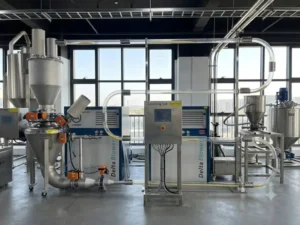
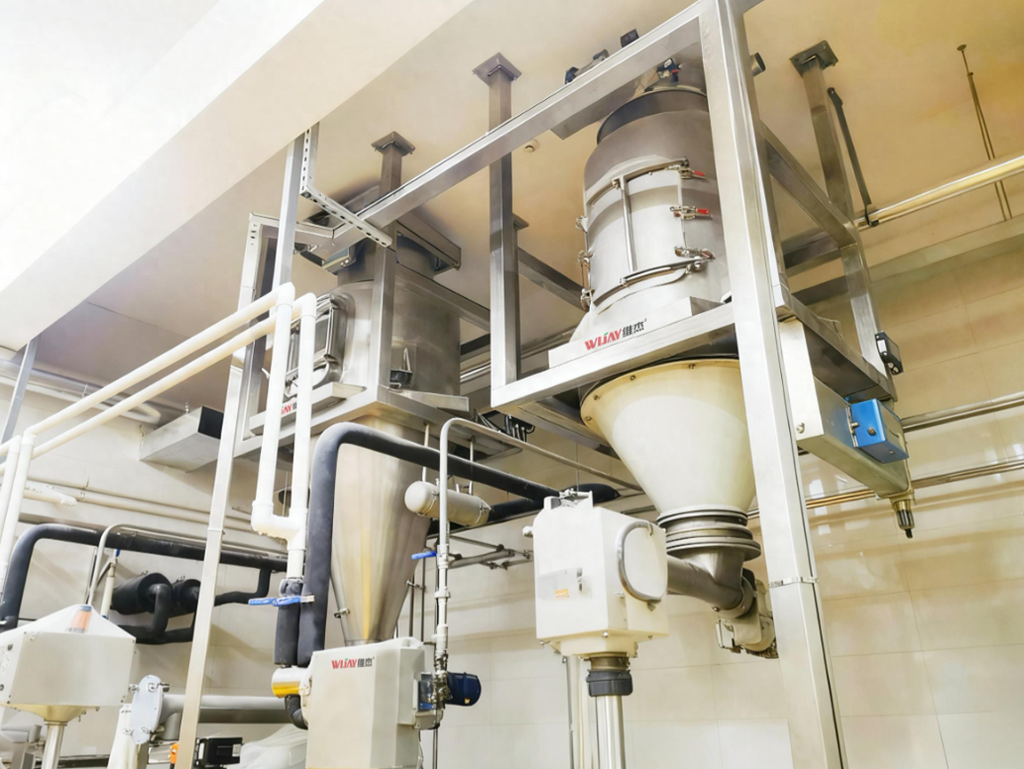
Walk into the production floor of a century-old biscuit manufacturer in South China, and you’ll notice something striking: there’s no flour dust in the air. Instead, white powder flows silently and precisely through a fully enclosed pipeline network, delivering measured quantities directly into industrial mixers. This quiet transformation is powered by an automated ingredient handling system engineered by Guangdong WIJAY Material Automation System Co., Ltd.
But this wasn’t always the case.
Like many traditional food manufacturers, this company—with a heritage spanning over a hundred years—had long relied on manual flour handling. Workers hauled 25 kg bags across the production floor, manually cut them open, and poured flour into mixers. The process was labor-intensive, inconsistent, and created airborne dust that posed both safety and quality risks.
As consumer expectations for product consistency intensified and food safety regulations tightened, the company recognized that raw material handling was the weakest link in its production chain. That’s when they turned to WIJAY’s pneumatic conveying system for biscuit production—a comprehensive solution that would redefine how ingredients move through their facility.
This case study explores how WIJAY’s automated ingredient handling system transformed a traditional biscuit production line into a precision-controlled, data-driven operation. It also examines the technical architecture behind the solution, the measurable outcomes achieved, and why pneumatic conveying technology has become a cornerstone of modern food manufacturing.
The Challenge: Why Traditional Flour Handling Was Holding Back Production
Manual Feeding: A Bottleneck Hiding in Plain Sight
The manufacturer’s original process followed a pattern familiar to many mid-sized bakeries and biscuit factories. Flour arrived in 25 kg bags, stored in an adjacent warehouse. Production workers would manually transport bags to the mixing station, cut them open, and empty them into mixers according to batch recipes. Salt, sugar, and minor ingredients were weighed separately on platform scales.
This workflow created several compounding problems.
First, inconsistency was built into the process. Human operators, no matter how experienced, cannot achieve the same weighing precision as automated systems. Variations in flour quantity per batch directly affected dough hydration ratios, which in turn influenced biscuit texture, spread, and color. As the company’s production manager later noted, “We used to rely on experience. Now we rely on data.”
Second, dust generation was unavoidable. Manual dumping released fine flour particles into the air, creating respiratory hazards for workers and increasing the risk of cross-contamination between allergen-containing and allergen-free products. Flour dust also settled on equipment surfaces, complicating sanitation procedures and increasing cleaning time between production runs.
Third, labor costs were escalating. Each production line required multiple workers dedicated to material handling, and staff turnover in food manufacturing added recruitment and training overhead. The company projected that without automation, its labor costs would continue rising at 5–8% annually.
Finally, scaling was difficult. As order volumes grew, particularly from large retail chains and export customers, the manual system simply couldn’t keep pace. Meeting demand spikes required overtime shifts, which further increased costs and introduced variability.
The Regulatory Context
These operational challenges were compounded by an increasingly stringent regulatory environment. Food safety authorities in China and international markets have shifted from post-incident penalties toward source-level prevention, with particular scrutiny on ingredient handling, cross-contamination control, and production traceability. Manual feeding stations—where operators physically handle open bags of flour, sugar, and additives—represent one of the highest-risk points in any food production facility.
The biscuit manufacturer needed a solution that would address operational inefficiency and regulatory compliance simultaneously. Manual improvements could only go so far; what was required was a fundamentally different approach to how raw materials entered the production process.
The WIJAY Solution: Integrated Pneumatic Conveying and Precision Batching
System Architecture Overview
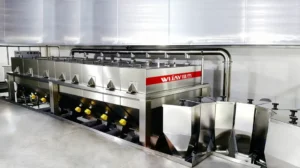
WIJAY designed a turnkey material automation system that replaced every manual touchpoint in the flour handling process. The solution integrated three core technological components:
- Dilute-phase pneumatic conveying system for dust-free flour transport
- High-precision weighing and dynamic batching technology for accurate ingredient dosing
- Centralized control system with recipe management for automated operation and traceability
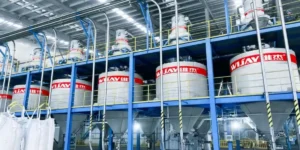
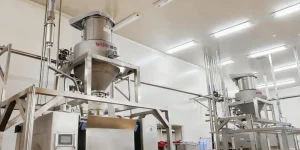
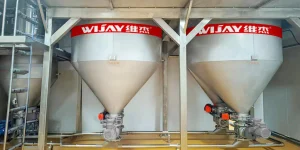
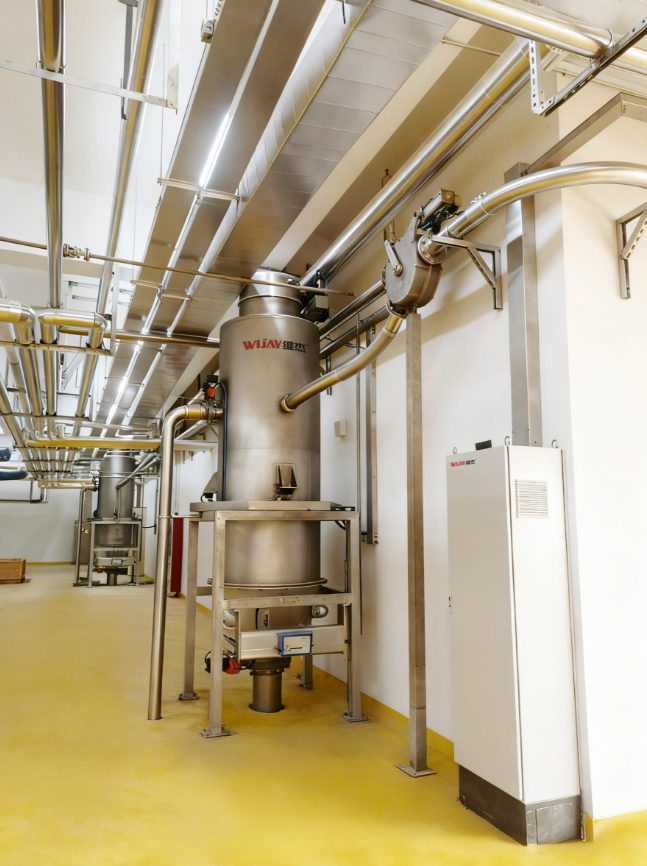
The architecture connects raw material storage silos to mixing stations through a fully enclosed pipeline network. Flour, sugar, and minor ingredients each travel through dedicated lines, eliminating cross-contamination risks. Sensors positioned throughout the system collect real-time data on pipeline occupancy, material levels, equipment status, and cleanliness—data that feeds into WIJAY’s intelligent path-planning algorithms to optimize conveying routes dynamically.
Dilute-Phase Pneumatic Conveying: The Backbone of Dust-Free Transport
At the heart of the system lies a dilute-phase pneumatic conveying configuration. This technology uses precisely controlled airflow to suspend flour particles and transport them through stainless steel pipelines at velocities calibrated to prevent both sedimentation and particle degradation.
The system’s design incorporates several engineering decisions that directly address the challenges of food-grade flour handling:
316L stainless steel construction. Every contact surface—from pipeline interiors to receiving vessels—uses 316L stainless steel, a material chosen specifically for its corrosion resistance and resistance to metal ion leaching. This ensures that no metallic contaminants enter the flour stream, a critical requirement for food safety compliance.
Fully enclosed conveying circuit. Unlike mechanical conveyors (screw conveyors, belt conveyors, bucket elevators) that expose material to ambient air, the pneumatic system operates as a closed loop. Flour travels from silo to mixer without any intermediate open transfer points. This design eliminates the dust emissions that plagued the original manual operation and prevents ingress of external contaminants such as dust, microorganisms, or foreign objects.
Precision airflow control. The system monitors conveying velocity and pressure differentials continuously, adjusting airflow to maintain optimal transport conditions. For flour—a fine, cohesive powder prone to compaction—this dynamic adjustment is essential. Too much velocity causes particle attrition and pipeline wear; too little leads to blockages. WIJAY’s control algorithms maintain the sweet spot, ensuring stable conveying across varying humidity and temperature conditions.
AI-powered foreign object detection. An integrated monitoring module uses high-precision sensors to scan the conveying airstream for metal and plastic contaminants as small as 0.3 mm. If detected, the system triggers an immediate alert and halts material flow to the affected destination, protecting downstream processing equipment and finished product quality.
High-Precision Weighing and Dynamic Batching
Conveying flour is only half the challenge; delivering the correct amount at the correct time is equally critical. WIJAY’s solution incorporates a multi-stage weighing and batching architecture that achieves dosing accuracy of ±0.5% or better—a level of precision unattainable through manual operations.
The batching process operates as follows:
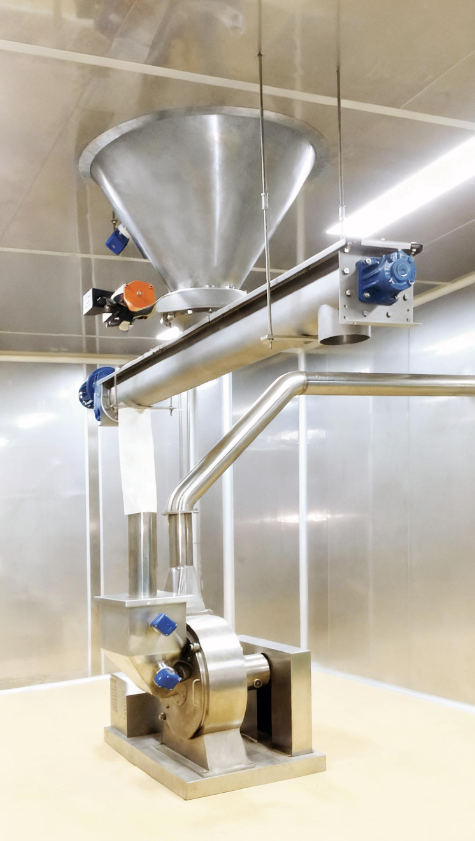
- Bulk ingredient dosing. For high-volume ingredients like flour, a loss-in-weight (LIW) feeding system measures the weight loss of a supply hopper over time to determine instantaneous mass flow rate. This approach eliminates the accumulation errors common in gain-in-weight systems and provides continuous, real-time feedback to the controller.
- Minor ingredient precision dosing. Salt, sugar, leavening agents, and flavorings are dosed through dedicated micro-feeding channels. Each channel uses a separate weighing module with its own calibration profile. The system cross-references actual delivered quantities against recipe targets, automatically compensating for variations in material bulk density or flow characteristics.
- Dynamic recipe adjustment. The control system stores multiple recipes simultaneously and switches between them without manual intervention. When a product changeover occurs, the system purges delivery lines, reconfigures weighing parameters, and initiates the new recipe—all through a single touchscreen command.
The production manager’s observation—“Before, we relied on experience; now we rely on data”—captures the fundamental shift that this system enables. Human judgment is replaced by sensor-driven control logic that never fatigues, never rushes, and never forgets to record a measurement.
Turnkey Integration: From Design to Commissioning
WIJAY’s approach to this project was not merely equipment supply but complete system integration. The company’s turnkey capability encompasses digital factory planning, system design, component manufacturing, installation, and commissioning.
For this biscuit manufacturer, WIJAY’s engineering team conducted a comprehensive site assessment, mapping existing production workflows and identifying critical integration points. The final system design accounted for:
- Available floor space and ceiling height for pipeline routing
- Electrical supply compatibility with existing plant infrastructure
- Dust control interface with the facility’s HVAC system
- Recipe data integration with the manufacturer’s production management software
This end-to-end approach minimized production disruption during installation and ensured that the automated system operated as a seamless extension of existing operations—not as an isolated island of automation.
Results: Quantified Improvements in Precision, Efficiency, and Quality
Flour Feeding Rate Stability
The most immediate and measurable outcome was the stabilization of flour feed rate at 40 kg per minute. Before automation, feed rate varied significantly depending on operator technique, bag weight consistency, and workflow interruptions. Post-implementation, the system maintained 40 kg/min ±0.5% continuously across entire production shifts.
This stability directly improved dough mixing outcomes. Consistent ingredient delivery means consistent hydration ratios, which translate to uniform dough viscosity, sheeting behavior, and biscuit texture after baking. For a product where “the signature crunch” defines brand identity, this consistency is commercially critical.
Batching Accuracy: 80% Reduction in Variation
Batching variation—the deviation between target and actual ingredient quantities across batches—dropped by more than 80%. This improvement has cascading effects throughout the production process:
- Reduced raw material waste. Over-dosing, a common defense against under-dosing in manual operations, is eliminated. The system delivers what the recipe specifies, nothing more.
- Fewer rejected batches. Inconsistent dough produces biscuits that fail quality specifications (too thick, too thin, uneven color). Automated batching dramatically reduces rejection rates.
- Tighter specification compliance. Regulatory requirements for ingredient declaration and allergen control become easier to meet when every batch’s composition is documented and repeatable.
Labor Efficiency: 25% Overall Productivity Gain
Production efficiency improved by approximately 25% across the affected line. This gain stems from multiple sources:
- Elimination of manual material handling. Workers who previously transported and opened bags now supervise automated processes, a less physically demanding and more skilled role.
- Faster changeovers. Recipe switches that once required 30–45 minutes of manual weighing and setup now execute in under 10 minutes through automated purging and reconfiguration.
- Continuous operation capability. The system runs without breaks, shift changes, or fatigue-related slowdowns, enabling more effective utilization of existing production capacity.
- Reduced cleaning downtime. Because the enclosed system prevents dust accumulation on surrounding surfaces, cleaning cycles between products are shorter and less labor-intensive.
The manufacturer noted that each production line now requires only 1–2 operators on duty, compared to the previous staffing model that demanded multiple workers per shift dedicated solely to material handling.
Quality Standardization: Reproducing the “Signature Crunch”
Perhaps the most strategically significant result is the standardization of product quality. A century-old biscuit brand’s reputation rests on a specific sensory experience—the texture, the bite, the way the biscuit dissolves on the tongue. This sensory profile depends on precise control of flour-to-liquid ratios, mixing times, and dough temperatures.
Manual batching introduced variables that no amount of mixing expertise could fully compensate for. Automated weighing and conveying eliminate those variables at the source. Every batch now starts from the same precise ingredient quantities, processed through the same controlled conveying environment, delivered to the mixer under the same conditions.
The result is that the “signature crunch” that made this brand famous is now reproducible at scale—not dependent on which shift is running or which operator is weighing ingredients.
Key Takeaways: Why Pneumatic Conveying Matters for Biscuit Production
Precision Is a Competitive Advantage
In commodity food categories like biscuits, the difference between market leaders and also-rans often comes down to consistency. Consumers may not articulate why one brand “tastes better,” but they notice when a product varies. Automated ingredient handling transforms precision from an aspiration into a guaranteed process parameter.
Dust-Free Is Not Just a Hygiene Requirement
While dust control is essential for food safety compliance and worker health, its operational benefits extend further. A clean production environment means less product lost to airborne dispersion, fewer allergen cross-contamination risks, and simplified sanitation verification.
Integration Beats Isolation
The most successful automation projects are those where material handling integrates seamlessly with mixing, forming, and baking operations. WIJAY’s system design philosophy—”minimalist design, ultimate reliability”—reflects this understanding. Every component serves a specific purpose, and every system interface is engineered for reliability.
Data Drives Improvement
The sensor network embedded throughout the conveying and batching system generates a continuous stream of operational data: feed rates, batch weights, cleaning cycles, equipment status. This data provides the foundation for continuous improvement initiatives, whether optimizing recipe parameters, identifying maintenance needs, or benchmarking performance across production lines.
Frequently Asked Questions
What is a pneumatic conveying system for biscuit production?
A pneumatic conveying system for biscuit production is a closed-loop material transport solution that uses controlled air pressure or vacuum to move flour, sugar, and other dry ingredients through stainless steel pipelines from storage to mixing stations. Unlike mechanical conveyors, pneumatic systems fully enclose the material, preventing dust emissions and cross-contamination while enabling precise, automated delivery at rates calibrated to production requirements.
How accurate is WIJAY’s automated batching system?
WIJAY’s automated batching systems achieve ingredient dosing accuracy of ±0.5% or better, depending on material characteristics and system configuration. This precision level is maintained through a combination of loss-in-weight feeding technology, real-time weight feedback, and dynamic recipe adjustment algorithms. For typical biscuit production applications, this translates to batch-to-batch variation reductions exceeding 80% compared to manual weighing.
Can pneumatic conveying handle different types of flour used in biscuit production?
Yes. Modern pneumatic conveying systems are designed to handle a wide range of flour types and particle sizes. WIJAY’s systems can convey cake flour with particle sizes as fine as 20 microns through to coarser semolina-type flours at 500 microns without performance degradation. The key is proper system calibration—airflow velocity and pressure differentials are adjusted for each material’s bulk density, flowability, and cohesion characteristics.
How does WIJAY’s system prevent cross-contamination between ingredients?
WIJAY’s design uses dedicated pipeline circuits for each major ingredient category, eliminating shared conveyance paths for allergen-containing and allergen-free materials. The system also incorporates automated CIP (clean-in-place) capabilities, where cleaning solutions circulate through pipelines and vessels without manual disassembly. For minor ingredients, individual dosing channels with separate weighing modules prevent any physical contact between different additives.
What maintenance does a pneumatic conveying system require?
Pneumatic conveying systems have fewer moving parts than mechanical conveyors, resulting in lower routine maintenance requirements. The primary maintenance activities include filter inspection and replacement in receiving vessels, pipeline integrity checks, and calibration verification of weighing modules. WIJAY’s systems include diagnostic monitoring that alerts operators when components approach service intervals, enabling predictive rather than reactive maintenance.
What ROI can a biscuit manufacturer expect from automating ingredient handling?
Return on investment varies based on production volume, labor costs, and quality-related savings. Industry data indicates that pneumatic conveying automation projects in food manufacturing typically achieve payback periods of 18–24 months through labor savings, reduced material waste, improved yield, and minimized production downtime. For high-volume biscuit operations, the ROI timeline is often shorter due to the compounding effects of consistent quality on brand value and retail relationships.
Conclusion: Precision Control Is the New Competitive Standard
The biscuit industry operates in an environment of narrow margins and high consumer expectations. Brands that win are those that deliver a consistent product at competitive cost—every batch, every shift, every day. Manual ingredient handling makes that promise impossible to keep. Automated pneumatic conveying and precision batching make it a process guarantee.
This case study demonstrates that the transformation is achievable without rebuilding a factory from the ground up. WIJAY’s modular system design enabled a targeted upgrade of the material handling function, integrated seamlessly with existing mixing and baking operations. The results—40 kg/min stable feed rate, 80% reduction in batching variation, 25% productivity gain, and standardized product quality—speak to what’s possible when material handling is treated as a precision engineering discipline rather than a logistical afterthought.
For food manufacturers evaluating their own automation pathways, the question is no longer whether to automate ingredient handling, but how quickly they can do so before competitors capture the quality and cost advantages that automation delivers.
Ready to explore how a pneumatic conveying system can transform your biscuit or bakery production line?
Contact WIJAY’s engineering team for a consultation and site assessment. WIJAY provides end-to-end material automation solutions—from pneumatic conveying and precision batching to complete turnkey system integration—serving food manufacturers across China and international markets. Visit wijaysystem.com to learn more about our food-grade material handling systems, or speak with one of our specialists about your specific production challenges.