If your plant has been through a food-safety inspection in the last two years, there’s a good chance the finding — or the near-miss — traced back to the same place: the dosing station. Not the mixer, not the packaging line, not the warehouse. The point where raw ingredients and additives get measured and combined by hand is where most preventable food-safety exposure actually originates, and it’s also the point most manufacturers are slowest to automate.
Regulatory enforcement in food manufacturing has shifted decisively from after-the-fact penalties to upstream process control. Inspectors are no longer just checking finished product — they’re checking whether the dosing process itself is structurally capable of preventing cross-contamination, additive overdosing, and untraceable batches. Plants still running open, manual ingredient dosing are finding that “we’ve never had a problem” is no longer an acceptable answer when an auditor asks how the process prevents one.
This is the gap a properly engineered batching system is built to close — not by adding a compliance checklist on top of an unchanged process, but by removing the structural conditions that create food-safety risk in the first place.
Why the Dosing Station Is Where Food-Safety Failures Actually Start
Open-Air Dosing Is a Contamination Pathway by Design
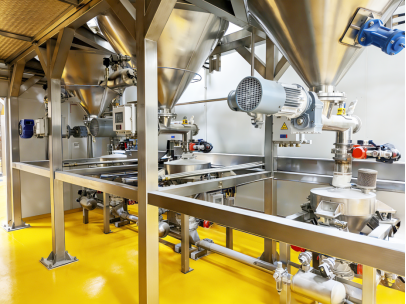
When flour, sugar, and additive powders are weighed and combined in open air, dust from each material settles across the workstation and, over time, across adjacent equipment. Different powders cross-contaminate on shared surfaces, and warm, humid production floors give any residual material a real chance to support microbial growth. This isn’t a housekeeping lapse — it’s an inherent property of open processing, which is exactly why inspection protocols increasingly treat open dosing stations as a structural finding, not an incidental one.
Manual Weighing Puts Additive Compliance at Risk Every Shift
Additive dosing has narrow tolerance bands for a reason, and manual weighing depends on an operator’s consistency across a full shift, scale calibration discipline, and freedom from production-pace pressure — none of which hold steady hour after hour. A dosing error that pushes an additive over its permitted threshold isn’t a rare event on a manual line; it’s a statistical certainty over enough batches, and it’s precisely the kind of finding that triggers a forced production stoppage and product recall.
Manual Cleaning Leaves Sanitation Gaps That Standard Protocols Can’t Guarantee
Equipment that requires manual disassembly for cleaning depends on an operator following every step correctly, every time, on every shift change. Dead zones inside piping, hoppers, and joints are easy to miss during manual cleaning and hard to verify after the fact — which means mold and bacterial growth risk isn’t fully addressed by a written cleaning protocol unless the equipment itself is designed to eliminate the gaps a person could miss.
No Digital Record Means No Defense During a Traceability Audit
When batch weight, dosing time, and cleaning records exist only on paper — or don’t exist at all — a plant has no reliable way to reconstruct what happened during a specific production run. Under current enforcement priorities, a traceability audit or product recall investigation that can’t be answered with a complete batch-level record typically results in a forced shutdown for corrective action, regardless of whether the finished product itself was actually compromised. The absence of documentation is treated as the failure.
What a Compliance-Grade Batching System Is Actually Required to Deliver
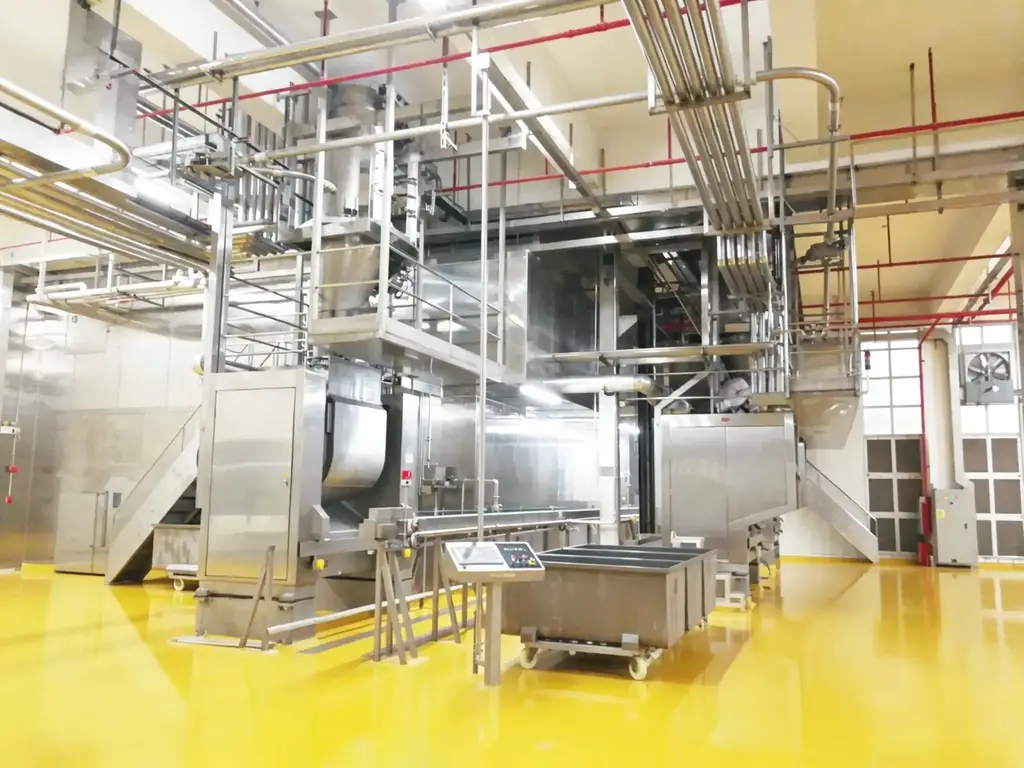
Manufacturers that have already closed these gaps converge on the same four structural requirements — and most legacy equipment, even when partially automated, addresses only one or two:
- Fully enclosed material transfer for every powder and additive in the formula, not just the primary ingredient
- Weighing accuracy tight enough to enforce a locked formula, removing operator judgment from additive dosing
- Automated CIP cleaning that eliminates dead zones a manual clean can miss
- Digitally archived, tamper-resistant batch records that can be exported on demand for a regulatory audit
A system that automates dosing but leaves cleaning manual, or that logs data but doesn’t lock the formula, still leaves a plant exposed at the next inspection. Closing all four gaps at once is where most competing systems on the market fall short.
Inside WIJAY’s Batching System for Food-Safe Ingredient Dosing
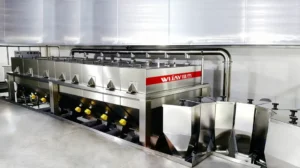
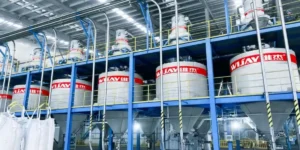
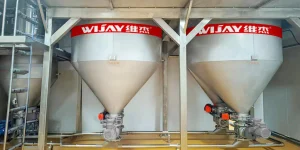
WIJAY Systems, with 16 years focused specifically on food-grade pneumatic conveying and more than 100 proprietary patents, engineered this batching system against the four failure points above — as a single integrated line, not a stack of retrofitted modules.
Fully Enclosed Conveying for Every Powder in the Formula
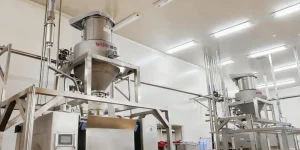
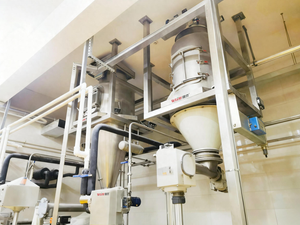
Flour, powdered sugar, and additives all move through sealed piping using positive-pressure, negative-pressure, or dense-phase conveying, with independent lines for each material to prevent cross-contamination between ingredients that were never meant to mix before the formula calls for it. Integrated food-grade dust extraction keeps the process fully contained from intake to dosing.
Precision Weighing Locked to ±0.3% Accuracy
The proprietary weighing module holds dosing accuracy within ±0.3%, tight enough to lock a standard formula into the control system and enforce it automatically — closing off additive overdosing at the hardware level rather than relying on an operator to catch an error before it happens. All product-contact components are built in 304/316 food-grade stainless steel.
Fully Automated CIP Cleaning, No Manual Disassembly
An integrated CIP (clean-in-place) system automatically circulates acid and alkaline cleaning solution through piping and storage vessels, eliminating cleaning dead zones without requiring equipment teardown. Standardized cleaning cycles run the same way every time, removing the variability that comes with manual cleaning discipline and directly addressing mold and bacterial growth risk at the source.
Digital Traceability With Tamper-Resistant Records
A Siemens-based smart control system automatically archives batch weight, production duration, and cleaning cycle records for every run, with data stored in encrypted, tamper-resistant form and exportable as a complete production log on demand. The system is built to align directly with HACCP and GB 14881 food production requirements, so audit response becomes a data export rather than a reconstruction effort.
Flexible Configuration Across Bakery, Confectionery, Snack, and Grain-Oil Lines
Different ingredient categories create different engineering problems, and WIJAY configures the system accordingly rather than applying a single generic design. For powdered sugar, which is prone to moisture absorption and caking, the system integrates dedicated grinding and temperature/humidity control units. For grain and oil processing, WIJAY runs a combined fluid-and-powder conveying process that doses liquid oil and powdered auxiliary materials in sync, using double-wall piping to prevent oil seepage and residue-related contamination.
The platform scales across 15 to 30 tons per hour, supports conveying runs up to 300 meters horizontal and 150 meters vertical, and is available as a full turnkey line for new-build facilities or as a modular retrofit for existing production floors — allowing plants to reach compliance without a full facility rebuild.
Proven Under Real Compliance Pressure
Systems already in production have held up under sustained inspection scrutiny: deployed lines typically run with 1–2 operators per line, cut labor costs by roughly 20%, meaningfully reduce raw material loss, and have a track record of passing successive years of food-safety spot checks at the dosing stage without a compliance finding — the exact area where manual-dosing plants remain most exposed.
Why This Shift Is No Longer Optional
Food-safety enforcement has moved decisively from reactive penalties to upstream process requirements, and the dosing station is the specific point regulators are scrutinizing most closely. Plants that eliminate open manual dosing aren’t just reducing risk incrementally — they’re removing the structural conditions that create most food-safety citations in the first place.
WIJAY Systems designs both full turnkey installations and targeted retrofits for existing lines, configured to your specific ingredient mix, current floor layout, and compliance deadline.
FAQ
How accurate is a batching system’s ingredient dosing compared to manual weighing? WIJAY’s system holds weighing accuracy within ±0.3%, tight enough to lock a formula into the control system and enforce it automatically, removing the operator variability that drives additive overdosing on manual lines.
Does an enclosed batching system meet HACCP and food-grade cleaning requirements? Yes. The system uses 304/316 food-grade stainless steel on all product-contact components and an integrated CIP cleaning system, and is engineered to align with HACCP and GB 14881 food production standards.
What records does the system generate for a food-safety audit? The system automatically archives batch weight, production duration, and cleaning cycle data for every run in encrypted, tamper-resistant form, exportable as a complete production log for regulatory review.
Can a batching system handle both powder and liquid ingredients, such as oil? Yes. For grain and oil applications, WIJAY runs a combined fluid-and-powder conveying process with double-wall piping to dose liquid oil and powdered materials together while preventing seepage and cross-contamination.
Is this system suitable for retrofitting an existing production line, or only new facilities? Both. WIJAY offers full turnkey installations for new-build facilities as well as modular retrofits for existing production floors, so plants can reach compliance without a full facility rebuild.