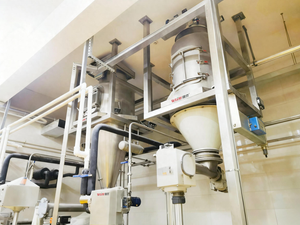
A quality lead pulls finished product samples from two production runs of the same confectionery SKU, made three days apart. The sweetness profile is measurably different. Nobody changed the recipe. Nobody switched suppliers. What actually happened: two operators, on two different shifts, hand-weighed the sugar and icing sugar dosing with slightly different techniques — and neither deviation got logged anywhere, because there was nothing built into the process to log it.
That’s the quiet failure mode running underneath most sugar batching operations. It’s not a formula problem. It’s a measurement and traceability problem baked into open, manually operated processing — and it shows up in two places at once: on the taste panel, and in the compliance file when an auditor asks for batch-by-batch dosing records that were never captured.
If your plant is grinding, weighing, and batching sugar or icing sugar through manual, open-air handling, you’re likely already living with the symptoms: dust accumulation around the grinding and mixing stations, finished-batch flavor variance that QC keeps flagging but can’t fully explain, and zero usable record when someone asks how much sugar went into a specific production lot six months ago. That’s not a future risk. It’s a cost and compliance gap that’s already active on your line.
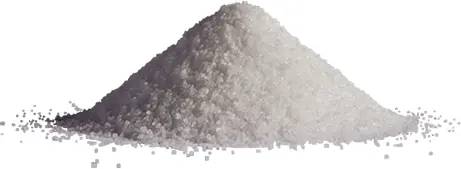
Why Manual Sugar Processing Fails Both Quality and Compliance Standards
Most confectionery, bakery, and snack producers are still running sugar processing built around manual weighing, open milling, and paper-based batch records. Three specific failure patterns account for most of the damage.
1. Manual weighing bakes variance directly into the recipe
When sugar-to-icing-sugar ratios are weighed and adjusted by hand, the resulting dosing error isn’t random noise — it’s a systematic input into every batch. That imbalance shows up directly as inconsistent finished-product sweetness and mouthfeel, and it’s a leading driver of the reject rate that gets absorbed as scrap rather than traced back to its source. Because the error happens at the dosing step, it’s effectively invisible until the finished product fails a taste or texture check downstream.
2. Open milling and transfer create a documented cross-contamination risk
Open-hopper grinding and transfer lets fine sugar dust drift and settle across the work area, mixing with flour, starch, and other airborne powders processed nearby. That cross-contamination pathway is exactly what HACCP clean-room controls are designed to prevent, and it’s a recurring finding in food-safety inspections of facilities running unenclosed powder processing. Airborne sugar dust also creates a documented combustible-dust hazard in confined processing areas — a safety exposure that closed handling removes at the source, not just a housekeeping issue.
3. No production record means no traceability when it matters
Manual sugar batching typically leaves no digital record of grinding duration, dosing weight per batch, or production sequencing. When a quality issue surfaces in a finished product and the investigation needs to trace it back to a specific batch of sugar input, plants running manual processes usually have nothing more than a paper log — if that. That’s a traceability gap that turns a routine quality investigation into an open-ended audit, and it’s precisely the kind of gap food safety regulators are checking for during compliance review.
Layered on top of all three: manual transfer, grinding, and packing of sugar is labor-intensive at every stage, which means staffing costs climb steadily as volume grows, and material spillage at each handling point compounds into real, measurable margin loss over a production year.
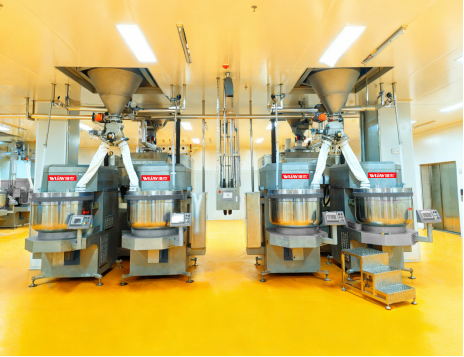
What a Dedicated Pneumatic Batching System Changes for Sugar Processing
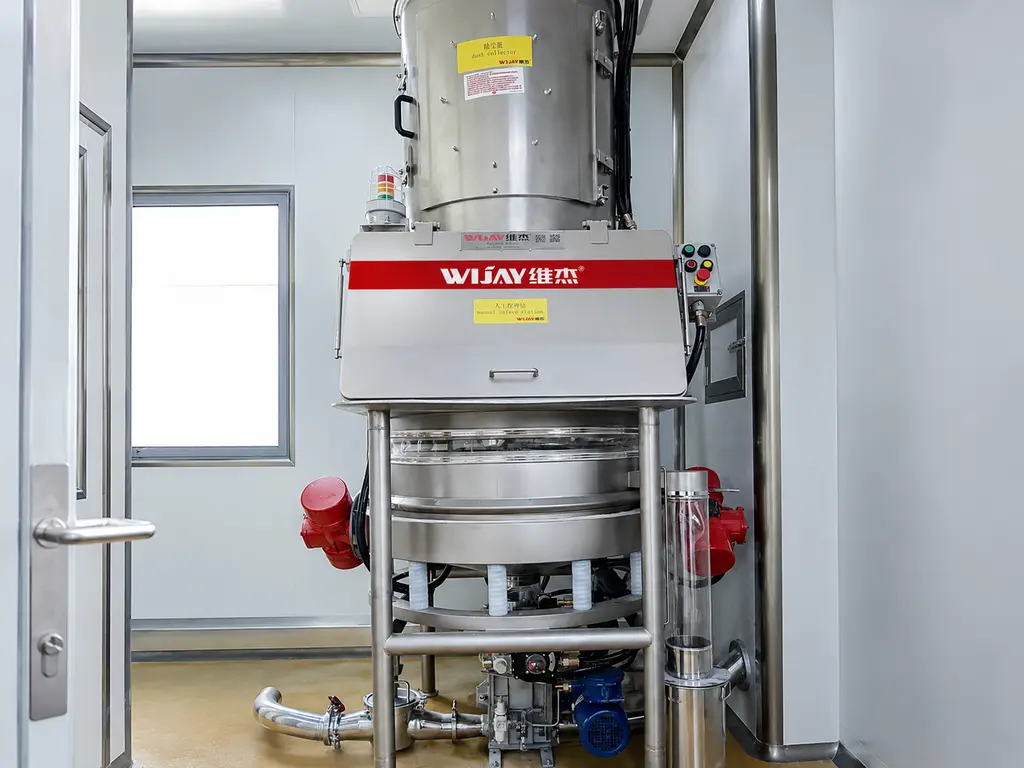
The fix isn’t tighter shift supervision or more frequent manual spot-checks. It’s removing the two structural weaknesses in manual sugar handling — operator-dependent weighing and open-air transfer — and replacing both with a system engineered specifically for sugar’s material properties. That’s the specific problem WIJAY’s dedicated sugar processing batching system is built to solve.
High-precision weighing eliminates dosing error at the source
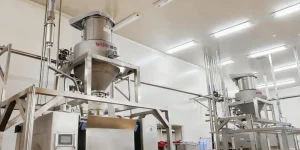
A purpose-built weighing module holds metering accuracy to within roughly 2%, with standardized recipes locked into the system rather than re-entered by hand each shift. That removes operator-dependent dosing variance as a factor entirely — every batch runs to the same sugar-to-icing-sugar ratio, with the same accuracy, independent of who’s on shift. The direct result is finished-product flavor consistency that holds across production runs, and a measurable drop in reject-driven material loss.
Fully enclosed conveying eliminates dust and cross-contamination exposure
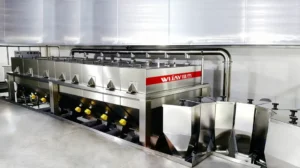
Positive-pressure, negative-pressure, or dense-phase pneumatic transfer moves sugar and icing sugar through a sealed pipeline for the entire process — no open hopper, no airborne dust, no material spillage at transfer points. Paired with food-grade dust extraction and full-line CIP (Clean-In-Place) capability, the system closes the cross-contamination pathway at its source rather than depending on cleaning crews to manage it after the fact, and it supports the clean-production standard HACCP-governed facilities are held to.
Automatic data capture builds the traceability record manual processes can’t
The system automatically logs grinding duration, dosing weight, and production sequencing for every batch, creating a complete, structured production record with no manual transcription step. When a quality issue or regulatory review requires tracing a finished product back to a specific batch of sugar input, that record already exists — turning what would otherwise be an open-ended investigation into a straightforward data pull.
Integrated grinding and moisture control solves sugar-specific handling problems
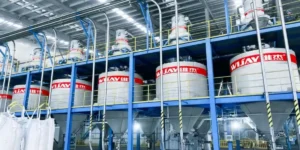
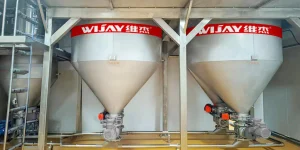
Sugar and icing sugar behave differently in a conveying line than free-flowing powders — clumping and moisture pickup are two of the most common causes of line stoppages in sugar processing specifically. A dedicated system with integrated grinding and temperature/humidity control units addresses both directly, rather than treating sugar as a generic powder and inheriting the clumping and blockage problems that come with that assumption. Proven configurations run 15–30 t/h processing capacity, with horizontal conveying up to 300 meters and vertical lift up to 150 meters, supporting multiple storage tanks, multiple weigh hoppers, and multiple production feed points running simultaneously.
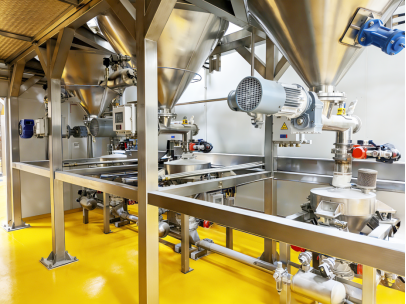
Field-Proven at Production Scale
WIJAY’s sugar batching platform isn’t a lab concept — it’s running in active production across multiple completed turnkey installations for leading food manufacturers, including integrated multi-powder processing lines, combined milling-and-packing systems, and dual-line sugar-and-flour conveying setups that have been in stable operation for several years. That track record is reflected in outside recognition: WIJAY was named a 2025 Outstanding Safety Supplier based on the reliability of its delivered systems.
Installations are engineered around each plant’s actual conditions — a targeted retrofit on an existing production line or a full intelligent processing plan for a new facility — with equipment designed for a low fault rate and straightforward maintenance. In practice, that typically brings staffing down to one to two operators per line, translating to roughly a 20% labor cost reduction alongside a comparable gain in overall production efficiency, with material loss from spillage and dust reduced substantially over the life of the system.
About WIJAY Systems
WIJAY has spent 16 years engineering pneumatic conveying and powder automation systems for bulk material handling, with deep, sugar-specific field experience gained across multiple completed installations for major food producers. Recognized as a Dongguan High-Tech Enterprise and Gazelle Enterprise, WIJAY operates a dedicated R&D center and holds more than 100 independent patents in materials automation. Each system is engineered around the customer’s specific sugar and powder handling requirements — not deployed as a generic conveying package.
FAQ
What makes a batching system suitable for sugar and icing sugar processing specifically? It needs high-precision weighing to eliminate operator-dependent dosing error, fully enclosed pneumatic transfer to prevent dust and cross-contamination, integrated grinding and moisture control to handle sugar’s tendency to clump, and automatic data logging for batch traceability — not a generic powder conveyor adapted after the fact.
How does an automated sugar batching system improve finished-product consistency? By locking standardized recipes into the system and holding metering accuracy to within roughly 2%, the system removes the shift-to-shift, operator-to-operator variance that manual weighing introduces, so every batch runs to the same sugar-to-icing-sugar ratio regardless of who’s operating the line.
Can a sugar batching system handle other powders on the same line? Yes. WIJAY’s platform has been deployed in configurations processing multiple powder types — including combined sugar and flour conveying — on shared or parallel lines, with recipes and feed points configured per material.
What throughput and conveying distance can a sugar batching system realistically support? Proven WIJAY installations run 15–30 t/h processing capacity, with horizontal conveying up to 300 meters and vertical lift up to 150 meters, supporting multiple storage tanks and feed points for simultaneous production.