Most food safety conversations in bulk solids manufacturing start at the scale — weighing accuracy, bag integrity, seal quality, pallet stability. Those stages matter, and they get a lot of well-deserved attention. But pneumatic conveying systems are what determine the actual condition of the material before it ever reaches the weigh hopper, and that upstream stage rarely gets the same scrutiny — even though contamination, moisture pickup, and cross-contact risk are often introduced there first, long before anyone downstream has a chance to catch them.
Food safety in bulk solids handling — flours, sugars, grains, powdered ingredients, processed dry foods — is a continuous commitment across every stage of the process, not a single checkpoint at packaging. This article walks through where enclosed, low-degradation pneumatic conveying fits into that chain, why the downstream controls everyone focuses on depend on what happens upstream, and a real case where a persistent bagging-line quality issue traced back to a conveying problem nobody had connected to it.
Why the Conveying Stage Is the Food Safety Control Most Plants Underweight
By the time a batch of flour or sugar reaches the weigh hopper, it has already moved through storage, transfer, and conveying — and every one of those stages is a genuine opportunity for contamination, moisture exposure, or cross-contact with other materials, particularly allergens, to enter the product before a single downstream control has a chance to catch it. An open or poorly sealed conveying path can introduce airborne contaminants or ambient moisture into a product stream that no amount of careful weighing, bagging, or sealing can remove afterward — those downstream controls verify and protect product integrity, but they can’t restore integrity that was already compromised upstream.
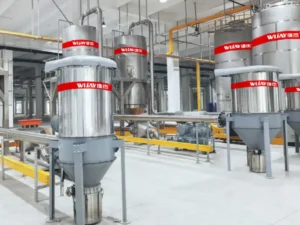
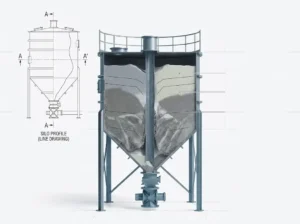
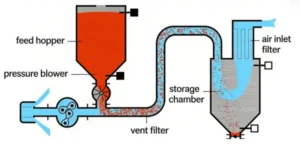
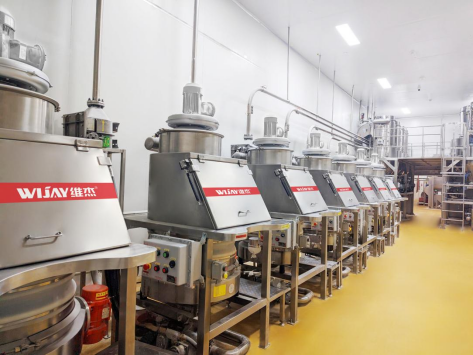
Enclosed pneumatic conveying addresses this directly by keeping material inside a sealed pipeline from storage through to the point of packaging, with no open transfer points where contamination, pests, or cross-contact can enter. That containment is what actually determines whether the weighing accuracy and seal integrity discussed below are protecting a genuinely clean product, or simply packaging a product that was already compromised before it arrived.
Weighing: Accurate Only If the Material Reaching the Scale Is What It Should Be
Accurate weighing is a foundational food safety and compliance control — a single mis-weighed batch can cascade into mislabeling, inconsistent product quality, or regulatory violations, and underfilled or overfilled bags carry both economic and trust consequences, up to and including recalls. Compliance with declared net weight standards, batch-to-batch uniformity, and accurate ingredient control (especially where multiple allergens are handled on the same line) all depend on weighing systems that are properly calibrated, generating real-time data for traceability, and operated by staff who understand why the protocol matters, not just how to follow it.
What often goes unexamined is whether the material actually arriving at the scale reflects the material that left storage. A conveying system that degrades particle size, introduces moisture, or allows cross-contact between transfers can produce a batch that weighs correctly but no longer matches its original specification — a failure mode that weighing accuracy alone can’t detect, because the scale is measuring mass, not composition or purity.
Bagging: A Barrier That’s Only as Clean as What It’s Containing
Bagging is the next critical control point, and proper bagging does more than contain product — it preserves quality, blocks the entry of contaminants, and starts the traceability chain that follows the product through distribution. Food-grade bag material prevents chemical migration, resists moisture, and deters pests; hygienic handling and storage of bags before filling prevents cross-contamination from the packaging side; and batch segregation with clear marking supports fast, targeted action if a contamination issue does surface.
Controlled filling environments, operator hygiene protocols, and bag inspection before filling are all standard best practices — but they’re protecting the bag’s contents from external contamination during the bagging step itself. They don’t address contamination that entered the material stream earlier, during conveying, which is exactly why bagging-line quality issues sometimes persist despite bagging practices that look correct on every audit.
Seal Integrity: The Last Line of Defense, Not the First
A bag’s seal is the final barrier against the external environment, and even a minor seal defect can let in moisture, oxygen, or pests — leading to spoilage, infestation, or foodborne illness risk, and shortening shelf life in ways that matter across long, global supply chains. A genuinely strong seal has to resist handling, stacking, and transportation stress; sealing areas need to stay clean and free of product buildup that interferes with seal formation; and both visual inspection and mechanical testing (tensile or burst testing) should be routine, with results documented to feed back into process improvement.
Seal failures are a well-documented leading cause of recalls, particularly for moisture- or oxygen-sensitive products, and in many cases better maintenance and inspection protocols could have prevented the failure. But seal quality is also affected by what’s being sealed — residual dust or fines from upstream conveying can interfere with seal formation at the jaws in ways that look like a bagging-line problem but actually originate further back in the process.
Palletizing: Where Upstream and Downstream Risk Both Show Up
After bagging and sealing, bulk solid foods face their final and often least predictable challenge: storage and transit. Load instability, packaging punctures, and increased cross-contamination or tampering risk are all real consequences of poor palletizing. Consistent stacking patterns, appropriate stretch wrapping and strapping, pre-shipment load inspection, and clean, dry pallet surfaces all protect the product through its final stage — a single pallet failure in transit can mean the loss of an entire shipment, with real financial and reputational cost, which makes disciplined palletizing a genuinely cost-effective safeguard.
A Case Worth Sharing: When the Bagging Line Wasn’t the Problem
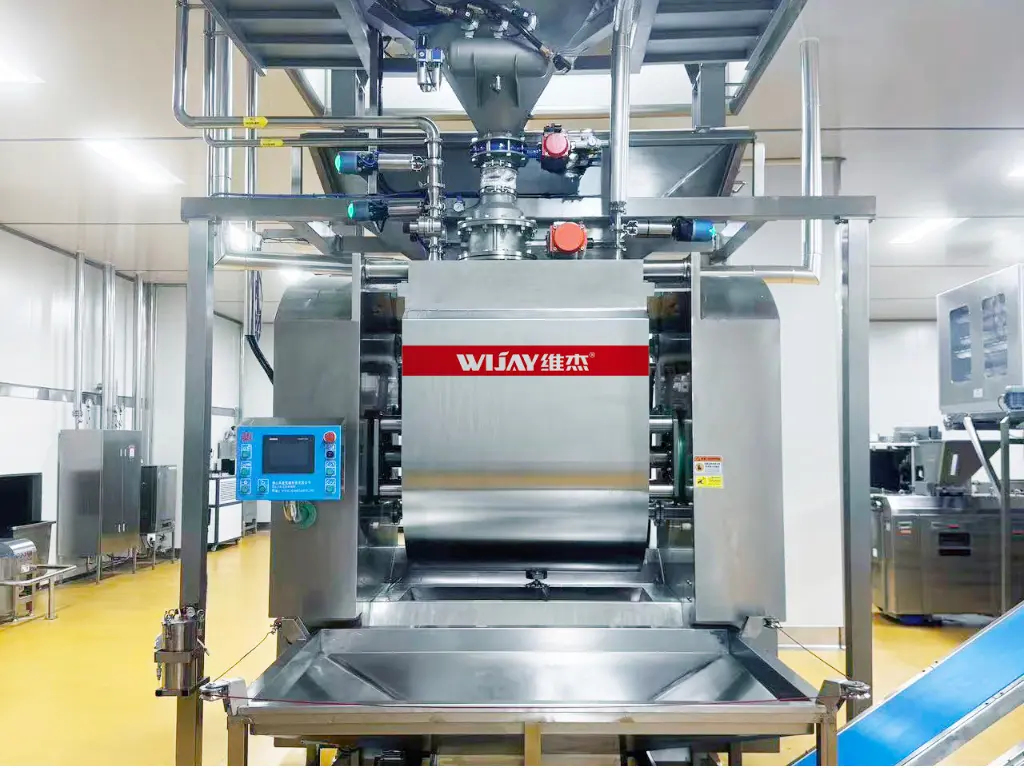
We worked with a food ingredient processor whose bagging line was failing seal integrity checks intermittently, along with occasional contamination flags that quality control couldn’t pin to any single cause. The bagging equipment itself had been inspected, cleaned, and recalibrated multiple times, and every audit of the bagging process itself came back clean — which made the recurring failures genuinely difficult to explain.
The actual source was upstream: a section of the pneumatic conveying line feeding the weigh hopper had a minor seal degradation at a pipe joint, invisible during routine visual inspection, that was allowing a small amount of ambient air — and with it, trace moisture and fine airborne particulate from the surrounding facility — into the material stream before it ever reached weighing. That trace contamination was subtle enough not to fail incoming material specs, but it was just enough to interfere with seal formation at the bagging jaws and occasionally trigger contamination flags downstream. Once the joint was identified through pressure and airflow testing on the conveying line — not through anything visible on the bagging line itself — resealing it resolved both the seal integrity failures and the contamination flags, without a single change to the bagging equipment or process. The lesson: a persistent downstream quality issue is worth investigating upstream before assuming the problem lives where the symptom is showing up.
Building a Preventive Food Safety Culture Across the Whole Line
Effective food safety in bulk solids handling depends on a culture of prevention that spans the entire process, not just the stages where problems tend to get noticed first. That means enforced hygiene protocols with documentation across equipment, packing zones, and storage areas; continuous monitoring of weights, fill levels, seal quality, and pallet condition throughout every shift; genuine employee engagement in recognizing and reporting risk rather than just following a checklist; and treating every deviation as a learning opportunity shared across teams rather than an isolated incident to close out and forget.
Extending that same preventive mindset upstream — to the conveying system that determines what condition the material is actually in before any of these downstream checks even begin — closes a gap that a lot of food safety programs don’t realize they have.
Getting the Whole Chain Right, Not Just the Visible Stages
Food safety in bulk solids handling is genuinely a chain, from conveying and weighing through bagging, sealing, and palletizing, and each link depends on the integrity of the one before it. Downstream controls — accurate scales, quality bags, strong seals, disciplined palletizing — are necessary, but they’re verifying and protecting product integrity, not creating it from scratch. Integrity starts with how the material is actually moved and contained from storage to the point of packaging, which is exactly where enclosed pneumatic conveying earns its place at the center of a genuinely preventive food safety program rather than an afterthought to it.
FAQ
Why does the conveying stage matter for food safety if bagging and sealing come later? Because conveying determines the actual condition of the material before any downstream control has a chance to catch a problem. Contamination, moisture pickup, or cross-contact introduced during conveying can pass through weighing undetected, since a scale measures mass, not purity or composition.
Can a bagging-line quality problem actually originate in the conveying system? Yes, and it’s more common than most plants expect. A conveying line issue — even a minor seal degradation at a joint — can introduce trace contamination or moisture that interferes with downstream seal formation or triggers contamination flags, while the bagging equipment itself tests clean on every audit.
What’s the difference between food-grade bagging and enclosed pneumatic conveying in terms of contamination control? Food-grade bagging protects the product from the point of filling onward — external contamination during and after bagging. Enclosed pneumatic conveying protects the product before that point, during storage, transfer, and movement to the weigh hopper, which is a distinct and earlier stage of contamination risk.
Why do seal failures sometimes persist despite clean bagging equipment audits? Because seal quality can be affected by what’s being sealed, not just how the sealing equipment is maintained. Residual fines or trace contamination introduced upstream — during conveying — can interfere with seal formation at the bagging jaws in ways a bagging equipment audit alone won’t reveal.
How can a plant tell if an upstream conveying issue is affecting downstream food safety metrics? When downstream quality issues — seal failures, contamination flags — persist despite equipment that passes inspection and audit, it’s worth testing the conveying line itself for pressure and airflow integrity, rather than continuing to focus troubleshooting efforts solely on the stage where the symptom appears.
WIJAY Systems designs enclosed, low-degradation pneumatic conveying systems as the upstream foundation of food safety in bulk solids handling — keeping material sealed from storage through to weighing and packaging, across food, chemical, and other bulk material industries. If your bagging, sealing, or quality metrics are showing problems that don’t trace cleanly to the equipment itself, that’s worth a conversation with our process engineering team.