When engineers compare pneumatic conveyors vs bucket elevators, the conversation usually starts and ends in the same place: one uses air, the other uses buckets on a belt or chain. That is a description, not a decision. The two systems fail differently, cost differently, and are constrained by completely different material properties. Choosing between them on price per meter or on the drawing they fit into is how plants end up with a bucket elevator that coats the building in dust, or a pneumatic line that cannot hit the tonnage a simple bucket elevator would have delivered at half the energy.
This is the comparison most vendor pages skip: not which technology is “better,” but which one is wrong for your material, your building and your compliance obligations — and what that costs over ten years rather than at the purchase order.
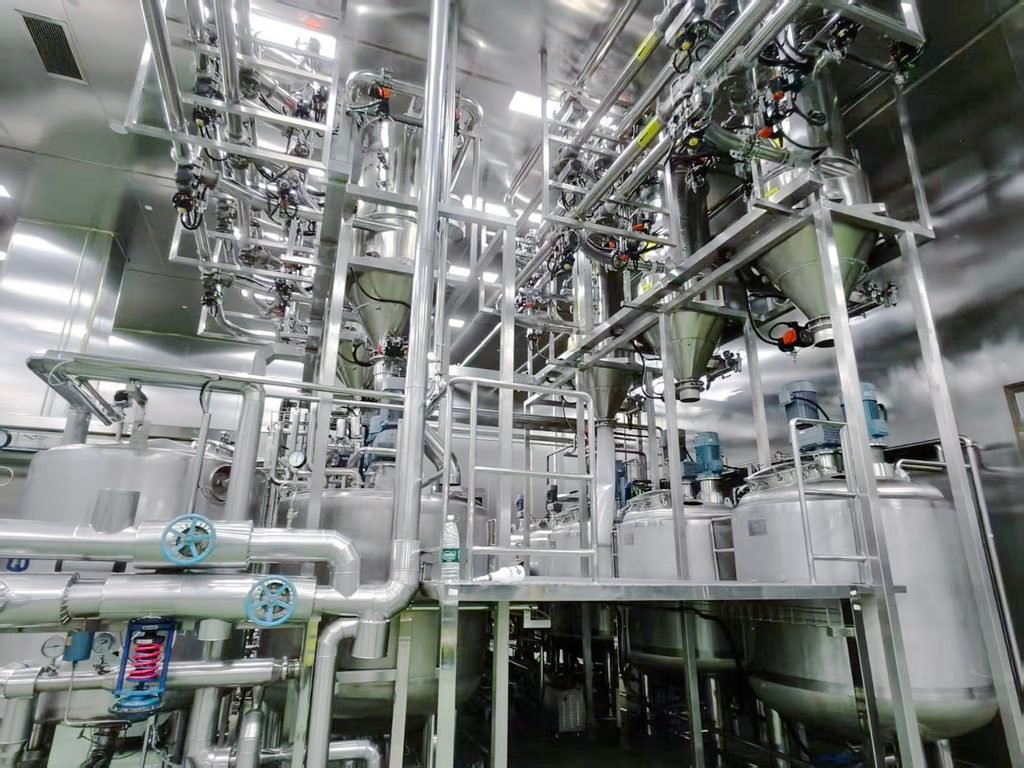
What a Bucket Elevator Actually Does Well
Start with honesty, because it is the fastest way to a correct decision. A bucket elevator is a very efficient machine within its envelope.
It lifts material vertically with low energy per ton, because it is not compressing air to do it. It handles high tonnages in a small footprint. It tolerates coarse, lumpy, hot and moderately wet materials that would be difficult or impossible to convey pneumatically. It has a proven, well-understood maintenance model. For a cement plant moving clinker, a grain elevator moving corn, or a quarry moving crushed stone a short vertical distance, a bucket elevator is often the correct engineering answer and a pneumatic system would be an expensive mistake.
The problems begin when a bucket elevator is specified outside that envelope — when the material is a fine combustible powder, when cross-contamination matters, when the building layout forces multiple discharge points, or when the material is fragile.
Where Bucket Elevators Break Down in Practice
Dust is not a side effect — it is the architecture
A bucket elevator is an open-boot, open-head machine. Material is scooped from a boot, carried in open buckets, and discharged by centrifugal or gravity action into a chute. At every one of those points — the boot, the loading leg, the discharge, the head — there is an air exchange between the inside of the casing and the plant.
On a fine powder, that air exchange carries dust. It escapes at the boot, at casing joints, at inspection doors and at the discharge chute. The building gets a continuous housekeeping load, and the dust settles on overhead steel, cable trays and structural members — which is exactly where a secondary dust explosion becomes possible.
For combustible dusts, this is not a housekeeping preference. NFPA 652 requires a Dust Hazard Analysis, and NFPA 61 for agricultural and food processing sets specific expectations for bucket elevators handling combustible material — including bearing monitoring, belt alignment and ignition-source control. A bucket elevator handling a combustible powder is a recognized ignition-risk location, not because the equipment is badly made, but because the design involves a moving belt or chain in a dusty casing.
Cross-contamination and changeover cost
A bucket elevator cannot be cleaned between products without stopping and opening it. Residual material sits in the boot, in the buckets and on the casing walls. In a multi-product plant — food, pharmaceutical, specialty chemical, battery materials — that residual is a cross-contamination source and a quality deviation waiting to be discovered in a lab test.
The cost shows up as changeover time, cleaning labor and, in regulated products, as a validation problem. A system that takes four hours to clean between products cannot economically run small batches, and a plant that runs small batches will avoid the product mix that a bucket elevator makes expensive.
Material damage
Buckets scoop, lift and throw material. For fragile products — crystals, coated particles, tablets, extruded or pelletized materials, some polymer and food products — the mechanical handling generates breakage and fines. Breakage is not just a yield loss; it changes the particle size distribution, the flow behavior and the downstream process.
Single-path failure
A bucket elevator is a single mechanical path. If the belt breaks, a chain fails, a bucket detaches or the boot plugs, the entire material route stops. There is no redundancy and no partial-capacity mode. For a plant that depends on that route, this is the failure mode that determines the spare-parts strategy and the maintenance staffing level.
Layout rigidity
A bucket elevator goes up. Getting material from that vertical lift to multiple destinations requires additional conveyors, diverter chutes, or a distribution system on top. Each of those is another open transfer point, another dust source and another maintenance item. A layout that needs five discharge points on a bucket elevator is a layout that will need five open transfer points.
What Pneumatic Conveying Changes
A pneumatic conveying system moves material through a sealed pipe using air. That single architectural difference produces a cascade of practical consequences.
The containment boundary is the pipe
The material never leaves the sealed system between the feed point and the receiver. Dust does not escape at the transfer because there is no open transfer. Where the system runs under vacuum, any fugitive dust at a flange or a worn valve is drawn back in rather than pushed out.
For combustible dust applications, this changes the hazard conversation. The dust is still combustible, and the hazard assessment still has to be done — but the containment boundary is continuous and the ignition sources are outside it rather than inside a dusty casing.
Layout freedom, including multiple discharge points
A pneumatic line routes around equipment, through walls, up and over obstructions, and to multiple discharge points using diverter valves. Where a bucket elevator would need additional conveyors and open transfer chutes to reach five destinations, a pneumatic system reaches five destinations from one line.
This is where the footprint advantage becomes real. A pneumatic layout can reduce building height and eliminate the distribution floor that a bucket elevator installation requires on top.
Changeover and cleaning
A well-designed pneumatic system with smooth internal geometry, minimal dead zones and properly designed diverter valves can be cleaned far faster than an open bucket elevator. In multi-product plants, this is often the deciding factor — not throughput, but whether the plant can change products without a half-day cleaning shutdown.
Material integrity
Dense phase conveying moves material as a slow-moving bed rather than suspending it at high velocity. For fragile products, this dramatically reduces breakage and fines generation compared with a bucket elevator’s scoop-and-throw action.
Automation as one loop
A pneumatic system can tie feed rate, conveying cycle, receiver sequencing and batching into one control architecture. A bucket elevator typically operates as an independent mechanical drive with upstream and downstream equipment controlled separately, which produces more manual intervention and more opportunities for a mismatch between supply and demand.
The Honest Limits of Pneumatic Conveying
A comparison that only lists advantages is not a comparison. Pneumatic conveying has real constraints, and pretending otherwise produces bad decisions.
Energy per ton. For a simple vertical lift of coarse, heavy material over a short distance, a bucket elevator is more energy-efficient. Compressing air is not free, and short-lift, high-tonnage, coarse-material duty belongs to mechanical conveying.
Capacity ceiling. At very high tonnages, pneumatic lines require large pipe diameters and large air volumes, and the economics shift toward mechanical conveying.
Material compatibility. Very coarse lumps, very wet or sticky materials, and materials that degrade in contact with air may not be suitable for pneumatic conveying at all.
Distance and pressure. Beyond a certain line length, the usable pressure differential falls and the system requires careful architecture — stepped diameters, multi-point air injection — to hold rate. This is solvable, but it is engineering, not a catalog selection.
The decision rule is not “pneumatic is better.” It is: match the technology to the material, the layout and the compliance obligation.
How to Actually Compare Them
| Decision factor | Bucket elevator | Pneumatic conveying |
|---|---|---|
| Fine combustible powder | High dust generation, ignition-risk location | Enclosed, containment boundary continuous |
| Multi-product changeover | Requires opening and manual cleaning | Cleanable, faster changeover |
| Fragile material | Scoop-and-throw breakage | Low-velocity dense phase minimizes breakage |
| Multiple discharge points | Requires extra conveyors and open transfers | One line, diverter valves |
| Short vertical lift, coarse material, high tonnage | Usually the right answer | Usually not economic |
| Building height and footprint | Needs headroom and a distribution floor | Routes around obstructions, lower building |
| Single-point failure | One mechanical path, full stop | Multiple lines can be independent |
| Dust hazard compliance | Requires DHA, ignition control, monitoring | Requires DHA, but containment is inherent |
The practical approach is to characterize the material first, then evaluate the layout, then compare total cost over a ten-year horizon including cleaning labor, changeover downtime, maintenance and product loss — not just the capital cost of the equipment.
What This Looks Like in the Field
A food ingredient plant. A bucket elevator handling a fine, dusty ingredient was generating continuous housekeeping load and required a full clean-down between products. The changeover was taking the better part of a shift, which made small batches uneconomic. After switching the route to an enclosed pneumatic system with a vacuum receiver at the process, the changeover dropped substantially and the housekeeping labor fell with it. The throughput requirement did not change. The product mix the plant could economically run did.
A mineral processing line. A bucket elevator was the correct choice for a coarse, abrasive material over a short vertical lift. A pneumatic alternative was evaluated and rejected on energy per ton and wear. This is the case that vendors selling pneumatic systems do not like to discuss — and it is the case that proves the comparison has to be done honestly.
A chemical powder line. A plant running multiple products on one route had a recurring cross-contamination issue traced to residual material in a mechanical conveying path. The pneumatic replacement did not increase throughput. It eliminated the residual, which eliminated the quality deviations and the cleaning downtime that came with them.
How WIJAY Approaches the Decision
WIJAY designs and builds pneumatic conveying and bulk material handling systems, so the honest position is this: pneumatic conveying is not always the answer, and a supplier who says otherwise has not done the material characterization.
Our approach starts with the material — bulk density, particle size distribution, cohesion, moisture, abrasiveness, breakage sensitivity and dust explosibility parameters — and then evaluates the layout, the required rate, the number of pickup and discharge points and the changeover requirements. If a bucket elevator is the right answer for the duty, that is the answer.
Where pneumatic conveying is the right answer, WIJAY builds it as one enclosed boundary: integrated line architecture from feed point to receiver, fully enclosed dust-free conveying, low material loss through correctly sized receivers and filtration, dense phase options for fragile or abrasive products, and automation that ties feed rate, conveying cycles and batching into one control loop. Custom layouts handle multi-point loading and discharge, and the same architecture adapts across food, chemical, mineral, polymer and battery material applications without re-engineering the line for every new product.
For plants currently running a bucket elevator that generates dust, requires long changeovers or limits the product mix, the first step is a material and boundary audit rather than an equipment quote [internal link: WIJAY conveying system audit and service]. For new projects, the comparison should be made on the material data and the ten-year cost, not on the drawing that happens to fit the building [internal link: WIJAY pneumatic conveying system design]. Where dust containment and automated material flow are production requirements, the conveying system and the automation should be specified together [internal link: WIJAY bulk material handling automation].
FAQ
Is pneumatic conveying always better than a bucket elevator?
No. For short vertical lifts of coarse, heavy or hot material at high tonnage, a bucket elevator is usually more energy-efficient and more appropriate. Pneumatic conveying wins on fine powders, dust containment, multi-point distribution, changeover and fragile materials.
Why do bucket elevators generate so much dust?
Because they are open machines. Material is scooped at the boot, carried in open buckets and discharged into a chute, and air exchanges between the casing and the plant at each of those points. On a fine powder, that air exchange carries dust into the building.
Are bucket elevators a dust explosion risk?
They are a recognized ignition-risk location when handling combustible dusts, because the design involves a moving belt or chain inside a dusty casing. Standards such as NFPA 652 and NFPA 61 set expectations for hazard analysis, bearing monitoring, belt alignment and ignition-source control.
How does pneumatic conveying handle multiple discharge points?
Through diverter valves on a single line, rather than additional mechanical conveyors and open transfer chutes. This is one of the main reasons pneumatic layouts reduce building height and open transfer points.
Can pneumatic conveying handle fragile products without breakage?
Yes, particularly in dense phase, where material moves as a slow bed rather than being suspended and thrown. Dense phase dramatically reduces breakage and fines generation compared with scoop-and-throw mechanical handling.
What is the main cost disadvantage of pneumatic conveying?
Energy per ton on short-lift, high-tonnage, coarse-material duty. Compressing air costs more than lifting buckets, and at very high tonnages the pipe diameters and air volumes required make mechanical conveying more economic.
CTA
If you are comparing pneumatic conveyors vs bucket elevators for a specific duty and the decision is still sitting on capital cost, send WIJAY the material data, the layout, the required rate and the number of pickup and discharge points. We will give you an honest comparison — including the case where a bucket elevator is the right answer — and, where pneumatic conveying is correct, a design that contains the powder from feed point to receiver with the dust control, low loss and automation your production actually requires.