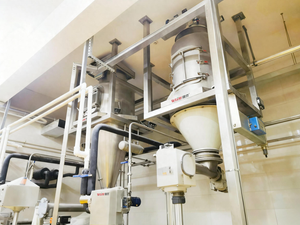
Every plant that’s specified a pneumatic conveying line has faced the same decision at the component level: take the standard, catalog part that’s cheaper and ships faster, or spend more time and money on something engineered specifically for the material actually running through the line. On paper, the standard part usually wins — lower unit cost, shorter lead time, easier to source a replacement. In production, that decision often looks very different eighteen months later, when the same valve, elbow, or fitting has already been replaced twice, and the maintenance team has stopped being surprised by it.
That gap between what a component costs to buy and what it costs to own is where a lot of pneumatic conveying systems quietly bleed money — not through one catastrophic failure, but through a steady accumulation of clogging, premature wear, and unplanned downtime that never quite gets traced back to the actual root cause: a part that was never designed for the material it’s handling.
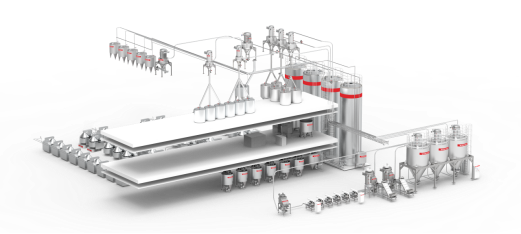
Why Off-the-Shelf Components Struggle With Real Production Material
Every Material Behaves Differently, and Generic Parts Assume It Doesn’t
Fine powders and larger granular materials require fundamentally different handling approaches to avoid clogging or degradation in transit, and that difference shows up at every component in the system — not just the obvious ones. A standard, catalog component is built for a general case, and general-case engineering is exactly what struggles when the actual material’s particle size, abrasiveness, moisture sensitivity, or flow behavior falls outside whatever assumption the part was designed around.
Mismatched Components Accelerate Wear Across the Whole System
When a component isn’t suited to the specific demands of an application, the resulting inefficiency doesn’t stay contained to that one part. Excess wear at a mismatched fitting or valve changes flow dynamics downstream, which accelerates wear at the next component in line — a chain reaction that shortens the service life of the system as a whole, not just the original weak point.
The Maintenance Cost Curve Bends the Wrong Way
Standard components carry a lower upfront price, but without engineering matched to the actual application, they tend to wear faster and need more frequent repair or replacement. That maintenance burden compounds over time: more frequent interventions, more unplanned downtime, and a maintenance team spending increasing hours chasing the same recurring failure rather than doing planned work — until the operating cost curve erases whatever was saved on the initial purchase.
The Real Cost Is Rarely Just Financial
Beyond the direct expense, this cycle wears down maintenance teams who keep solving the same problem without ever addressing its root cause, and it erodes confidence in the line’s reliability at exactly the moments — high-volume runs, tight delivery windows — when that reliability matters most.
What a Properly Matched Component Strategy Actually Requires
Starting From the Material, Not the Catalog
The advantage of working with a conveying system provider that engineers around the customer’s actual material — rather than selling from a fixed parts list — is straightforward: understanding a specific bulk solid’s particle size, moisture sensitivity, abrasiveness, and flow characteristics, and how those properties interact with the customer’s specific application, is what allows a component to actually be matched to the job rather than assumed to fit it.
A Real Case: Replacing a Manual Changeover Point With a Purpose-Built Component
A well-known food ingredient manufacturer in the American Midwest — a company known for strict food production quality standards — ran into a recurring problem in its starch production process. The line depended on manually swapping hoses to redirect material between lines, a process that was slow, inefficient, and created real safety exposure: frequent manual switching led to worker fatigue and elevated accident risk. On top of that, the manual hose-changeover process carried a standing cross-contamination risk, directly threatening the quality standards the company had built its reputation on.
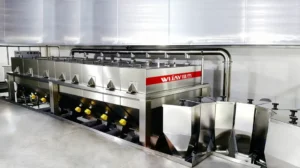
Recognizing that a standard, off-the-shelf component wasn’t going to solve a problem this specific, the company worked with its equipment partner to introduce a custom-engineered multi-port diverter valve, designed to automatically switch material flow between lines or products without requiring a full stop — and without the manual hose changes that had been the source of both the safety and contamination risk. The result simplified operation, meaningfully reduced downtime, and improved worker safety by removing the hazardous manual intervention entirely. It also protected the company’s sanitation standards by eliminating the cross-contamination exposure at its source — a combination that improved both productivity and operational efficiency in a single change.
The lesson from this case generalizes well beyond starch or food ingredients: the problem wasn’t that manual changeover was inherently unworkable; it was that no standard catalog component was built to solve this plant’s specific combination of throughput, safety, and sanitation requirements. A custom-engineered solution was.
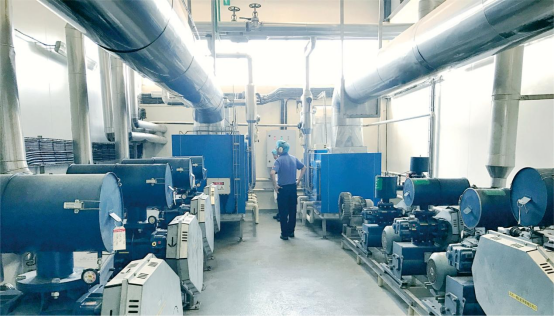
Choosing an Engineering Partner for Custom Components
What to Look For
When a plant decides that custom components are the right path, the choice of who engineers and manufactures them matters as much as the decision itself. The relevant factors are straightforward but easy to overlook under project time pressure: direct experience designing and producing custom pneumatic conveying components — not just assembling standard ones, a track record that can be verified through documented case studies and customer references rather than marketing claims alone, and demonstrated ongoing investment in engineering advancement, since a supplier that isn’t keeping pace with current material-handling techniques will eventually hand a plant yesterday’s solution to today’s problem.
Why the Relationship Should Outlast the Initial Project
A one-time custom component purchase solves today’s problem. An ongoing engineering relationship with a component partner solves the next one before it becomes a production issue — because a plant’s material mix, throughput requirements, and regulatory standards keep changing, and a partner already familiar with the line’s specific history and constraints can adapt the system faster than starting from scratch with a new vendor each time.
Where Standard Components Still Make Sense
None of this means every component in a pneumatic conveying system needs to be custom-engineered. Standard parts remain the right call in plenty of applications — particularly where material behavior is well within normal parameters and project cost constraints are tight. The real skill isn’t defaulting to custom or defaulting to standard; it’s knowing, component by component, which approach actually matches the material and the application, and having the engineering judgment to make that call correctly the first time rather than discovering the mismatch through repeated failures.
WIJAY Systems approaches pneumatic conveying system design with exactly that judgment: specifying standard components where the application genuinely calls for them, and engineering custom solutions — valves, fittings, transfer points — where the material’s specific behavior demands it, rather than defaulting to whichever option is faster to quote. That’s the difference between a system priced to win a bid and a system engineered to run reliably for the life of the plant.
FAQ
Are custom components always more reliable than standard, off-the-shelf parts? Not automatically — custom components are worthwhile specifically when a material’s particle size, abrasiveness, moisture sensitivity, or flow behavior falls outside what a standard part was designed for. WIJAY evaluates each component against the actual material profile rather than defaulting to custom engineering across the board, since standard parts remain the right choice in plenty of applications.
How can I tell if my conveying system’s maintenance issues are actually a component-matching problem? Recurring wear or failure at the same point in the system, especially after replacement, is a strong signal that the component wasn’t matched to the application in the first place. WIJAY diagnoses this kind of pattern by tracing failures back to material properties rather than treating each repair as an isolated event.
Does switching to custom components always cost more upfront? Usually yes, but the relevant comparison is total cost of ownership, not initial purchase price — standard components that wear out faster and require more frequent maintenance often cost more over an 18- to 24-month window. WIJAY factors this lifecycle cost into component recommendations rather than optimizing only for quoted price.
What should I look for when choosing a partner for custom pneumatic conveying components? Direct experience engineering custom components (not just assembling standard ones), a verifiable track record through case studies and references, and demonstrated ongoing investment in engineering advancement. WIJAY’s approach is built around this same standard, with component design matched to each customer’s specific material and application.
Can a custom component solve a safety or contamination problem, not just an efficiency problem? Yes. In one documented case, replacing a manual hose-changeover process with a custom-engineered automated diverter valve eliminated both a worker safety hazard and a standing cross-contamination risk in a single change. WIJAY designs conveying system components with this kind of combined efficiency, safety, and sanitation outcome in mind, not isolated efficiency.