How to prevent pneumatic conveying line blockages is one of the most common questions process engineers search for, and for good reason — even a well-engineered pneumatic conveying system can develop plugging problems over time, and when material stops moving, production stops with it. Pneumatic conveying is prized for its efficiency, cleanliness, and reliability, but blockages remain one of the most frequent issues reported across food, chemical, plastics, and bulk material handling operations.
This guide breaks down why blockages actually happen, what to do when a line plugs, and — more importantly — the design and operating practices that prevent blockages from becoming a recurring problem in the first place.
What Actually Causes Blockages in Pneumatic Conveying Lines
1. A system that was never correctly designed for the material. Pneumatic conveying systems are genuinely flexible, but performance is almost entirely material-dependent. A system rated for 10 tons per hour of sand might only manage 3 tons per hour of precipitated calcium carbonate, and the same system may fail to convey a sticky titanium dioxide at all. That’s why conveying test trials on the actual material — not a similar material, the actual one — matter so much: they establish the real pressure, rate, and air consumption constants the system needs to be designed around. Skip that step, and the system is built on assumptions rather than data, which tends to show up as unreliable performance later.
Design failures of this kind are usually a matter of underestimating complexity, not carelessness. A dense-phase system looks simple on paper — a pressure vessel, valves, conveying pipe, bends, couplings, a dust filter. In practice, every one of those components requires deliberate sizing: transporter volume, pipe diameter, filter capacity, bend geometry. Get any of these wrong, and the system either underperforms or fails outright.
2. A system that’s no longer operating the way it was designed to. This is more common than most plants expect, and it usually falls into one of four patterns:
- The material has changed — either a completely different product than the system was designed for, or the same product in a different form (particle size, bulk density, shape, or moisture content).
- The conveying distance or number of destinations has been extended beyond the original design.
- The system is running at a higher throughput rate than it was specified for.
- Components have been swapped for parts that weren’t part of the original design — a diverter valve added, a bend replaced with an unsuitable geometry, an isolation valve installed mid-line.
Any one of these changes can shift a previously reliable system into intermittent or chronic blockage territory, often without anyone connecting the dots back to the modification that caused it.
3. Compressed air supply problems. This category splits into two common failure modes. Wet compressed air is by far the more frequent culprit — a compressed air system that performed well at installation gradually loses air quality over time, either from deferred maintenance or from rising plant-wide compressed air demand outpacing the dryer’s capacity. Water and powder are a poor combination in a conveying line, and moisture contamination is one of the most under-diagnosed causes of chronic plugging. Low compressed air pressure is the second failure mode, and its effects go beyond conveying performance alone — it also affects air humidity, the reliability of air-actuated valves, self-cleaning dust filter performance, and can contribute to freezing in sub-freezing ambient conditions.
How to Fix a Blockage Safely When It Happens
If a system is plugging repeatedly, there are two immediate options that buy time, and one long-term option that actually solves the problem.
Immediate fix: increase the air-to-material ratio. Using more compressed air relative to material reduces plugging risk in the short term. The trade-off is real: higher air volume increases wear on abrasive materials, increases degradation on fragile ones, and raises compressed air (and energy) consumption. This is a stopgap, not a fix.
Immediate fix: apply air injection at the plug location. Systems designed with staged air injection points (often called boosters) along the pipeline can sometimes resolve a recurring plug by adding air precisely where the blockage is forming, or by adding an additional injection point between existing ones, right at the location where material tends to compact.
Long-term fix: a system audit. This is the option that actually prevents recurrence rather than just managing it. A proper audit — ideally performed by an experienced conveying system designer — can range in outcome from replacing one or two components to redesigning the system outright. One of the most common and counterintuitive findings in these audits: the conveying pipe is simply too small.
That finding surprises a lot of engineers, because it seems backwards — how does a system running too fast cause plugging rather than preventing it? The mechanism is straightforward once you see it: some materials compact under pressure, and when material moving at high velocity hits a bend, the rapid deceleration through the bend compresses the material into a compact, stubborn plug. This type of blockage typically forms just upstream of the bend, and it’s a strong sign that pipe sizing — not just air volume — needs re-evaluation.
A Case Worth Sharing: When Adding More Air Made the Problem Worse
We worked with a plant conveying a moderately cohesive powder that plugged consistently at the same bend, roughly once or twice a shift. The standard first response had already been tried: increase air volume. It didn’t just fail to help — it made the plugging slightly more frequent, which understandably confused the operations team, since more air is the textbook immediate fix for plugging.
Field measurement showed the actual conveying velocity approaching that bend was already too high for the material’s compaction behavior. The material was decelerating sharply through the bend, compacting under that deceleration, and forming a plug — and adding more air had only increased approach velocity into the bend, making the compaction worse rather than better. The long-term fix wasn’t more air; it was upsizing the conveying pipe diameter through that section to reduce velocity into the bend, combined with a longer-radius bend to soften the deceleration. The blockage stopped recurring. The lesson here is one worth remembering broadly: “more air” is the intuitive response to plugging, but it’s the correct fix for only some root causes — for velocity-driven compaction plugs, more air can make things worse, not better.
Preventing Blockages Before They Start: Best Practices
Test the actual material before finalizing a design. A supplier with genuine full-scale testing capability can capture the real conveying constants — pressure, rate, air consumption — for your specific material, rather than relying on assumptions from a similar-sounding product.
Choose a supplier with real pneumatic conveying experience, not general bulk handling experience. The range of materials that can be conveyed pneumatically is wide enough that generalized bulk handling experience doesn’t reliably transfer. A supplier with a genuinely deep track record across multiple system designs is in a materially different position than one applying a single design template to every application.
If plugging risk is a known concern, design in staged air injection from the start. For difficult-to-convey materials, a system engineered with air injection points spaced along the pipeline — rather than added reactively after the fact — reduces the maximum distance any single plug has to be pushed to clear, which is the practical mechanism behind why this approach works.
Air Management: The Overlooked Variable Behind Many Blockages
Inefficient air management is one of the more commonly overlooked contributors to blockage risk. Excess air doesn’t just waste energy — it destabilizes flow conditions in ways that can actually promote plugging rather than prevent it, which is part of why “just add more air” isn’t a universal fix. A well-engineered air injection strategy automatically regulates conveying air to the minimum level actually required at the specific point where it’s needed, stabilizes pressure along the length of the pipe, and helps prevent material slugs from merging into larger, harder-to-move masses as they travel through the line. Done correctly, this reduces blockage risk and compressed air consumption at the same time — they aren’t competing goals.
Keeping the System Reliable Long-Term
Fixing a pneumatic conveying blockage starts with correctly identifying the root cause — design, operating drift, or air supply — but long-term reliability comes from designing the system correctly around your actual material from the start, not from a series of reactive fixes applied after each new plugging episode.
FAQ
Can too little air cause plugging in a pneumatic conveying line? Yes. Taken to the extreme, zero air obviously can’t convey material at all, so there’s a minimum air volume above zero that’s genuinely required for any given material — and running below that threshold, even slightly, is a real and common cause of plugging.
What are the most effective long-term solutions for recurring pipeline clogging? Prevention-focused solutions: a properly designed system based on actual material testing, sufficient and properly conditioned compressed air supply, and operating the system within the parameters it was originally designed for rather than letting throughput, distance, or material specification drift over time.
How can blockages in conveying lines be prevented from the start? Through proper system design grounded in testing the actual material to be conveyed — not a similar material, and not assumptions carried over from a different application.
Can staged air injection points help reduce blockages? Yes, when they’re engineered into the system design rather than added reactively. Spacing injection points along the pipeline reduces the distance any single developing plug needs to be cleared, which meaningfully lowers the odds of a full blockage forming.
What are the early warning signs of a developing pneumatic conveying blockage? Rising system pressure, declining material throughput, an unstable or fluctuating conveying rate, and increasingly frequent system alarms. Catching these signals early — rather than waiting for a full stoppage — is usually the difference between a quick adjustment and an unplanned production stop.
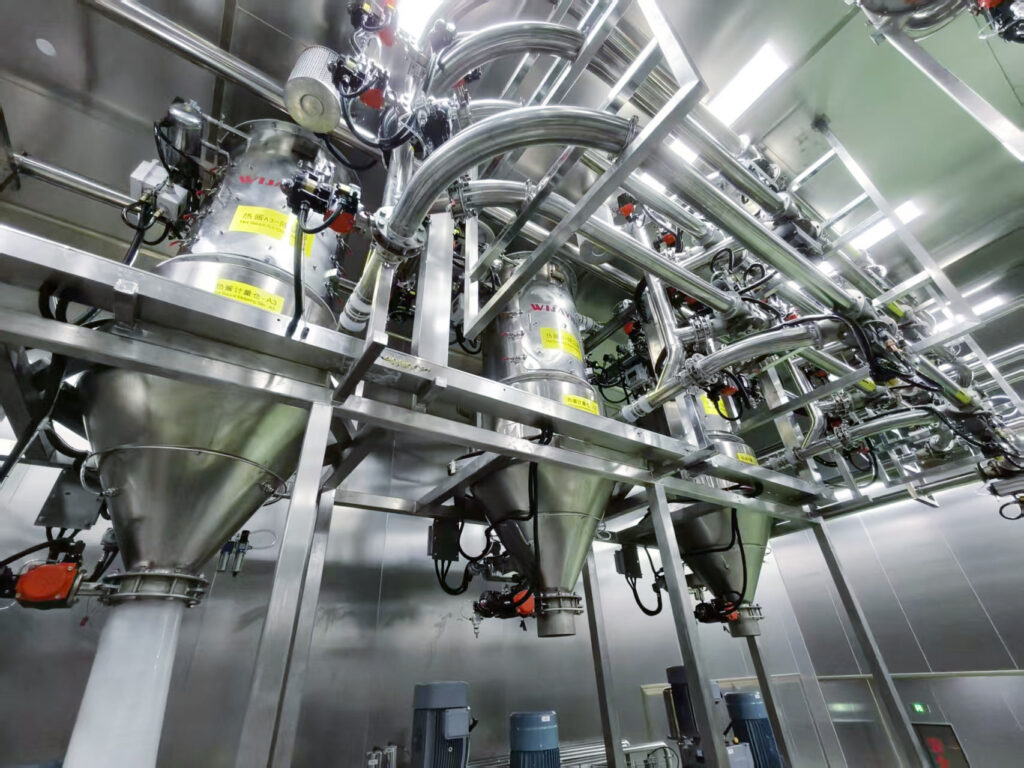
If your conveying line is plugging more often than it should, the fix usually isn’t just “more air” — it’s understanding which of the root causes above is actually driving it. WIJAY Systems designs and troubleshoots pneumatic conveying lines across food, chemical, plastics, and other bulk material industries, with system design grounded in real material testing rather than generic assumptions. If a recurring blockage is costing you downtime, our process engineering team is glad to take a look.