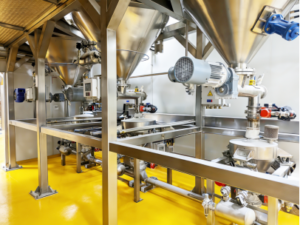
Walk into a bakery, snack, or seasoning production floor still running manual powder handling, and you can usually tell within a minute — there’s a faint haze in the air near the dumping station, a fine layer of residue on nearby equipment, and an operator who’s clearly done this exact bag-cutting motion a thousand times before. None of it looks dramatic. That’s exactly the problem: the cost accumulates so gradually that most plants never connect the dots between the daily dust cloud and the quarterly numbers on material loss, quality holds, and cleaning labor.
Flour, starch, powdered sugar, milk powder, protein powder, and most food-grade powder additives share a set of physical traits that make this worse than it looks — they’re light, they scatter into the air easily, they absorb ambient moisture fast, and they cake or oxidize once they do. Manual unpacking, open pouring, and single-unit feeding expose that vulnerability at every transfer point, and the result is airborne dust, moisture-driven quality inconsistency, material loss that’s larger than it appears, and a labor-heavy process that’s getting harder to staff.
This guide breaks down what a genuinely dust-free powder handling system needs to include to solve these problems in a food production environment — not just enclosing the equipment, but designing for the full set of sanitary, moisture-control, and changeover requirements that food-grade powders actually demand.
Background: Why Open Powder Handling Keeps Costing More Than It Looks Like
The Four Recurring Problems in Legacy Food Powder Handling
Most food plants still running manual or single-unit powder feeding run into the same four compounding issues, regardless of product category.
- Airborne dust drives environmental and safety pressure. Manual bag-cutting and pouring releases light powder into the air at every transfer, creating poor working conditions, a respiratory exposure concern for operators over time, and a genuine dust accumulation hazard — on top of failing to meet the cleanliness standards a food production floor is expected to hold.
- Moisture absorption and contamination undermine finished-product consistency. Powder exposed to open air readily absorbs ambient moisture, caking and changing its flow characteristics, while open handling also invites dust, hair, and foreign material contamination. Batch-to-batch variation in moisture content and cleanliness translates directly into inconsistent taste, color, and quality in the finished product.
- Material loss is higher than it looks, and it compounds. Higher-value powders like powdered sugar, milk powder, and functional food additives scatter and spill during manual transfer, and caked or contaminated material that can’t be used gets scrapped entirely — both losses adding up to a real and often underestimated cost over a full production year.
- Heavy manual dependency drives labor cost and inconsistency. Bag unpacking, feeding, and material handling are repetitive, physically demanding roles that are difficult to keep staffed, and manual operation introduces operator variability that makes standardized, scaled-up production harder to hold consistent.
The fix isn’t simply enclosing the existing equipment — food-grade powder automation needs to be designed around the material’s specific sensitivities and the plant’s sanitary compliance requirements, which is exactly where a generic industrial conveying package tends to fall short.
Core Technical Explanation: What a Dust-Free Food Powder System Actually Requires
1. Enclosed, Dust-Free Feeding Station Design
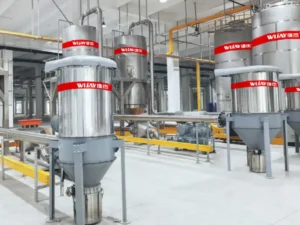
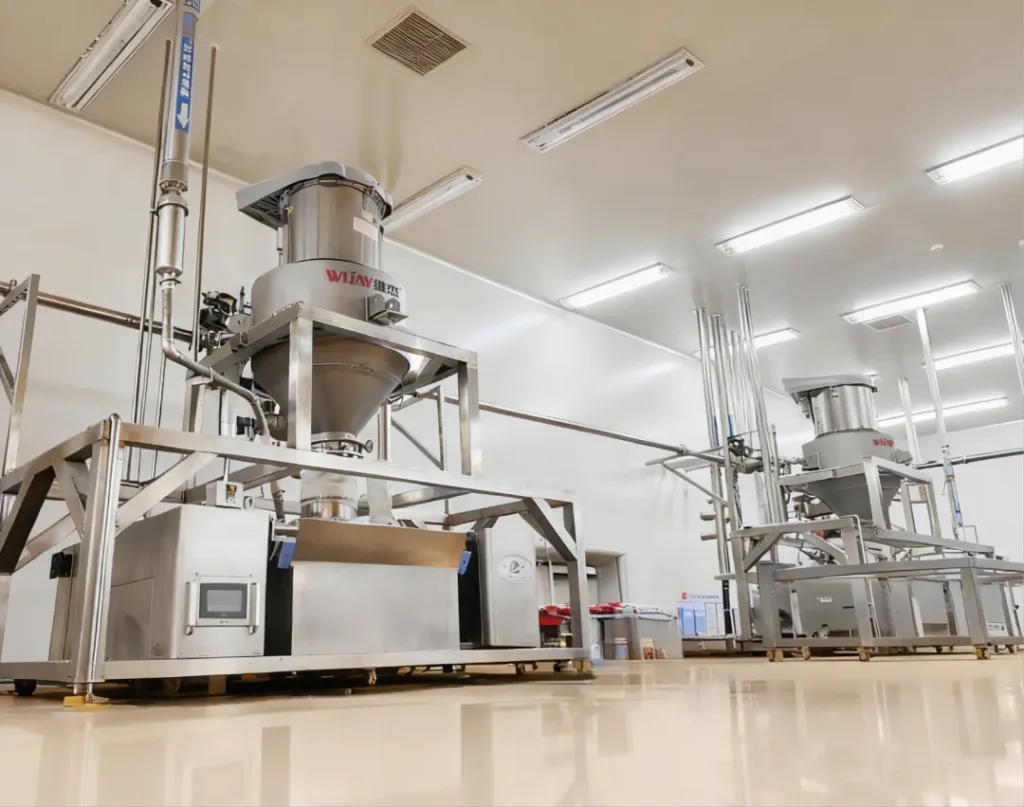
The feeding point is where most airborne dust originates, so it’s the first place a dust-free design needs to focus. An enclosed food-grade feeding station, paired with pulse-jet back-flush dust collection and a high-frequency vibratory screening unit, lets an operator complete bag-opening and feeding inside a sealed station while dust is captured and cleaned in real time rather than escaping into the room. The screening stage simultaneously removes caked clumps, fibrous debris, and foreign material at the point of entry — solving airborne dust and raw material cleanliness in the same step, rather than treating them as separate problems.
2. Food-Grade Material and Sanitary Surface Finish
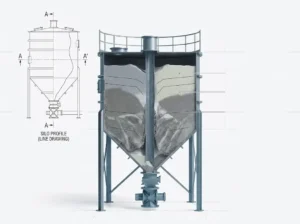
Every material-contact component — piping, storage vessels, fittings, and discharge parts — needs to be food-grade stainless steel with a mirror-polished interior finish, free of dead zones and burrs, and designed to resist wall adhesion so it cleans easily. This isn’t a cosmetic spec: rough or dead-zone-prone surfaces are exactly where residue accumulates, and residue sitting in a food production environment is a direct pathway to microbial growth and secondary contamination.
3. Negative-Pressure, Enclosed Pneumatic Conveying
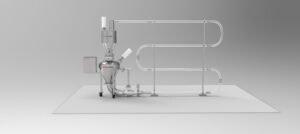
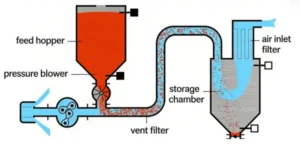
Dilute-phase, negative-pressure pneumatic conveying keeps powder suspended and moving entirely inside sealed piping, with no contact with ambient air, moisture, or airborne contaminants along the route. This is the mechanism that actually prevents the moisture absorption, caking, and oxidation that occur the moment a hygroscopic powder is exposed — and it’s what keeps the physical and chemical properties of the material consistent from batch to batch, rather than depending on how quickly an operator moves the material by hand.
4. Flexible Changeover and Anti-Residue Design for Multi-SKU Production
Food plants running multiple SKUs with frequent changeovers need piping and equipment engineered specifically to avoid cross-batch contamination — smooth bend geometry with minimized dead zones, paired with an automated air-purge module that clears wall residue at every changeover. Without this, a plant is relying entirely on manual cleaning diligence to prevent one product’s residue from contaminating the next, which is an inconsistent control point at best.
5. Intelligent Flow Control and Precision Batching
A system with intelligent flow regulation and precision metering automatically matches conveying velocity and pressure to each specific powder’s properties, keeping feed rate stable and even rather than fluctuating with material behavior. Paired with an automated weigh-batching module, this reduces the manual dosing error that drives recipe inconsistency, standardizing the formula accuracy behind finished-product taste and quality.
6. Visual, Digital Control for Traceability
A PLC-based central control platform that logs feed quantity, conveying flow rate, run duration, and equipment status in real time turns the system into a genuine traceability asset — supporting the production records, quality audits, and regulatory documentation that food manufacturers increasingly need to produce on demand, rather than reconstructing after the fact from paper logs.
Quick Reference: Legacy Open Handling vs. Enclosed Dust-Free System
| Factor | Manual/Open Handling | Enclosed Dust-Free System |
|---|---|---|
| Airborne dust at transfer points | Present at every bag-opening/pouring step | Captured at the point of origin via pulse-jet dust collection |
| Moisture exposure | Continuous exposure to ambient humidity | Fully enclosed, no contact with ambient air along the conveying route |
| Cross-contamination risk on changeover | Dependent on manual cleaning thoroughness | Structurally reduced via smooth-bend piping and automated purge |
| Material loss | Scattering, spillage, and scrap from caked/contaminated material | Contained within sealed piping and vessels |
| Batch consistency | Varies with operator technique and moisture exposure | Governed by controlled conveying parameters and automated metering |
| Traceability | Paper-based, reconstructed after the fact | Automated, real-time data logging |
For plants evaluating whether an existing line needs this kind of redesign versus targeted upgrades to specific stations, a site survey combined with testing against the plant’s actual material set is generally the fastest way to confirm scope before committing to a full system design.
Practical Field Troubleshooting & Decision-Making Guidance
Is This an Operational Fix, or a Sign the System Needs a Design Upgrade?
| Symptom on the Floor | Operating Fix | Sign You Need an Enclosed System Redesign |
|---|---|---|
| Occasional dust visible at one feeding point | Add local containment/PPE, tighten housekeeping | Dust is a recurring issue across multiple stations regardless of housekeeping effort |
| Minor caking in one batch during humid weather | Improve short-term storage/sealing practices | Caking recurs consistently across batches, pointing to ongoing ambient moisture exposure during handling |
| One changeover shows slight cross-contamination | Extend the manual cleaning step | Cross-contamination recurs structurally because the piping has dead zones with no purge capability |
| Material loss “feels high” but isn’t tracked | Start measuring it over a defined period | Measured loss is consistently landing in a range that materially affects raw material cost |
| Manual weighing occasionally drifts | Recalibrate and retrain | Weighing inconsistency is chronic across shifts and operators, pointing to a structural need for automated metering |
| Difficulty producing traceability records during an audit | Tighten manual logging procedures | Audits repeatedly flag gaps that manual logging can’t reliably close |
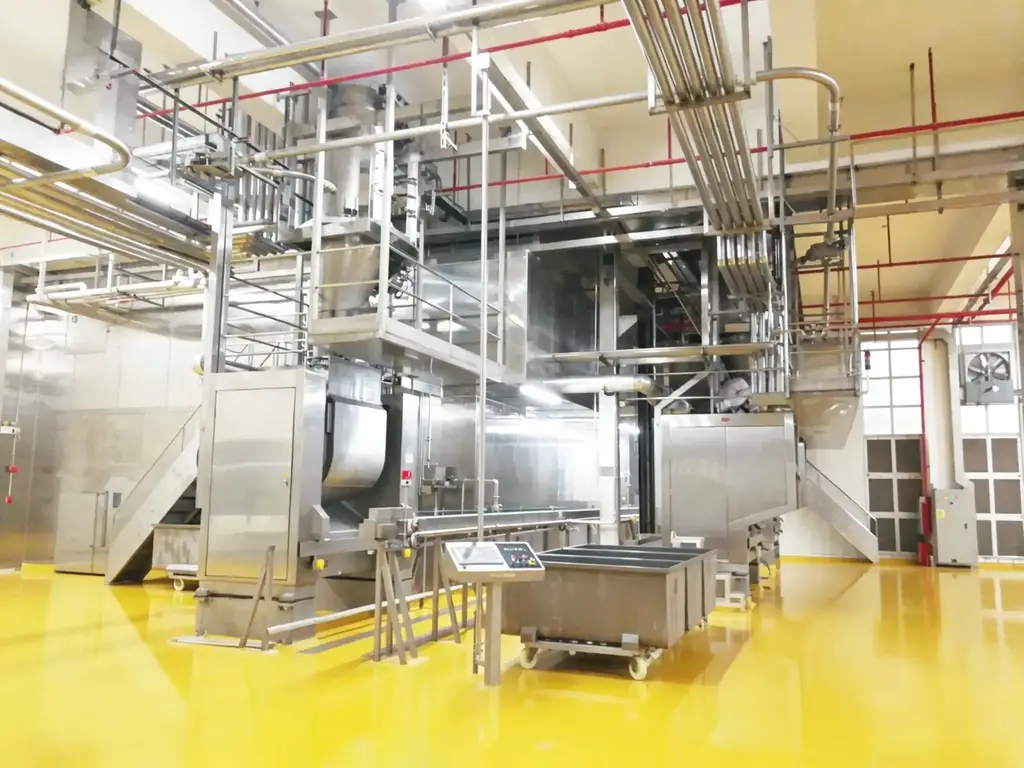
Rule of thumb: if the fix is a training, housekeeping, or calibration adjustment that holds up over time, the issue is operational. If the same problem keeps recurring regardless of how carefully staff follows procedure, it’s a structural design gap — and that’s the signal to move from patching the existing setup to specifying an enclosed system built around the material’s actual behavior.
Key Design & Operation Best Practices
- Solve dust at the feeding point first — this is where the majority of airborne dust originates, and enclosing it has the largest single impact on both housekeeping burden and worker exposure.
- Specify sanitary surface finish as a functional requirement, not a preference — mirror-polished, dead-zone-free surfaces are what actually prevent residue buildup, not just a cleaner-looking spec sheet.
- Match conveying method to the material’s moisture sensitivity — hygroscopic powders need fully enclosed transport with no exposure to ambient air anywhere along the route, not just at the feeding and discharge points.
- Design purge and changeover capability from the start on multi-SKU lines — retrofitting anti-contamination features after a quality incident is a more disruptive and expensive fix than specifying it upfront.
- Automate metering wherever recipe consistency matters — manual weighing error compounds across every batch and is one of the more common, avoidable sources of finished-product variability.
- Treat the control system as a compliance tool, not just an automation convenience — automated data logging is what actually supports an audit, rather than a paper trail assembled after the fact.
Common Mistakes & Pitfalls to Avoid
- Assuming enclosing the conveying line alone solves the dust problem. If the feeding station itself is still open, dust exposure at the point of transfer remains largely unaddressed.
- Treating sanitary surface finish as a cosmetic upgrade rather than a functional requirement. Rough or dead-zone-prone surfaces are a direct cause of residue accumulation and contamination risk, not just an aesthetic shortfall.
- Underestimating how much moisture-driven quality variation costs over a full production year. Because it shows up as diffuse batch-to-batch inconsistency rather than a single obvious failure, this cost is easy to underestimate until it’s actually measured.
- Applying one changeover cleaning procedure across very different SKUs without engineering for it. Manual cleaning diligence alone is an inconsistent control point on high-frequency, multi-SKU lines.
- Skipping automated metering because manual weighing “seems accurate enough.” Manual dosing error compounds silently across batches and is one of the more common, correctable sources of recipe drift.
- Deferring traceability and data logging capability to a future phase. Retrofitting centralized data capture into a system that wasn’t designed for it is more disruptive than building it in from the start.
FAQ
What makes food-grade powder handling different from general industrial powder conveying?
Food-grade applications add sanitary material requirements, moisture and contamination sensitivity, frequent multi-SKU changeovers, and traceability obligations that general industrial conveying systems typically aren’t engineered around from the start.
How much material loss does open, manual powder handling actually cause?
This varies by facility and material, but scattering, spillage, and scrap from caked or contaminated powder during manual handling is a commonly cited source of hidden cost in food plants — tracking it over a defined period is the most reliable way to know your plant’s actual number rather than relying on impression.
Can an existing manual feeding line be converted to a dust-free enclosed system without a full plant shutdown?
In many cases, yes — this depends on facility layout, available shutdown windows, and how much of the existing storage and structural infrastructure can be reused, and is generally worth a dedicated site assessment rather than a generic answer.
Why do some food powders cake even when stored properly?
Caking is typically driven by ambient moisture absorption during handling and transfer rather than storage alone — hygroscopic powders like powdered sugar and milk powder can absorb moisture at any point they’re exposed to open air, which is why enclosed conveying matters as much as enclosed storage.
Does a dust-free powder handling system require a full production line shutdown to design and validate?
Design and simulation work can typically be done without disrupting current production; only the final installation and commissioning phase requires scheduled downtime, and that window is generally minimized through staged implementation planning.
Ready to Evaluate a Dust-Free Powder Handling System for Your Line?
Every food powder — and every plant’s layout, SKU mix, and compliance requirements — is different, which is why a generic enclosed conveying package doesn’t automatically solve the dust, moisture, and contamination issues specific to your operation. Share your material list, throughput targets, facility layout, and site distance so an engineering team can assess your specific dust control, sanitary design, and changeover requirements before a system is specified.