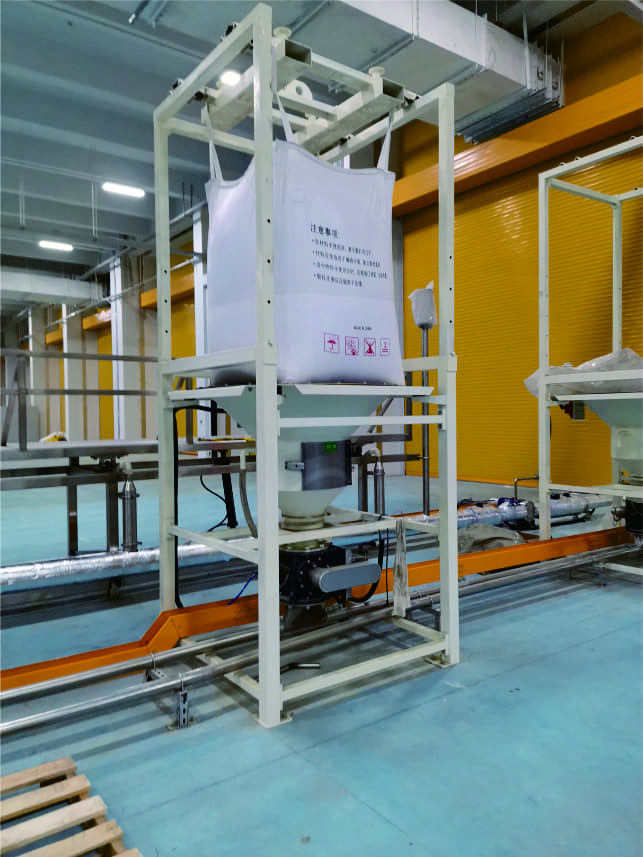
A dust-free bulk bag unloader system is one of those specifications that sounds simple to verify and turns out to be anything but. Bulk bags — also called FIBCs, big bags, or super sacks, typically holding anywhere from 1,000 kg of dense material up to roughly 2.5 cubic meters of lighter powder — are a standard part of the material handling workflow across countless industries. But the unloading step, where a sealed bag gets opened, tipped, massaged, and emptied, is exactly where dust containment claims get tested against reality, and where a surprising number of systems marketed as sealed still aren’t.
This article breaks down what a genuinely dust-free bulk bag unloader system actually requires beyond a filter bolted onto the frame, why the unloading sequence has more release points than most spec sheets account for, and a real case where a “dust-free” rating on paper still left a measurable gap.
Why Bulk Bag Unloading Is Where Dust Problems Actually Start
Without a properly engineered unloading system, the point where a bag opens and empties becomes a recurring source of operational problems: airborne particulate exposure for operators, potential combustible dust hazards, product contamination from environmental exposure, measurable material yield loss — especially with fine powders — and, in food, chemical, or pharmaceutical environments, genuine regulatory risk on top of the more mundane but persistent burden of cleanup and housekeeping.
None of this tends to show up as a single dramatic failure. It shows up as a housekeeping task that never quite goes away, a yield number that’s persistently a little lower than expected, and an air quality reading that occasionally raises a question nobody can fully answer — which is exactly the pattern that should prompt someone to ask whether the current unloading equipment is actually doing what its rating claims.
What a Genuinely Dust-Free Unloader Actually Requires
Dust capture at the point of release, not downstream of it. A lot of equipment marketed as dust-controlled vents fugitive dust into the surrounding workspace and relies on a separately specified external dust collector to clean it up after the fact. That’s containment after the release, not prevention at the source. A genuinely dust-free design captures particulate right where the bag opens and empties — before it has a chance to become an airborne problem in the first place.
Material recovery, not just containment. Capturing dust is only half the value; what happens to that captured material matters just as much. Equipment engineered to recycle recovered dust back into the process, rather than treating it as waste, protects both product yield and the underlying economics of the operation. A system that captures dust but routes it to a waste stream has solved the safety half of the problem while leaving the yield half unaddressed.
Flow assistance for materials that resist discharge. Starches, silica, plastic resins, and hygroscopic powders are common examples of materials that don’t reliably free-flow out of a bag on their own. Equipment without genuine flow-assist mechanics forces operators to manually massage or manipulate bags to keep material moving — reintroducing exactly the manual intervention and inconsistent discharge rate a properly engineered system is supposed to eliminate.
Operator safety built into the bag-handling sequence, not added as a caution label. Untying, opening, and massaging a bulk bag are the points where operators are most likely to have direct contact with the material and the dust it generates. A well-engineered system builds in sealed access — internal gloves for no-contact untying, a sight glass for visibility without exposure — so operators never need to lean into or physically disturb the bag to get it to discharge properly.
Partial discharge capability where the process requires it. Dosing, batching, or staged unloading needs equipment that can deliver a precise partial discharge without spillage or cross-contamination between batches — a requirement that’s easy to overlook if you’re evaluating equipment only against a single full-discharge use case.
Durability matched to continuous, high-volume operation. Equipment specified for occasional or light-duty use shows its limitations quickly under sustained industrial throughput — frame fatigue, filter degradation, and mechanical wear all accelerate when the actual duty cycle exceeds what the equipment was engineered for.
A Case Worth Sharing: When “Dust-Free” on the Rating Still Had a Gap
We worked with a facility that had installed a bulk bag unloading system rated and marketed as dust-free, and by every visual measure it looked the part — sealed housing, an integrated filter, no obvious dust cloud during normal operation. Despite that, periodic air quality monitoring kept flagging particulate levels slightly above what the plant expected from a genuinely sealed system, with no obvious source anyone could identify during routine inspection.
The issue wasn’t the filter — it was the bag-opening sequence. The untying and initial opening step happened just outside the fully sealed portion of the containment envelope, in a transition zone the original spec hadn’t treated as a release point, because it wasn’t the dramatic, visible dust release the system was designed to prevent. Fine particulate was escaping in small, largely invisible amounts during that specific step, consistently enough to register in air monitoring data but not during a visual walkthrough. Extending the sealed containment envelope to cover the bag-opening step itself — not just the discharge and massaging stages the original design focused on — closed the gap entirely. The lesson: a “dust-free” rating typically describes the system’s primary discharge function, not necessarily every transfer point in the sequence, and verifying that requires looking at the full unloading process, not just the stage everyone assumes is the risky one.
What to Actually Verify Before You Buy
Choosing among suppliers claiming dust-free bulk bag unloading capability comes down to verifying specifics rather than accepting the rating at face value:
- Where in the process is dust actually captured — at the release point, or downstream through a separately specified collector?
- What happens to the captured material — recycled back into the process, or treated as waste?
- Does the system include genuine flow assistance, or does it rely on operators to manually work difficult materials free?
- Is operator access to the bag genuinely sealed through the entire opening and discharge sequence, or only during the most visible discharge step?
- Can the system handle your specific material’s flow behavior — cohesive, hygroscopic, or prone to bridging — without requiring manual intervention?
- Is the equipment built for your actual duty cycle, or specified for a lighter use case than your operation actually requires?
A supplier who can answer these specifically is offering something meaningfully different from a generic “dust-free” label without the engineering detail behind it.
Getting Dust-Free Bulk Bag Unloading Right
Genuinely dust-free bulk bag unloading isn’t a single feature — it’s the sum of containment at every transfer point, real material recovery rather than waste disposal, flow assistance matched to the material’s actual behavior, and operator safety built into the equipment rather than managed through training and caution alone. A system that gets most of this right but misses one transfer point, as in the case above, can still generate a measurable dust problem despite an accurate-sounding rating on the spec sheet.
FAQ
What’s the difference between “dust-controlled” and genuinely “dust-free” bulk bag unloading equipment? Dust-controlled equipment often vents fugitive dust to an external collector as a secondary step. Genuinely dust-free design captures particulate at the point of release, before it becomes an airborne workspace issue, and typically recycles that material back into the process rather than treating it as waste.
Can a system rated as dust-free still have a hidden release point? Yes, and it’s more common than most buyers expect. Ratings often describe the primary discharge function specifically, while transition points — like the bag-untying and opening step — can fall outside the sealed containment envelope if they weren’t specifically engineered as part of it. Air quality monitoring, not visual inspection, is typically what catches this.
What materials tend to need flow-assist features in a bulk bag unloader? Starches, silica, plastic resins, and hygroscopic powders are common examples of materials that don’t reliably free-flow out of a bag without mechanical assistance. Without genuine flow assistance built into the equipment, these materials typically require manual operator intervention to discharge consistently.
How do I know if a supplier’s dust-free claim is backed by real engineering rather than marketing language? Ask specifically where dust is captured in the process, what happens to the captured material, and whether the sealed containment covers the entire bag-opening and discharge sequence — not just the discharge step. A supplier with genuine engineering behind the claim will answer these specifically rather than repeating general “dust-free” language.
Does a dust-free bulk bag unloader require specialized operator training? Generally minimal, when the equipment is genuinely well-engineered — sealed access and intuitive controls are designed specifically to reduce the training burden and the need for operators to physically interact with the bag or the material during normal operation.
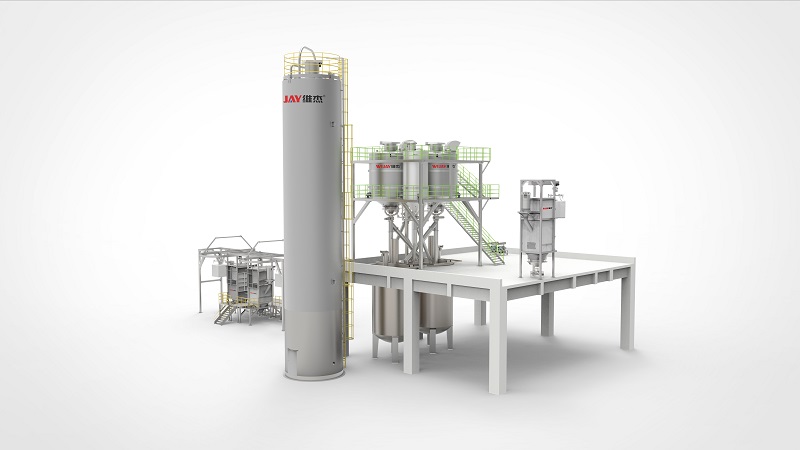
WIJAY Systems engineers dust-free bulk bag unloading as part of fully integrated, enclosed process lines — dust capture at the point of release, material recovery rather than waste, and flow assistance matched to your specific material’s behavior, across food, chemical, plastics, and other bulk material industries. If your current unloading equipment is generating dust, material loss, or manual intervention that its spec sheet says it shouldn’t, that’s worth a conversation with our process engineering team.