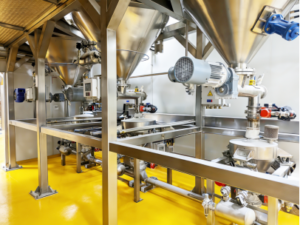
When a new greenfield facility installs an automated material feeding system, the design team starts with a blank floor plan. Ceiling heights, structural load ratings, pipe routing, equipment footprints, and utility runs are all planned around the automation system.
Retrofitting an automated material feeding system into an existing chemical or plastics production facility is a fundamentally different engineering problem. The building was not designed for the system you are trying to install. The ceiling may be too low for a central silo. The floor slab may not carry the load. The equipment is already there, and it cannot all move. And critically — the line cannot stop.
Why Retrofitting an Existing Chemical Plant Is a Different Engineering Problem
This is the operating reality for the majority of chemical and plastics manufacturers considering a feeding line upgrade right now. Industry project data indicates that over 60% of existing chemical and plastics production lines still rely on manual bag-breaking, manual transfer, and hand-weighing for material feeding. The operational consequences are well-documented: dosing errors of ±1.5%–3% in manual weighing operations, inconsistent batch chemistry, high EHS exposure from open powder handling, and zero digital traceability for quality audits.
The pressure to change is real. Chemical safety regulations are tightening. Quality system requirements — particularly for facilities supplying export markets — now routinely require batch-level traceability that manual operations cannot provide. But the path from manual feeding to automated feeding in an existing facility is constrained in ways that standard equipment catalogs do not address.
【pneumatic-conveying-system-design-guide】
Three Retrofit Paths: What the Industry Actually Offers
There is no universally correct approach to retrofitting material feeding automation into an existing chemical or plastics plant. The right path depends on your specific floor plan, shutdown tolerance, budget envelope, and five-year capacity plan. Here is an honest assessment of each option.
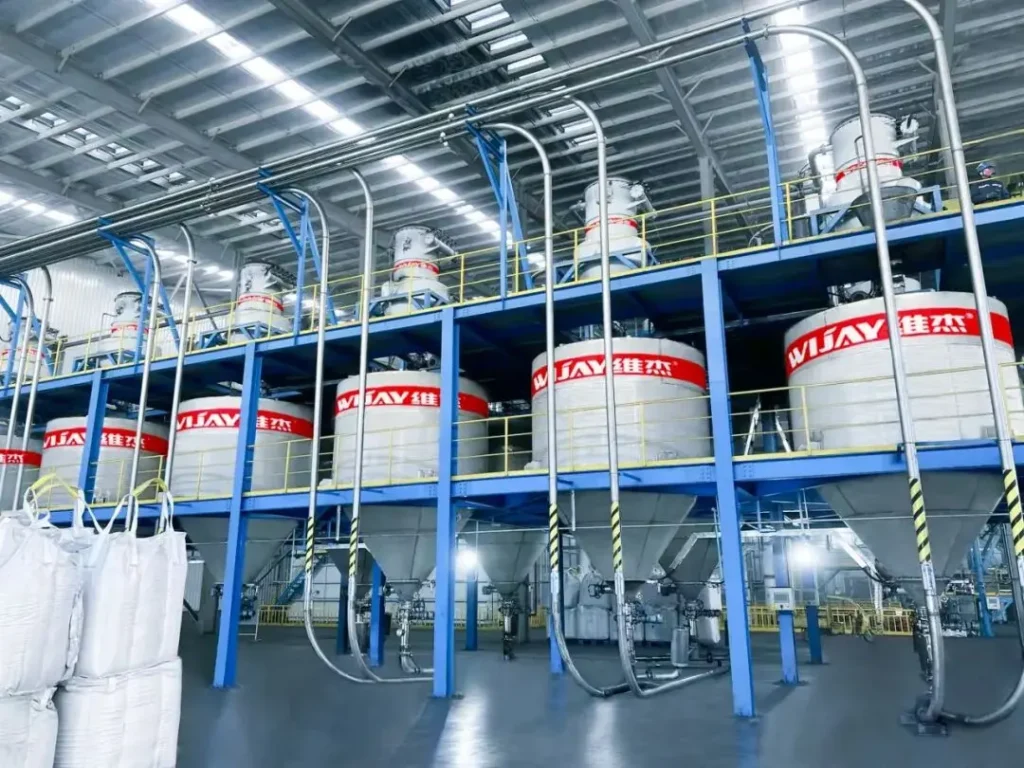
Path 1: Full Central Pneumatic Conveying System
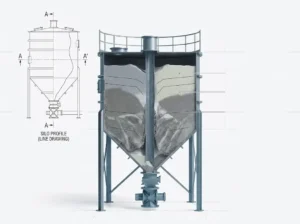
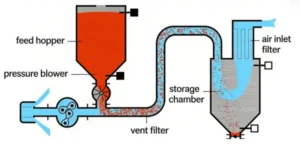
A central pneumatic conveying system routes all material through a single network of distribution pipelines from centralized storage silos to every workstation on the floor. For a greenfield facility with 20+ extrusion or reaction stations, high throughput, and a limited number of material types, this is typically the highest-performance option. The system can achieve high automation density, centralized drying and conditioning, and a clean, well-organized production floor.
The problem for existing plants: Installing a central distribution network in a facility that was not designed for it requires significant civil work — wall penetrations, equipment foundation pours, main pipeline routing through a floor plan that already has equipment in it. The installation timeline typically runs several months. More critically, executing the civil and installation work while the facility is operating is extremely difficult; most central system retrofits require a coordinated full-facility shutdown window that most continuous-production chemical plants cannot schedule.
For existing facilities with low ceiling heights, limited structural load capacity, dense equipment layouts, and continuous production schedules, a central system retrofit is frequently not viable — regardless of budget.
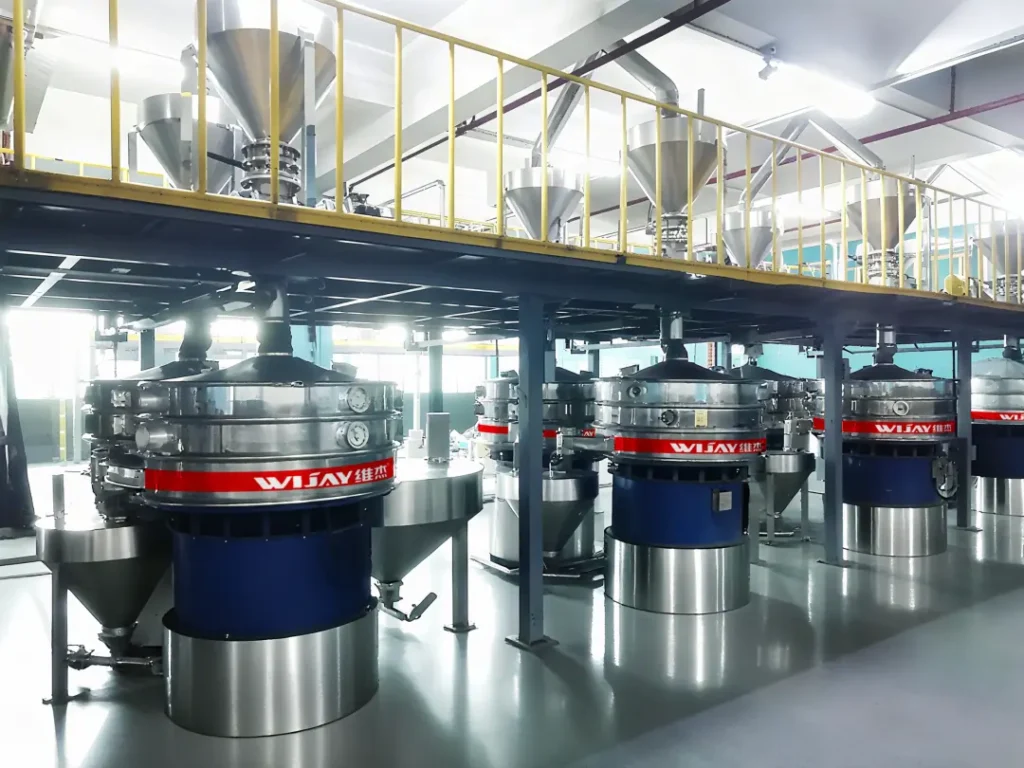
Path 2: Modular Step-by-Step Retrofit
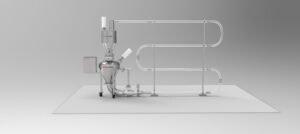
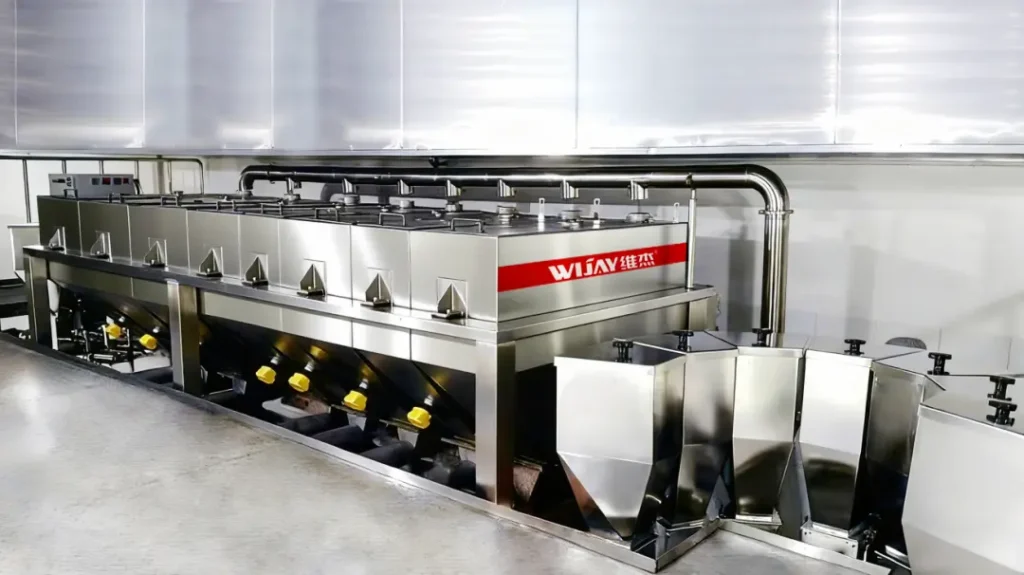
A modular automated feeding system uses self-contained unit modules — each capable of independent operation — that can be deployed workstation by workstation without a central distribution network. Multiple modules can be networked in parallel when required, but each module can also stand alone.
This approach is specifically compatible with the constraints of existing facilities:
- Space: Modular units are sized to fit in the fragmented available space in a working production floor — against walls, in corners, between existing equipment runs.
- Structural: Lightweight modular construction eliminates the need for large equipment foundations and minimizes floor loading requirements.
- Production continuity: Each workstation is retrofitted independently. While one station undergoes installation, the others continue operating. The shutdown required at any point is local and brief — not facility-wide.
- Budget: Because the civil work is minimal and the implementation is staged, total project cost compared to a central system of equivalent scale is typically 30%–50% lower.
The trade-off is that a modular system does not deliver the same level of centralized storage and distribution optimization as a full central network. For facilities with very high material volume concentration and large numbers of identical workstations, the economics eventually favor a central system. For the majority of existing chemical and plastics plants working within real building and operational constraints, modular retrofit is the practical path.
Path 3: Keep Manual Operations
Manual material handling carries no upfront capital cost and no installation disruption. It also carries costs that do not appear on a capital expenditure line.
Dosing error in manual weighing operations runs ±1.5%–3% under real production conditions — not laboratory conditions. For high-value chemical raw materials, that variance translates directly into material waste and batch rejection. Open powder handling in chemical and plastics facilities creates EHS exposure that is increasingly difficult to defend under modern safety regulations. And the complete absence of digital records makes quality system audits — and incident investigations — significantly more difficult and expensive to manage.
Manual feeding can function as a short-term bridge while an upgrade project is planned and funded. As a long-term operating model for a facility that handles hazardous, corrosive, or moisture-sensitive powders, it is an accumulating liability.
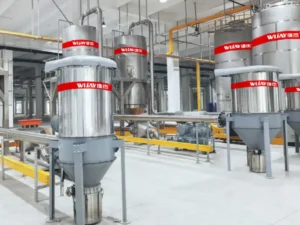
【IMAGE-实拍-three-retrofit-paths-comparison】 Workstation-level modular feeding unit deployed alongside existing reactor equipment — no civil foundation work, installed during scheduled maintenance window.
【powder-conveying-ehs-compliance-guide】
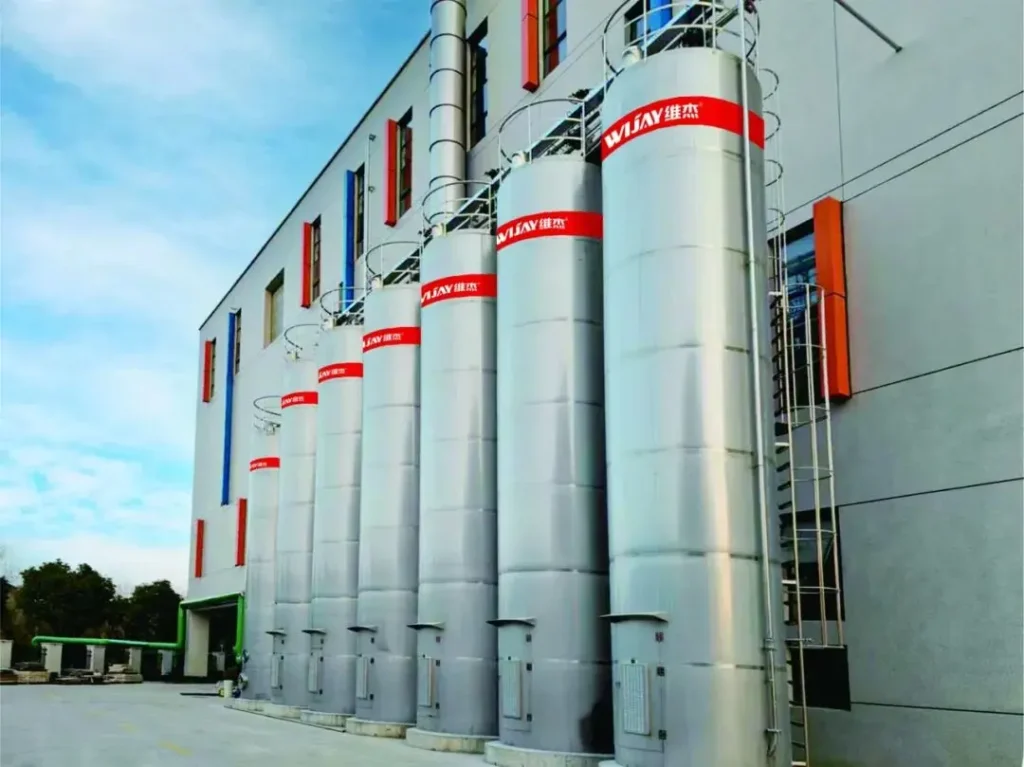
Case Study: Modular Retrofit in a Fine Chemicals Facility
Note: Client name and location are anonymized per standard project confidentiality. All engineering parameters are from the commissioned installation.
The Starting Condition
A fine chemicals manufacturer operating multiple reaction production lines had relied on manual powder feeding for its primary and secondary material inputs since the facility was built. The materials involved were corrosive and hygroscopic — both properties that increase EHS risk in open-handling environments and accelerate equipment wear when material contact surfaces are not purpose-designed.
The operational problems were compound: manual dosing inconsistency was producing batch chemistry variation that showed up in finished product quality. Material waste from dosing overruns and rejected batches was significant. And the complete absence of batch records meant that when a quality deviation occurred, root-cause investigation had to work backward from finished product test results with no process data to anchor it.
The facility needed an upgrade. But it also presented every constraint that makes retrofit projects difficult:
- Building: Existing structure with limited ceiling height and floor load ratings that ruled out large overhead silos or heavy centralized equipment.
- Layout: Dense equipment footprint with minimal available floor area for new equipment.
- Production schedule: Continuous production with no available window for facility-wide shutdown.
- Budget: A project budget that could not support a full central conveying network at the required scale.
The Engineering Response
The retrofit design abandoned the central network approach entirely. Instead, it used parallel-deployed modular feeding units — each independently functional, each sized and specified for the material characteristics of its specific workstation.
Material characterization was completed before equipment specification using an internal database of bulk powder physical properties — including angle of repose, bulk density, moisture absorption rate, corrosivity index, and bridging tendency. This data drove the equipment design rather than standard catalog specifications.
Key engineering decisions from the material characterization:
- Anti-corrosion lining on all material-contact surfaces for the corrosive powder streams
- Activated arch-breaking mechanisms in all hoppers handling hygroscopic materials — specifically to prevent the bridging and caking that causes irregular discharge in humid environments
- Gravimetric (loss-in-weight) weighing modules on primary material streams, achieving dosing accuracy of ±0.2% — eliminating the ±1.5%–3% variance of the previous manual process
Before shipment to site, each module completed a material simulation test at the manufacturer’s pilot testing facility — running with actual production materials under conditions replicating the site environment. This pre-shipment testing process resolved the majority of equipment-to-material compatibility issues before they could become field problems, eliminating approximately 80% of typical on-site commissioning failures before the equipment left the factory.
Implementation: Staged, Non-Disruptive, Parallel
Installation followed a workstation-by-workstation sequence. Priority was given to the highest-volume reaction workstations — the stations where dosing accuracy had the greatest impact on finished product quality and where material waste was highest.
Each workstation installation was completed during a scheduled local maintenance window. While one station was being installed and commissioned, all other stations continued running on their existing manual feeding setup. A manual backup feeding channel was preserved at each workstation until the automated system was proven stable — ensuring that a commissioning issue at any point did not affect production at that workstation.
The factory’s existing reaction and extrusion equipment required no modification. The modular feeding units were designed to interface with the existing equipment inlet geometry — preserving the capital value of the equipment already on the floor.
On-site commissioning time per workstation was compressed by approximately 40% compared to typical field commissioning timelines — a direct result of the pre-shipment material testing that moved the equipment-to-material compatibility work into the controlled factory environment.
All modules connected to a factory data management platform that logs every feeding event — weight dispensed, time, material batch reference, and equipment operating parameters — with local persistent storage. Every batch record is permanently archived and exportable for quality system audits and EHS compliance documentation.
Results
After full system commissioning across all workstations:
- EHS exposure eliminated at the material handling stage. Hazardous corrosive powders are transferred in a fully enclosed system with no manual contact required. Open-air powder handling in the reactor feed area is ended.
- Material waste and batch rejection reduced by 70%+. The combination of ±0.2% dosing accuracy and arch-breaking mechanisms that ensure complete and consistent discharge eliminates both the dosing overruns and the irregular batch inputs that were the primary drivers of material waste.
- Batch chemistry consistency significantly improved. With consistent material input quantities per batch, finished product quality variation attributable to the feeding stage is removed.
- Full digital traceability operational from day one. Every batch has a complete feeding record. Quality deviation investigations now have a documented process data trail.
- No full-facility shutdown was required at any point in the project.
- Expansion interfaces built in. The system architecture includes provisions for 3–5 years of capacity expansion — additional workstations or higher-throughput configurations can be added without redesigning the existing installation.
【loss-in-weight-dosing-accuracy-guide】
Core Design Requirements for Chemical Plant Retrofit Systems
A modular feeding system designed for general industrial use will not perform reliably in a chemical or plastics environment over the long term. The following design requirements are the non-negotiables for existing plant retrofit in this sector.
Material-Specific Engineering
Standard equipment specifications assume standard materials. Chemical and plastics production lines handle materials that are corrosive, hygroscopic, high-temperature sensitive, prone to electrostatic buildup, or explosive in dust form — often in combination. Equipment must be specified to the actual material, not to a generic powder handling category.
This requires access to physical property data for each specific material: bulk density variation across storage conditions, angle of repose, moisture absorption rate, bridging tendency under the specific humidity conditions of the target plant, and corrosivity class. Without this data, equipment sizing and materials-of-construction decisions default to conservative over-specification — which increases cost — or optimistic under-specification — which causes operational failures.
Arch-Breaking and Discharge Consistency
Hygroscopic materials absorb moisture during storage and develop inter-particle adhesion that causes hopper bridging — the formation of a stable arch across the hopper outlet that stops material flow without warning. Activated arch-breaking mechanisms (vibrators, agitators, or pneumatic pulse systems selected based on material response data) are not optional in systems handling moisture-sensitive chemical powders. They are a fundamental operating requirement.
Low-Disruption Physical Design
Retrofit equipment must fit in the space that exists — not the space that would be convenient. This means:
- Compact footprint units that can be positioned in irregular available areas
- Lightweight construction that does not require dedicated structural foundations
- Minimal wall or floor penetrations (each penetration requires planning, approval, and civil work)
- Interface connections compatible with existing equipment inlet geometry
Digital Compliance Infrastructure
Chemical production facilities in most export markets are subject to quality management system requirements (ISO, GMP, or industry-specific standards) that mandate batch-level production records. An automated feeding system that does not generate and store those records provides the operational benefit of automation without resolving the compliance requirement that made the upgrade necessary.
Data capture must include: weight dispensed per batch, time stamp, material batch reference, equipment operating parameters, and any fault events. Local storage — not cloud-only — is required for facilities in jurisdictions with data sovereignty requirements or network connectivity limitations.
Selection Decision Checklist for Plant Engineers
Before committing to a retrofit approach, evaluate your facility against these six parameters:
| Parameter | Central System | Modular System | Manual (Status Quo) |
|---|---|---|---|
| Available ceiling height | Requires clearance for silos | Compact — works with low ceilings | No requirement |
| Floor load rating | High — requires assessment | Low — lightweight units | No requirement |
| Available floor area | Requires continuous routing paths | Works with fragmented space | No requirement |
| Shutdown window available | Full facility shutdown required | Workstation-by-workstation only | None |
| Material variety per facility | Best for few material types, many stations | Handles varied materials per station | Unlimited |
| Budget envelope | High — civil + equipment | 30%–50% lower than central | Zero capital |
| Batch traceability required | Yes | Yes | No — manual records only |
| EHS exposure from open powder handling | Eliminated | Eliminated | Continues |
If your facility answers: limited ceiling height, limited floor area, no full-facility shutdown window available, moderate number of workstations, and a defined but constrained budget — modular step-by-step retrofit is the technically appropriate path.
If your facility answers: new construction or major expansion, high material throughput concentration, large number of identical workstations, and a design window that allows civil work — a central pneumatic conveying system will deliver better long-term economics.
FAQ: What Chemical Plant Engineers Ask Before Specifying a Retrofit System
Q1: How do we handle materials with very different physical properties on the same production floor?
Each modular feeding unit is specified independently for its target material. A facility running both free-flowing granular resins and hygroscopic fine chemical powders will have different unit configurations for each material type — different hopper geometry, different arch-breaking provision, different contact surface material. All units operate on the same control and data platform regardless of configuration differences.
Q2: What happens if we need to expand capacity by 30% in three years?
Modular systems are designed with expansion in mind. Additional units can be added to the network without modifying the existing installation. Expansion interface provisions — electrical, pneumatic, and data connection points — are specified and installed at initial commissioning. Adding capacity means connecting a new module, not redesigning the existing system.
Q3: How does the system interface with our existing batch management or ERP system?
The factory data management platform exports batch records in standard formats compatible with common ERP and MES platforms. The specific integration protocol — API, flat file, or direct database connection — is confirmed during project scoping. Local storage remains active regardless of integration status, so batch records are preserved even during system integration work.
Q4: What is the realistic on-site commissioning timeline, and how much production disruption should we budget for?
Per-workstation commissioning time is reduced by approximately 40% compared to standard field commissioning timelines, because the majority of equipment-to-material compatibility validation is completed during pre-shipment testing at the manufacturing facility. For a facility with six to eight workstations being retrofitted in sequence, the total project timeline from first station installation to full system operation typically runs weeks, not months — with production disruption limited to planned local maintenance windows at each workstation.
Q5: What are the cases where a modular system is NOT the right choice?
A modular system is not the optimal solution when: (a) material throughput volume is high enough that the economics favor centralized bulk storage and distribution; (b) the facility has a large number of identical workstations with identical material inputs, where a central distribution network achieves better material utilization; or (c) the production process requires centralized material drying or conditioning before distribution, which is most efficiently handled by a central system. In these cases, the higher upfront investment in a central system is justified by the long-term operating economics. The honest answer is that both system types have appropriate applications — the goal is matching the system to the facility, not selling a preferred solution.
The Bottom Line for Chemical Plant Process Engineers
Existing chemical and plastics production facilities are not going to become greenfield plants. The building constraints are fixed. The equipment is there. The production schedule has commitments. The budget has limits.
The engineering question is not “what would we build if we were starting over?” It is “what can we actually install, commission, and operate reliably within the constraints of this specific plant?”
For the majority of existing chemical and plastics facilities considering material feeding automation, modular step-by-step retrofit is the answer that fits within those constraints — delivering measurable improvements in dosing accuracy, EHS performance, material utilization, and batch traceability without requiring a full-facility shutdown or a civil construction project.
The case study in this article demonstrates that the outcome is achievable: 70%+ reduction in material waste, ±0.2% dosing accuracy replacing ±1.5%–3% manual error, full digital traceability operational, and zero full-line production interruption during implementation.
If your facility is working through the same evaluation, the starting point is a site assessment that maps your specific constraints — ceiling height, floor load, available space, shutdown tolerance, material properties, and five-year capacity plan — against the technical requirements of each retrofit option.
Talk to a Material Feeding System Engineer
Every retrofit project starts with a site assessment. If you are evaluating material feeding automation for an existing chemical or plastics production line, our engineering team can work through the six core constraints with you — and give you an honest assessment of which retrofit path is technically appropriate for your facility.
We do not offer standard catalog configurations for retrofit applications. Every system is designed to your specific material properties, building constraints, and production schedule requirements.
Contact us to request a facility assessment and customized retrofit proposal:
- 📧 Email:wijay@wijaygroup.cn
- 💬 WhatsApp: +86 181 8889 7761 (available Mon–Sat, 9:00–18:00 CST)
- 🌐 Online inquiry form: contact
We respond to engineering inquiries within one business day. For urgent retrofit assessments, please indicate your project timeline in your message.
Wijay Systems — Pneumatic conveying and automated material feeding systems for chemical, plastics, food, and new energy manufacturing. 15 years of industry experience · 100+ invention patents · 200+ chemical and plastics automation projects commissioned · Manufacturing and R&D based in Dongguan and Hunan, China · International business office in Hong Kong.