When plant engineers start searching for the best suppliers of dust-free bulk handling systems, the trigger is usually not a spec sheet. It is a dust cloud in the packaging room. It is a worker wearing a respirator all shift. It is a batch rejected for moisture. It is a fine powder coating every beam and motor in the building. By the time someone starts looking for a supplier, the plant has usually already tried the cheaper route and learned why it did not work.
Here is the honest truth about dust-free bulk handling: the equipment is only half the story. The other half is understanding the material. Some powders are toxic. Some are explosive. Some absorb moisture from the air and clump. Some attract pests. Some react badly to oxygen. If you treat all of them the same, you will get dust, contamination, spoilage, and downtime — no matter how good the hardware looks on the quote.
This article walks through the industries and material types that benefit most from enclosed pneumatic conveying, what makes a supplier worth trusting, and what we have learned from plants that got it wrong the first time.
Why Enclosed Conveying Beats Mechanical Conveying for Problem Materials
Mechanical conveyors — belts, screws, drag chains, bucket elevators — move material in open or partially open systems. That works fine for sand, gravel, or sturdy pellets. It falls apart when the material is dusty, hygroscopic, toxic, or explosive.
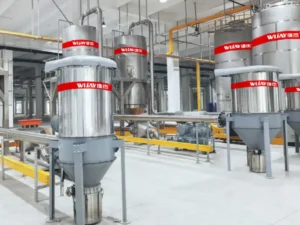
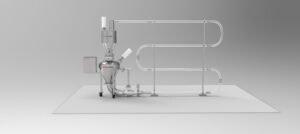
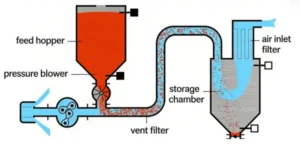
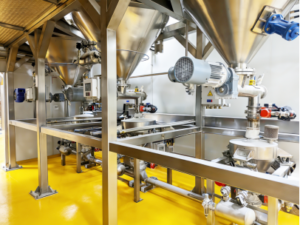
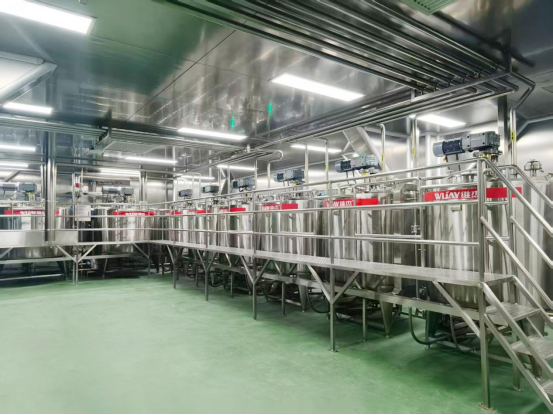
Pneumatic conveying moves material through a closed pipeline using air or inert gas. The process environment stays separate from the plant environment. That single design difference solves several problems at once:
- Dust is contained. Material stays in the pipe instead of coating the building.
- Contamination is blocked. Outside air, moisture, and pests cannot get in.
- Product degradation drops. Especially in dense phase, where material moves slowly in slugs rather than flying at high speed.
- Layout is flexible. Lines can route around existing equipment, over walkways, and into tight spaces where a mechanical conveyor will not fit.
- Hygiene is easier to maintain. This matters enormously in food and pharmaceutical production.
The catch is that enclosed conveying only works when the system is designed around the material. That is where supplier selection matters.
Food Industry: Hygroscopic, Dusty, and Sensitive Ingredients
Food plants handle everything from flour and sugar to starch, milk powder, coffee, and cocoa. Many of these are hygroscopic — they pull moisture out of the air. That leads to clumping, spoilage, and bacterial growth. Others, like cocoa powder, are extremely dusty and create both housekeeping and safety problems.
Pneumatic conveying helps because it controls the environment around the product. A standard compressed air system with a regenerative dryer produces air with a pressure dewpoint around -40°F. When that air expands to atmosphere, the dewpoint drops further, to roughly -60°F. In plain terms, normal dry compressed air is drier than the Sahara. For a hygroscopic ingredient, that means the system is not adding moisture to a material that already fights it.
For oxidation-sensitive products, conveying gas can be nitrogen or another inert gas. This eliminates oxygen exposure, which reduces oxidation, fire risk, and dust explosion potential.
Dense phase conveying is often the right choice for fragile food ingredients. Because material moves in a slow, compact slug rather than a high-speed stream, breakage and fines generation drop significantly. For a cereal or snack plant, that directly protects yield and product quality.
A Field Case: The Cocoa Dust Problem
A cocoa processor had two operators spending most of each shift cleaning dust from the packaging area. The plant had a mechanical transfer point that leaked fine powder continuously. Filters clogged fast, and the plant was close to failing a hygiene audit.
We replaced the transfer with a closed pneumatic system using dust-tight receivers and top removal filters. Airborne dust dropped sharply. Cleaning time fell by more than half. The plant passed its next audit without a corrective action.
Plastics: Dry Pellets, Not Streamers
The plastics industry has a specific requirement: pellets must stay dry and intact. Moisture in resin causes surface defects, bubbles, and weak parts. Damaged pellets create streamers and fines that plug equipment and ruin finish quality.
Pneumatic conveying helps in three ways:
- Closed transfer keeps pellets dry. No exposure to humid plant air.
- Dense phase reduces fines and streamers. Low velocity means less pellet-to-pellet and pellet-to-wall impact.
- Long-distance routing is practical. Large facilities can move resin from a central silo farm to multiple molding or extrusion lines.
Dilute phase can work for short runs and sturdy pellets, but for high-value engineering resins and long distances, dense phase usually wins on product quality and total cost.
Chemicals: Toxic, Abrasive, Corrosive, Explosive
Chemical powders are often the hardest to handle. Many are toxic. Many are abrasive. Some are corrosive. Some are combustible. In chemical processing, safety comes before everything else.
Enclosed conveying is not optional here. It protects workers, the environment, and the product. Common materials we design for include citric acid, catalysts, adipic acid, terephthalic acid, activated carbon, and a wide range of specialty chemicals.
Dense phase conveying is frequently the answer for chemical powders because it moves material at low velocity, which reduces particle degradation and wear, and it can be configured for inert gas blanketing to eliminate oxygen exposure.
A Field Case: Activated Carbon in a Chemical Plant
An activated carbon line was wearing through elbows every two months and generating visible dust at the receiving end. Activated carbon is both abrasive and extremely dusty.
We reviewed the conveying data and found the line was running at high velocity because the feed point was leaking. Correcting the leak and moving the transfer to a lower-velocity dense phase design cut elbow wear dramatically and eliminated the visible dust plume. The plant also reduced compressed air consumption.
Foundry: Sand, Clay, Dust, and Heat
Foundries handle some of the dirtiest, heaviest, and most abrasive materials in manufacturing: molding sand, clay, dust, and refractory products. These materials destroy mechanical conveyors and create serious dust hazards.
Pneumatic conveying works well here because:
- There are no exposed moving parts to wear out. Sand grinds mechanical conveyors to failure. A sealed pipeline has far less to attack.
- Dust stays contained. Foundry dust is a health and safety issue. Enclosed transfer improves air quality and reduces cleanup.
- Dense phase minimizes pipe wear. Low velocity plus wear-resistant elbows in high-wear zones extends system life.
For foundries, the most important design variables are velocity control, bend geometry, and material testing. Guessing on any of these leads to premature wear.
Railroad: Traction Sand Done Right
Locomotive traction depends on consistent, dry sand delivered to the rail. If the sand is wet or contaminated, traction and braking suffer.
Rail sanding systems are a specialized application. They need to load dry sand into locomotives cleanly, quickly, and without dust. High-capacity pneumatic conveying combined with automated controls lets operators load sand without manual handling, spills, or the downtime of traditional methods.
This is a good example of why supplier experience matters. A general conveying supplier can deliver a system. A supplier who has built rail sanding systems knows the specific requirements of the application.
Building Products: Cement, Lime, Fly Ash, Gypsum
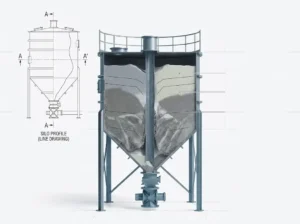
Cement, lime, fly ash, and gypsum are dusty, abrasive, and environmentally sensitive. They are also moved in enormous volumes.
Pneumatic conveying gives building products plants:
- Dust-free transfer for cleaner, safer operations.
- Durability in abrasive service through proper velocity control and wear protection.
- Efficient bulk transport over long distances.
Blending and conveying cement to storage silos is a common application. So is fly ash handling at power plants and lime transfer into production.
Other Industries That Benefit
Pneumatic conveying also plays a critical role in:
- Pharmaceuticals — precise powder handling in sanitary, oxygen-controlled environments, with full traceability.
- Energy — biomass and alternative fuel handling.
- Agriculture — grains, herbicides, pesticides, and fertilizers.
- Personal care — dense phase conveying and weighing of active ingredients.
The common thread in all of these is a material that cannot be exposed to the plant environment without creating a problem.
What Separates a Good Supplier from the Best
If you are evaluating suppliers of dust-free bulk handling systems, these are the questions that actually predict success:
Do they test your material before designing? Flow properties, bulk density, particle size, moisture sensitivity, abrasiveness, and explosibility all change the design. A supplier who skips testing is guessing.
Do they understand your process? Conveying is not standalone. It interacts with feeding, weighing, blending, and packaging. A supplier who only thinks about the pipe will create problems upstream and downstream.
Do they design for the whole line? Integrated systems — feeder, pipeline, receiver, filter, controls, and commissioning — reduce finger-pointing when something does not work.
Do they meet your compliance standards? FDA 21 CFR 110.40 and cGMP for food and pharma. NFPA 660 and ATEX for combustible dust. ISO 8573 for compressed air quality. EHEDG and 3-A for sanitary design.
Do they support the system after startup? Spare parts, retrofits, and performance reviews matter over a 20-year system life.
FAQ: Dust-Free Bulk Handling Systems
What are dust-free bulk handling systems?
They are enclosed systems that move dry bulk materials through a sealed pipeline or contained transfer, preventing dust from escaping into the plant. Pneumatic conveying is the most common technology. They are used when material is toxic, explosive, hygroscopic, abrasive, or simply too dusty for open mechanical conveying.
Which industries benefit most from dust-free conveying?
Food processing, plastics, chemicals, foundries, rail sanding, building products, pharmaceuticals, energy, agriculture, and personal care. The common factor is a material that creates dust, absorbs moisture, reacts to oxygen, or poses a health or explosion hazard.
Why is dense phase better for fragile or abrasive materials?
Dense phase moves material at low velocity in a compact slug rather than a high-speed suspended stream. Lower velocity means less impact, so fragile products break less and abrasive products wear the pipe less. It also reduces segregation in blended products.
How do I choose the best supplier of dust-free bulk handling systems?
Look for material testing before design, process understanding beyond the pipe, integrated system scope, compliance with your industry standards, and long-term support. Ask for references in your specific material and application. A supplier who has handled your material before will avoid problems a generalist will not see.
Can an existing mechanical conveyor be replaced with a dust-free pneumatic system?
Often, yes. The conversion depends on distance, throughput, material characteristics, and available space. Some plants convert one transfer point at a time to control cost and disruption. An engineering review determines whether the change belongs in the maintenance budget or a capital project.
Choose a Supplier Who Understands Your Material, Not Just Your Pipe
The industries and materials that benefit most from dust-free bulk handling are the ones where exposure to the plant environment causes real damage — to product, to equipment, to workers, and to compliance. Enclosed pneumatic conveying solves those problems, but only when it is designed around the material and the process.
At WIJAY Systems, we design integrated pneumatic conveying and powder automation systems for food, plastics, chemical, foundry, building products, pharmaceutical, and energy applications. We test materials, design systems, manufacture equipment, and support installation and commissioning. Our systems are enclosed, dust-tight, low-loss, and automated.
If you are comparing suppliers of dust-free bulk handling systems, contact WIJAY Systems to discuss your material, your process, and what a properly engineered system would look like in your plant.