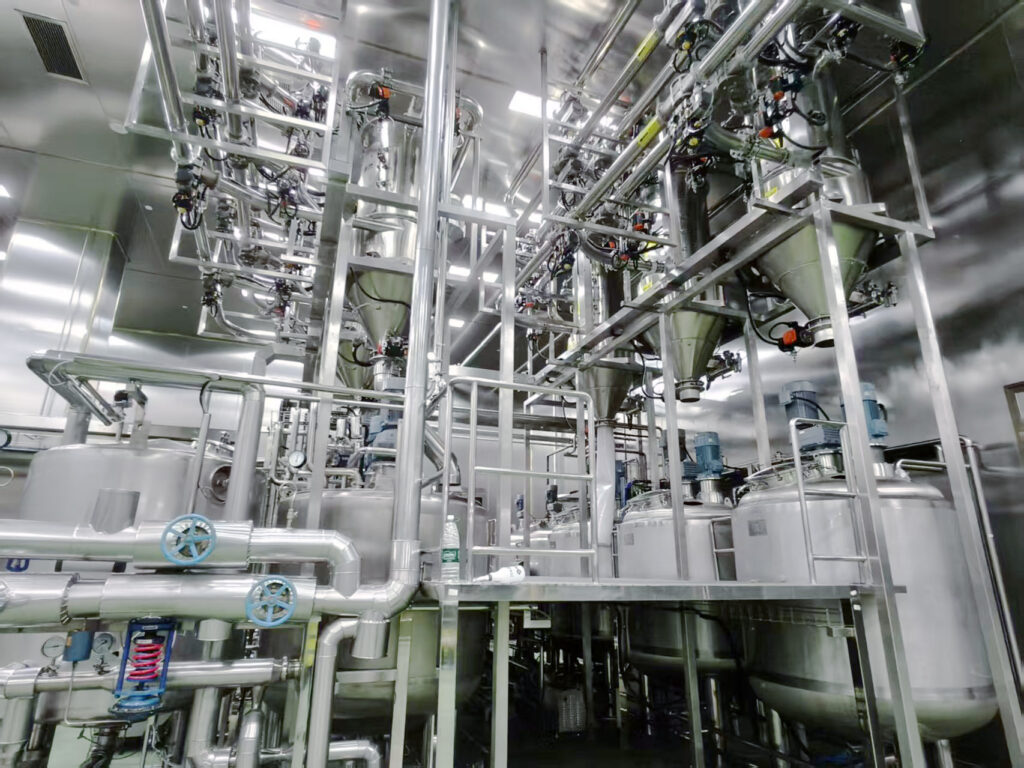
Ask most plant engineers to name the best dust control equipment for powder processing plants, and the conversation goes straight to filtration — cartridge design, can velocity, collector placement. That’s the right instinct for airborne dust generated at process vents and transfer points. But it misses a source of dust escape that never reaches a filter at all: a poorly sealed pipe joint in the conveying line itself, leaking powder directly into the plant environment before the material ever gets anywhere near a collection system.
This article makes the case for treating pipe connections as genuine dust control equipment — not just a mechanical reliability concern — and walks through what actually goes wrong at a joint, why dense phase systems are particularly exposed to this failure mode, and a real case where a persistent dust complaint had nothing to do with the plant’s filtration system at all.
Why Filtration Alone Doesn’t Cover Every Dust Source
Dust control equipment conversations tend to focus on the visible release points — silo vents, transfer hoppers, bag discharge stations — because that’s where dust is expected to escape and where a filter is the obvious countermeasure. A leaking pipe joint doesn’t fit that pattern. It’s not a designed release point; it’s a failure point, and because it sits inside an otherwise enclosed conveying line, it’s easy to assume the line is sealed simply because it’s not supposed to leak.
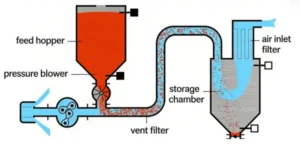
Dense phase pneumatic conveying — the preferred method for fragile, abrasive, or high-value powders precisely because it minimizes degradation and wear — runs at meaningfully higher pressure than dilute phase conveying. That pressure is exactly what turns a minor joint imperfection into an active dust source: the internal pipe environment has to stay tightly controlled for material to flow consistently, and any small gap, misalignment, or seal degradation at a joint gives pressurized air and entrained powder a path directly out of the system.
Why a Leaking Joint Behaves Differently From a Leaking Filter Housing
A dust collector housing with a degraded seal tends to leak at a relatively consistent, gradually worsening rate — the kind of problem that shows up in routine filter inspection or air quality trending over time. A pipe joint in a pressurized dense phase line behaves differently, and worse, for two specific reasons.
First, abrasive materials — sand, alumina, refractory batches — don’t just escape through a leak; they actively enlarge it. Once material starts passing through a small gap at a joint, the abrasive action of that material passing through the opening widens it further, which means a leak that starts small doesn’t stay small. Second, because dense phase lines are fully enclosed by design, a joint leak often escapes visual detection for far longer than a leak at an obviously exposed point, since nobody is routinely inspecting the internal condition of a sealed pipe run the way they’d inspect a filter housing.
What Actually Causes a Joint to Leak
Poor internal alignment. In dense phase conveying, the internal surface of the pipe needs to stay as smooth and continuous as the design allows — no internal misalignment, no protruding edges, no step changes in diameter at a joint. Even a small amount of internal resistance from a poorly aligned connection doesn’t just risk plugging; it creates a point where pressure differential concentrates, which is exactly the condition that turns a marginal seal into an active leak.
Inadequate sealing under pressure. A seal that holds under static, no-flow conditions can still fail under the sustained pressure of active dense phase conveying if it wasn’t specified for that pressure range in the first place. A gasket design that increases sealing pressure as system pressure rises is meaningfully more resilient here than a fixed-compression seal, because it responds directly to the condition most likely to expose a weak joint.
Real-world mechanical drift. Vibration from nearby equipment, temperature swings causing pipe expansion and contraction, gradually loosening supports, and maintenance work on unrelated components that inadvertently shifts a joint all erode a connection’s integrity over time — none of which shows up in the original installation-day inspection, because none of it existed yet at that point.
Why This Belongs in the Dust Control Equipment Conversation, Not Just Maintenance
Treating pipe joint integrity as purely a mechanical reliability issue — something that shows up as plugging or wear, addressed through the maintenance budget — misses its role as an actual dust source. A joint leaking fine, abrasive powder directly into the plant environment is functionally no different from an under-filtered collector stack: both put airborne particulate into a space the plant is trying to keep clean, and both carry the same downstream consequences — worker exposure, housekeeping burden, and in fine or combustible materials, genuine safety risk.
This is exactly why a comprehensive dust control equipment specification needs to include pipe connection quality alongside filtration design: heavy-duty joint construction, sealing mechanisms that are actually inspectable rather than buried in a way that discourages routine checking, tolerance for the vibration and thermal movement every operating plant generates without losing seal integrity, and reusability without seal degradation after routine maintenance access.
A Case Worth Sharing: The Dust Complaint That Had Nothing to Do With the Filters
We worked with a plant that had been fielding recurring air quality complaints in one section of a powder processing facility for several weeks. The maintenance team’s first response was reasonable — inspect and service the nearest dust collector, check filter cartridge condition, verify the collection system’s can velocity. Every one of those checks came back within normal range, which made the persistent complaints genuinely confusing, since the equipment everyone assumed was responsible was performing exactly as it should.
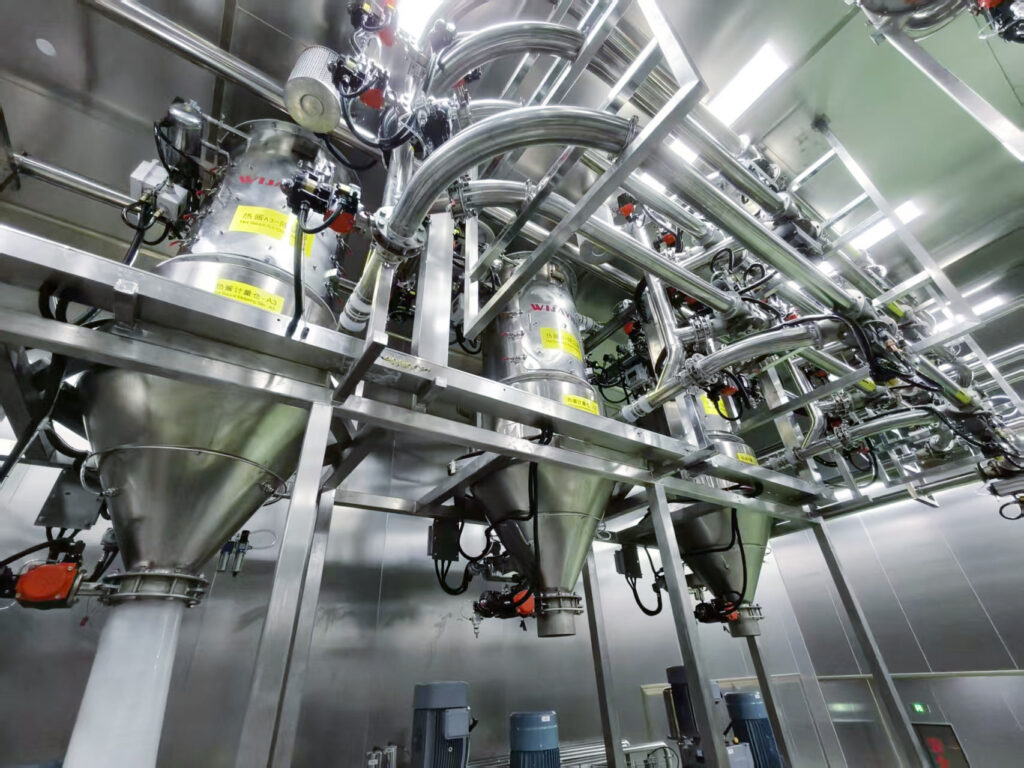
The actual source was a pipe joint on a dense phase conveying line running directly above the affected work area — a connection where minor misalignment, invisible during a routine exterior inspection, had allowed a slow, abrasive-widened leak to develop over months. The joint wasn’t venting dramatically; it was releasing a fine, largely invisible stream of powder that settled and became airborne again with normal air movement in the space below, which is exactly why it registered as an air quality problem rather than an obvious, visible leak anyone would have spotted immediately. Once the investigation shifted from the filtration system to the conveying line itself — specifically checking internal joint alignment rather than external appearance — the leaking connection was identified and corrected, and the air quality complaints stopped entirely. The lesson: when a dust problem doesn’t respond to filtration troubleshooting, the conveying line’s pipe joints deserve direct inspection, not just the equipment everyone assumes is the obvious suspect.
What a Complete Dust Control Equipment Specification Actually Covers
Genuinely effective dust control for a powder processing plant has to account for every point material can escape the intended system, not just the points designed to vent. That means filtration sized and designed correctly for the material and airflow involved, and — just as deliberately — pipe connections throughout the conveying line specified for precision alignment, pressure-appropriate sealing, and mechanical resilience against the vibration and thermal movement real plants generate over years of operation. Treating these as two separate specifications, evaluated by different people at different stages of a project, is exactly how a joint like the one in the case above goes unnoticed for months.
FAQ
Can a pipe joint really be considered dust control equipment? Functionally, yes. A leaking joint in a conveying line releases airborne particulate into the plant environment the same way an under-filtered collector does — the material path is different, but the outcome for worker exposure and air quality is the same, which is why joint integrity belongs in the same specification conversation as filtration.
Why do dense phase systems face more risk from joint leaks than dilute phase systems? Dense phase conveying runs at meaningfully higher pressure than dilute phase, and that pressure differential is what turns a minor joint imperfection into an active leak path. The same small misalignment that might be harmless in a lower-pressure dilute phase line can leak steadily in a dense phase system.
Why do leaks at pipe joints get worse over time instead of staying constant? Because abrasive materials passing through a small gap don’t just escape — the abrasive action of that material erodes the opening further, widening the leak progressively. A leak that starts small in an abrasive-material application rarely stays small.
How can a plant tell if a dust problem is coming from filtration or from the conveying line itself? If filtration inspection and air quality data don’t correlate with the collector’s actual performance — filters check out fine but the problem persists — it’s worth investigating the conveying line’s pipe joints directly, particularly sections running through or near the affected area, rather than continuing to focus solely on the filtration system.
What should be included in a dust control equipment spec beyond the filter itself? Pipe joint alignment precision, pressure-rated sealing (including gasket designs that respond to rising system pressure), mechanical robustness against vibration and thermal movement, and inspectability — sealing mechanisms that can actually be checked during routine maintenance rather than requiring a full teardown.
WIJAY Systems treats pipe joint integrity as part of a complete dust control equipment specification — precision alignment, pressure-appropriate sealing, and mechanical durability engineered alongside filtration, not evaluated separately — across food, chemical, plastics, and other powder processing industries. If your plant has a dust or air quality issue that filtration troubleshooting hasn’t resolved, that’s worth a conversation with our process engineering team before assuming the collector is the problem.