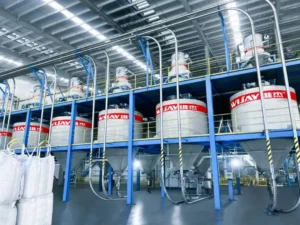
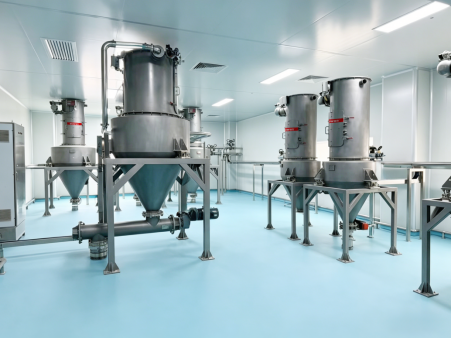
If you are looking for top removal dust filters for powder handling systems, you are probably trying to solve a problem that goes beyond dust. You need to protect workers, maintain high product quality, reduce maintenance time, and avoid sending anyone into a confined, dirty, or hazardous process space. Traditional dust collectors often force maintenance teams to enter the process environment to change filter media. Top removal dust filters take a different approach. They are replaced from outside the process, which completely changes the safety, cost, and efficiency equation.
What Is a Top Removal Dust Filter?
A top-removal dust filter is an air filtration system designed to capture fine dust and other airborne particles while allowing the filter media to be changed from outside the process vessel. Instead of opening a housing and entering the process, maintenance personnel access the filters from the top or outside. This design can be used on any vessel that needs to be vented. It prevents dust from escaping the process and also keeps contaminants from entering it.
This is not just a convenience feature. In many powder processes, the space inside the dust collector is confined. It may contain irritating dust, hazardous dust, or process gas that is not safe to breathe. Top removal filters eliminate the need to enter that space for routine maintenance.
Traditional Baghouse vs. Top Removal Dust Filter: A Direct Comparison
Traditional baghouse dust collectors are common in powder processing. They can be effective, but they often entail high maintenance demands and safety risks. When filter bags or cartridges need replacement, workers may have to open the unit and enter the process environment. That means confined space procedures, personal protective equipment, and sometimes respiratory protection or full hazmat suits. In hazardous environments where air is unavailable, an SCBA may be required, and another person must stand by for rescue. This is slow, expensive, and risky.
Top removal dust filters change that. The filter elements are removed and replaced from outside the process. No confined-space entry is required for normal maintenance. This reduces safety risk, cuts downtime, and makes maintenance planning much easier.
The comparison does not stop at safety. It also affects filter efficiency. Top removal dust filters can be designed with a lower can velocity. The velocity is the upward velocity of air as it approaches the filter elements. When the velocity is lower, less dust reaches the filters. More dust settles out before it hits the media. That means the filter captures a higher percentage of the dust, and emissions are lower. Better filter efficiency means cleaner air and less product loss.
Why Top Removal Dust Filters Make Sense in Powder Handling
The first advantage is safety. No one wants a maintenance worker inside a dusty process vessel. Many powders are dangerous to breathe. Some processes contain gases other than air. Confined space entry requires permits, safety protocols, and standby personnel. Top removal filters eliminate the need for normal filter changes.
The second advantage is dust collection efficiency. Lower can velocity means less dust reaching the filters. The filters run cleaner, capture more dust, and release less to the environment. This is especially important for fine powders, toxic powders, and products where dust loss is expensive.
The third advantage is cost. Top-removal dust filters often do not require a full enclosure, which reduces initial installation and long-term operating costs. They also use less energy in some cases because the filter media does not clog as quickly.
The fourth advantage is layout flexibility. Top removal filters are modular. You can add as many or as few as needed and place them precisely where the plant needs them. This is a major benefit in crowded powder plants where space is limited.
The fifth advantage is reduced maintenance cost. Traditional dust collectors with higher can velocities need more frequent cleaning because more dust reaches the filters. Top removal filters do not need to be cleaned as often, so filter cartridges last longer. When replacement is needed, the work is faster and safer because it happens outside the process.
The sixth advantage is environmental and worker health. Better filtration means less airborne dust. That improves air quality in the production area. It also reduces waste and dust emissions, helping the facility meet environmental goals and protect worker health.
Integration with Pneumatic Conveying and Automated Powder Handling
A dust filter does not work alone. A modern powder handling system must integrate pneumatic conveying, feeding, mixing, and automation. Top removal dust filters can be installed on silos, receivers, mixers, blenders, and transfer points. They vent the vessel, capture dust, and keep the process sealed.
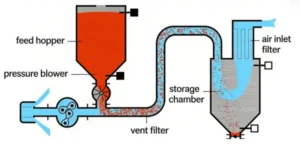
When integrated with pneumatic conveying, top removal filters help maintain a clean transfer. They prevent dust from escaping at the receiving end and reduce product loss. When integrated with automated controls, they can provide pressure and differential pressure data. That data helps operators know when filters need attention and when the process is running efficiently.
This integration is where a system approach matters. A filter sized and placed correctly will outperform a generic unit every time. It should be selected based on the material, process gas, temperature, dust loading, and cleaning method.
A Real Case: Food Powder Plant Reduces Downtime and Risk
A food powder plant was handling fine sugar and flour blends. The existing dust collector required maintenance workers to enter the unit to replace filter bags. The work was hot, dusty, and classified as confined space entry. Each filter change took most of a shift, and production had to stop. The plant also struggled with dust emissions and inconsistent filter life.
The plant replaced the old collector with modular top-removal dust filters. The new filters were mounted on the receiving vessels and transfer points. Maintenance workers now change filter elements from outside the process. No confined space entry is needed. Filter change time dropped from about eight hours to under one hour. Emissions decreased because the new design ran at a lower can velocity. Filter life increased, and the production area was noticeably cleaner.
This case demonstrates the real value of top-removal dust filters. They are not just a different maintenance method. They are a safer, more efficient, and more cost-effective way to control dust in powder handling systems.
What to Check Before Choosing a Top Removal Dust Filter
Before selecting a system, gather the right information. You need the dust properties: particle size, bulk density, moisture, toxicity, and explosiveness. You need the process conditions: temperature, pressure, gas composition, and cleaning requirements. You need the vessel details: size, venting rate, and available space. You also need maintenance requirements: how often filters will be changed, and what access is available.
A good supplier will ask for this data. A top removal dust filter is not a generic box. It must be sized for the airflow, the dust load, and the cleaning cycle. It must also be compatible with the process materials and the plant environment.
Five Frequently Asked Questions
Q1: What is the main difference between a top removal dust filter and a traditional baghouse?
The main difference is access. A traditional baghouse often requires workers to enter the unit or open it, exposing them to dust and process gas. A top-removal dust filter is serviced from outside the process, so filter changes do not require confined-space entry.
Q2: Are top removal dust filters suitable for hazardous dust?
Yes. They are often preferred for hazardous or irritating dust because maintenance workers do not enter the dusty space. The filter media and housing can be selected for the specific dust and process gas.
Q3: How can velocity affect filter performance?
Can velocity is the upward air velocity as it approaches the filters. Lower can velocity means less dust reaches the filter media. As more dust settles out, filter efficiency improves and emissions drop.
Q4: Can top removal dust filters be integrated with pneumatic conveying?
Yes. They are commonly installed on receiving vessels, silos, and transfer points in pneumatic conveying systems. They vent the vessel, capture dust, and help keep the process clean and product loss low.
Q5: Do top removal dust filters cost more than traditional collectors?
Not necessarily. They can reduce initial cost because they often do not need a full enclosure. They also reduce long-term cost through lower maintenance, longer filter life, and less downtime. The best way to compare is to look at the total cost of ownership, not just the purchase price.
Conclusion
Dust control in powder handling is not just about compliance. It is about safety, product quality, maintenance cost, and reliable production. Top-removal dust filters for powder-handling systems offer a practical alternative to traditional baghouse collectors. They eliminate confined-space entry for filter changes, improve filter efficiency by lowering can velocity, reduce maintenance time, and support cleaner working environments.
If you are planning a new powder-handling system or upgrading an existing dust-collection setup, WIJAY Systems can help. Our engineers work with pneumatic conveying, bulk material handling, feeding, mixing, and automation every day. Share your dust properties, process conditions, and vessel details with us, and we can help you evaluate whether top removal dust filters are the right fit for your plant.