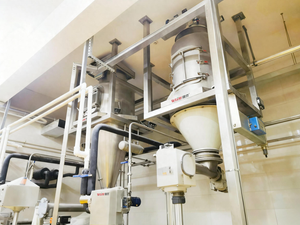
A batch gets flagged in QA. Nobody can find the source. The line’s been shut down for four hours while a team traces every transfer point back from the packaging machine to the storage tank, and the answer, when it finally surfaces, is almost always the same: a rotary valve at a discharge point that wasn’t spec’d for the job it was doing. Not a dramatic failure — a gasket that let cleaning fluid track into a bearing housing, a transition radius that was never designed to be wiped clean, a valve pulled from a general catalog because it looked close enough on paper.
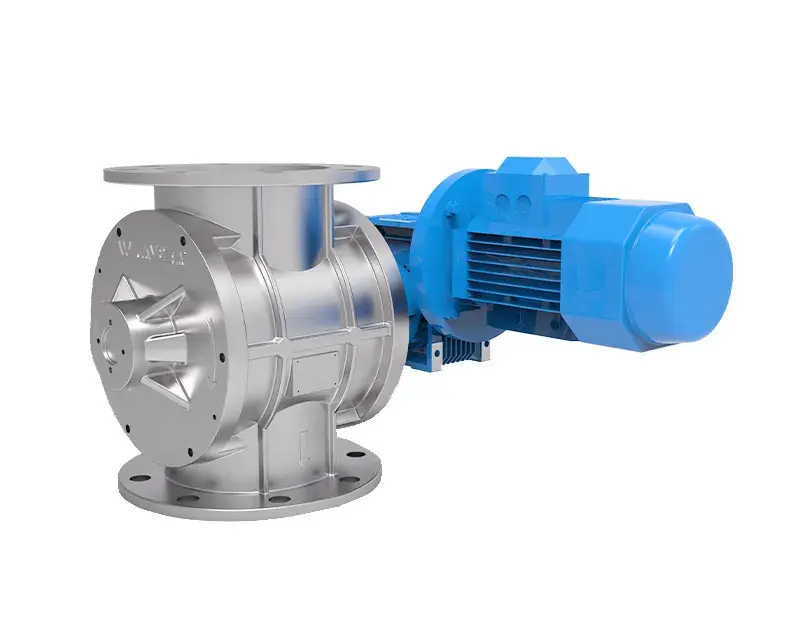
This is one of the most under-discussed failure points in bulk material handling, and it’s almost entirely preventable at the specification stage. The rotary valve sitting under a storage tank or silo outlet isn’t a commodity part — it’s the single component that determines whether material moves from storage into your conveying line without becoming a contamination event.
Why This Matters More Than Most Spec Sheets Admit
The World Health Organization estimates that contaminated food sickens tens of millions of people worldwide every year, with pathogens like E. coli and Salmonella among the most common culprits. On the production side, that risk translates directly into recall costs, line shutdowns, and reputational damage that outlasts the recall itself. A single valve failure at a storage tank discharge point can trigger a full-line stop, a root-cause audit, and — depending on how the contamination event is classified — a mandatory recall that costs far more than the valve itself was ever going to save.
That’s the real argument for treating rotary valve selection as an engineering decision, not a procurement afterthought.
The Three Standards That Actually Govern Sanitary Valve Design
Three independent bodies set the benchmarks used across the industry: the USDA, 3-A Sanitary Standards Inc., and the European Hygienic Engineering & Design Group (EHEDG). Their standards define surface finish tolerances, seal design, and cleanability requirements by application risk level. Below is how those requirements break down in practice, from baseline to full CIP validation.
Basic Sanitary Requirements: Dry, Low-Risk Product
At the entry level, every product-contact surface must use FDA-compliant material — typically AISI 304/316 stainless steel for its corrosion resistance and cost-to-strength ratio, along with FDA-approved plastics, polymers, and rubber where applicable. Non-contact components can use coated aluminum or mild steel, protected with plating, painting, or powder coat.
This tier fits dry applications where a downstream thermal step — roasting, baking, cooking — neutralizes residual contamination risk: coffee, sugar, or flour moving out of a storage tank into processing, where frequent teardown cleaning isn’t the primary control.
Typical configuration: a fixed-vane, beveled rotor with the inlet/outlet left at as-cast finish (roughly Ra 3.2 µm). Where periodic cleaning is required, a quick-release rotor is the standard fix — remove the end cover opposite the drive, pull the rotor, clean it, and vacuum out residue from the housing and shaft seal area. Compressed air is never used for this step; blowing dry residue around a valve housing is how cross-contamination actually starts. Wipe down with a sanitizing cloth and allow a full dry-out before reassembly.
Mid-Level Sanitary Requirements: Frequent Dry or Wet Cleaning
Dry-Cleaning Applications
Moving dried milk powder or similar product from a storage silo to a packaging line is a textbook mid-tier application — one that demands more frequent dry cleaning than the basic tier allows. Valves here need a three-sided beveled rotor with radiused vane transitions, all contact surfaces (including inlet/outlet) polished to 0.8 Ra (roughly 180 grit), and internal housing corners radiused to at least 0.8mm to eliminate pinholes and crevices where product can lodge.
Slide-rail teardown design: valves fitted with an external slide-rail system let the non-drive-end cover be supported and withdrawn without contact stress on the housing or vanes during disassembly. This matters most on larger valves, where it protects sealing clearances and rotor alignment while cutting the time and injury risk of manual teardown.
Wet-Cleaning Applications
Discharge from spray-dried or wet-blended powder handling calls for the mid-tier wet-clean configuration. On top of the dry-clean material and finish standards, this tier adds: FDA-approved silicone or epoxy sealant closing external crevices where product could collect; stainless steel guards and hardware in place of anything prone to rust; wash-down-rated bearings; and O-ring or gasket protection on the drive-end cover to stop cleaning fluid from migrating into the bearing housing — the exact failure mode that most often triggers an unplanned line stop.
Cleaning protocol: wet-clean tiers run either Clean-Out-of-Place (COP) or Clean-in-Place (CIP). A typical COP sequence: remove the non-drive-end assembly, install a dummy shaft, then flush in order — warm water, alkaline solution, warm water, mild acid rinse, high-volume water rinse, sanitizer, final clean water — followed by shaft seal cleaning and hot-air drying. CIP systems automate this entirely, integrated with the plant’s existing CIP infrastructure, with no manual teardown required.
High-Level Sanitary Requirements: Dairy and Perishable Product
Processing dairy-based or other perishable product calls for valves certified by bodies such as the USDA Dairy Division. Beyond meeting every mid-tier requirement, these valves must withstand aggressive acid and alkaline cleaning agents and tolerate manual scrub-down, with the design independently component-verified by a third party such as USDA or EHEDG — not just self-certified by the manufacturer.
Highest Sanitary Requirements: Full CIP Validation
At the top tier, valves run a fully stainless direct-drive system with CIP-rated shaft seals, engineered for complete automated cleaning with zero manual disassembly. O-ring-sealed end covers eliminate manual intervention entirely, delivering validation-grade cleaning while cutting both contamination exposure and long-term maintenance labor. Before specifying this tier, confirm third-party CIP certification testing — a manufacturer’s internal claim isn’t the same as an independent validation record your quality team can put in an audit file.
Where Valve Selection Fits Into the Larger System
A rotary valve doesn’t operate in isolation — it’s the interface between your storage tank and everything downstream: the conveying line, the process step, the packaging machine. Specifying the right hygiene tier solves the valve-level risk, but plants that pair correctly-specified valves with an open or manually-loaded conveying system are still bleeding product and dust at every other transfer point in the line.
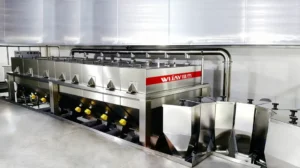
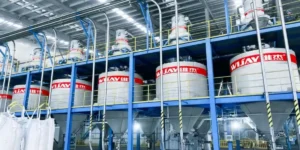
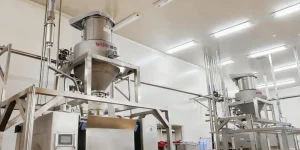
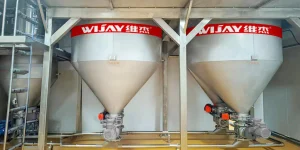
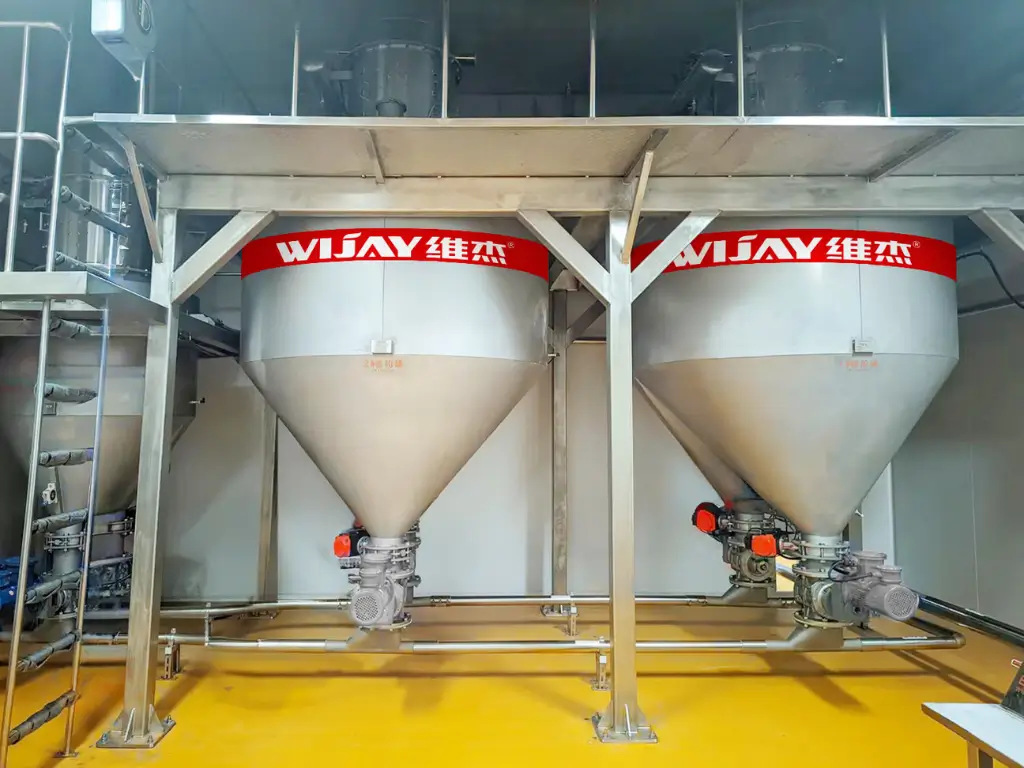
This is the layer WIJAY Systems engineers around. We design fully integrated bulk handling lines — enclosed pneumatic conveying, dust-free transfer, automated dosing and discharge — built around correctly specified sanitary components like rotary valves, so contamination control and product loss are addressed at the system level, not patched valve by valve. Across food, dairy, pet food, flavoring, and pharmaceutical powder lines, that combination is what actually keeps loss rates, dust exposure, and cleaning downtime down over years of production, not just on day one.
FAQ
What is the minimum sanitary standard for a rotary valve on a food-grade storage tank? At minimum, every product-contact surface should use FDA-compliant material such as AISI 304/316 stainless steel, with non-contact parts protected against corrosion. This baseline fits dry, low-risk applications where a downstream thermal step reduces contamination risk.
What’s the difference between COP and CIP cleaning for sanitary rotary valves? COP (Clean-Out-of-Place) requires manual disassembly and a staged wash-rinse-sanitize sequence. CIP (Clean-in-Place) automates the same cleaning logic without teardown, and is required at the highest sanitary tier.
Which standards bodies certify sanitary rotary valve design? The USDA, 3-A Sanitary Standards Inc., and EHEDG are the three primary bodies setting surface finish, seal design, and cleanability benchmarks used industry-wide.
Can a mid-tier rotary valve be used for dairy processing? No. Dairy and other perishable applications require high-tier valves certified by bodies such as the USDA Dairy Division, capable of withstanding aggressive chemical cleaning and third-party component verification.
Get the Right Valve Spec the First Time
Choosing a rotary valve off a general catalog is how contamination risk enters a plant that otherwise runs clean. If you’re specifying discharge valves for a storage tank, silo, or hopper feeding a pneumatic conveying line, WIJAY Systems can review your product characteristics, hygiene classification, and cleaning protocol, and recommend a valve tier that fits your actual risk profile — as part of a fully integrated, enclosed, low-loss material handling line. Talk to our engineering team about your application.