You’ve Seen What Dust Does to a Good Run
Picture this: you’re running optical-grade film. The resin is certified clean. The extruder is dialed in. Then, halfway through the shift, you start seeing black specks. Surface haze. Reject rates climbing from 1% to 5% in a matter of hours.
You check the raw material—it’s fine. You check the extruder—it’s fine. But the defects keep coming.
We’ve walked into plants where operators spend more time cleaning hoppers and vacuuming filter bags than monitoring the process. We’ve seen elbows worn paper-thin by abrasive fines. We’ve watched plant managers do the math on a 3% scrap rate and realize they’re losing six figures a year to something they can’t even see until it’s too late.
The culprit? Dust and fines. Generated right inside your pneumatic conveying line. And if you’re not actively removing them, they’re actively costing you.
Here’s what we’ve learned from hundreds of plants across plastics, chemicals, and food processing: pneumatic conveying will always generate some dust. The question isn’t whether you can eliminate it entirely—you can’t. The question is whether you’re going to let it run downstream into your process, or whether you’re going to catch it before it does damage.
Where Dust and Fines Actually Come From
Most people assume dust comes from “dirty” resin. In reality, the vast majority is generated inside the conveying line.
The mechanics are straightforward:
- Dilute-phase conveying – High-velocity air pushes pellets through the line at speed. Every bend, every impact with the pipe wall chips off microscopic particles. Over time, these fragments accumulate into visible dust and fibrous “streamers” (sometimes called angel hair).
- Dense-phase conveying – Slower velocity, but higher pressure. Pellets rub against each other and the pipe, creating micro-dust even though the bulk motion is gentler.
- Additional factors – Pellet shape (sharp edges break easier), moisture (weakens the pellet surface), temperature (softened pellets abrade more readily), and even static charge (which makes dust cling to surfaces) all play a role.
Once generated, fines don’t stay in one place. They travel with the air stream, settle in hopper cones, get sucked into extruder throats, clog filters, and coat product surfaces. In optical film production, a single speck can scrap an entire roll. In medical-grade molding, it can trigger a full lot rejection.
The point is: dust isn’t a material problem—it’s a system problem. And it demands a systemic answer.
What Dust Actually Costs You
Let’s put real numbers on this.
In a typical plastics plant running 5,000 hours a year, even a 0.5% scrap rate from dust-related defects means tens of thousands of pounds of wasted resin annually. At today’s polymer prices, that’s easily six figures.
But the scrap is just the visible cost. The real pain is harder to measure:
- Unplanned downtime – Clogged filters, jammed rotary valves, and fouled lines can stop production for hours. Each hour of lost extrusion or molding time carries a burden cost that far exceeds the raw material loss.
- Accelerated maintenance – Fines act as an abrasive. Elbows wear out 2–3× faster. Conveying lines need more frequent cleaning. Filters need replacement sooner. Pulse-cleaning systems work harder and fail earlier.
- Sensor and instrumentation failures – Dust deposits on optical sensors, capacitive probes, and level switches. Recurrent false alarms and blocked-line warnings often get blamed on the instrument, when the real problem is particulate loading in the conveying loop.
- Regulatory and customer risk – In food-contact or medical applications, particulates are a compliance red flag. One audit failure can cost you a major account.
This is why leading processors are shifting their focus from “managing the dust” to “removing the dust before it reaches the process.”
The Case for Inline Pellet Cleaning
You can reduce dust generation by optimizing conveying parameters—lowering velocity, using gentle bends, maintaining smooth pipe surfaces. But you cannot eliminate it entirely.
That’s where inline pellet cleaning comes in.
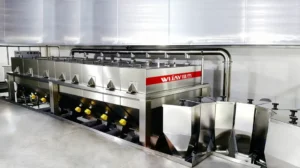
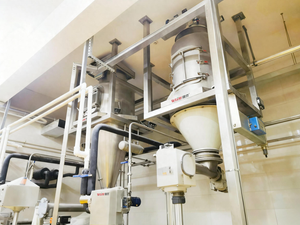
The most effective approach we’ve seen integrates a dedicated cleaning station directly into the pneumatic conveying line, just before the material enters the process hopper or extruder. It runs continuously, inline, without interrupting flow.
The principle combines two critical actions:
1. Static elimination – Conveying generates static charge, which makes dust cling to pellets. A static eliminator upstream of the cleaning section neutralizes this charge, so fines can be easily separated.
2. Air-wash cleaning – Pellets pass over a precision-engineered fluidizing plate. Clean air flows upward through the bed, fluidizing the pellets and sweeping away loose dust and streamers. The contaminated air is extracted through a dust collector or cyclone, while clean pellets discharge from the bottom.
The result? Up to 98% of surface contaminants removed—without mechanical scrubbing, without degrading the pellets themselves.
Open-Loop vs. Closed-Loop: Which Configuration Fits Your Plant?
Inline cleaning systems can be configured two ways, depending on your production environment:
Open-loop system
- Draws fresh filtered air for washing
- Exhausts contaminated air to a dust collector
- Best for plants that change products or colors frequently—eliminates cross-contamination risk
Closed-loop system
- Recirculates air through a filter and back into the system
- Ideal for operations requiring inert atmosphere (e.g., nitrogen for oxygen-sensitive polymers)
- Also suitable for standard operations where energy efficiency is a priority
Both configurations deliver high efficiency with low maintenance requirements. The choice depends on your material sensitivity and plant layout.
Where to Integrate Inline Cleaning in Your Conveying Line
The modular design of modern pellet cleaning stations supports integration at multiple points in the conveying loop:
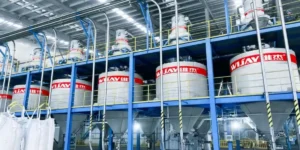
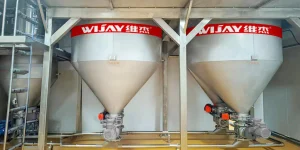
- Central day bins/silos – Ensures clean pellets are distributed to multiple processing machines
- Extruder and injection molding machine hoppers – Prevents dust-related defects, surface blemishes, and gels at the point of processing
- Packaging systems – Integrated at the hopper outlet to ensure dust-free packaged material
- Reclaim operations – Cleans regrind or flakes before optical sorting, preventing dust from fouling sensors
This inline integration doesn’t just improve product quality—it reduces downstream maintenance and extends equipment life.
What the Data Says
Independent testing has demonstrated the effectiveness of air-wash pellet cleaning:
- Before cleaning: 3,631 ppm dust concentration
- After cleaning: 59 ppm dust concentration
- Removal efficiency: Approximately 98%
These results have been validated across multiple material types, confirming that the technology consistently delivers cleaner pellets and tangible downstream improvements.
Why System Integration Matters
An inline cleaner is only as good as the system around it. If your upstream conveying is erratic, the cleaning module won’t see a steady flow. If the downstream connection is rigid, you introduce new forces that affect weight or flow.
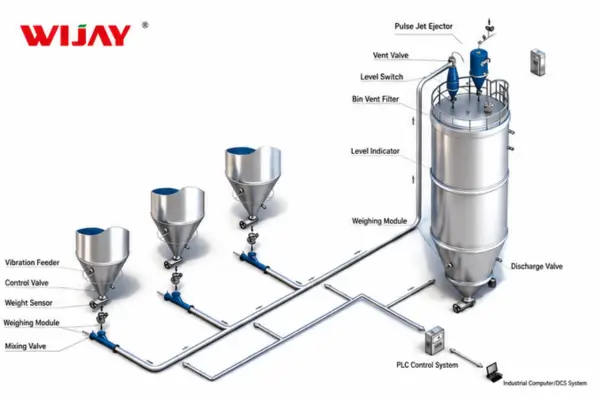
That’s why at WIJAY, we approach pneumatic conveying as a whole-line engineering challenge—not a collection of separate components.
We design systems that:
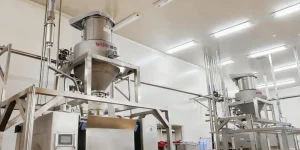
- Are fully enclosed – No dust escape, no operator exposure, minimal housekeeping
- Automate the entire sequence – From receiving to storage to conveying to cleaning to process feeding, with centralized control
- Adapt to multiple materials – Because your plant may run different polymers, each with its own conveying and cleaning requirements
When you treat the cleaning module as an integral part of the conveying line, you get consistent pellet quality, lower maintenance, and a system that practically runs itself.
The Bottom Line
Dust and fines aren’t just a nuisance—they’re a direct hit to your profitability, your product quality, and your reputation.
You can’t eliminate them entirely. But you don’t have to let them reach your process.
By optimizing your conveying parameters and adding an inline air-wash cleaning module with static elimination, you can remove up to 98% of surface contaminants. You’ll see fewer defects, less downtime, lower maintenance costs, and a cleaner, safer plant floor.
We’ve helped plants cut their scrap rates in half, reduce filter cleaning from daily to weekly, and pass audits that once seemed daunting. It starts with a practical conversation about your line, your materials, and your goals.

Frequently Asked Questions
Q: Can I retrofit an inline pellet cleaner to my existing pneumatic conveying system?
A: Yes. Most cleaning modules are designed as compact skids that can be inserted into the conveying line with minimal modifications. The key is ensuring adequate space and access.
Q: Will air-wash cleaning damage delicate pellets?
A: No. The fluidization uses controlled air velocity that lifts pellets gently without impacting them against hard surfaces. It’s a non-abrasive process.
Q: How often should I replace the cleaning air filters?
A: Depending on the dust load, filters typically last several months. Regular monitoring of pressure drop across the filter will tell you when replacement is needed.
Q: Does closed-loop cleaning require more energy?
A: The recirculation fan runs continuously, but the energy cost is modest compared to the savings from reduced scrap and downtime.
Q: What industries benefit most from this approach?
A: Any processor of pellets, flakes, or granules—especially in plastics, chemicals, pharmaceuticals, and food—where cleanliness is critical to final product quality.
Q: Is inline cleaning really necessary if I already have a dust collection system?
A: Yes. Dust collection captures airborne dust after it’s been generated. Inline cleaning removes contaminants from the pellet surface before they reach your process. They serve different purposes, and both are important.
Let’s Talk About Your Conveying Line
We don’t sell off-the-shelf boxes. We listen to your challenges, examine your material behavior, and engineer a pneumatic conveying solution that fits your plant’s reality.
If dust and fines are costing you time, money, or sleep, let’s have a no-pressure discussion about what we can do together.