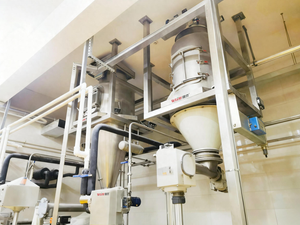
It’s 2 a.m. on a mineral processing line, and the night crew is standing over a jammed bucket elevator again. The chute below it is caked with wet, gritty powder that’s been grinding against the same steel elbow for six straight weeks. Maintenance already swapped this fitting once this quarter. Upstream, an operator is shoveling residual material off the floor near the mechanical conveyor, breathing in fine dust that the enclosure never fully contained. Nobody logs it as a “failure” — it’s just Tuesday. But by the end of the year, that “just Tuesday” adds up to thousands of dollars in replacement elbows, unplanned line stoppages, and a safety incident report nobody wanted to file.
If this sounds familiar, you’re not dealing with a maintenance problem. You’re dealing with a material-handling design problem — and it’s one that conventional mechanical conveying was never built to solve.
Why Wet, Abrasive Powders Break Conventional Conveying Systems
Moisture Turns Fine Powder Into an Abrasive Slurry
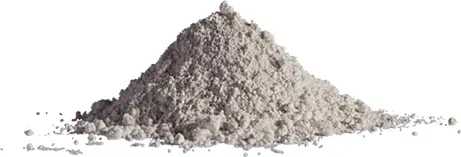
Dry mineral powders are hard enough to handle. Add moisture — from a wet-processing stage, a washdown step, or ambient humidity — and fine particles clump into a gritty, semi-abrasive paste that behaves nothing like the dry spec sheet suggests. Even materials with a modest Mohs hardness in the 2.8–3.2 range (common for micaceous minerals) become aggressive enough to wear through carbon steel elbows and conveyor components within weeks when they’re wet, dense, and moving at velocity through a fixed mechanical path.
Mechanical Wear Points You Can’t Engineer Away
Bucket elevators, screw conveyors, and belt systems all share the same structural weakness: multiple moving parts in direct, repeated contact with the material stream. Every bearing, every flight, every transfer point is a potential wear site — and with wet abrasive powder, “potential” becomes “guaranteed.” Worse, most mechanical systems can’t be fully enclosed, which means operators working near loading and discharge points are routinely exposed to hot, damp, or dusty material.
What the Data Says About Hidden Conveying Losses
Processing teams rarely put a number on this until they’re forced to. In practice, plants handling wet abrasive minerals typically see:
- Elbow and fitting replacement cycles as short as 4–6 weeks on standard carbon steel bends, versus a 12-month target lifespan on engineered systems
- Unplanned downtime costs that compound quickly when a single wear-through failure halts an entire batch line, not just one component
- Product loss and rework from spillage at open transfer points, particularly on high-value fine minerals sold by micron grade
- Labor variability from manual material handling near hot or wet discharge zones, which introduces both safety exposure and batch-to-batch inconsistency
None of this shows up on a single line item. It shows up as a slow bleed across maintenance budgets, safety metrics, and yield — which is exactly why it gets normalized instead of fixed.
Industry Standard: What Engineers Look for in Abrasive Wet Material Handling
When a process engineer sets out to replace a failing mechanical line, the requirements are consistent across industries — minerals, food ingredients, pigments, polymers:
- Fully enclosed transport to eliminate dust emission and worker contact with hot or wet material
- Minimal moving parts in the material path to reduce mechanical wear points
- Engineered wear protection at direction changes, since elbows and bends are where abrasive material impact is concentrated
- Batch-level process control, so the conveying system feeds downstream drying, sizing, or packaging at a controlled rate rather than dumping material unpredictably
- Compact routing that fits within existing plant footprints, especially where a system has to move material vertically and around obstructions
Mechanical conveying can satisfy maybe one or two of these. It’s structurally incapable of meeting all five at once — which is why enclosed pneumatic conveying has become the default engineering answer for abrasive, moisture-laden bulk powders.
A Field Example: What High-Attrition Mineral Conveying Actually Looks Like
One long-running mineral processing operation — over five decades handling mica powder used as a filler across agriculture, construction, polymer, and coatings applications — offers a useful reference point for what this failure mode looks like at scale, and what fixing it actually requires.
The wet-processing stage on that line produced a damp, sand-like, abrasive mica slurry that needed to move from ground-level wet processing up to a drying system one floor above — roughly 11 meters of vertical lift, routed around two 90-degree turns, across about 30 meters of total path length. The original mechanical conveyor and bucket elevator setup wore out components on a punishing schedule: standard elbows were failing in as little as six weeks under the combined load of moisture, abrasion, and impact velocity.
The engineering fix followed the standard-of-practice model above, applied at scale:
- A 560-liter ground-level receiving hopper fed the vacuum line directly from the wet-processing discharge, keeping the transfer enclosed from the first handoff
- A 15 kW positive-displacement vacuum system running at roughly 500 mbar differential pressure moved material through a 75mm-diameter line — enough draw to lift dense, wet powder 11 meters without relying on gravity or exposed mechanical lift
- Deflector-style elbows replaced standard bends at both 90-degree turns. Instead of letting abrasive particles strike bare steel directly, the geometry lets a cushion of suspended material redirect the flow, absorbing impact instead of transferring it to the pipe wall
- An 800-liter bag-filter receiver — chosen over a cartridge filter specifically because bag media handles damp, sticky fines better — captured the batch at the top of the line, with a pulse-jet reverse cleaning cycle to keep filter media clear
- Level sensors tied into the PLC synchronized receiver fill state with line throughput, so the batch pace matched downstream drying capacity instead of overloading it
The measurable result: elbow service life went from roughly six weeks to twelve months — close to a 9x improvement — while fully removing operators from direct contact with hot, wet material. The line also gained the flexibility to split output into 90-micron and 125-micron product grades across separate downstream paths, which is exactly the kind of process flexibility that’s difficult to retrofit onto a mechanical system.
The Engineering Principles Behind It — and How WIJAY Applies Them
Cases like this aren’t unusual once you’ve seen enough abrasive-material lines fail the same way. The pattern repeats across mineral fillers, pigments, food powders, and polymer feedstocks: moisture plus abrasion plus exposed mechanical parts equals short component life and safety exposure. The fix is rarely a single part swap — it’s a system redesign built around enclosed transport, wear-point engineering, and process control.
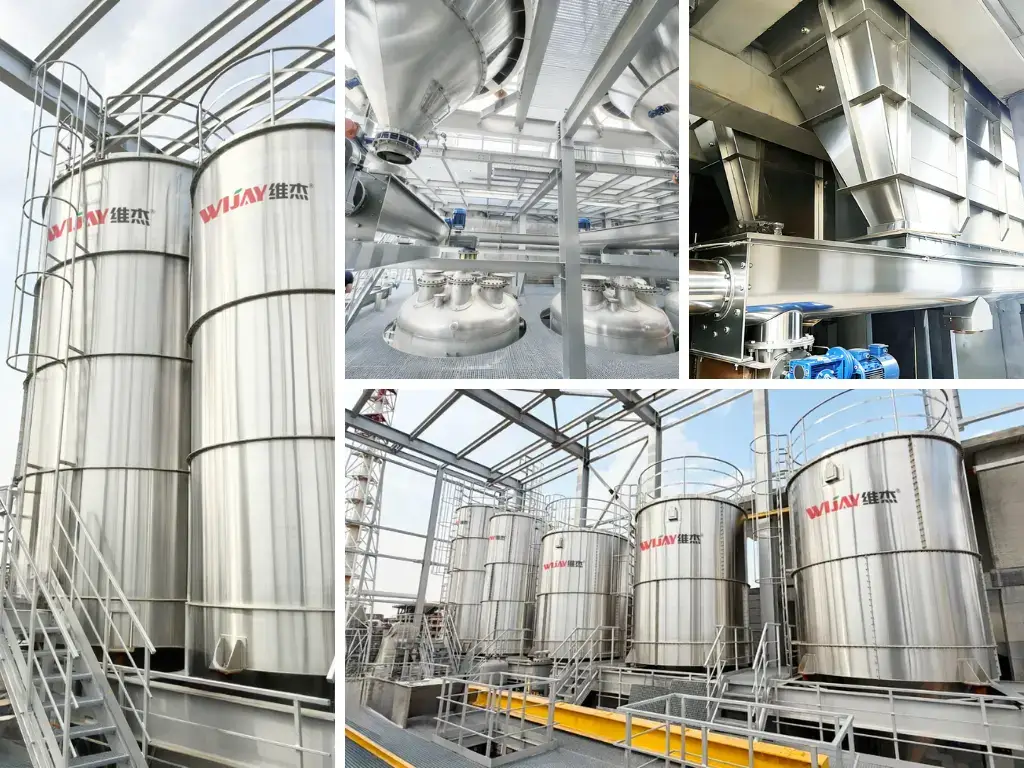
That’s the same design logic WIJAY Systems applies to bulk material handling lines across pneumatic conveying, dust-free transfer, and powder automation projects:
- Integrated line design — hopper, transport, filtration, and downstream sizing engineered as one system, not stitched-together components
- Fully enclosed, dust-free conveying — no open transfer points, no fugitive dust, no manual scooping near hot or damp material
- Low-degradation transport paths — routing and velocity control designed to protect both fragile particulates (avoiding attrition) and equipment (avoiding wear), which is the core tension in handling materials that are simultaneously friable and abrasive
- Automated, PLC-managed batch control — consistent throughput without relying on manual pacing or judgment calls from the floor
- Multi-industry adaptability — the same underlying engineering principles apply whether the material is a mineral filler, a food ingredient, or a polymer compound; what changes is the wear protection spec and filtration media, not the fundamental design approach
FAQ
What makes a material both “fragile” and “abrasive” at the same time? Many mineral and mica-based powders are structurally friable — they degrade or fracture under mechanical impact — while also being hard enough at the particle level to erode metal surfaces on contact. This combination is why aggressive mechanical handling (which relies on impact and shear) tends to damage both the product and the equipment simultaneously.
Why does moisture make abrasive wear worse instead of better? Dry powder tends to flow and cushion impact to some degree. Wet powder clumps into denser particles that carry more mass and momentum into every impact point, while also creating a paste-like coating that resists cleanout and accelerates corrosion-assisted wear on exposed metal.
Is pneumatic conveying always better than mechanical conveying for abrasive materials? Not universally — but for wet, abrasive, or contamination-sensitive materials that need enclosed transport and precise batch control, engineered vacuum or pressure pneumatic systems consistently outperform open mechanical conveying on wear life, dust control, and worker safety. The right choice depends on particle size, moisture content, distance, and elevation change, which is why system design should start with a material and process audit rather than a generic spec.
How long should a properly engineered elbow last on an abrasive powder line? On well-designed systems using deflector or wear-resistant elbow geometry, 12-month service intervals are a reasonable target for moderately abrasive materials — a significant jump from the 6–8 week failure cycles common on standard bends handling the same material.
If your line is losing hours to elbow replacements, dust complaints, or inconsistent batch quality on wet or abrasive powders, that’s a design problem worth solving before the next unplanned stoppage. WIJAY Systems engineers enclosed pneumatic conveying and powder automation systems built specifically around high-attrition, moisture-sensitive bulk materials — talk to our process engineering team about auditing your current line.