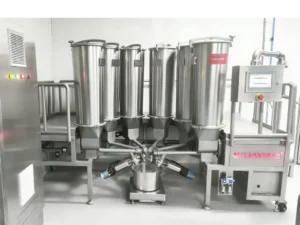
A plant buys an automatic feeding system, installs it, and calls for a safety review. The reviewer finds an explosion-proof motor on the blower, then asks about the valves, the sensors, the grounding between sections, and the dust collector’s capacity. The answers don’t line up. The system was purchased as equipment, and nobody translated the safety rules into its hardware configuration. Now the plant faces rework on a line that is already running.
This pattern is common as dust explosion requirements tighten across plastics, fine chemical, and food powder processing. This article explains which compliance controls belong in a powder conveying system, how they should be built in rather than added later, how the path differs for a new plant and an existing one, and which misconceptions cause repeat failures. It is general engineering guidance. Requirements differ by jurisdiction, so confirm specifics with your local authority and a qualified safety engineer.

Background: Why the Feeding Section Gets Scrutiny
Powder feeding and conveying is a focus area for safety oversight. Many existing plants still run material handling that falls short on explosion protection, dust control, and static protection, so they face compliance upgrades. The trouble starts when buyers don’t know how the rules translate to hardware, purchase equipment on price and catalog specs, and then can’t pass the review.
Core Technical Explanation: The Five Compliance Controls
| Control | What It Means in Hardware | Why It Matters |
|---|---|---|
| Dust containment | Conveying kept enclosed as far as practical | Less dust escapes into the room, lowering the risk of concentration reaching an explosible level |
| Anti-static system | Tanks, piping, and valves all grounded, with bonding between components | Stops static charge from friction building up |
| Explosion-proof components | Motors, solenoid valves, and sensors selected to the hazardous-area classification | Removes electrical ignition sources |
| Overpressure and blockage alarms | Pressure and buildup monitoring with alerts | Abnormal conditions are flagged for prompt action |
| Dust collection | Capacity for silos and loading stations matched to line throughput | Dust is captured at the source instead of managed afterward |
Dust Containment First
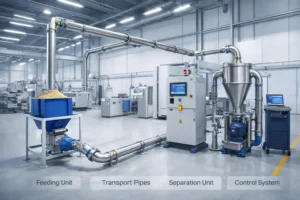
Enclosed conveying keeps powder inside vessels and piping from the start. This tackles the problem at the source, which makes it more fundamental than any downstream fix.
An Anti-Static Network, Not a Single Ground Wire
Every tank, pipe section, and valve is grounded, and parts are bonded to one another so charge cannot isolate on one component and accumulate. Friction between powder and pipe generates static, so this path to ground needs to be continuous.
Components Matched to the Area, Not Covered After the Fact
Motors, solenoid valves, and sensors need an explosion-protection rating that fits the hazardous-area classification. Ordinary parts with a protective cover added do not substitute for rated components.
Alarms and Dust Collection Designed Into the System
Pressure and material-buildup monitoring should raise alarms when something is abnormal. Dust collection must be sized for actual line capacity. A small collector added later to get through an inspection is a recognized weak point.
The Explosion-Protection Chain
The controls above form one chain. If any link is missing, the system’s protection is incomplete.
| Link | If Missing |
|---|---|
| Rated motor only | Valves, sensors, wiring, and grounding remain unprotected |
| Dust collector only | Dust is still released at the source |
| Grounding gaps | Static can accumulate on an isolated part |
| No alarms | Blockage and overpressure go unflagged |
Practical Field Troubleshooting & Decision-Making Guidance
New Plant vs. Existing Plant
| Situation | Compliance Path |
|---|---|
| New plant | Include the feeding system in the safety design at the planning stage, with the building’s explosion-protection design, so requirements are met once |
| Existing plant | First assess the current hazardous-area classification, then upgrade the material section. Remove open manual dumping first, replacing it with enclosed automatic feeding, then close the static, alarm, and dust-collection gaps |
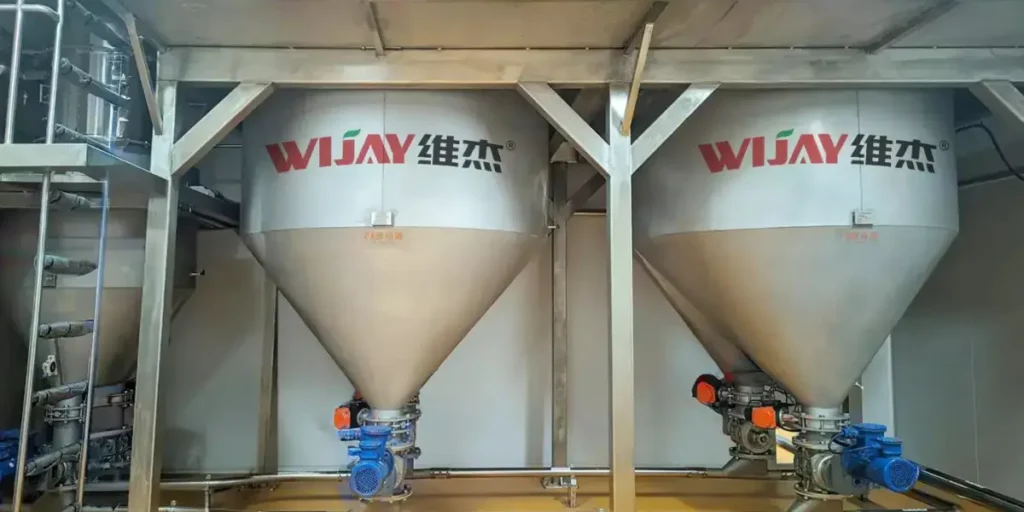
Compliance is a design-stage decision. Some engineering partners, including our team at WIJAY, build the enclosed architecture, bonding network, alarms, and rated components into the system design, and check interlocks and alarms in a factory acceptance test before shipment.
Operating Fix or Design Gap?
| Symptom | Operating Fix | Points to a Design Gap |
|---|---|---|
| Visible dust at a transfer point | Check seals, service the filter | Conveying is open at that point |
| Static discharge felt at a fitting | Check one ground connection | Bonding between components was never designed |
| Reviewer asks for component ratings | Locate the documentation | Components lack the required rating |
| Pressure alarm not raised on a blockage | Test the sensor | No pressure or buildup monitoring in the system |
| Dust collector overloaded at peak | Clean the filters | Collector was not sized for line capacity |
Write These Into the Technical Requirements Before Purchase
- The hazardous-area classification and the rating each electrical component must meet
- Enclosed conveying, with the points where powder is exposed identified
- A system-wide grounding and bonding scheme
- Overpressure, blockage, and level alarms, with where alarms are logged
- Dust collection capacity tied to peak throughput
Key Design & Operation Best Practices
- Specify compliance at the start, not as an accessory after commissioning.
- Enclose first, then add collection and protection around it.
- Verify the full chain (motors, valves, sensors, wiring, grounding, collection) rather than one item.
- Size dust collection to peak throughput, not to what is convenient to install.
- Log alarms centrally as well as signaling locally, so events are recorded.
- Confirm requirements locally with your authority and a qualified safety engineer.
Common Mistakes & Pitfalls To Avoid
- Assuming an explosion-proof motor makes the system compliant. Valves, sensors, wiring, grounding, and dust collection are all part of the chain.
- Assuming a dust collector solves dust explosion risk. It is one link, and enclosed conveying at the source matters more.
- Fitting protective covers over ordinary components instead of selecting rated ones.
- Adding a small collector at the end to satisfy an inspection.
- Leaving compliance out of the purchase specification, which leads to rework after the system runs.
FAQ
Is an explosion-proof motor enough for a compliant powder conveying system?
No. The motor is one part of a chain that also includes valves, sensors, wiring, grounding, and dust collection. If any link lacks protection, the system’s overall protection is incomplete.
Does installing a dust collector solve dust explosion risk?
Not by itself. Collection is one link. Keeping the conveying enclosed so dust does not escape in the first place is the more fundamental control.
How do I handle compliance in an existing plant?
Assess the current hazardous-area classification first. Then remove open manual dumping by moving to enclosed automatic feeding, and close the gaps in static protection, alarms, and dust collection.
Why should compliance be specified before purchase?
Safety features added after installation often mean rework on a running line. Writing the hazardous-area class, component ratings, grounding scheme, alarms, and collection capacity into the requirements avoids that.
Can an ordinary valve with a protective cover replace a rated one?
No. Components should be selected to the area’s classification. A cover added to an ordinary part does not substitute for a rated component.
Ready to Review Compliance in Your Feeding System?
Send your material list, dust classification, throughput targets, and site layout. An engineering team can review which controls your conveying system needs before you issue a purchase specification.