In the baking industry, the soft texture and consistent quality of bread are the keys to winning the market. Behind every loaf, however, lies a hidden determinant of success: how flour is handled from the very source. Recently, a renowned bread manufacturer in China partnered with WIJAY Systems to implement a tailor-made automated flour conveying and dosing system. This solution successfully achieved highly efficient, precise, and clean raw material feeding, laying a solid foundation for the company’s relentless pursuit of product quality. By replacing traditional manual loading with a fully integrated, enclosed, and automated process, the bakery not only elevated its product consistency but also transformed its workshop environment and operational efficiency.
This case study examines the challenges the bakery faced, the customized solution WIJAY Systems designed and deployed, and the measurable results that followed. It offers valuable insights for food manufacturers considering similar upgrades to their bulk material handling processes.
Background: The Efficiency and Quality Bottlenecks of Manual Flour Loading
The bakery in question consumes a massive volume of flour daily. For years, it relied on traditional manual bag opening and loading methods. While functional, this approach presented a series of persistent pain points that increasingly constrained the company’s growth.
First, weighing errors compromised formula accuracy. Manual weighing inevitably introduces human error, and even minor deviations in flour quantity can affect the precision of product recipes. This led to batch-to-batch quality fluctuations—a critical issue for a brand whose reputation rests on consistent taste, crumb structure, and appearance.
Second, dust dispersion threatened both the workshop environment and worker health. During bag opening and dumping, flour dust filled the air, creating an unpleasant and potentially hazardous working environment. Beyond respiratory concerns, airborne dust also posed a risk of foreign matter contamination, compromising food safety standards. For a modern food production facility, these conditions were unacceptable.
Third, the cumbersome process limited overall production efficiency. Manual loading is labor-intensive and time-consuming, making it difficult to match the company’s growing market demand. As production volumes increased, the bottleneck at the flour intake stage became increasingly pronounced, restricting the company’s ability to achieve continuous, large-scale production.
These challenges are not unique to this bakery. Across the food and baking industry, manual material handling remains a common obstacle to quality consistency, workplace safety, and operational scalability. Recognizing the need for a transformative solution, the company turned to WIJAY Systems for expertise in bulk material automation.
The Solution: A Customized Fully Automated Flour Conveying and Dosing System
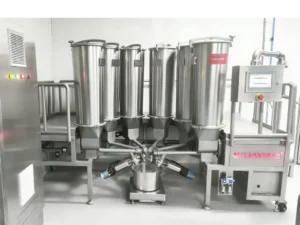
Leveraging its deep professional experience in material automation, WIJAY Systems designed and implemented an intelligent flour solution that integrates conveying, storage, and dosing into one seamless system. The core objective was to eliminate manual intervention, ensure dust-free operation, and achieve high-precision dosing—all while maintaining the highest standards of food safety and hygiene.
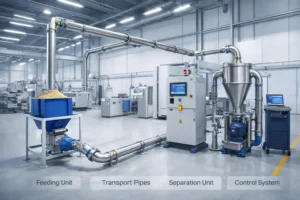
The system’s core workflow is as follows:
- Efficient and Dust-Free Bulk Bag Unloading
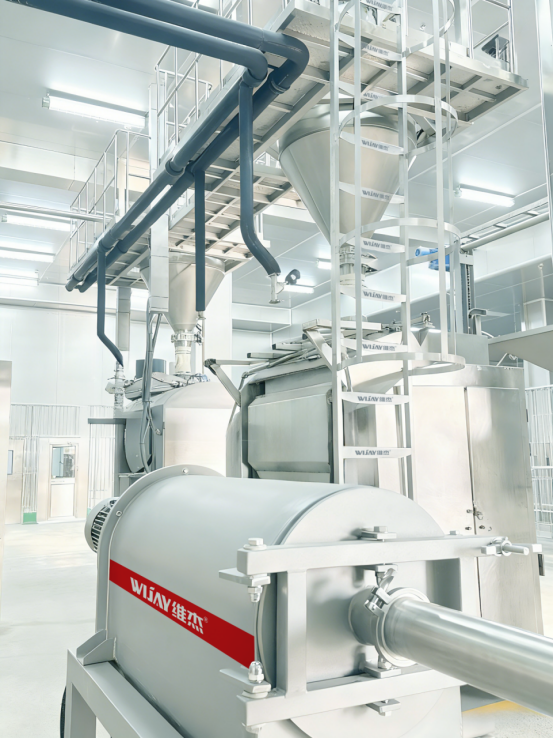
The process begins with WIJAY’s specially developed bulk bag (FIBC) unloader and dedicated feeding station. Operators place the flour bulk bag into the station, and the system automatically initiates the unloading process. Using enclosed pipelines and proprietary block-breaking and screening functions, the system achieves high-volume, dust-free feeding from the very source—eliminating contamination and waste at the point of entry.
This design is a critical upgrade from manual dumping. The enclosed bulk bag unloader not only captures dust at the source but also ensures a steady, controlled flow of flour into the conveying line. The integrated block breaker prevents clumping and ensures consistent material flow, while the screener removes any oversized particles or foreign objects before they can enter the production stream.
- Stable and Reliable Enclosed Conveying
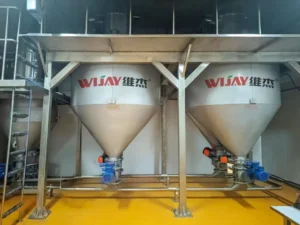
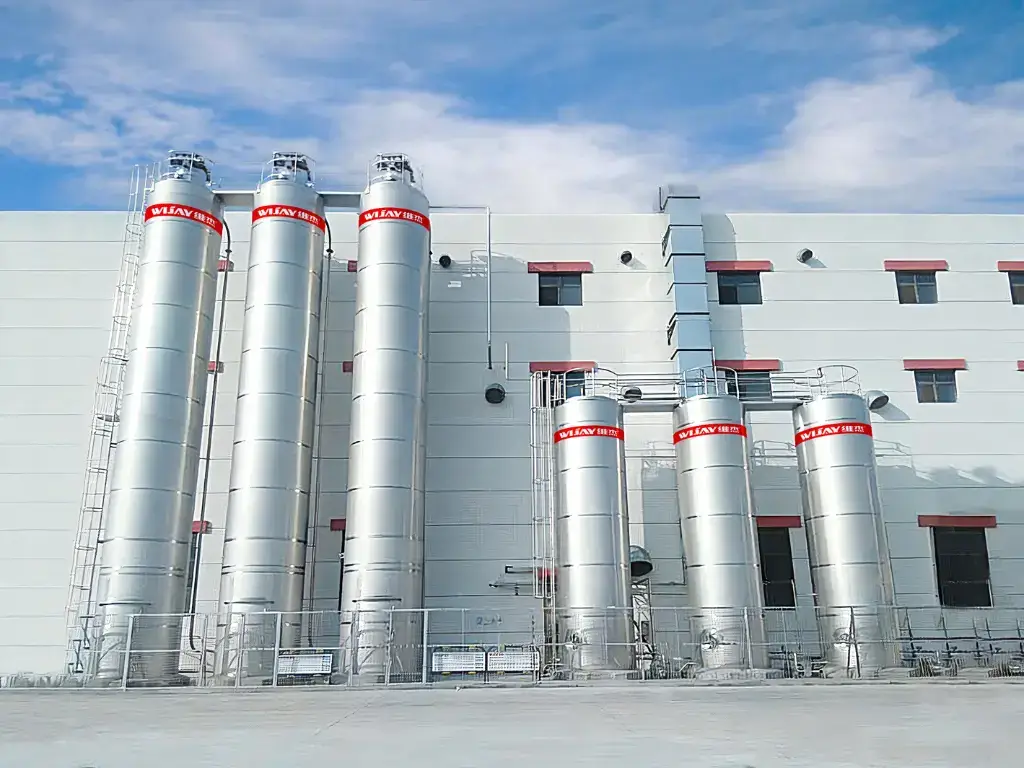
After unloading, the flour is transported via WIJAY’s carefully engineered screw conveyors to designated intermediate storage silos or batching bins. This process is fully enclosed, completely isolating the material from external contact and guaranteeing its purity. The screw conveyor design minimizes product degradation and material loss, ensuring that the flour arrives at its destination in optimal condition.
For bakeries and food manufacturers, enclosed conveying is not merely a convenience—it is a food safety imperative. By eliminating open transfer points, the system prevents airborne contamination, pest intrusion, and moisture ingress. WIJAY’s screw conveyors are designed for gentle handling, low loss, and reliable performance across a wide range of bulk materials, making them ideal for multi-industry adaptation.
- High-Precision Dosing and Batching
At the end of the line, the system integrates a high-precision dosing scale that dynamically and in real time measures the flour delivered to the mixer according to production recipe requirements. The dosing accuracy far exceeds that of manual operation, ensuring that the core ingredient ratio for every batch of dough is exact—down to the gram.
This level of precision is achieved through advanced load cell technology and intelligent control algorithms that continuously monitor and adjust the flow rate. The system compensates for variations in material density and flow characteristics, maintaining accuracy even at high throughput rates. For a bakery producing thousands of units per day, this precision translates directly into consistent product quality and reduced ingredient waste.
- Integrated Control and Automation
The entire system is orchestrated by WIJAY’s integrated control platform, which provides real-time monitoring, recipe management, and data logging. Operators can adjust parameters, track material consumption, and receive alerts for maintenance or anomalies—all from a centralized interface. This level of automation reduces human intervention, minimizes the risk of error, and provides a clear audit trail for quality assurance.
Results: A Triple Upgrade in Quality, Efficiency, and Management
The successful operation of the system has delivered significant value to the customer, with measurable improvements across three key dimensions.
Quality Upgrade: Precision from the Source
Accurate dosing from the very beginning ensures the stability of product formulas, keeping the bread’s taste, crumb structure, and appearance consistently at a high level. This consistency strengthens brand competitiveness in a crowded marketplace where consumers expect every loaf to meet the same high standard.
The elimination of manual weighing errors also reduces the need for rework or product rejection. For a bakery operating at scale, even a small reduction in reject rates can translate into substantial cost savings over time.
Efficiency Leap: Automation Frees the Workforce
The automated process liberates workers from heavy manual labor, increasing loading and conveying efficiency several times over. The shortened production cycle enables the company to meet the demands of large-scale, continuous production—a critical advantage as the bakery expands its market reach.
Perhaps most importantly, the system’s throughput is consistent and predictable, allowing production planning to be more accurate and reliable. The bakery no longer needs to account for the variability and fatigue inherent in manual labor.
Management Optimization: Cleaner, Safer, Smarter
The system achieves clean production, dramatically improving the workshop environment and meeting high food safety standards. The reduction in dust emissions also lowers the risk of respiratory issues among workers and reduces the need for frequent cleaning and maintenance.
Automation reduces human intervention, lowering quality risks and overall management costs. The integrated control system provides valuable data for continuous improvement, enabling the bakery to identify inefficiencies and optimize its processes over time.
Beyond the Immediate Results: A Platform for Future Growth
The modular and scalable design of WIJAY’s system means the bakery can expand capacity or add new production lines without redesigning the entire material handling infrastructure. This flexibility is a key advantage in a dynamic market where consumer preferences and production volumes can shift rapidly.
Frequently Asked Questions (FAQ)
Q1: What is an automated flour conveying and dosing system?
An automated flour conveying and dosing system is an integrated material handling solution that transports flour from bulk bags or silos to mixing stations using enclosed conveyors and precision dosing equipment—without manual intervention. It ensures consistent quality, reduces dust, and improves efficiency in bakeries and food production facilities.
Q2: How does WIJAY’s system prevent flour dust contamination?
WIJAY’s system uses enclosed bulk bag unloaders, sealed screw conveyors, and dust collection mechanisms at transfer points to capture airborne flour particles. This design not only protects worker health but also prevents foreign matter from entering the product stream, aligning with stringent food safety standards.
Q3: What industries can benefit from WIJAY’s material automation systems?
WIJAY Systems serves a wide range of industries, including baking, food processing, chemicals, pharmaceuticals, plastics, and building materials. The company’s multi-industry adaptability means solutions can be customized to handle various bulk materials with different flow characteristics and safety requirements.
Q4: Can the system handle different types of flour and recipe changes?
Yes. WIJAY’s dosing and control system supports recipe management, allowing operators to switch between different flour types and formulations with minimal downtime. The system automatically adjusts conveying and dosing parameters to maintain accuracy across different materials.
Q5: What is the typical lead time for a customized WIJAY system?
Lead times vary depending on system complexity and site requirements. WIJAY’s team works closely with each customer to design, manufacture, and commission the system, typically within a few months from project approval. Contact WIJAY for a detailed project timeline.
Conclusion: Partnering for a Smarter, More Efficient Industrial Future
WIJAY Systems has once again demonstrated its technical strength and customer value in the field of industrial material handling through this successful collaboration. By replacing manual flour loading with a fully automated, enclosed, and precision-controlled system, the bakery achieved a triple upgrade in quality, efficiency, and management—proving that smart material automation is a strategic investment, not just a capital expense.
We firmly believe that technology-driven process innovation is the key to helping partners navigate fierce market competition with confidence and stability. Whether you are in baking, food processing, or another bulk material industry, WIJAY Systems offers line-integrated, low-loss, dust-free, and multi-industry-adaptable solutions tailored to your specific needs.
Ready to transform your material handling process? Contact WIJAY Systems today to discuss how our automated conveying and dosing solutions can elevate your product quality, streamline your operations, and future-proof your production line. Visit WIJAY’s pneumatic conveying systems page or bulk bag unloader solutions to learn more, or reach out to our engineering team for a personalized consultation.