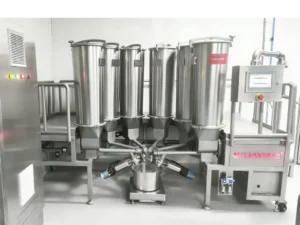
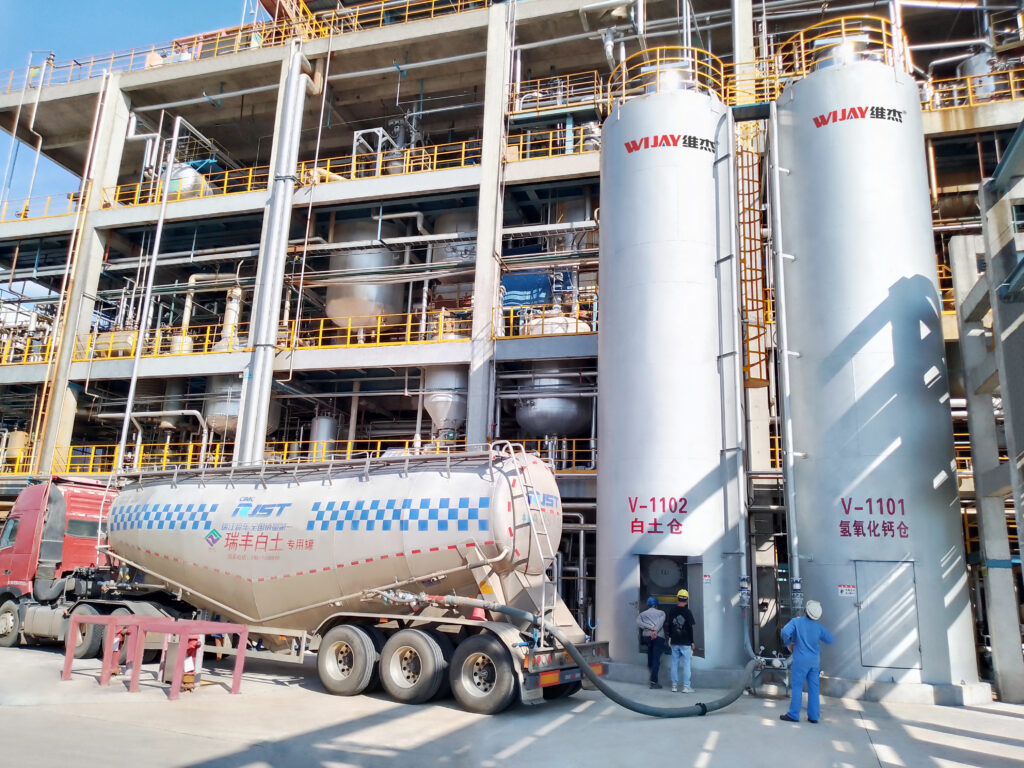
As the global food packaging industry moves toward sustainability, polylactic acid (PLA), a leading bio-based biodegradable material, is becoming a key solution to plastic pollution because it balances environmental benefits with practical performance. With 15 years of experience in material automation, Wijay has combined pneumatic conveying technology with PLA blow molding processes to develop a custom PLA pneumatic conveying system. This system supports green production and efficient manufacturing from raw material transfer to finished-product forming.
Outstanding Properties of PLA
Bio-based and biodegradable
PLA is made from renewable resources such as corn starch and sugarcane. Under industrial composting conditions, it can fully break down into water and carbon dioxide. Its lifecycle carbon emissions are more than 68% lower than those of traditional plastics, reducing environmental burden at the source.
Safety and compliance
The material is FDA-certified, has no toxic migration risk, and offers good biocompatibility. It can be used in direct contact with food, meeting the packaging needs of sensitive categories such as bakery products and fresh food.
Upgraded performance
Through biaxially oriented PLA (BOPLA) technology, PLA film achieves tensile strength comparable to traditional BOPP film. It also offers anti-fog, antibacterial, and high-transparency properties, making it suitable for cling film, disposable tableware, and high-end flexible food packaging.
Core Advantages of the Pneumatic Conveying System
1. Fully enclosed clean conveying for food safety
Zero-contamination barrier: The system uses 316L stainless steel pipes and food-grade sealing technology, together with a nitrogen curtain to isolate inlet and outlet points. The dust escape rate is below 0.1 mg/m³, and the risk of microbial contamination is reduced by 90%.
Intelligent foreign matter monitoring: An AI vision inspection module can identify metal and plastic impurities as small as 0.3 mm in the airflow. It provides real-time warnings and automatic sorting to ensure the purity of PLA raw material.
2. High efficiency, energy savings, and flexible production
Precise flow control: Variable frequency drive technology dynamically adjusts air velocity from 0.1 to 0.3 m/s. Power consumption per ton of material is 68% lower than that of conventional pneumatic systems. Annual electricity savings can reach RMB 155,000 based on an annual output of 15,000 tons.
Modular flexible layout: The system supports three-dimensional conveying, including 60 m horizontal and 40 m vertical transfer. It reduces transfer points by 40% and fits food packaging lines that require multiple product types, small batches, and quick changeovers.
3. Process collaboration for better blow molding quality
Low-temperature conveying: Airflow temperature is precisely controlled at 5–15°C to avoid PLA degradation caused by frictional heat. This helps maintain film transparency and mechanical strength after blow molding.
Intelligent production scheduling: The system integrates PLC control and IoT modules to achieve millisecond-level precise proportioning from the raw material silo to the blow molding machine. Batch traceability reaches 100%.
Wijay’s Professional Strength
As a leading supplier of material automation system solutions for the food industry, Wijay has built a global service network.
R&D and manufacturing capability: Wijay has a modern production base of more than 20,000 m² and a professional R&D center of more than 3,000 m². It provides full-chain services from system design to customized equipment.
Global service system: With its Hong Kong international development center and Poland after-sales service center in Europe, Wijay provides 24/7 rapid technical support to help ensure stable equipment operation.
Industry benchmark experience: Wijay has customized PLA pneumatic conveying systems for well-known food companies at home and abroad, covering bakery, dairy, condiment, and other segments. These projects help customers achieve both green production and cost optimization.
Conclusion
Wijay’s mission is “technology empowers sustainable development.” The custom PLA pneumatic conveying system is designed as a bridge between eco-friendly materials and intelligent manufacturing. From precise raw material conveying to quality assurance in blow molding, Wijay uses innovative technology to help food companies seize opportunities in the carbon peak and carbon neutrality era. To learn more about PLA packaging automation solutions, visit www.wijaysytems.com or contact our technical team to explore the possibilities of green production.
Wijay — your professional partner for material automation system solutions in the food industry. With 15 years of focus on material automation, Wijay provides full-process customized services from powder conveying and intelligent feeding to clean packaging, driving the food industry toward greener and smarter upgrading through technology innovation.
Five FAQs
1. Can PLA pellets be conveyed pneumatically without damaging the material?
Yes. PLA can be conveyed pneumatically, but the system should be designed for low-speed, low-temperature transfer. Frictional heat and excessive impact should be controlled to reduce the risk of PLA degradation. A custom PLA pneumatic conveying system can adjust airflow, temperature, and routing based on the actual pellet grade and production line.
2. Why is a fully enclosed conveying system important for food-grade PLA?
Food-grade PLA must be protected from dust, moisture, microorganisms, and foreign matter. A fully enclosed system with food-grade sealing, nitrogen isolation, fine filtration, and AI vision inspection helps maintain material purity and food safety. It also reduces cleaning load and product loss in the packaging area.
3. What air velocity is suitable for PLA in a blow molding line?
The suitable velocity depends on pellet properties, conveying distance, and line layout. In many food-grade PLA projects, low-speed conveying with precise variable frequency control is preferred. The system should be tuned after powder or pellet testing rather than set only by equipment capacity.
4. How does the system support frequent product changeovers?
A modular layout, PLC recipes, and IoT-based production scheduling allow the line to switch between product types and batch sizes more efficiently. Smooth internal surfaces, easy-clean access, and accurate traceability also help reduce changeover time and cross-contamination risk.
5. What information is needed before requesting a custom PLA pneumatic conveying system quote?
Prepare the PLA grade and pellet properties, throughput per hour or batch size, horizontal and vertical conveying distance, number of transfer points, available space, food safety requirements, cleaning needs, and existing blow molding line details. Sharing this information early helps engineers propose a practical and reliable system design.