Walk a plant that has digitalized its extrusion, mixing, and molding lines, and the dashboards look convincing. Then walk back to the raw material section. Consumption is copied by hand into a logbook. Nobody knows whether the recipe actually ran as written. A plugged line is discovered when someone happens to walk past it. Inventory and consumption numbers reach planning late, so the schedule is built on stale information.
That front end is where many “digital” factories still run blind. This article lays out the data chain a digital powder handling system should capture, what that data buys you, why screens alone don’t count as digitalization, and how to phase the work in a new plant versus an existing one.
Background: The Data Gap in the Material Section
| Gap | What Happens Today | Consequence |
|---|---|---|
| Manual consumption records | Material use copied into paper logs | Errors, lost pages, slow reporting |
| No recipe feedback | Recipe execution cannot flow back automatically | No proof the batch ran as written |
| Faults found on site | Plugging and supply faults noticed only by people nearby | Late response, longer stops |
| Lagging stock and usage figures | Inventory and consumption statistics arrive after the fact | Production planning built on old data |
Digitalizing the whole plant means the material section has to join the data network. It cannot remain an island.
Core Technical Explanation: The Data Chain From Receiving to Consumption
What a Complete Chain Captures
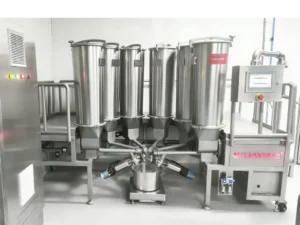
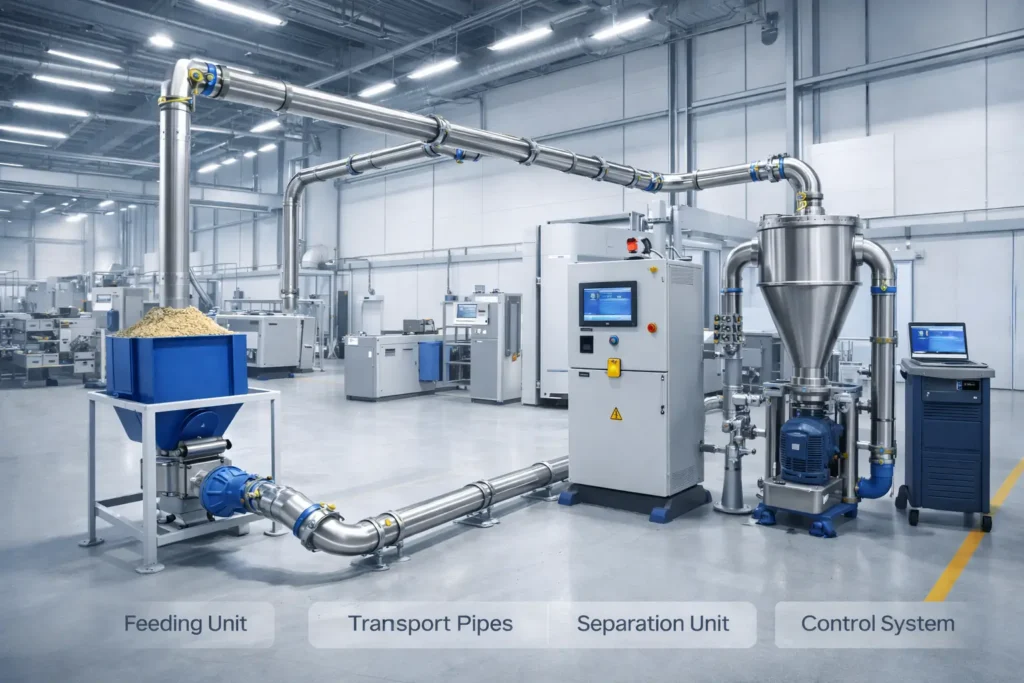
A digital powder handling system does more than move powder. It builds a chain from raw material receiving through storage, conveying, batching, feeding, and consumption statistics.
| Stage | What Is Captured |
|---|---|
| Receiving | Raw material batch and arrival time, linked to inbound information |
| Storage monitoring | Silo level and temperature in real time, so inventory is visible |
| Conveying and batching | Every transfer and every recipe run, with weighing data and operating parameters |
| Exception events | Plugging warnings, pressure anomalies, and equipment faults logged automatically |
| Upstream exchange | Standard interfaces that pass material data to the plant’s MES and ERP |
A central control module sits at the center, handling data collection, early fault warning, and remote supervision.
What the Data Buys You
Traceability. Each finished batch can be linked back to its raw material batch and batching parameters. When a quality problem appears, you can quickly tell whether the cause was the material or process variation, which shortens troubleshooting.
Planning and cost accounting. The system counts raw material consumption by line automatically. Finance gets objective data for material costing, and production gets real consumption for scheduling, without manual compilation.
Maintenance. Complete equipment logs record fault types and frequency. Maintenance staff can see patterns and move from repair after failure toward predictive maintenance, which lowers the chance of unplanned stops.
Digitalization Is Not Piling Up Screens
A large display is not digitalization. The core is real data collection, reliable storage, and connection to business processes. If feeding and weighing hardware is unstable, the collected data carries large errors, and a polished dashboard has no business value. Stable hardware is the precondition. Software extends what the hardware can do.
Practical Field Troubleshooting & Decision-Making Guidance
Operating Fix or Structural Data Gap?
| Symptom | Operating Fix | Points to a Structural Data Gap |
|---|---|---|
| Logbook entry missing for one shift | Tighten the logging routine | Records go missing repeatedly because capture is manual |
| One batch cannot be traced to its raw lot | Check that the lot was entered | Traceability breaks regularly because lot and batching data are not linked |
| A plugged line found late once | Add a walk-through check | Faults are routinely found by people, not by the system |
| Stock figure off after a count | Recount and correct | Inventory is chronically out of step with real usage |
| Dashboard weight differs from physical weight | Recalibrate the scale | Weighing hardware is unstable, so the data itself is unreliable |
Rule of thumb: if the same discrepancy returns after the fix, the problem is in how data is captured or how stable the hardware is, and another reminder to staff will not solve it.
Phasing the Work: New Plant vs. Existing Plant
| Situation | Approach |
|---|---|
| New build | Plan the full material automation and digital system together from the design stage, aiming for the best overall result |
| Existing plant | Install the automation hardware first, then connect the software interfaces afterward, building the data base step by step |
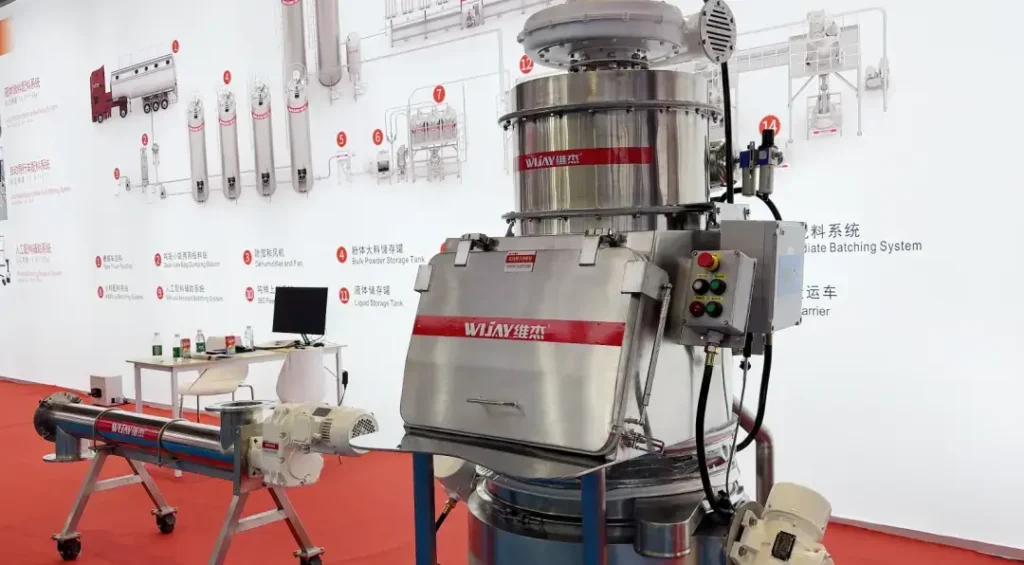
An existing plant does not need to reach full integration in one move. Keep the build tied to real production needs and skip features that don’t serve them. Some engineering partners, including our team at WIJAY, develop the control software in-house alongside the hardware and check interfaces and data logging during a factory acceptance test with real material.
Key Design & Operation Best Practices
- Fix the hardware first. Data is only as good as the feeding and weighing equipment producing it.
- Capture data at the source instead of relying on manual entry.
- Link batches end to end: raw lot, batching parameters, and finished batch.
- Log exceptions automatically, including plugging warnings, pressure anomalies, and faults.
- Specify standard interfaces to MES and ERP during selection, not afterward.
- Phase the rollout in existing plants so each step serves a real production need.
Common Mistakes & Pitfalls To Avoid
- Treating big screens as digitalization. Without reliable data underneath, the display adds no value.
- Digitalizing on unstable hardware. Poor weighing or feeding means the recorded numbers are already wrong.
- Leaving the material section out of the data network. It stays an island and blocks plant-wide traceability.
- Buying closed software with no standard interface, which forces manual re-entry upstream.
- Chasing features the plant does not need. Functions detached from production needs add cost without benefit.
FAQ
What data should a digital powder handling system record?
It should record raw material batch and arrival time, silo level and temperature, every transfer and recipe run with weighing data and operating parameters, and exception events such as plugging warnings, pressure anomalies, and equipment faults.
How does material data support quality traceability?
Each finished batch links back to its raw material batch and batching parameters. When quality drifts, engineers can quickly judge whether the cause lies in the material or in process variation, which shortens the investigation.
Why does stable hardware matter for digitalization?
Data is collected from the feeding and weighing equipment. If that hardware is unstable, the readings carry large errors, so even a well-designed dashboard shows numbers that cannot support decisions.
Can an existing plant digitalize its material section in stages?
Yes. Install the automation hardware first, then connect software interfaces to MES and ERP later. This builds the data base gradually and keeps each step tied to real production needs.
How does logged equipment data reduce unplanned stops?
Logs of fault types and frequency show patterns in how equipment behaves. Maintenance staff can then act before failures occur, shifting from repair after breakdown toward predictive maintenance.
Ready to Connect Your Material Section to the Plant Data Network?
Send your material list, current record-keeping method, MES or ERP platform, and site layout. An engineering team can map which data points your process needs and how they should reach your upstream systems.