Introduction
Guangdong WIJAY Material Automation System Co., Ltd. recently successfully delivered a complete offshore material automation conveying system to a major energy conglomerate, replacing traditional heavy and hazardous manual operations with advanced “piping” and “intelligence.” This project represents a significant milestone in the application of automated material handling systems in the demanding marine environment, where safety, reliability, and environmental protection are paramount.
The Operational Challenge: Manual Handling in a Hostile Environment
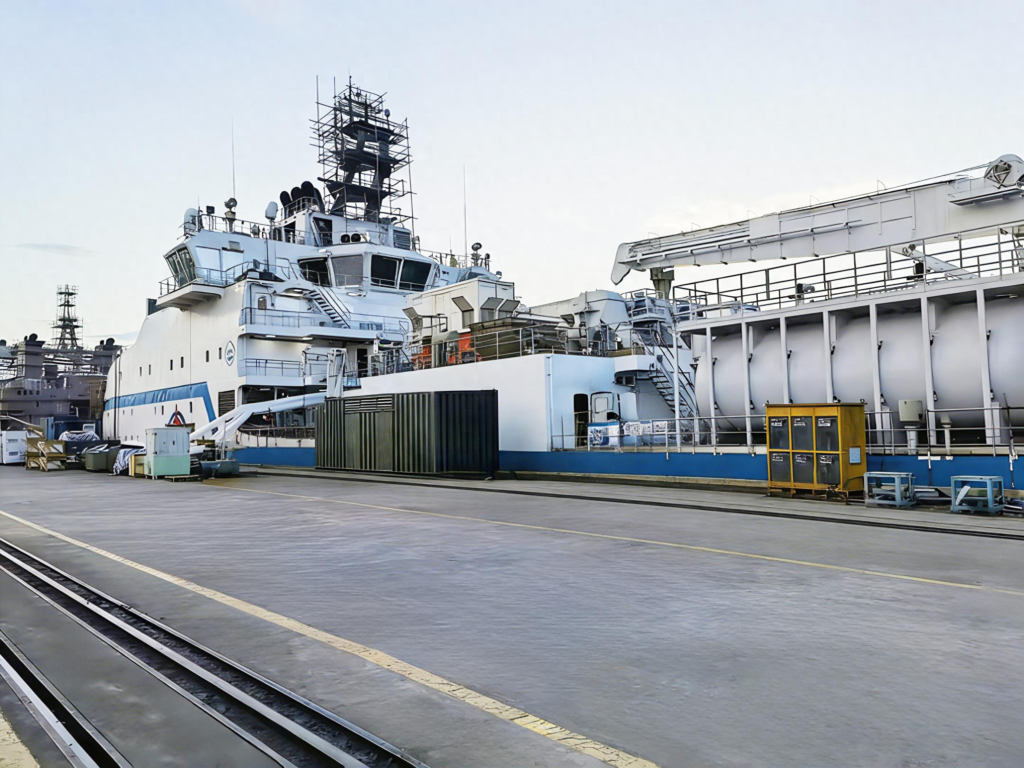
The client’s offshore fracturing vessel operates in the South China Sea, where space is extremely limited, weather conditions are volatile, and operational windows are often narrow. The vessel requires regular supply of dry bulk chemicals—specifically guanidine gel powder, gel breakers, and other production-essential powders and agents—to support continuous hydraulic fracturing operations.
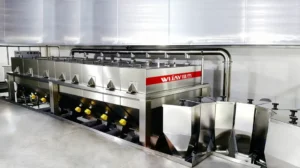
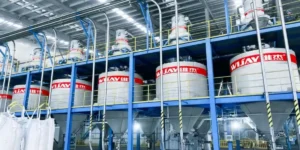
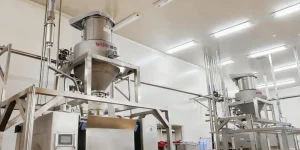
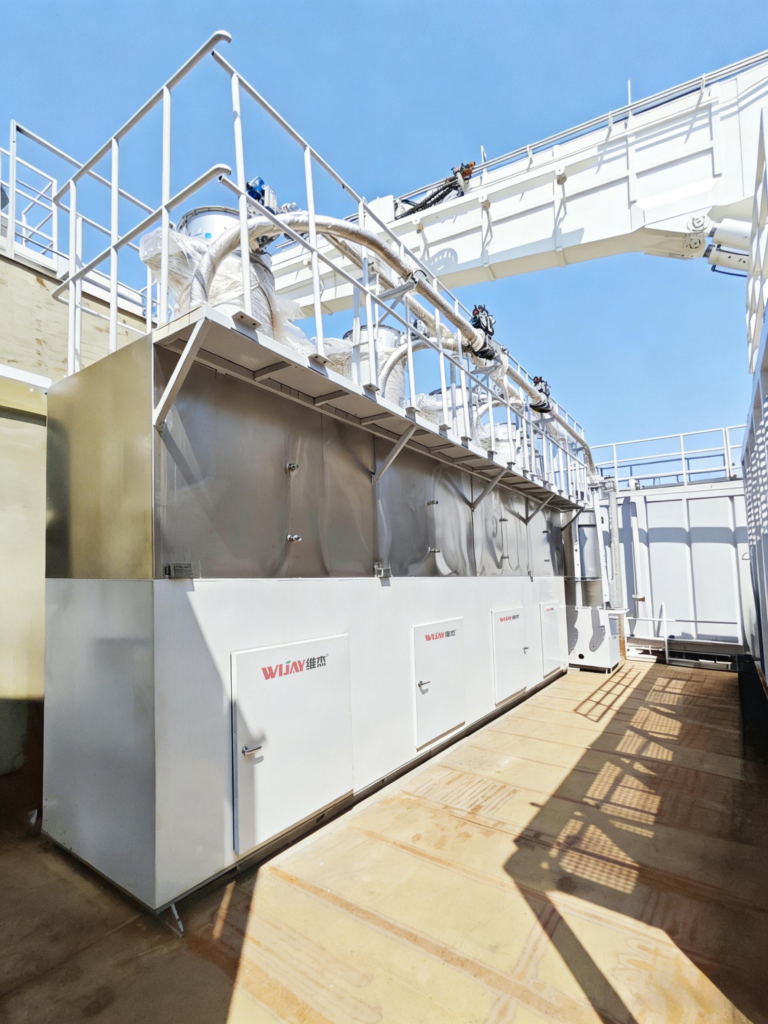
The system is specifically designed to convey guanidine gel powder, gel breakers, and other powders and agents essential for production. It functions like a “smart artery,” automatically and cleanly transporting materials from the deck to designated locations within the vessel’s storage and processing compartments, with a conveying capacity of up to 5 tons per hour. For offshore operation sites where space is at a premium and environmental conditions are harsh, this represents a dramatic upgrade in both efficiency and safety.
It is widely known that offshore environments present constant wind, waves, and vessel rolling, which impose extreme demands on equipment reliability and stability. The client had previously relied on manual bag handling—workers carrying 25kg bags across slippery decks, hoisting them to elevated hoppers, and manually cutting and emptying them. This process exposed workers to ergonomic injuries, chemical dust inhalation, and slip-and-fall accidents. Moreover, bag breakage and spillage resulted in material waste and potential marine contamination. The client urgently needed a solution that could handle the required throughput without compromising personnel safety or environmental integrity.
The WIJAY Solution: An Automated Material Handling System Engineered for the Sea
WIJAY‘s response was a purpose-built automated material handling system that not only met but exceeded the client’s expectations. The system was designed from the ground up to operate flawlessly under the most severe offshore conditions, incorporating multiple layers of engineering safeguards.
Fully Enclosed, Dust-Free, and Leak-Proof Conveying
The entire system is fully enclosed, ensuring zero dust emission and zero leakage. This design choice addresses two critical concerns simultaneously: protecting worker health by eliminating airborne powder exposure, and safeguarding the marine ecosystem by preventing any product release into the sea. The negative-pressure pneumatic conveying technology employed by WIJAY ensures that the conveying line operates under vacuum, so even in the unlikely event of a minor seal breach, air is drawn inward rather than allowing dust to escape outward. This closed-loop design also nearly eliminates material loss during transfer, directly contributing to cost savings and yield improvement.
Marine-Grade Certification and Explosion-Proof Compliance
All equipment in the system holds full marine product certificates and explosion-proof certifications. This is not a superficial compliance checkbox; every component—from motors and sensors to valves and control panels—has been tested and approved by recognized classification societies for offshore service. The explosion-proof ratings are essential given the potential presence of flammable gases in the vicinity of oil and gas operations, ensuring that the system poses no ignition risk.
Anti-Sway Reinforcement for Dynamic Vessel Motion
Special anti-sway reinforcement has been applied to all structural components to cope with the constant rolling, pitching, and heaving of the vessel. Unlike land-based systems that assume a stable foundation, offshore equipment must withstand dynamic loads that can exceed static weights by several times during storms. WIJAY engineers conducted finite element analysis to identify stress points and designed custom bracing and flexible mounting interfaces that absorb motion while maintaining precise alignment of conveying pipelines. This reinforcement ensures that the system remains operational even in rough seas, providing uninterrupted material supply to fracturing operations.
Intelligent Control with Remote Data Access
Through advanced intelligent control, material conveying is executed with pinpoint accuracy, and remote data viewing is enabled for convenient management. The PLC-based control system integrates with the vessel’s existing automation network, allowing operators to monitor real-time parameters such as conveying rate, system pressure, material levels in storage vessels, and equipment status. The remote access feature is particularly valuable: onshore engineering teams can log in to review historical data, diagnose potential issues, and optimize conveying parameters without having to board the vessel. This remote capability reduces maintenance costs and improves response time, ensuring that the system consistently delivers peak performance.
Implementation and Measured Results
The system was installed during a scheduled maintenance turnaround, with WIJAY’s field engineers working closely with the client’s offshore crew to minimize disruption to ongoing operations. After thorough commissioning and performance testing, the system was officially handed over for full production use.
The actual operational results have been truly impressive:
- Complete elimination of manual handling safety risks – Workers no longer need to lift, carry, or cut chemical bags, removing the primary causes of musculoskeletal injuries and chemical exposure incidents. The deck area is now free from bag debris and spilled powder, creating a cleaner and safer work environment.
- Overall conveying efficiency improved by over 60% compared to the previous manual process – The system consistently achieves its design capacity of 5 tons per hour, and because it operates continuously without the need for frequent breaks or bag changeovers, total daily throughput has increased significantly. The automated sequence also reduces the time required to switch between different material types.
- Material loss is almost completely avoided – The fully enclosed, negative-pressure design, combined with precision metering and recovery vessel, ensures that virtually every kilogram of powder delivered to the platform reaches its intended destination. This near-zero loss rate directly translates to substantial cost savings, given the high value of fracturing chemicals.
- Labor costs are greatly reduced – With the system handling the bulk of material transfer, skilled crew members can be redeployed to more critical tasks such as well monitoring and equipment maintenance. The client reports a notable reduction in man-hours dedicated to material logistics, contributing to overall operational efficiency.
Significance for Deep-Sea Energy Development
This successful deployment marks WIJAY‘s renowned pneumatic conveying technology being applied in the deep-sea domain for the first time at this scale, providing China’s offshore energy sector with a safer, more efficient, and environmentally friendly intelligent equipment alternative. The project demonstrates that automated material handling systems are not only viable but highly advantageous in the most challenging offshore settings. It also sets a benchmark for future offshore fracturing vessel designs, where integrated material automation can be specified from the initial shipbuilding phase rather than retrofitted later.
Post-Implementation Review: Lessons and Best Practices
What Made the Difference
- Early engagement of WIJAY in the design phase allowed the system to be customized to the vessel’s existing layout and operational workflows, avoiding costly modifications.
- Comprehensive on-site training for both operators and maintenance personnel ensured that the client’s team could fully utilize the system’s capabilities and perform routine troubleshooting independently.
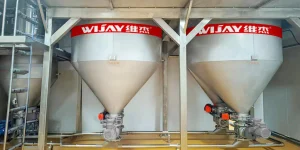
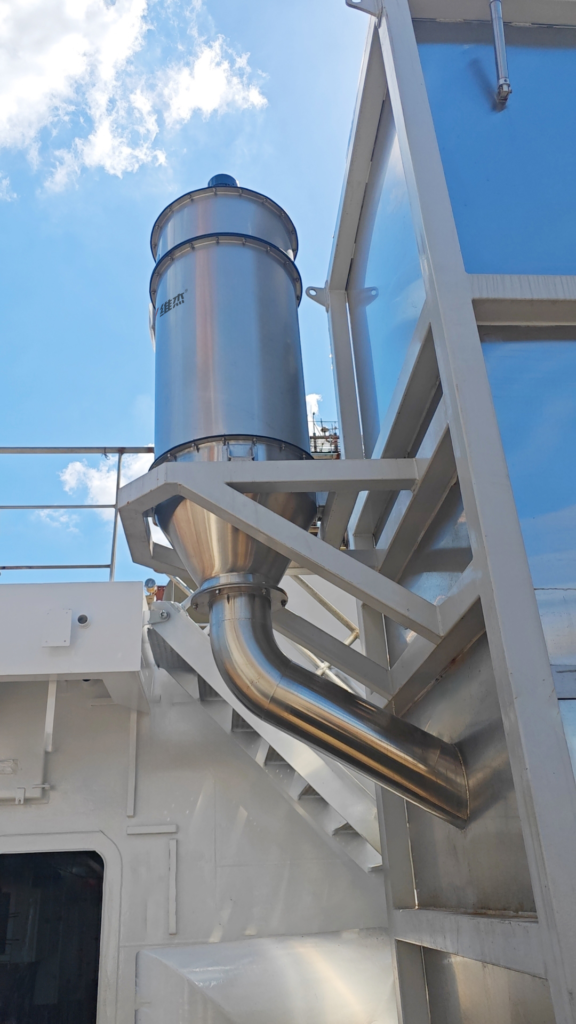
- Redundant components – such as parallel pressure vessels in the guanidine gel subsystem – provided operational continuity even during maintenance activities, preventing unplanned downtime.
Challenges Overcome
- Logistical constraints of delivering heavy equipment to an offshore platform required careful planning of lifting operations and deck load distribution. WIJAY’s project management team developed detailed lift plans that complied with the vessel’s dynamic stability criteria.
- Operator adaptation from manual to automated handling was managed through a structured training program that combined classroom theory with hands-on practice, gradually building confidence and competence.
Conclusion
The delivery of this automated material handling system to a major energy group’s offshore fracturing vessel represents a watershed moment for the industry. By replacing dangerous manual labor with intelligent, fully enclosed pneumatic conveying, WIJAY has proven that extreme-environment bulk material handling can be safe, precise, and environmentally sound. The system’s marine certification, explosion-proof design, anti-sway reinforcement, and remote monitoring capabilities collectively set a new standard for offshore material logistics.
WIJAY continues to innovate in the field of material automation, serving diverse industries including food processing, lithium battery materials, chemicals, and offshore energy. With over a decade of experience in powder conveying, liquid conveying, and integrated control systems, WIJAY is the partner of choice for companies seeking to enhance operational safety, efficiency, and sustainability.