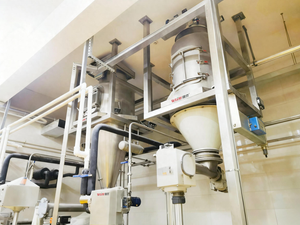
If you run a plant that moves powders, pellets, flakes, or bulk solids, you already know the feeling: a maintenance tech reconnects a line after a routine inspection, the crew brings the system back online, and somewhere in the back of your mind you’re hoping every clamp, every ground strap, every gasket went back exactly where it belonged. One overlooked connection point is all it takes to turn a quiet Tuesday shift into an evacuation, an incident report, and a production line down for weeks.
This isn’t a hypothetical. According to DustSafetyScience’s 2020 Combustible Dust Incident Report, the U.S. alone averages 31.8 combustible dust explosions per year, concentrated in chemical processing, food manufacturing, woodworking, and metals — the same industries running conventional pneumatic conveying and bulk material handling systems every day. Many of these events have resulted in fatalities, serious injuries, and multimillion-dollar losses in equipment, cleanup, and lost production.
Almost every process engineer, EHS manager, and plant operator would agree explosions should be avoided. Yet the standard industry playbook for managing dust explosion risk is still built around what happens after ignition: suppression, containment, and venting. These systems undeniably reduce damage compared to having no protection at all. But they all share the same structural weakness — they’re designed to activate only once an explosion has already started.
The Hidden Cost of Reactive Protection
Suppression, containment, and venting hardware represent real engineering achievement, and none of it is optional where it’s required by code. But “managing” an explosion after ignition still means:
- Emergency shutdown and evacuation procedures triggered
- Days to weeks of downtime for damage assessment, cleanup, and equipment recertification
- Insurance claims, incident investigations, and regulatory reporting
- Replacement of blast panels, hinged doors, or suppression canisters before the line can restart
- Lingering liability exposure even when no one is hurt
None of that happens if the explosion never occurs in the first place. That’s the shift more process engineers are making: instead of asking “how do we contain the blast,” they’re asking “how do we design the material handling system so the blast can’t form.”
The Three Ingredients Every Dust Explosion Needs
Every deflagration requires three things at the same time: a combustible fuel source, oxygen, and an ignition source. Remove any one of the three, and you’ve eliminated the risk entirely.
Fuel is usually the hardest variable to control in a production environment, because the raw material is the product you’re paid to move. Polyethylene powder, sugar, powdered milk, and grain dust are all commonly treated as “low-risk” materials — until particle size, moisture, or concentration shifts and they become highly combustible fuel sources.
Oxygen typically comes from ambient air inside the conveying system, with humidity and atmospheric pressure influencing the risk level. Purging a system with inert gas like nitrogen can eliminate oxygen, but for most bulk solids handling applications, full inerting is an expensive, operationally heavy solution that isn’t necessary.
Ignition is where real, practical prevention lives — and it’s the piece most conventional systems get wrong.
A Real-World Failure: One Misaligned Clamp
Consider a plastics processor using an automated pneumatic vacuum conveying system to move polyethylene powder from a storage silo to a twin-screw extruder for compounding. As the material travels through the ductwork, friction generates static charge — and the faster the conveying velocity, the greater the charge buildup. Because the system is fully enclosed and keeps fine dust particles out of the plant environment, it’s easy to assume the fire risk is contained along with the dust. It isn’t.
The system had been properly grounded at installation. But after a routine maintenance check, the clamp connecting the conveyor outlet to the extruder feed hopper was reinstalled slightly misaligned. That single connection point broke the grounding path. Static charge that should have dissipated safely into the earth instead built up — and ignited the polyethylene dust cloud. One clamp. One catastrophic loss.
Minimum Ignition Energy: The Number That Should Drive Your Design Decisions
Engineers designing pneumatic conveying and bulk material handling systems rely on Minimum Ignition Energy (MIE) to quantify how easily a given powder ignites. MIE is measured in millijoules (mJ) — the lower the number, the more sensitive the material, and the greater the risk.
Typical reference values include:
| Material | Approximate MIE |
|---|---|
| Grain dust | 55 mJ |
| Powdered sugar | 30 mJ |
| Magnesium powder | 20 mJ |
| Polyethylene | 10 mJ |
| Toner powder | 1 mJ |
As a general rule, materials with an MIE of 100 mJ or below require proper grounding of equipment and personnel, along with controls to prevent fine particles from remaining suspended in air. Materials at or below 25 mJ demand additional engineering controls due to their high ignition sensitivity.
Here’s the operational headache most spec sheets don’t tell you: MIE isn’t fixed. Small shifts in particle size, shape, moisture content, concentration, humidity, or atmospheric pressure can produce dramatically different MIE results for the same material batch to batch. A process line engineered around an MIE of 50 can run into serious trouble if a new material supplier delivers a batch that tests at 40. Blending, reacting, crystallizing, or co-conveying two individually “safe” materials can also produce a downstream MIE far more sensitive than either material alone. Any engineer specifying a material handling system needs to treat MIE as a moving target, not a fixed data point.
Why Suppression, Containment, and Venting Fall Short
Suppression systems use instrumentation to detect a deflagration in progress, mechanically isolate the blast within a vessel or section of the line, and inject a high-pressure chemical suppressant — commonly nitrogen — to extinguish the reaction in milliseconds.
Containment systems design equipment to withstand the maximum predicted explosion pressure for the materials and conditions in question, often incorporating rupture discs or other pressure-relief components so the explosion can occur without catastrophic structural failure.
Venting systems create engineered openings in vessels or ductwork that direct explosion force toward a safer location, such as outside the building. Blast panels, hinged doors, and similar covers help confine the majority of the force to a controlled area.
All three approaches are proven engineering. All three also share the same fundamental limitation: they only activate once ignition has already occurred. Even a successfully suppressed, contained, or vented explosion typically forces a production line offline for damage assessment, repair, and recertification — turning a preventable incident into planned downtime, unplanned cost, and regulatory scrutiny.
Designing Ignition Out of the Material Handling System
Since eliminating the fuel source usually isn’t practical — moving that material is the whole point of the operation — and full inerting with nitrogen is often more than most facilities need, the most practical and proven lever left is eliminating the ignition source itself.
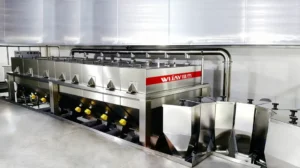
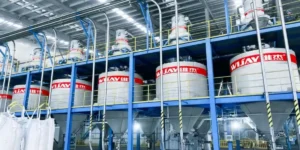
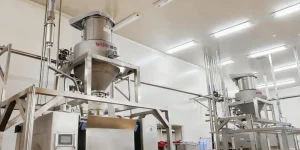
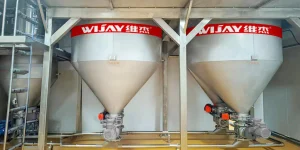
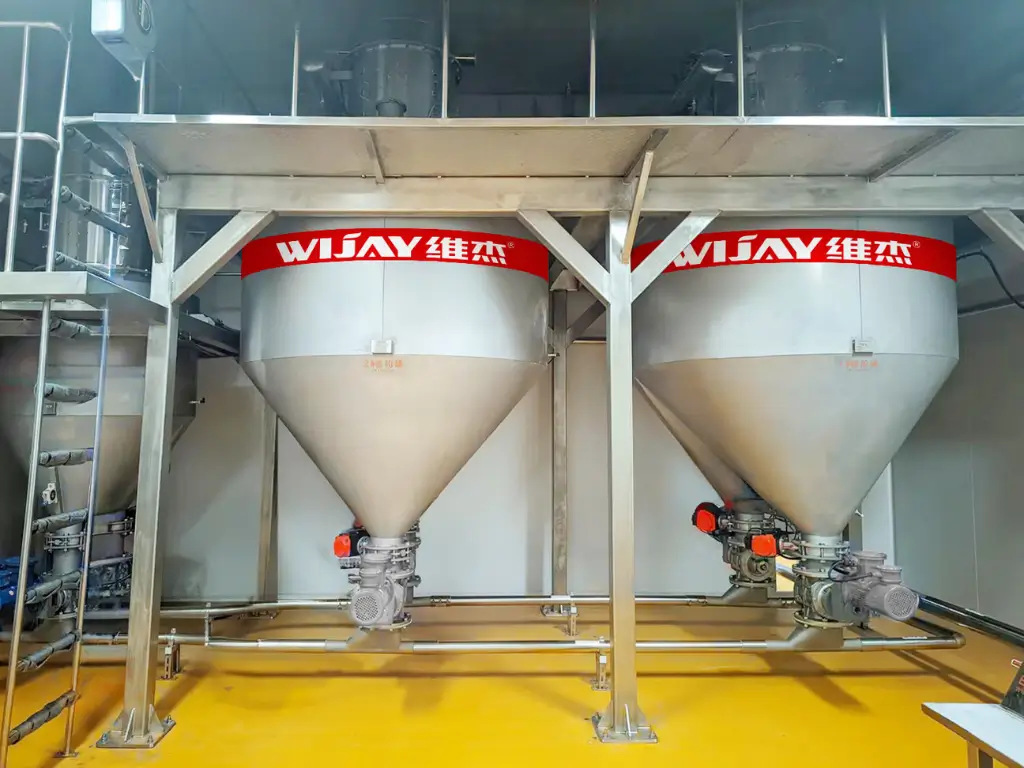
This is the design philosophy behind WIJAY’s pneumatic vacuum conveying systems. By operating entirely through pneumatic force — no electric motor, no rotating parts inside the conveying path, no heat generation — combined with proper electrostatic grounding throughout the line, these systems remove the ignition variable from the equation before material ever starts moving. WIJAY’s conveying equipment is ATEX-certified, engineered for safe installation in classified dust explosion hazard zones across chemical, food, wood, and metals processing.
WIJAY has supplied hundreds of these systems worldwide for conveying powders, granules, flakes, and other bulk materials — with zero incidents reported to date.
As facilities invest more heavily in workplace safety programs to meet a growing web of regulations, codes, and best-practice guidelines, more engineers are questioning the logic of designing systems that allow an explosion to happen safely, rather than designing systems that prevent it from happening at all. Preventing ignition isn’t just the more cautious engineering choice — it’s typically the lower lifetime-cost one, once you account for downtime, recertification, insurance, and liability exposure.
Frequently Asked Questions
Is suppression, containment, or venting ever still necessary if a system prevents ignition? For many low-MIE materials handled through a fully grounded, non-electric, non-rotating pneumatic vacuum conveying system, ignition-source elimination can serve as the primary line of defense. Facility-specific risk assessments — including material characteristics, process conditions, and applicable codes — should always confirm the final protection strategy.
How do I know if my current material handling system has an ignition risk? Start with a grounding and bonding audit at every connection point — clamps, flanges, flexible hose sections, and equipment interfaces — combined with an MIE assessment for your actual production materials, not just generic industry averages.
Does eliminating ignition sources cost more than suppression or venting hardware? Upfront equipment costs vary by application, but ignition-source elimination avoids the recurring costs of suppression canister recharges, blast panel replacement, downtime for damage assessment, and insurance premium impacts tied to explosion incidents.
What industries benefit most from ATEX-certified pneumatic vacuum conveying? Any operation handling combustible powders or granular materials — plastics compounding, food and dairy powders, pharmaceuticals, metal powders, and chemical processing — benefits from a material handling system engineered to remove static ignition risk at the source.
Ready to evaluate whether your current material handling system is managing explosion risk — or actually preventing it? Talk to a WIJAY process engineer about an ATEX-certified pneumatic vacuum conveying solution built around your specific material’s MIE and ignition profile, or explore our full range of dust-safe bulk material handling systems.