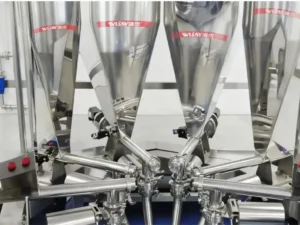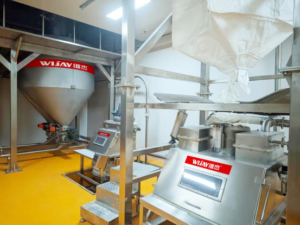
Walk through the bulk storage area of most plants handling powders, pellets, or granular product, and you’ll see the same scene: bulk bags lined up single-file across the floor, each one taking up more than a square meter of space it doesn’t need to, a forklift operator working carefully to avoid tipping a load that’s swinging slightly on its lift loops, and a discharge process that depends on someone manually cutting or untying a spout under a hopper. None of that is a failure of the bulk bag itself — it’s a failure of the system built around it.
The bulk bag, or FIBC, has become the default choice for storing and transporting dry bulk material across petrochemical, chemical, tire and rubber, food processing, plastics, pharmaceutical, battery-material, and agricultural operations for good reason: woven polypropylene construction resists tearing and abrasion, the bags are lightweight and chemically resistant, and they’re reusable and recyclable in a way that fits a plant’s sustainability targets far better than single-use packaging or dedicated bulk trucking equipment. Upgrading from 25-kilogram sacks to bulk bags is usually an easy efficiency and cost decision on its own.
What’s much less straightforward is getting full value out of that decision once the bags are actually in production — and that’s where most plants are still leaving money, floor space, and product quality on the table.
Where Standard Bulk Bag Handling Falls Short
| Challenge | The Real Problem |
|---|---|
| Safety risk | A loaded bag weighing 500–1,500 kg requires skilled handling; improper lifting or an unstable transfer creates a real tipping hazard |
| Hygiene control | Food and pharmaceutical operations need contamination prevention and bag materials suited to sanitary handling |
| Stacking instability | Loosely stacked bags are prone to toppling, and laying bags flat side-by-side burns through floor space fast |
| Equipment compatibility | Lift-loop and discharge-spout positioning varies bag to bag, which limits how well a given piece of handling equipment actually fits |
These aren’t edge cases — they’re the default condition on a lot of production floors, because most facilities treat the bulk bag as a standalone container rather than one component of an integrated filling, storage, and discharge system. When filling, transport, and discharge are each handled as separate manual steps, every one of those steps becomes an opportunity for a spill, a safety incident, or a quality issue.
What a Properly Engineered Bulk Bag System Actually Requires
Solving these problems at the system level — rather than patching around them bag by bag — comes down to three connected requirements:
Fill Efficiency Without Manual Rigging
A fill station that requires an operator to manually rig each bag’s lift loops onto a frame every time adds labor minutes to every single fill cycle, and inconsistent rigging is itself a source of tipping risk once the bag is loaded and in motion.
Transport and Stacking Density
A bag stored on the floor, unsupported, typically occupies more space than its footprint suggests once aisle clearance and tip-over margin are factored in. Without a structural frame that supports safe multi-level stacking, plants are effectively paying warehouse rent for air.
Controlled, Repeatable Discharge
Manual discharge — cutting a spout, untying a closure, or wrestling a bag into position over a hopper — is slow, inconsistent, and one of the more common points where product spills, cross-contaminates, or simply doesn’t fully empty from the bag, leaving unrecovered material as a quiet ongoing loss.
Engineering a Bulk Bag System That Solves All Three at Once
Fast, Consistent Filling
A properly engineered bulk bag handling frame lets an operator position an empty bag under a fill point and connect the lift loops to the frame in a single motion, without manual rigging for each cycle. The frame itself is designed for straightforward forklift positioning under the fill system, which keeps fill-cycle time consistent regardless of which operator is running the station.
Stable, High-Density Stacking
Because the bag is suspended and supported by its lift loops within a rigid frame rather than resting loosely on the floor, it stays stable during both internal warehouse transport and truck loading. That same frame structure is what makes stacking to heights of roughly 20 feet — six to seven bags high in typical configurations — a realistic, safe practice rather than a theoretical one, which can multiply usable storage density several times over compared to single-layer floor storage.
Controlled, Funnel-Bottom Discharge
A funnel-shaped discharge base, paired with a slide-gate closure at the bottom, gives operators direct control over material flow — opening incrementally for metered discharge or fully for a complete empty, rather than relying on a manually cut spout. That level of control matters directly for both product recovery and downstream process consistency.
A Real Production Case: Bringing Bulk Bag Filling In-House
A manufacturer of high-performance thermoplastic elastomer and thermoplastic compound materials illustrates what these gains look like in practice. Before restructuring its bulk bag process, the company shipped filled bags to a third-party logistics provider, where the bags were emptied into transport trucks — an extra handling step that added time, cost, and a meaningful quality risk, since product integrity and contamination control were no longer fully in the manufacturer’s hands once the material left the facility.
After evaluating alternatives — including dedicated bulk truck loading equipment and more complex conveying retrofits — the company brought bulk bag filling and discharge fully in-house using a modified frame system compatible with its existing stacker equipment, built on a custom platform positioned directly above its transport tankers. In operation, an operator opens the slide gate and material discharges directly from the bag into the tanker below — a process that’s clean, fast, and doesn’t require a third party to ever touch the product.
The company now runs 115 handling frames in production, filling bags at the point of manufacture and discharging directly into tankers on-site. Stacked two levels high in the warehouse, the frame footprint of roughly 1.44 square meters per bag — compared to about 1.21 square meters for a standard floor-stored bag — still delivers a net space saving of more than 60 square meters, since two-high stacking nearly halves the floor area required per bag in storage. Empty frames stay assembled and ready for immediate refill rather than being broken down and reassembled each cycle, saving operational time on every turnaround. With the process fully internalized, the manufacturer estimates a return on investment in the equipment within roughly four years, while eliminating the quality risk that came from third-party handling entirely.
What This Means for Plants Still Handling Bulk Bags Manually
The core lesson from this case isn’t specific to one material or one industry — it applies to any operation still treating bulk bag filling, transport, and discharge as three disconnected manual steps. Bringing those steps into a single integrated handling system reduces the number of points where a product can be spilled, contaminated, or lost, cuts the labor time built into every fill-and-discharge cycle, and reclaims warehouse floor space that’s currently being spent on inefficient single-layer storage.
For plants in petrochemical, chemical, food, plastics, pharmaceutical, battery-material, and agricultural processing already running or considering bulk bag storage and transport, the question worth asking isn’t whether bulk bags are the right container — it’s whether the surrounding handling system is actually built to get full value out of them. WIJAY Systems designs bulk material handling equipment, including bulk bag filling and discharge stations, as part of a fully integrated line — engineered around a plant’s specific throughput, floor layout, and material handling requirements rather than sold as a standalone accessory.
FAQ
How much warehouse space can a stackable bulk bag system actually save? In a documented production case, switching from single-layer floor storage to a two-high stackable frame system saved more than 60 square meters of floor space for the same number of bags, since stacking nearly halves the footprint required per unit. WIJAY factors this kind of stacking density directly into facility layout planning when specifying a bulk bag handling system.
What height can bulk bags safely be stacked to with a proper frame system? Properly engineered stacking frames can safely support heights of roughly 20 feet—around six to seven bags— compared to loose floor stacking, which is prone to toppling well before that height. WIJAY specifies frame structures rated for this kind of stacking density rather than defaulting to a generic frame not built for the load.
Does bringing bulk bag filling and discharge in-house actually pay off financially? In the case referenced above, the manufacturer estimated a return on investment within roughly four years after bringing bulk bag filling and discharge in-house, while also eliminating the quality risk tied to third-party handling. WIJAY designs bulk bag handling systems with that kind of ROI timeline in mind, factoring in labor savings, space reclamation, and reduced product loss.
How does a funnel-bottom discharge design improve product recovery compared to manual discharge? A funnel-shaped base with a slide-gate closure allows controlled, metered discharge directly from the bag, reducing the spillage and incomplete emptying that come with manually cutting or untying a spout. WIJAY integrates this discharge geometry into its bulk bag stations specifically to minimize unrecovered material loss.
Can a bulk bag handling system work with existing forklift or stacker equipment? Yes, when the frame is designed for compatibility from the start. In the production case above, the manufacturer used a modified frame configuration built to work with its existing stacker equipment rather than requiring new handling machinery. WIJAY designs its bulk bag systems with the same compatibility priority, matching frame configuration to a plant’s existing equipment wherever possible.