If you run production on an edible oil, blended oil, or oil-based additive line, you already know the two problems that never fully go away: oil finds a way out of every fitting it can reach, and fine powder finds a way into every corner of the room. Add a food-safety inspector to that picture, and most plants are one walkthrough away from a corrective action notice they didn’t see coming.
This isn’t a maintenance issue. It’s a design issue. Open-transfer equipment — the kind still running on a large share of edible oil and grain lines — was never built to hold liquid oil and powdered additives to the sealing standard that current food-safety regulation now expects. As inspection frequency rises and documentation requirements tighten, plants running on legacy conveying equipment are finding that the gap between “it still works” and “it passes audit” has gotten a lot narrower.
A pneumatic conveying system engineered specifically for combined liquid-oil and powder handling has become the practical answer — not because it’s the newest technology on the market, but because it’s the only design that closes the leak, dust, and traceability gaps at the same time.
Why Legacy Oil and Grain Conveying Equipment Keeps Failing Inspection
Open Transfer Points Are a Contamination Pathway, Not Just a Housekeeping Issue
Most older grain and oil lines still depend on manual transfer at some stage — pouring, scooping, or gravity-feeding oil and powdered additives between stations. Every open transfer point is a place where airborne dust settles into standing oil residue, and oil residue in turn traps dust and organic material against equipment surfaces. In a warm processing environment, that combination is exactly the microbial growth condition food-safety auditors are trained to flag.
Piping Leaks Are a Compliance Problem Before They’re a Cost Problem
Oil seepage at pipe joints and fittings doesn’t just mean lost product — it triggers environmental and workplace-safety corrective actions once inspectors identify it, and those corrective actions frequently mean a full line stoppage until the issue is resolved. On a production schedule with committed order volume, an unplanned shutdown for a fixable mechanical issue is one of the most avoidable sources of downtime a plant will face all year.
Dust Emissions Push Plants Into Environmental Non-Compliance
Powdered additives handled in open or partially open systems generate airborne dust that, without proper containment, can exceed permitted emission thresholds. That’s a separate compliance track from food safety — one that brings environmental inspectors into the plant on top of food-safety auditors, doubling the surfaces a plant has to defend during any review cycle.
No Data Trail Means No Defense During an Audit
Legacy equipment rarely captures anything electronically. Oil-to-additive ratios, batch sequencing, and equipment run status typically live in an operator’s log — if they’re recorded at all. When a product recall investigation, a clean-room certification review, or a safety-production inspection asks for batch-level production records, a plant running on undocumented manual transfer has nothing defensible to hand over. That’s not a minor paperwork gap; it’s the difference between a passed inspection and a shut line.
What a Compliance-Grade Pneumatic Conveying System Actually Requires
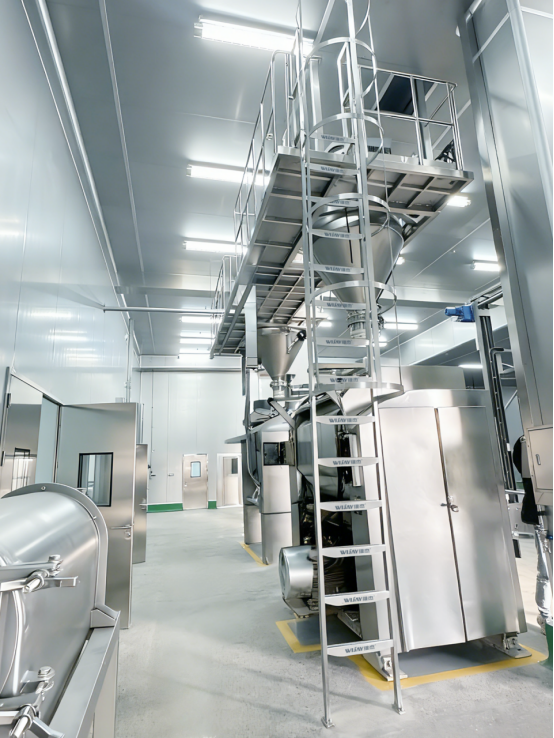
Manufacturers that have already solved this problem converge on the same four design requirements, and most legacy retrofits only address one or two of them:
- Fully sealed transfer for both liquid oil and powder — not separate systems bolted together after the fact
- Food-grade cleaning built into the line, not added as an afterthought
- Real-time fault detection for leaks, dust exceedance, and material shortfall — not discovered during a shift-end walk
- Automated data capture that integrates with the plant’s existing digital management system, rather than sitting as a standalone log
A system that only solves conveying and ignores documentation still leaves a plant exposed at the next inspection cycle. That gap is exactly where most competing conveying suppliers stop short.
Inside WIJAY’s Pneumatic Conveying System for Oil and Grain Processing
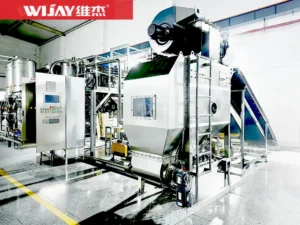
WIJAY Systems, with 16 years of dedicated work in pneumatic conveying, built this system specifically against edible oil and grain industry compliance standards — not as a general bulk-material system adapted after the fact.
Fully Enclosed Piping for Zero-Leak Oil Transfer
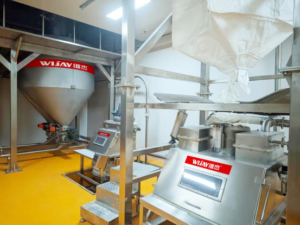
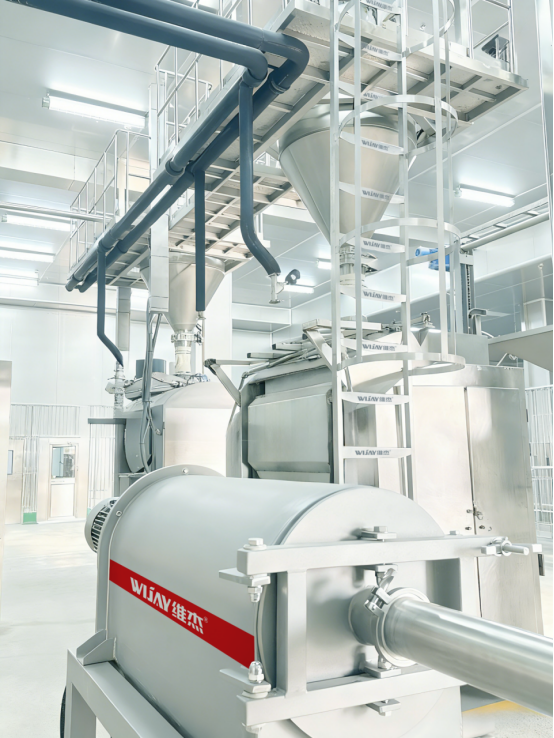
Liquid oil moves through a completely sealed pipe network engineered against seepage at every joint, eliminating the leak points that trigger environmental corrective actions and unplanned shutdowns. The design runs on stable, energy-efficient operation rather than high-pressure workarounds that stress fittings over time.
Dust-Free Powder Transfer for Additives and Auxiliary Materials
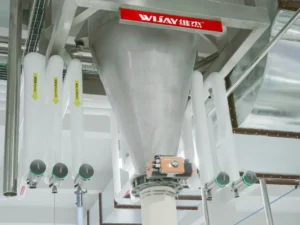
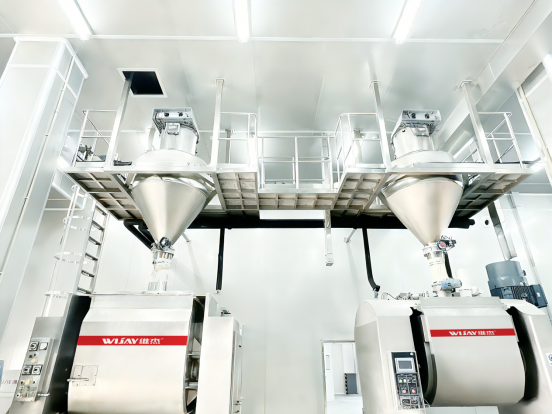
Powdered additives move through the same enclosed architecture using positive-pressure or dense-phase conveying, keeping particulate fully contained from intake to dosing point — removing the airborne exposure that drives both microbial risk and emissions non-compliance.
Food-Grade CIP Cleaning Built Into the Line
Integrated clean-in-place structures meet food-grade sanitation requirements directly, supporting clean-room certification and environmental inspection without requiring separate manual cleaning protocols between runs.
Unified Smart Control for Unattended Oil-and-Powder Batching
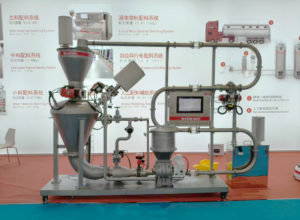
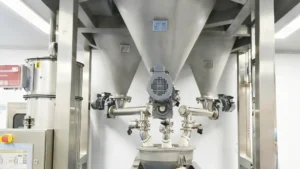
A single intelligent central control system coordinates liquid oil and powder dosing together, enabling unattended batching across both material types rather than running them as separate manual processes that have to be reconciled by hand.
Automated Data Logging With Real-Time Fault Alerts
Every batch’s production data is automatically archived, and the system flags leaks, material shortfalls, and dust threshold exceedances in real time — before they become a shutdown or an audit finding. The control interface is built to integrate with a plant’s existing digital management system rather than requiring a standalone platform.
Engineered for Different Oil and Additive Material Profiles
Refined oil, blended oil, and oil-based additives each behave differently in transfer. WIJAY configures positive-pressure or dense-phase conveying based on the specific material profile, so liquid oil and powdered additives can be dosed in sync without one process compromising the other.
Backed by Deep Technical Infrastructure
WIJAY operates a 2,000-square-meter dedicated R&D center and holds more than 100 proprietary patents in material automation, and is recognized as a high-tech and gazelle enterprise. That infrastructure has supported deployments for a range of grain, oil, and seasoning-oil manufacturers working through compliance-driven equipment upgrades — from full greenfield installations to targeted retrofits of specific line sections on existing production floors.
Why Oil and Grain Processors Are Upgrading Now
Regulatory scrutiny in food processing isn’t loosening, and the plants still running on open manual transfer are the ones absorbing the most inspection risk with the least documentation to defend themselves. A pneumatic conveying system doesn’t just move material more efficiently — it closes the leak points, dust exposure, and data gaps that currently put a plant’s compliance status at risk every time an inspector walks the floor.
WIJAY Systems designs both new-build lines and targeted upgrades for aging equipment, matched to your specific mix of liquid oil and powdered additives, your current floor layout, and your compliance timeline.
FAQ
How does a pneumatic conveying system prevent oil leakage compared to older piping? The system uses fully sealed piping engineered against seepage at every joint, removing the open connection points where legacy equipment typically leaks and triggers environmental corrective actions.
Can one system handle both liquid oil and powdered additives? Yes. WIJAY’s system uses a unified smart control platform to coordinate liquid oil and powder dosing together, with conveying method (positive-pressure or dense-phase) configured to each material’s specific profile.
What compliance documentation does the system generate automatically? The system automatically archives batch-level production data and flags leaks, material shortfalls, and dust threshold exceedances in real time, creating a defensible record for clean-room certification, safety inspections, and product traceability reviews.
Is this system suitable for retrofitting an existing oil or grain processing line? Yes. WIJAY designs both full new-line installations and partial retrofits for existing floor layouts, depending on the plant’s current infrastructure and compliance requirements.
Does the system integrate with existing plant management software? Yes. The control interface is designed to connect with a plant’s existing digital management system rather than operating as an isolated platform.