A plant manager we’ve talked with described it well: “We automated batching. We still have a dust problem, a traceability problem, and a labor problem.” That’s not a contradiction — it’s what happens when “automating batching” means installing one weighing station and leaving everything around it — intake, storage, transfer, mixing, record-keeping — exactly as manual as before.
This is the most common failure mode we see when food and confectionery plants attempt to modernize. A single automated scale or a standalone conveyor gets bolted onto an otherwise manual line, and the plant markets it internally as “automation” — while operators are still hand-dumping bags into hoppers upstream, dust is still drifting off open transfer points, and nobody can produce a clean batch record when an auditor asks for one. The equipment changed. The risk profile didn’t.
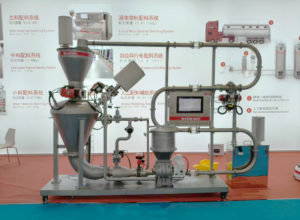
A batching system that actually solves food safety and production-loss problems has to be engineered as a closed loop, not a single station. That means six functional units working together — intake and storage, pneumatic conveying, precision weighing, automated mixing, and a control layer tying it all together — with no manual handoff between any of them.
Where Point-Fix Automation Breaks Down
Plants that automate only the weighing step typically run into three predictable walls:
Upstream contamination survives the upgrade. If bags are still being hand-cut and dumped into an open hopper before reaching the automated scale, cross-contact and airborne dust exposure haven’t gone away — they’ve just moved one step earlier in the process.
Storage becomes the weak link. Hygroscopic ingredients like powdered sugar and milk powder absorb ambient moisture in standard silos, clumping and bridging inside the vessel. Without dehumidification and anti-bridging fluidization built into storage, product quality drifts before it ever reaches the scale — and no downstream weighing accuracy can correct for material that’s already degraded.
Data stays fragmented. A standalone weighing unit produces a weight log. It doesn’t know what silo the material came from, how long it sat in storage, which line it fed, or whether the mixer that received it completed a full cleaning cycle beforehand. When a recall investigation needs the full chain of custody for a batch, fragmented data across disconnected machines turns a two-hour lookup into a multi-day forensic exercise — and every hour of that delay compounds against a line that may need to stay shut down until the investigation clears.
The commercial cost of this gap shows up in ways plants don’t always attribute correctly: raw material shrinkage from spillage at unautomated transfer points, rework from inconsistent mix quality, and labor that never actually drops because someone still has to babysit the manual steps around the “automated” one.
The Six Units a Complete Batching System Needs
1. Intake
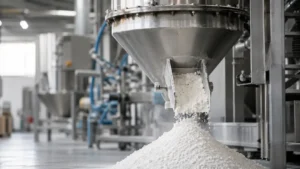
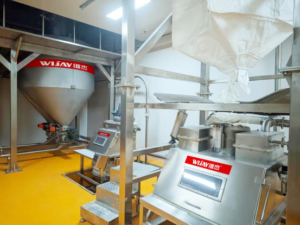
Raw material format varies — bulk bags, small bags, tanker-delivered liquids — and each needs a dedicated, enclosed unloading station. Bulk bag discharge stations and dust-free small-bag intake points, paired with pulse-jet dust collection, keep particulate contained at the exact moment bags are opened, which is where most airborne contamination actually originates. Inline de-ironing and sieving at intake catch foreign material before it ever enters the process.
2. Storage
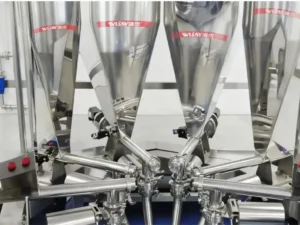
Outdoor bulk silos and in-process buffer/weigh vessels should be built in food-grade 304 stainless steel, with radar level sensing, anti-bridging fluidization, and temperature/humidity control for moisture-sensitive materials like sugar and milk powder. Separate, non-interconnected storage per ingredient — flour, starch, additives each in their own vessel with their own piping — prevents the cross-contact that shared storage introduces before batching even begins. CIP-ready ports on every vessel mean sanitation doesn’t require manual entry.
3. Pneumatic Conveying
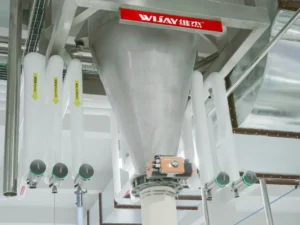
Positive-pressure, negative-pressure, or dense-phase conveying — selected per material characteristic — moves ingredients through fully enclosed piping across distances up to 300 meters horizontal and 150 meters vertical. No spillage, no exposure, and material loss that would otherwise show up as unexplained shrinkage on a yield report gets eliminated at the transfer step.
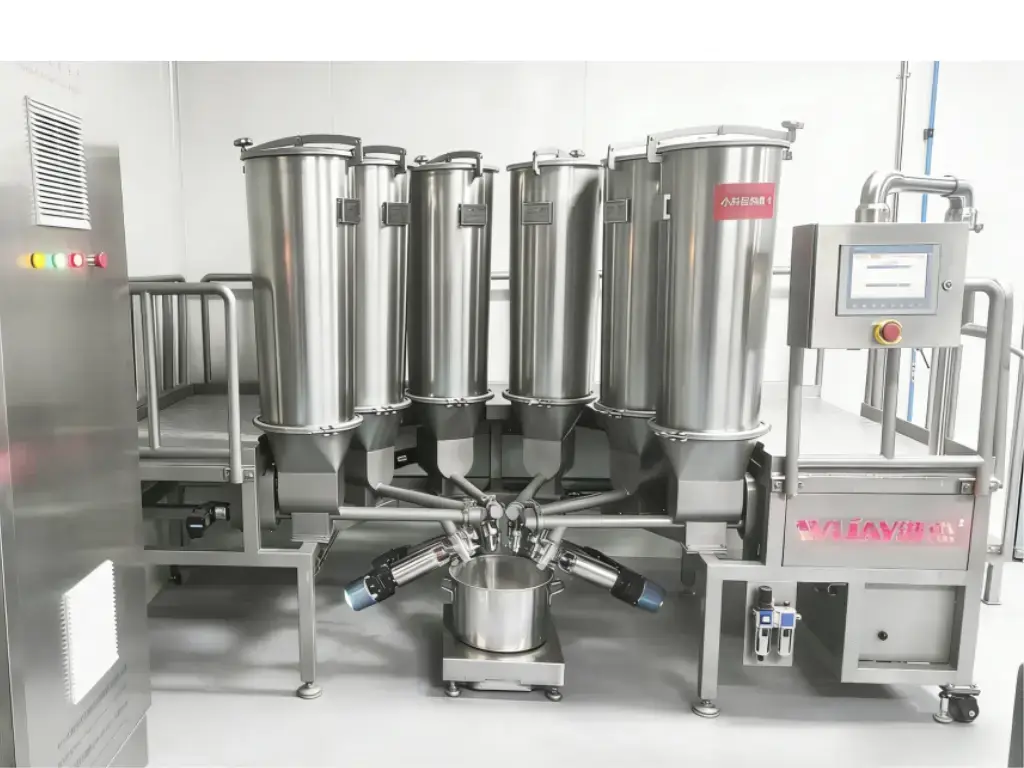
4. Precision Weighing
This is the unit most plants think of as “the batching system” — but on its own, it’s incomplete. A dynamic weighing module needs to distinguish between high-volume bulk ingredients and micro-dosed additives, applying the appropriate weighing precision to each. Engineered correctly, batch accuracy holds within ±0.3%, with the system sequencing multi-ingredient additions automatically according to a locked formulation — removing operator judgment from the step where dosing errors most often occur.
5. Automated Mixing
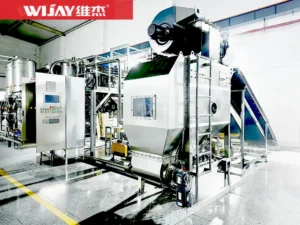
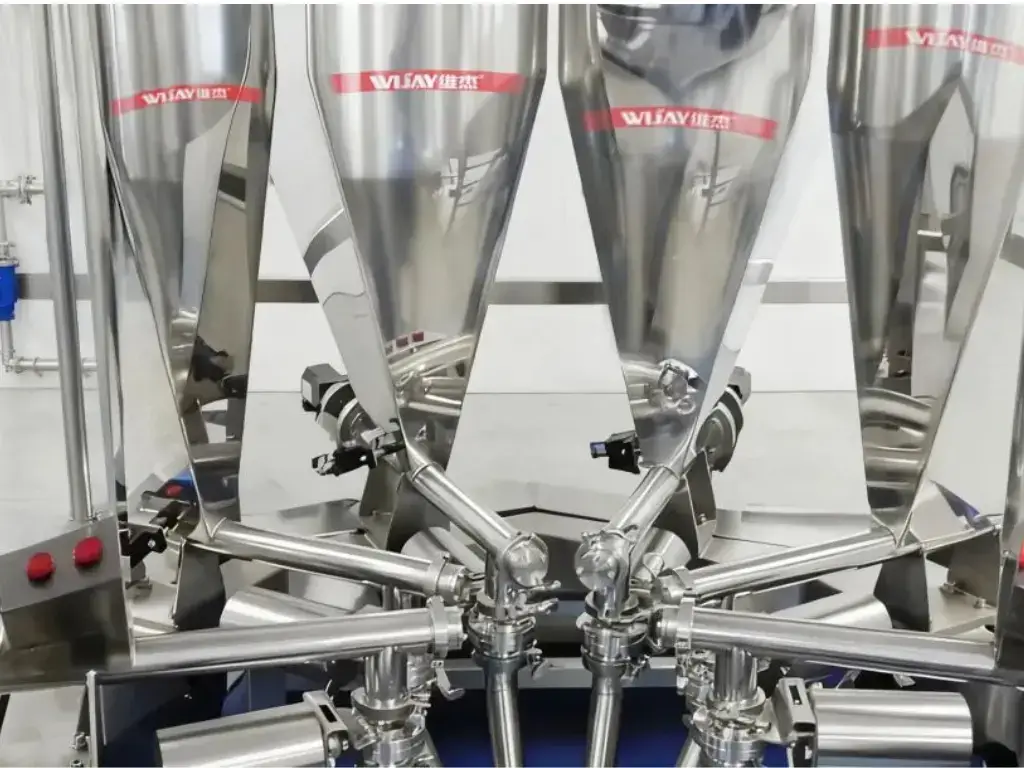
Weighed material transfers by closed piping directly into mixing equipment — dough mixers, blenders, or compounding units — with multi-station simultaneous feed for plants running several mixers in parallel. Mix timing and agitation duration are controlled automatically per formulation, which is what keeps flavor and texture consistent batch to batch, rather than dependent on an operator’s sense of “looks about right.”
6. Control Software
None of the previous five units function as a system without a control layer connecting them. A Siemens HMI-based platform ties intake, storage, conveying, weighing, and mixing into one digital record: thousands of stored formulations switchable in one action, real-time tracking of inventory levels, conveying throughput, batch weights, mix duration, and cleaning-cycle completion — all encrypted and exportable on demand. Automatic alarms for low material, line blockage, excess dust, or temperature deviation catch problems before they become downtime, and MES integration means the batching line reports into the plant’s existing production system rather than sitting as a data island.
What Changes When All Six Units Run as One Line
The difference between point automation and an integrated batching system shows up in staffing and traceability first. Lines built this way typically run with one to two operators handling monitoring and inspection — rather than staffing every transfer point — while raw material loss from spillage and manual handling drops accordingly. Batch records that used to take an afternoon to reconstruct from paper logs export in a single action.
WIJAY Systems engineers all six units as one connected specification, sized to throughput requirements from 15 to 30 tons per hour, and deployable either as a full turnkey line for a new food plant build or as a modular retrofit sequenced into an existing facility without a full production shutdown. The configuration flexes by product category — bakery, confectionery, oils and flour, and snack production each carry different material-handling requirements — but the underlying principle doesn’t change: a batching system is only as strong as its weakest disconnected unit.
If your plant has already automated the scale but is still troubleshooting dust, drift, or missing records, the gap usually isn’t in the weighing accuracy. It’s in everything the weighing station was never connected to.
FAQ
What’s the difference between a batching system and a weighing system? A weighing system measures ingredient quantity at a single point. A batching system connects intake, storage, conveying, weighing, mixing, and data control into one closed process — a weighing unit is only one of its six functional components.
Can a batching system be added to an existing plant without rebuilding the line? Yes. The six units can be installed as a modular retrofit sequenced around existing production, which is generally faster and less disruptive than a full-line rebuild, and is the more common path for facilities under compliance or capacity pressure.
How does a batching system prevent cross-contamination between different powders? By routing each ingredient through dedicated, non-shared storage and piping from intake through to weighing, rather than through shared chutes, hoppers, or open transfer points where different powders can mix.
What throughput range does an integrated batching system typically support? Engineered systems commonly scale from 15 to 30 tons per hour, with conveying distances up to 300 meters horizontal and 150 meters vertical, adjustable to a plant’s specific production targets.