Manually charging a reactor is one of the last places in many chemical and food processing plants where an operator still stands directly over an open vessel, dumping bags or drums of powder by hand while dust rises around them. It’s a task that depends on physical strength, careful sequencing, and a tolerance for repeated dust exposure — and it’s also one of the more common sources of batch-to-batch variation, since the exact quantity charged and the pace at which it enters the reactor depend on whoever happens to be doing the charging that shift. When something goes wrong at this step — an overcharge, a spill, a dust cloud that lingers longer than it should — the consequences show up downstream as an off-spec batch or a documented safety incident, neither of which is easy to walk back.
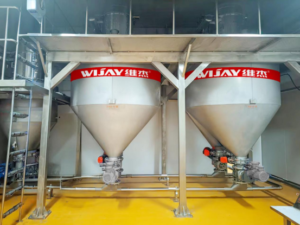
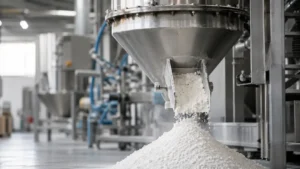
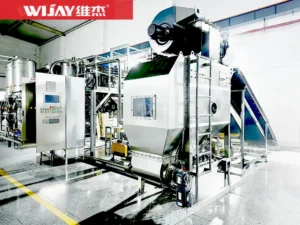
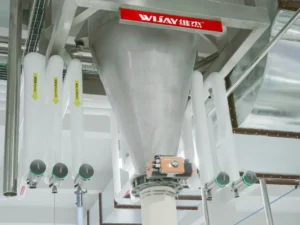
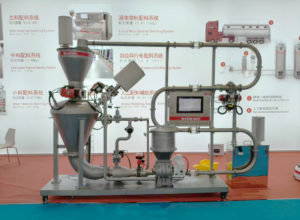
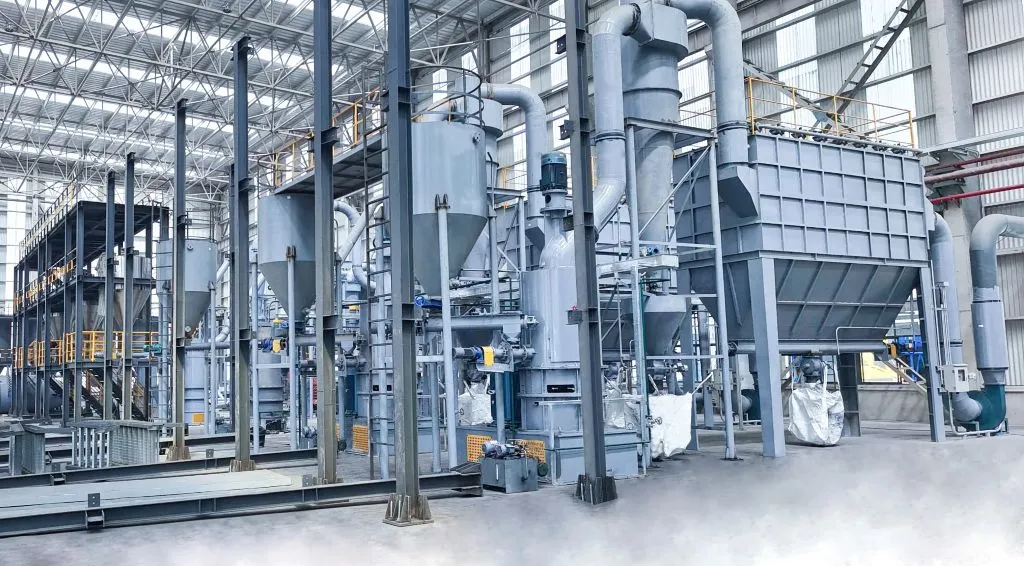
Pneumatic conveying eliminates this exposure by automating reactor filling. Bulk materials — powders, granulates, or mixtures — are fed reliably into stirred tanks or reactor vessels without manual intervention, which is a decisive improvement for both occupational safety and process consistency. A flexible system design allows both unpressurized and pressurized reactors to be filled efficiently and without dust: source containers such as bulk bags, drums, or silos are emptied through a dust-tight docking connection, and product moves directly to the reactor via gas flow with minimal loss along the way. Depending on process requirements, either suction (vacuum) or pressure conveying handles the transfer, with integrated weighing and precise dosing control ensuring exact batch sizes rather than approximate ones. Conveying distances ranging from a few meters to well over 100 meters are achievable depending on system design, which means this isn’t a solution limited to reactors sitting immediately next to material storage.
Why Manual Reactor Charging Creates Structural Risk, Not Just Inconvenience
The problems with manual reactor charging aren’t limited to the physical strain on operators. Every manual charging event is an open-air transfer point, which means dust exposure isn’t an occasional risk — it’s a recurring condition every time a batch gets charged. For reactive or hazardous powders, that recurring exposure compounds real occupational safety concerns over time. Batch consistency suffers as well, since the exact rate and quantity of material entering the reactor depends on operator technique rather than a controlled, repeatable process — a variable that’s difficult to fully document for regulated processes that require traceable batch records. Sealed, automated conveying removes the open-air transfer point entirely, which is what actually solves both the safety exposure and the consistency problem simultaneously, rather than trading one for the other.
Vacuum Conveying: Maximum Flexibility for Dust-Free Filling
Vacuum conveyors are particularly well suited to conveying distances in the 10 to 20 meter range, and two proven configurations cover most reactor filling scenarios.
Collecting Product in a Vacuum Receiving Vessel Above the Reactor
In this configuration, product is drawn by vacuum into a receiving container positioned directly above the reactor, then discharged down into the vessel below. This approach works well where the reactor design or available headspace makes direct suction into the vessel impractical, giving the system a staging point that decouples the conveying cycle from the reactor’s actual fill sequence.
Direct Suction Into the Reactor
Alternatively, product can be drawn by vacuum directly into the reactor itself, without an intermediate receiving vessel. This configuration works well where reactor geometry and available space support it, and it simplifies the overall system by removing an additional transfer stage.
Both vacuum conveying configurations enable safe, dust-free, and fully automated filling, even in demanding processes involving reactive or sensitive materials — the choice between them comes down to the specific reactor’s design and the physical space available around it, not a difference in underlying safety or reliability.
Pressure Conveying: Handling More Demanding Reactor Processes
Where reactor processes place additional demands on the conveying system — higher back pressure, larger conveying distances, or materials that need gentler handling — pressure conveying offers a more capable alternative to vacuum conveying.
Dilute-Phase Conveying With a Rotary Valve for High-Speed Transfer
In this configuration, product is introduced into the airstream through a rotary valve and transported at high conveying velocity using overpressure, independent of the reactor’s own operating pressure. This approach suits applications where conveying speed matters more than gentle particle handling, and where the material itself can tolerate the higher-velocity impact that dilute-phase conveying involves.
Dense-Phase Conveying With a Pressure Vessel for Gentle Handling
For materials that can’t tolerate high-velocity impact — friable products, particle blends where segregation is a concern, or materials sensitive to mechanical stress — dense-phase conveying using a pressure vessel moves product at lower velocity with reduced gas volume relative to dilute-phase conveying. This gentler transport method allows even sensitive products and processes with elevated back pressure to be handled safely and efficiently, without the particle degradation that higher-velocity conveying can introduce.
Gas-Tight Pressure Vessels for Targeted Introduction
Gas-tight pressure vessels extend pressure conveying’s capability further, allowing product to be introduced in a targeted way against existing pressure conditions inside the reactor, or even below the liquid level in processes where that’s required. This capability adds meaningful process reliability and flexibility for reactor operations that vacuum conveying alone can’t reliably support. Positive pressure conveying configurations can also reduce the physical footprint required directly above the reactor — a practical benefit in facilities where headspace around the vessel is already constrained by other equipment.
Choosing Between Vacuum and Pressure Conveying for a Specific Reactor
The decision between vacuum and pressure conveying comes down to a small set of process-specific factors rather than a universal preference for one method over the other: the reactor’s operating pressure, the conveying distance involved, the material’s sensitivity to mechanical impact, and whether product needs to be introduced against existing pressure or below a liquid surface. Vacuum conveying tends to be the simpler, more space-efficient solution for shorter distances and unpressurized or lightly pressurized reactors. Pressure conveying — particularly dense-phase conveying with a gas-tight pressure vessel — becomes the better fit as conveying distance increases, as reactor back pressure rises, or as material sensitivity rules out higher-velocity transfer.
What This Means for Facilities Still Charging Reactors Manually
The core case for automating reactor filling through pneumatic conveying isn’t just efficiency — it’s the elimination of a recurring, well-documented exposure point in the process, combined with the batch consistency that comes from precise, repeatable dosing rather than operator judgment. Facilities weighing this transition should evaluate their reactor’s operating pressure, the physical distance between material storage and the reactor, and the specific material’s sensitivity to mechanical handling before selecting between vacuum and pressure conveying — the wrong choice on paper still moves material, but it won’t deliver the same gentle handling, space efficiency, or process reliability that a properly matched system provides.
WIJAY Systems designs pneumatic conveying systems for reactor filling and similar high-precision transfer applications with this same evaluation built into the process — matching vacuum or pressure conveying, and dilute-phase or dense-phase configuration within pressure conveying, to the reactor’s actual operating conditions and the material’s specific handling requirements, rather than defaulting to whichever method is simpler to install. For chemical and food processing facilities still charging reactors by hand, that kind of matched system design is what turns manual reactor filling into a fully automated, dust-free, and precisely dosed process.
FAQ
Is vacuum or pressure conveying better for reactor filling? Neither is universally better — the choice depends on conveying distance, reactor operating pressure, and material sensitivity to mechanical impact. WIJAY evaluates these factors for each application before recommending vacuum or pressure conveying rather than defaulting to one method.
How far can pneumatic conveying transport material to a reactor? Vacuum conveying works well for distances of roughly 10 to 20 meters, while pressure conveying can handle distances from a few meters up to well over 100 meters depending on system design. WIJAY specifies conveying distance and method together based on the actual layout between storage and the reactor.
Can pneumatic conveying handle materials that are sensitive to mechanical stress? Yes, with dense-phase pressure conveying using a pressure vessel, which moves material at lower velocity and reduced gas volume compared to dilute-phase conveying, minimizing particle degradation. WIJAY specifies dense-phase conveying specifically for friable or stress-sensitive materials where dilute-phase transfer would cause damage.
Can pneumatic conveying introduce material into a pressurized reactor or below a liquid surface? Yes, using gas-tight pressure vessels designed for targeted introduction against existing pressure conditions or below the liquid level inside the reactor. WIJAY designs this capability into pressure conveying systems where the reactor’s process conditions require it.
Does automating reactor filling with pneumatic conveying actually improve batch consistency? Yes. Integrated weighing and precise dosing control ensure exact batch sizes on every charge, removing the variation introduced when charging rate and quantity depend on operator technique. WIJAY builds this dosing precision directly into its reactor filling system designs rather than treating it as an optional add-on.