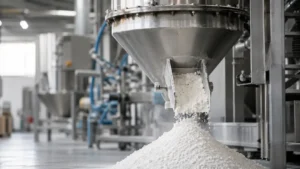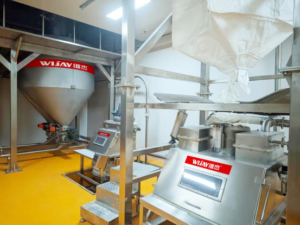
An operator opens a drum of a moisture-sensitive powder in an unsealed area, and by the time the material reaches the process vessel, it’s already picked up enough ambient humidity to start clumping in the feed line. A reactive compound gets loaded without an inert purge, and a slow oxidation reaction starts degrading product quality before anyone notices. A bulk bag discharges into an open vessel because that’s how it’s always been done, and dust released during that transfer becomes an air quality problem, a housekeeping burden, and — with the wrong material — a combustible dust hazard the plant hadn’t fully accounted for.
None of these are equipment failures in the conventional sense. The equipment usually does exactly what it was built to do. The failure happens earlier, at the design stage, when a bulk material handling system gets specified around generic assumptions instead of the specific material’s actual behavior — its particle size and shape, its hygroscopicity, its reactivity, its bulk density, and how all of that changes once the material is moving through conveying equipment rather than sitting in a bag or drum.
Bulk material handling in chemical manufacturing has always demanded precision, but today’s production environments raise the bar further. Materials vary enormously in flow properties, reactivity, and contamination risk. Some behave unpredictably the moment they’re exposed to humidity or oxygen. Others carry verified combustible dust hazards that demand engineered protection, not just careful handling. Designing a system that moves these materials reliably has stopped being a purely mechanical problem — it’s a multi-variable engineering challenge shaped by material science, process control, and environmental safety working together.
Understanding Material Behavior: The Foundation of System Design
Engineering a bulk material handling system starts with one question, asked before any equipment gets specified: what is this material actually going to do once it enters the system? Particle size and shape, cohesiveness, hygroscopicity, and bulk density directly determine whether a material moves freely, forms agglomerations under its own weight, degrades under mechanical stress, or absorbs moisture during conveying. Even packaging format — kraft bags, drums, totes, bulk bags — affects how predictably material feeds into the system from the very first step.
Flow mode matters just as much as the material itself. Batch operations require tight control over dosing and isolation between runs, while volumetric or continuous processes need steady-state movement that avoids both starvation and surging. Intermittent flow behaves differently from uninterrupted flow, and each scenario places distinct demands on receiving equipment, conditioning stages, and conveyor selection — a system tuned for one flow mode will underperform, sometimes badly, if the actual process runs the other way.
Designing around these properties from the outset is what keeps the rest of the line stable. Materials that generate dust clouds during emptying need sealed transitions, not open discharge points. Powders prone to hard agglomeration may need conditioning before they ever reach a conveyor. Oxygen-reactive compounds need inert gas environments to prevent oxidation or decomposition in transit. None of these considerations are optional extras — they’re foundational, and skipping them means even well-built equipment underperforms against a material it was never actually engineered to handle. Getting this level of insight almost always requires detailed, upfront conversations with plant teams about material characteristics, packaging, flow modes, and process constraints before a single component gets specified.
Containment and Atmospheric Control: Where Safety and Product Integrity Converge
The point where an operator physically interacts with raw material is also the point where risk is highest — for the operator and for product integrity alike. That’s why containment interfaces creating a sealed environment for opening and emptying raw material packages have become standard practice in modern chemical plants. These aren’t simple physical barriers; they’re engineered environments with defined, controlled atmospheric conditions.
When a hazardous or oxygen-sensitive material is loaded into a sealed containment chamber, the chamber is sealed and purged — typically with nitrogen — until oxygen levels drop to a safe threshold, and only then does the operator receive confirmation that it’s safe to open the package. Once emptied, material moves directly into a closed conveying path, and the chamber returns to ambient atmosphere so the operator can remove the empty packaging without exposure risk.
That cycle establishes a predictable, repeatable method for isolating material from both the operator and the surrounding environment. For oxygen-reactive materials, the purge process is what prevents an unwanted chemical reaction from ever starting. For materials hazardous to people, containment eliminates dust exposure and airborne particulate at the source. In both cases, predictable atmospheric conditions protect product integrity while minimizing cross-contamination risk between materials handled in the same facility.
Environmental classification shapes this design further. In facilities handling combustible dusts or volatile compounds, explosion-proof controls and classified-area-rated components aren’t optional specifications — they’re mandatory ones. Matching controls and components to the correct area classification protects operators, prevents ignition of combustible dust, and maintains compliance with plant and regulatory safety requirements over the full life of the system. Engineering for compliance means more than meeting a code checklist at commissioning — it means designing a system that continues to behave safely as materials, conditions, and process steps evolve over years of operation.
Sealed Conveyance and Mechanical Design: Moving Material Gently and Predictably
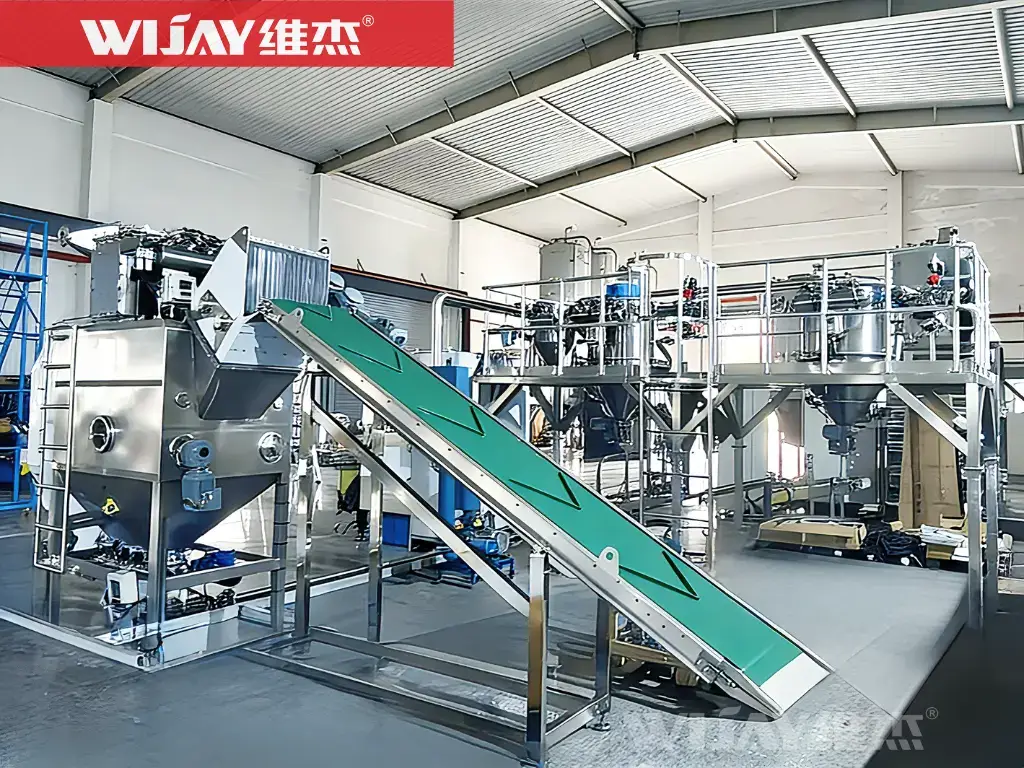
Once material leaves the unloading zone, the conveyance method directly affects both product quality and plant air quality. In many chemical facilities, bulk bags are still discharged directly into open vessels — a method that moves large quantities quickly but releases dust, causes material loss, and introduces avoidable safety hazards in the process. Shifting bag handling to fully enclosed, floor-level discharge points improves air quality by containing dust, vapor, and odor at the source, while simultaneously reducing operator exposure and the likelihood of flammable dust or vapor ignition. Enclosing the conveyance path removes these risks entirely and creates a genuinely controlled environment for sensitive materials.
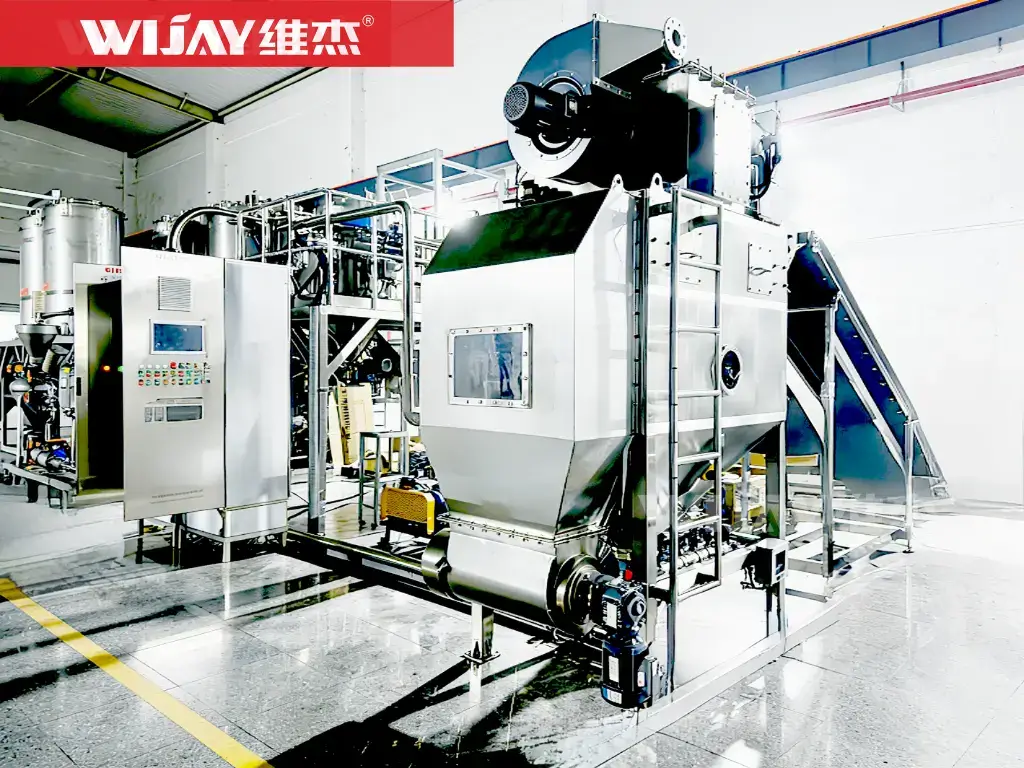
Tubular drag conveyors are frequently the right choice for gentle, consistent powder movement. They typically operate at low speeds — often below 40 feet per minute — moving material en masse rather than accelerating individual particles the way many conveying methods do. That combination of slow velocity and high torque reduces particle degradation, preserves blend uniformity, and minimizes segregation across the conveying run. Because the system is fully sealed, powders stay isolated from ambient humidity and oxygen throughout transit, and the line itself can be purged with nitrogen wherever inert conditions are required.
Mechanical design choices matter directly to performance here. Lower conveying speed reduces frictional heat, which lowers ignition risk when handling combustible dust — a real consideration, not a theoretical one, in facilities processing fine reactive powders. Higher torque lets the conveyor move material using less horsepower, improving energy efficiency across continuous operation. Throughput scales with conveyor diameter, which typically ranges from 3 to 12 inches depending on the material’s volume and physical properties. None of these details are incidental — they collectively determine operational stability and long-term reliability.
Automation, Compliance, and Engineering Adaptability
Automation has become central to chemical processing, especially wherever manual weighing or bag counting introduces variability or ergonomic strain on operators. Automated batching, recipe control, and PLC-driven sequencing deliver consistent dosing and batch integrity that manual methods can’t reliably match over time. Modern systems integrate into existing plant controls through hardwired connections or Ethernet links, reducing commissioning time and improving interoperability between legacy and newly installed equipment.
High-purity and contamination-sensitive processes demand an additional layer of control. Dust-tight construction prevents particulate migration between process zones, while inert gas purging protects reactive powders throughout handling. Surface finish matters more than it might seem — polished internal and external surfaces simplify wipe-down cleaning, and clean-in-place configurations support validated washdown processes required in regulated industries. Material compatibility across construction options — stainless steel, specialized plastics, elastomers — ensures equipment durability when handling corrosive or chemically aggressive powders. The ability to specify different metals, plastics, and elastomers to coexist with a facility’s specific chemical profile is frequently what allows a system to meet performance and compliance requirements simultaneously, rather than trading one off against the other.
Compliance in this context isn’t only about meeting a regulatory checklist — it’s about understanding the operational realities specific to each facility. Facilities vary widely in layout, hazard classification, material profile, and operator workflow, and effective system design requires comprehensive upfront discussion to surface those variables early: whether the system serves a midstream or standalone process, how steady or intermittent the required flow will be, and whether batch or volumetric operation actually aligns with the plant’s process objectives. Without that depth of understanding built in from the start, even well-engineered individual components can end up misaligned with a plant’s actual operating conditions.
What This Means for Facilities Handling Reactive or High-Risk Powders
Smarter bulk material handling in chemical manufacturing ultimately comes down to accurately anticipating how a specific powder behaves and designing every stage of the system around that behavior rather than around generic assumptions. Particle dynamics inform equipment selection. Environmental conditions — oxygen exposure, humidity, classified-area requirements — shape containment strategy. Mechanical design choices determine whether material moves gently and predictably or degrades in transit. Control architecture and construction materials determine whether the system stays stable, hygienic, and compliant for years, not just at commissioning.
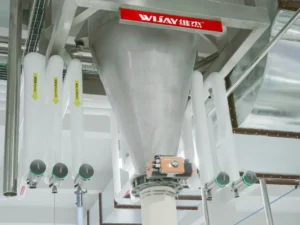
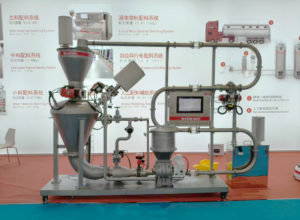
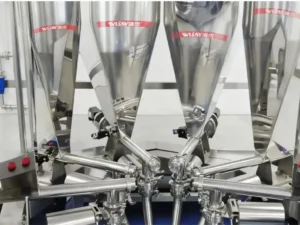
WIJAY Systems applies this same material-first design principle to the bulk material handling and pneumatic conveying systems it builds — starting with the material’s actual particle size, hygroscopicity, reactivity, and flow characteristics, and engineering containment, conveyance, and control around those specific properties rather than fitting the material into a generic equipment template. As chemical manufacturing continues moving toward higher purity standards, stricter safety classification, and more specialized reactive powders, that engineering-first approach — grounded in detailed conversation with the people who actually run the process — is what keeps handling infrastructure reliable as materials and requirements evolve.
FAQ
Why does bulk material handling equipment underperform even when it’s mechanically well built? Underperformance usually traces back to equipment specified around generic assumptions rather than the material’s actual particle size, hygroscopicity, reactivity, and flow behavior. WIJAY starts every system design with material characterization specific to the customer’s actual product, not a standard equipment template.
When is containment with inert gas purging necessary in bulk material handling? Inert purging is essential for oxygen-reactive materials, where exposure to ambient air can trigger unwanted oxidation or decomposition during unloading. WIJAY specifies sealed containment with nitrogen purge capability wherever a material’s reactivity profile calls for it, rather than treating it as a universal default.
What makes tubular drag conveyors a common choice for sensitive powders? Their low operating speed and high torque move material en masse rather than accelerating individual particles, which reduces degradation, preserves blend uniformity, and limits segregation — while full enclosure keeps the material isolated from humidity and oxygen throughout conveying. WIJAY specifies this conveying method specifically where gentle, predictable movement is a priority.
How does classified-area requirement affect bulk material handling system design? Facilities handling combustible dusts or volatile compounds require explosion-proof controls and classified-area-rated components as a mandatory baseline, not an optional upgrade, to prevent ignition and maintain long-term regulatory compliance. WIJAY matches control and component specifications to a facility’s actual area classification during system design.
Why does bulk material handling system design require upfront conversation with plant teams before equipment is specified? Facility layout, hazard classification, material profile, and operator workflow vary widely between plants, and effective design depends on surfacing those variables early rather than assuming a generic configuration will fit. WIJAY treats this upfront material and process discussion as a required design step, not a formality before quoting equipment.