Most quality incidents that get logged as a “packaging line issue” didn’t actually start at packaging. They started upstream — a screen that was undersized for the batch, a mesh that wasn’t matched to the product’s moisture content, or a sieving step that was treated as a formality instead of a control point. By the time the problem shows up on the packaging line, it’s already too late to fix cheaply. Industrial vibratory sieves installed correctly right before packaging are the last real opportunity to catch what got missed further up the line — and in our experience, that’s exactly where a surprising number of plants leave the gap open.
Why Sieving Right Before Packaging Actually Matters
Before material reaches the packaging line, it has to be clean, consistent, and free of anything that shouldn’t be there — clumps, oversize particles, foreign material, or residual debris from upstream handling. In food, pharmaceutical, and chemical production alike, vibratory sieves are the mechanism that enforces that standard at the point where there’s no more opportunity to correct it downstream.
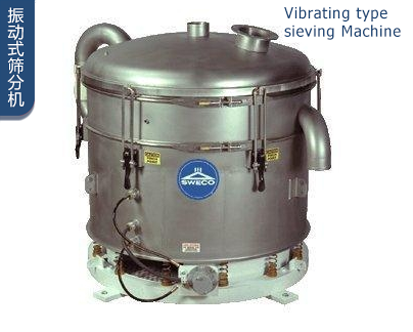
The operating principle is straightforward: controlled vibration moves material across a mesh screen, letting correctly sized particles pass through while retaining anything oversize or clumped. What’s not straightforward is getting the vibration frequency, mesh specification, and screen configuration matched to your actual product — which is where most of the real-world failures we’ve seen actually originate, not in the sieve’s basic function.
A Case Worth Sharing: When “It’s Already Sifted” Wasn’t Enough
We worked with a plant running a dry powder blend that kept triggering intermittent blockages right at the packaging feed — not constant, just often enough to eat into a shift’s output every few days and force operators to stop the line and clear the hopper by hand. The plant had a sieve installed upstream and assumed the material arriving at packaging was already clean.
The actual issue wasn’t the sieve’s presence — it was mesh specification and screen angle mismatched to the product’s moisture-driven clumping behavior, which only showed up under certain humidity conditions on the plant floor, not in the supplier’s standard test data. Once we reworked the mesh aperture and added a secondary check screen immediately before the packaging feed — not a redesign of the whole line, just a correctly specified last-stage screen — the intermittent blockages stopped showing up in the shift logs. The lesson wasn’t “add more sieving.” It was that the sieve closest to packaging has to be spec’d against your material’s real behavior on your floor, not a generic mesh chart or a spec that worked for a different product.
Consistency Is a Compliance Requirement, Not Just a Quality Preference
In food and pharmaceutical production especially, uniformity in particle size, texture, and composition isn’t optional — it’s tied directly to batch release, labeling accuracy, and dosing consistency. Powdered sugar or flour with undetected lumps, or a pharmaceutical powder with inconsistent particle distribution, doesn’t just look like a quality miss on paper — it can fail a batch outright.
A correctly specified sieve at the pre-packaging stage removes those irregularities before they become someone else’s problem — QA’s, the customer’s, or a regulator’s. That’s the difference between sieving as a formality and sieving as an actual control point.
Where Sieving Speed Actually Pays Off
Throughput matters, and it’s tempting to treat sieving as a bottleneck to minimize rather than a step to optimize. But the vibration mechanism itself is what allows material to move through the mesh efficiently without operators having to slow the line to compensate for a sieve that’s undersized for the batch rate.
The trade-off plants get wrong most often is choosing a sieve rated for average throughput instead of peak batch conditions. It runs fine most of the time, then becomes the bottleneck during exactly the high-volume runs where downtime is most expensive.
Yield Protection: The Number That Actually Shows Up on the P&L
For high-value ingredients or expensive raw materials, what a sieve rejects matters as much as what it passes. A screen that’s too aggressive — wrong mesh, wrong vibration amplitude — rejects usable product along with genuine oversize material, and that loss compounds over every batch run for the life of the equipment.
In food and pharmaceutical operations especially, reducing product loss during sieving isn’t a marginal efficiency gain — it’s a direct, recurring cost line. Getting the screen specification right the first time, rather than adjusting reactively after yield numbers come in low, is where the real savings sit.
The Real Cost Comparison: Equipment Spend vs. What a Bad Screen Costs You
Sieving equipment can look like a significant capital line item next to a hopper or a conveyor. But the comparison that actually matters isn’t “sieve cost vs. no sieve” — it’s “correctly specified sieve vs. one sized wrong for your material.” A well-built vibratory sieve is durable, low-maintenance, and runs for years with minimal intervention. One that’s mis-specified for your product generates recurring costs indefinitely: rework, blocked lines, yield loss, and the labor spent clearing it by hand — costs that don’t show up on the equipment invoice but absolutely show up on the operating budget.
Automating the sieving step also frees operators from manual screening tasks or repeated line-clearing interventions, letting plants either redirect labor elsewhere or scale throughput without adding headcount.
Getting the Last Screening Step Right
Sieving right before packaging is the last real checkpoint before product quality becomes the customer’s problem instead of yours. Done right, it protects consistency, reduces waste, and keeps the packaging line running without the intermittent blockages that eat into shift output — the kind we saw in the case above, and the kind that’s more common across plants than most spec sheets would suggest.
The equipment itself isn’t the differentiator. What matters is whether the mesh, vibration setup, and screen configuration were actually specified against your material’s real-world behavior — moisture, static, clump tendency — instead of a generic recommendation that happened to work somewhere else.
FAQ
Where should a vibratory sieve be positioned relative to packaging? As close to the packaging feed as the process allows. Sieving further upstream is useful for general quality control, but a final screen immediately before packaging catches contamination or clumping introduced later in the handling process — which is exactly the gap that causes intermittent, hard-to-diagnose blockages.
Can over-aggressive sieving actually hurt yield? Yes. A screen with the wrong mesh size or excessive vibration amplitude can reject usable product along with genuine oversize material, which shows up as a recurring yield loss rather than a one-time issue.
How do I know if my current sieve is mis-specified for my product? Common signs include intermittent blockages that don’t correlate with an obvious cause, batches that pass upstream QC but still trigger issues at packaging, or throughput that drops specifically during peak-volume runs. These usually point to a mesh or vibration mismatch rather than a sieve failure.
Does sieving equipment need to be sized for average or peak throughput? Peak. Sizing for average batch rate is a common mistake — the sieve performs fine most of the time, then becomes the bottleneck during exactly the high-volume runs where downtime costs the most.
Is sieving before packaging required for regulatory compliance? In food and pharmaceutical production, particle-size uniformity and contamination control are frequently tied to batch release and labeling accuracy, which makes a correctly specified pre-packaging sieve a practical compliance safeguard, not just a quality preference.
WIJAY Systems specifies and integrates industrial vibratory sieves as part of fully enclosed, dust-free bulk material handling lines — built around your product’s real behavior across food, pharmaceutical, chemical, and other industries, not a generic mesh chart. If your packaging line is dealing with intermittent blockages or yield loss that upstream QC can’t explain, that’s worth a conversation with our process engineering team.