The 6 a.m. Call No Plant Manager Wants
An inspector is standing at your batching station. There’s a thin film of oil pooled under the feed hopper where a fitting has been weeping for weeks. Powdered additive dust has settled on the beam above the mixer — nobody’s had time to strip and clean it since the last shift change. When the inspector asks for the last twenty batch records showing additive dosing and blend ratios, your operator pulls out a logbook with three entries missing.
That scenario plays out in edible oil and blended-oil plants more often than most operations teams admit. It’s not a training problem. It’s an equipment problem — and it’s one that open, manually-operated batching lines were never built to solve.
If you’re running precision oils, blended cooking oils, or oil-based additive systems on legacy conveying equipment, the pressure isn’t coming — it’s already here. Food safety regulators have tightened inspection frequency and documentation requirements across edible oil processing. Dust-free, leak-free, digitally traceable production is no longer a “nice to have” line item on a capital request. It’s the baseline for keeping your license to operate.
Why Legacy Batching Equipment Fails Edible Oil Compliance
Most edible oil processors are still running batching systems designed for an earlier regulatory era: open troughs, manual scoop-and-weigh additive dosing, gravity-fed oil transfer through fittings that were never rated for zero-leak service. Three failure patterns show up again and again on the plant floor.
1. Open handling creates a microbial and contamination pathway
Oil residue and powder dust don’t stay contained on open equipment — they settle on structural steel, drip into floor drains, and accumulate in seams that are difficult to reach in a standard CIP cycle. In a facility processing edible oil, that buildup is a documented microbial risk, not a housekeeping inconvenience. Inspectors treat visible oil film and dust accumulation as a direct indicator of contamination control failure.
2. Leakage and dust emissions trigger regulatory shutdowns
Oil leakage from worn seals and joints, combined with powder dust escaping uncontained transfer points, are two of the most common triggers for environmental and workplace-safety corrective action orders. When a facility gets flagged for excess particulate emissions or fluid leakage, the standard remedy is an immediate production hold until the line is remediated — a stoppage that has direct, measurable impact on plant output and shipping commitments, not just a compliance paperwork problem.
3. Zero digital traceability means audit failure
Legacy batching systems typically have no automated logging of blend ratios, additive dosing volumes, batch timestamps, or equipment run status. When a product recall investigation, clean-room acceptance review, or safety production audit asks for full-chain documentation, manual logbooks with gaps or illegible entries don’t hold up. The compliance burden lands entirely on plant staff trying to reconstruct records after the fact — a losing position in any formal review.
These three failure modes compound each other. A plant with manual dosing, open transfer, and no data capture isn’t looking at a compliance risk — it’s carrying all three simultaneously, on every batch, every shift.
What a Closed-Loop Pneumatic Conveying System Actually Changes
The fix isn’t better housekeeping or stricter shift procedures. It’s removing the exposure points where oil, powder, and human variability enter the process. That’s the specific engineering problem a fully enclosed pneumatic conveying system is built to solve.
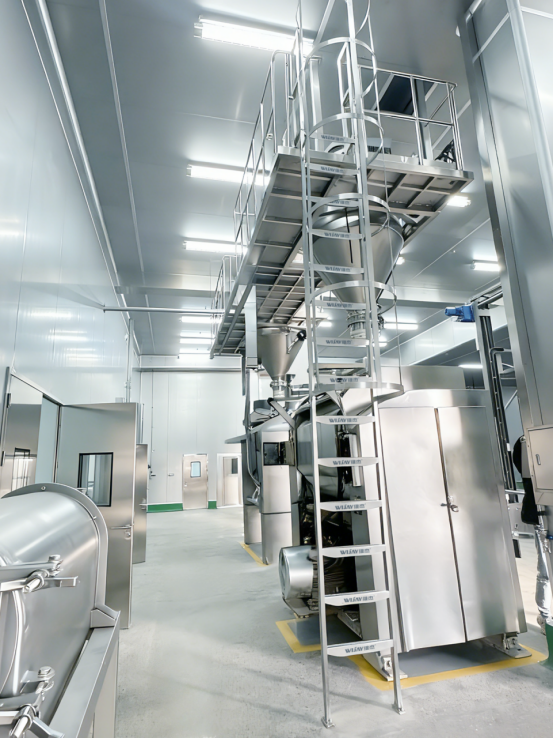
Fully enclosed transfer eliminates leaks and dust exposure
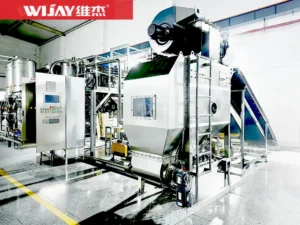
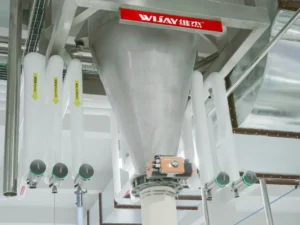
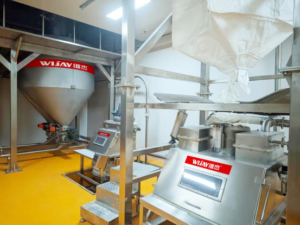
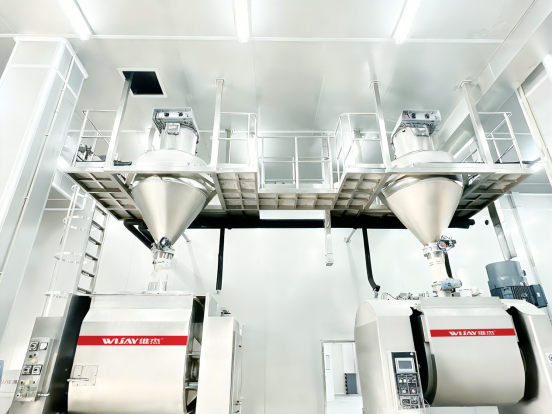
A closed-pipe pneumatic conveying design routes both liquid oil and powdered additives through sealed transfer lines from source to batching point — no open troughs, no manual scooping, no exposed drop points where product can escape containment. Oil transfer runs leak-free under controlled pressure, and powder additive lines run fully enclosed, eliminating the airborne dust that triggers particulate violations. The result on an inspection walkthrough is a visibly clean, sealed production environment rather than a system that depends on constant manual wipe-down to look compliant.
Food-grade CIP integration meets sanitation standards without added labor
Enclosed conveying only solves half the compliance equation if the internals can’t be verified clean. A food-grade Clean-In-Place (CIP) structure built into the conveying and batching path allows full internal sanitation cycles without disassembling the line — meeting food-contact cleanliness requirements while keeping cleaning labor and downtime proportional to a normal shift changeover, not a multi-hour teardown.
Intelligent central control removes manual dosing variance
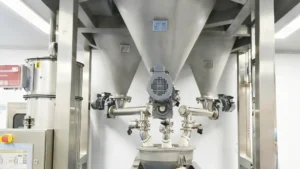
Unattended, coordinated batching of oil and powder additives through an integrated control system replaces manual weigh-and-add steps with programmed, repeatable dosing. That matters for two reasons: batch-to-batch blend consistency improves measurably against manual dosing, which typically carries meaningful lot-to-lot variance driven by operator fatigue and inconsistent technique; and every dosing event becomes a logged data point instead of a judgment call.
Automatic data logging builds your audit trail before you need it
Every batch — blend ratio, additive volume, run timestamp, equipment status — is automatically captured and archived by the system, with no manual transcription step. Leak, low-material, and excess-dust conditions trigger real-time alarms rather than being discovered on the next housekeeping pass. When a product traceability request or clean-room acceptance review comes in, the records already exist in a structured, exportable format. The system interfaces cleanly with a plant’s existing digital management platform, so this data becomes part of the facility’s standing compliance record rather than a one-off report assembled under deadline pressure.
Positive-pressure and dense-phase options matched to material properties
Refined oil, blended oil, and powdered oil additives don’t behave the same way in a conveying line — viscosity, particle size, and shear sensitivity all differ. A conveying system engineered around a single generic transfer method inevitably underperforms on at least one material stream. Configuring positive-pressure or dense-phase conveying to match the specific material — and running liquid oil and powder additive dosing in true synchronization rather than as two separate systems bolted together — is what keeps blend accuracy and equipment life in spec across a mixed-material production line.
What This Looks Like on Your Line
For a plant currently running manual batching, the practical shift is straightforward: oil and powder additives move from open, human-handled transfer to sealed, pressure-controlled pipeline transfer with programmed dosing. Sanitation shifts from manual disassembly-and-scrub to in-place CIP cycles. Compliance documentation shifts from after-the-fact logbook reconstruction to automatic, real-time data capture. The inspection walkthrough shifts from a scramble to a routine.
About WIJAY Systems
WIJAY has spent 16 years engineering pneumatic conveying and powder automation systems for bulk material handling, with deep, hands-on exposure to the specific failure points that show up across grain, oil, and food-ingredient production lines. Recognized as a Dongguan High-Tech Enterprise and Gazelle Enterprise, WIJAY operates a 2,000 m² dedicated R&D center and holds more than 100 independent patents. WIJAY has delivered compliant, intelligent conveying and batching systems to multiple leading edible oil and seasoning oil producers, with each system engineered to the specific viscosity, particle size, and dosing profile of the customer’s material — not sold as a one-size-fits-all package.
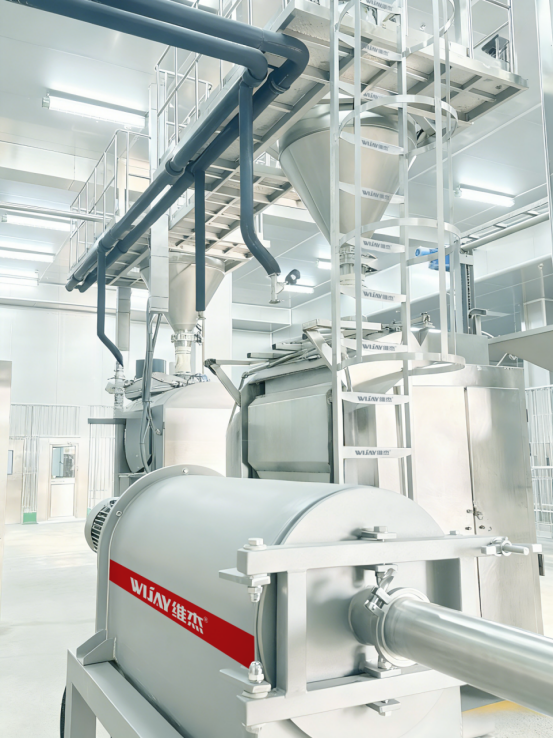
FAQ
What makes a pneumatic conveying system suitable for edible oil processing specifically? It needs fully enclosed, leak-free transfer for liquid oil, dust-free handling for powder additives, food-grade CIP-compatible internals, and synchronized dosing control across both material types in a single system — not a general-purpose bulk conveyor adapted after the fact.
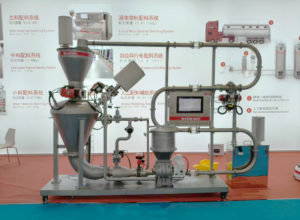
Can one system handle both liquid oil transfer and powder additive batching? Yes, when the system is engineered for it. WIJAY’s platform runs positive-pressure or dense-phase configurations for oil transfer alongside enclosed powder conveying, with a shared intelligent control system coordinating unattended dosing across both streams.
How does an intelligent conveying system help with a regulatory audit? By automatically logging blend ratios, dosing volumes, batch timestamps, and equipment status in real time, and generating alarms for leak, dust, or material shortfall conditions — producing a complete, structured production record without manual transcription.
Does upgrading to a closed pneumatic conveying system require a full production shutdown? Line modification scope depends on the existing facility layout and equipment footprint, and WIJAY engineers each installation around the customer’s operating schedule to minimize production disruption.
If your plant is facing a compliance technical upgrade deadline for oil or blended-oil production, WIJAY’s engineering team can assess your current batching layout and configure a pneumatic conveying system matched to your specific materials and audit requirements. [Talk to a WIJAY process engineer about your production line →]