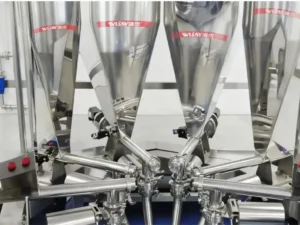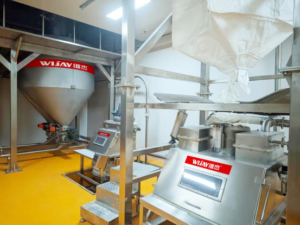
Most plant engineers running pneumatic conveying lines can tell you their throughput target. Very few can tell you, with confidence, what their air compressor is actually costing them per ton of material moved, or how close their rotary valve is to failure right now. That gap is not a knowledge problem — it’s a visibility problem, and it’s exactly the gap Digital Twin Technology is built to close.
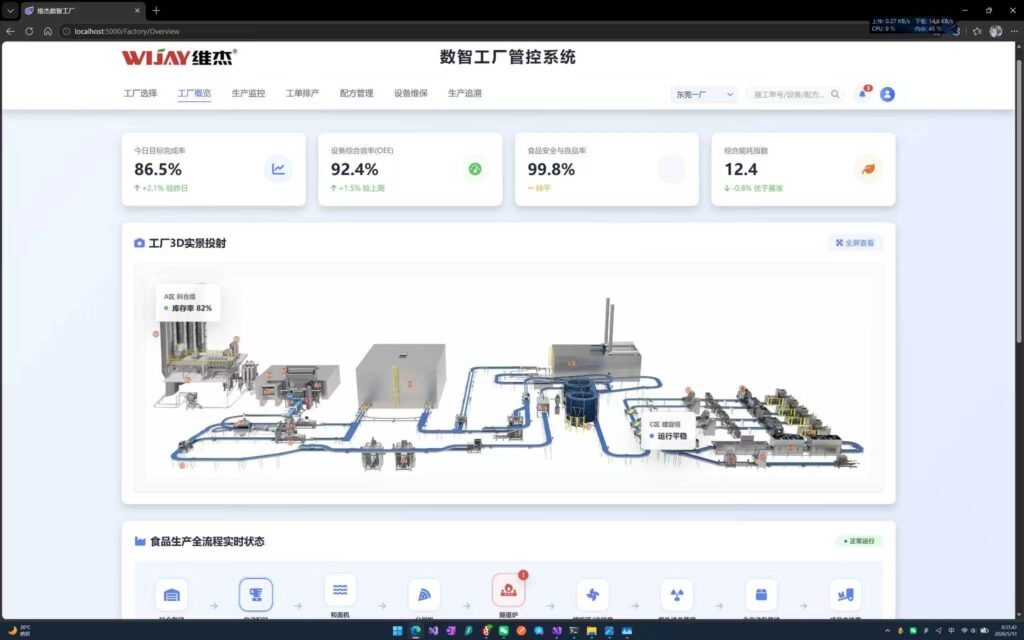
The Hidden Cost of Running a Pneumatic Conveying Line Blind
Pneumatic conveying is used across food processing, pharmaceuticals, mining, petrochemicals, and chemical manufacturing because it moves bulk powders and granules without the mess, contamination risk, or labor cost of mechanical conveyors. But it comes with a tradeoff: air is expensive to generate, and air-driven systems consume electricity continuously whether or not they’re running at peak efficiency.
In most facilities, that inefficiency stays invisible until it becomes a problem. A partial blockage in the delivery line doesn’t announce itself — it shows up as a gradual pressure creep that operators dismiss as normal drift, until the line stops entirely. A rotary valve losing rotor-tip clearance doesn’t trip an alarm — it just quietly leaks air and drags down conveying efficiency for weeks before anyone notices the amperage climbing on the motor.
By the time these issues surface during a routine walk-through or a scheduled inspection, the plant has already paid for them twice: once in wasted energy, and again in the unplanned downtime it takes to fix what could have been caught early.
Why Manual Inspection and Guesswork Can’t Keep Up
Traditional maintenance on pneumatic conveying equipment relies on periodic checks — a technician walking the line, logging pressure gauges, listening for unusual blower noise. That approach worked when conveying systems were simpler and margins were looser. It doesn’t hold up against modern production schedules for three reasons:
- Intermittent checks miss transient events. A pressure spike caused by an intermittent rotor jam might last minutes, not hours, and vanish before the next scheduled inspection.
- Wear is progressive, not binary. Bearing degradation, rotor-tip erosion, and filter bag fouling all develop gradually. Without continuous data, there’s no baseline to compare against, so “normal” and “developing fault” look identical until failure.
- Material variability changes the rules. A system tuned for one powder’s flow characteristics may run inefficiently — or unsafely — when feedstock changes, and manual checks rarely catch that shift in real time.
This is the operational reality that has pushed pneumatic conveying, along with the rest of industrial equipment, toward continuous, sensor-driven monitoring under the broader push of Industry 4.0.
Digital Twin Technology: What It Actually Means for Bulk Material Handling
A digital twin is a live, data-fed virtual model of a physical system. For a pneumatic conveying line, that means a digital representation of the Roots blower, rotary valve, delivery piping, storage silo, and silo-top dust filter — continuously updated from sensors on the actual equipment, not a static CAD file or a one-time simulation.
The distinction matters. A digital twin isn’t a dashboard that displays readings after the fact. It’s an active model that compares real-time performance against expected baselines, flags deviations, and — when paired with predictive analytics — estimates when a component is likely to fail rather than just reporting that it already has.
For pneumatic conveying specifically, that shifts maintenance and energy management from reactive to proactive, which is the difference between a scheduled five-minute valve adjustment and an unplanned four-hour line shutdown.
Where Digital Twin Technology Delivers Value in a Pneumatic Conveying System
Process Monitoring That Actually Prevents Blockages
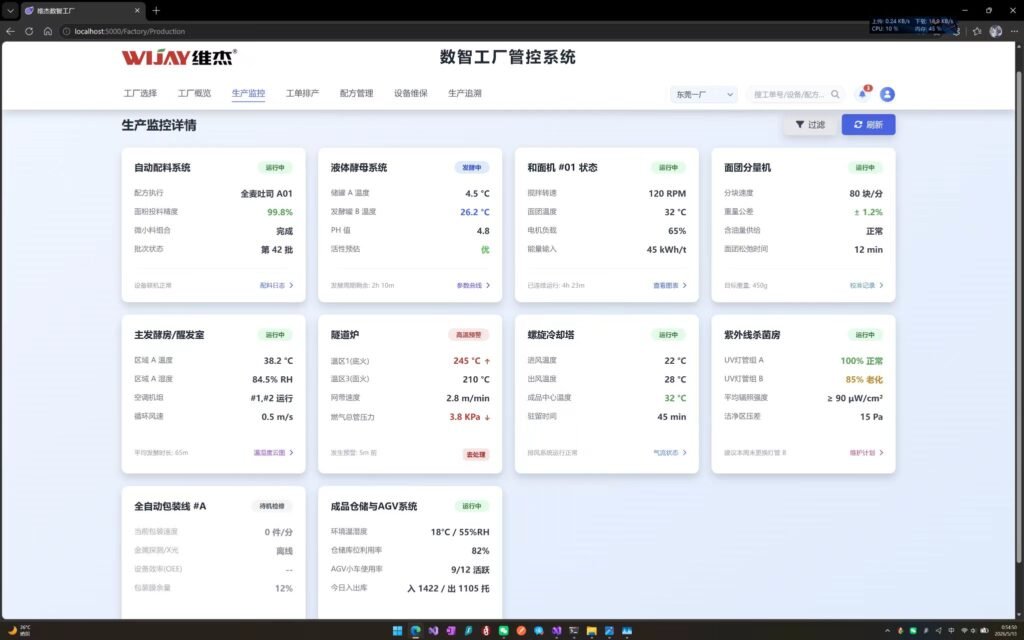
Process monitoring is the digital twin’s most direct application: tracking air pressure, flow rate, and energy draw across the conveying line, alongside external variables like ambient temperature and humidity that quietly affect material flow behavior.
The value isn’t in collecting this data — it’s in what the system does with it. A gradual, sustained pressure increase at a specific point in the line is a strong early indicator of a developing blockage. A sharp pressure drop instead points toward an air leak, often at the rotary valve. Recognizing these patterns as they emerge, rather than after the line has already stopped, is what separates a minor adjustment from a full shutdown.
Digital twins also let operators correlate flow rate and pressure against the specific material being conveyed. Different powders behave differently at different air velocities, and a twin that has learned a material’s optimal operating window lets operators adjust parameters in real time instead of running on generic setpoints.
Condition Monitoring on Blowers, Rotary Valves, and Filters
Where process monitoring watches the material flow, condition monitoring watches the equipment itself — and this is where the earliest warning signs typically appear.
- Roots blower: Outlet temperature and vibration reveal early signs of impeller wear or clearance issues long before the blower’s output drops noticeably. A slow rise in motor power draw relative to conveying output is often the first sign of bearing wear or belt slippage.
- Rotary valve: Inlet and outlet pressure differential indicates air leakage past the rotor. Vibration at the valve body or side flange typically points to rotor-to-housing contact or bearing wear — a failure mode that, left unaddressed, escalates quickly.
- Silo-top filter: Differential pressure across the filter bags signals fouling before it restricts airflow enough to cut conveying capacity. Dust emission sensors at the filter outlet also catch bag failures before they become a housekeeping or compliance issue.
- Piping: Pressure readings at multiple points along the delivery line localize blockages to a specific section rather than forcing a full-line inspection.
None of these signals is dramatic on its own. The value of a digital twin is catching the trend — a slow drift in vibration, a gradual pressure creep — before it becomes an unplanned stop.
Building a Digital Twin: From Sensor Integration to Continuous Evolution
Implementing a digital twin on an existing or new pneumatic conveying system generally follows five steps:
- Sensor integration. Pressure, temperature, vibration, and flow sensors are installed at the blower, rotary valve, piping, and filter — the points identified above as early-warning locations.
- Digital model creation. A software model of the conveying line is built and continuously synchronized with live sensor data, so the model always reflects current physical conditions rather than a design-stage assumption.
- Data acquisition and edge processing. Sensors capture readings at a sampling rate matched to the component — high-speed vibration sensors on a blower running at 1,500–3,000 RPM need far more frequent sampling than a silo level sensor. On-board edge processing lets sensors calculate derived metrics locally (peak velocity, RMS acceleration) and transmit only the relevant output, keeping bandwidth and cloud storage costs manageable.
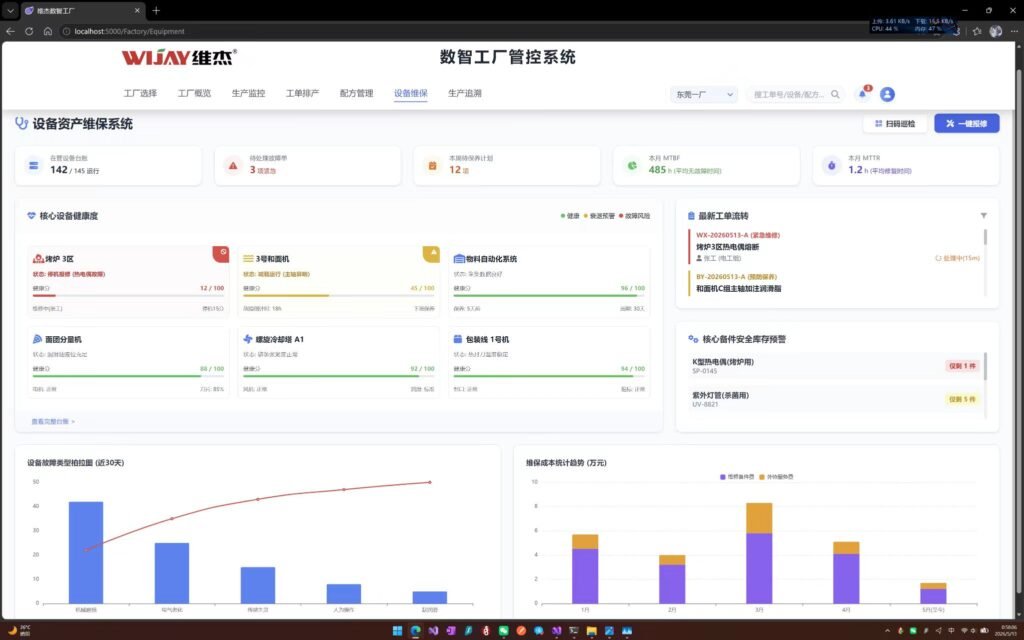
- Continuous monitoring and analysis. Operators track live and trended data through an IIoT platform, run simulations, and apply machine learning models trained on historical performance to flag anomalies and forecast maintenance needs.
- Ongoing evolution. As material specifications, throughput targets, or system configuration change, the digital twin’s baselines are updated to match — a twin calibrated once and never revisited loses accuracy over time.
Turning Sensor Data into Action
The path from raw sensor signal to an operator decision runs through an IIoT platform: sensors feed a gateway, the gateway transmits to the cloud, and the platform aggregates, stores, and analyzes the data before presenting it through a web-based interface. Sampling rate is a real engineering tradeoff here — too sparse, and the system misses transient faults; too dense, and communication, storage, and processing costs climb without adding useful insight. The right rate depends on the asset: a bearing-critical component spinning at 3,000 RPM needs a different cadence than a silo level sensor that changes slowly over hours.
Analytics layered on top of this data range from simple threshold alarms to trend-based statistical models and, increasingly, AI models trained on historical performance data. For pneumatic conveying specifically, this is where AI adds the most practical value — flagging a developing pipe blockage, a wearing rotary valve rotor, or a filter fouling trend before it interrupts production, rather than after.
The Bigger Picture: Efficiency as a Design Requirement, Not an Afterthought
As sustainability targets tighten and energy costs stay volatile, the plants that treat conveying efficiency as something to measure and manage — rather than something to hope for — are the ones absorbing those cost pressures without giving up throughput. Digital twin technology only delivers on that promise, though, when it’s built by people who understand pneumatic conveying equipment at the component level: what a rising vibration signature on a rotary valve actually means, why a filter differential pressure trend matters more than any single reading, how material changes shift a system’s optimal operating window.
That’s the intersection where system design experience and digital monitoring capability have to meet. A twin built without deep conveying-system knowledge produces data without judgment. A twin built on that knowledge turns raw sensor readings into decisions a plant can act on.
WIJAY Systems designs and engineers complete pneumatic conveying and bulk powder automation lines — sealed transfer, dust-free operation, low product loss, and full-line automation across food, chemical, pharmaceutical, and industrial applications. Because we design the equipment, we design monitoring around the failure modes that actually matter on Roots blowers, rotary valves, silo filters, and delivery piping, not generic sensor packages. If you’re evaluating how digital twin technology fits into a new or existing conveying line, our process engineers can walk through your specific system layout and material handling requirements.
FAQ
What is a digital twin in a pneumatic conveying system? A digital twin is a continuously updated virtual model of a physical conveying line — blower, rotary valve, piping, and silo filter — fed by real-time sensor data, used to monitor performance and predict maintenance needs before failures occur.
Which components benefit most from condition monitoring in pneumatic conveying? Roots blowers, rotary valves, silo-top filters, and delivery piping typically show the earliest measurable warning signs — through pressure, temperature, and vibration data — before a failure affects throughput.
Does digital twin technology reduce energy consumption in pneumatic conveying? Yes. By identifying inefficiencies such as air leaks, partial blockages, and suboptimal pressure settings early, digital twins allow operators to correct energy waste that would otherwise go unnoticed for weeks or months.
Is digital twin technology only useful for new pneumatic conveying systems? No. Sensors and a digital model can be retrofitted onto existing conveying lines; the main requirement is accurate baseline data on how the system performs under normal operating conditions.
How does predictive maintenance differ from condition monitoring? Condition monitoring tracks real-time equipment status; predictive maintenance uses that data, often combined with machine learning, to estimate when a component is likely to fail so maintenance can be scheduled proactively.