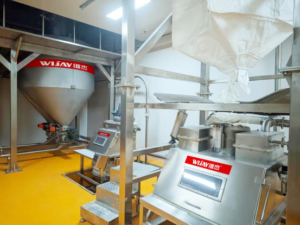
Why Your Batching Station Is the Weak Point in Every Audit
Walk any aging food processing floor at the ingredient intake stage, and the problem is visible before you even check a single number: powder settling on beams and conduit, operators hand-scooping from open bags, scale readings that depend on who’s standing at the station that shift. None of this shows up as a line-stoppage event — until an auditor walks the same floor.
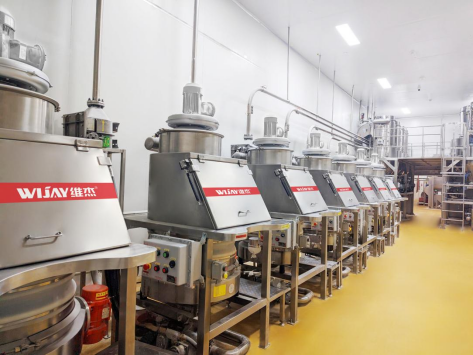
Open-air batching doesn’t just look bad. It’s the point where three separate compliance failures converge:
- Food safety risk. Airborne dust settles on equipment and structural surfaces, creating a harborage zone for bacteria near an active ingredient stream — exactly what HACCP and GFSI-aligned audits are built to catch.
- Environmental exposure. Fugitive dust emissions at manual dump stations are one of the most common triggers for unscheduled EHS inspections in powder-handling facilities, and repeat findings escalate quickly from warning to production hold.
- Traceability gaps. When batch weight, dosing time, and equipment status aren’t logged automatically, there’s no clean paper trail to hand an auditor asking for lot-level genealogy — and “we’ll pull it from the logbook” is not an answer regulators accept anymore.
Plants running manual batching also carry a cost that rarely shows up on a compliance checklist: material loss. Open dumping and hand-scooping routinely run 1–3% ingredient loss per batch from spillage and residual dusting — on a high-volume line, that’s real tonnage disappearing into the air filtration system instead of the product. Add in operator-to-operator dosing variance, and batch-to-batch consistency becomes a moving target long before anyone runs a quality check.
What’s Actually Driving the Retrofit Wave
Food safety regulators have been tightening enforcement on production floors that still rely on manual, open-air material handling — and it’s converging with parallel pressure from environmental permitting and customer-side supplier audits. The result: plants that could pass an inspection five years ago on paper records and visual housekeeping are now failing on dust exposure, missing digital batch logs, or both.
This isn’t a niche problem limited to legacy facilities. Mid-size and large food processors alike are discovering that the batching station — often the oldest, least-automated segment of an otherwise modern line — is the single point of failure holding back a full compliance certification.
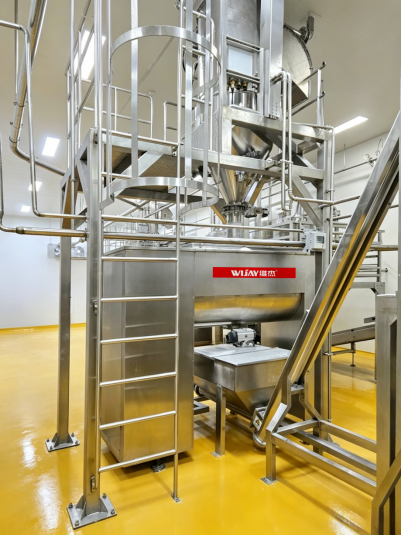
What a Compliant Batching System Actually Requires
A retrofit that survives the next three audit cycles needs to solve all three failure points at once, not patch them individually.
Fully Enclosed Pneumatic Conveying
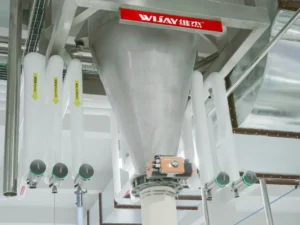
Material moves through sealed piping from silo or bag-break station to the batching vessel — no open transfer point, no airborne exposure. This eliminates the dust generation event at its source rather than trying to filter or vacuum it after the fact. For flour, starch, and food-additive powders in particular, closed-loop conveying is what separates a genuine engineering fix from a housekeeping workaround.
Automated, Unattended Dosing
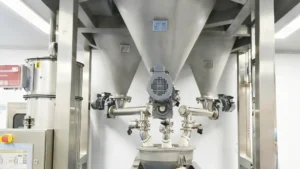
A centralized control system runs the batching sequence without requiring an operator to weigh, dump, or judge dosing by eye. This closes the human-variance gap that shows up as inconsistent finished-product specs and removes the labor dependency that makes third-shift staffing shortages a production risk.
Automatic Data Logging and Traceability
Every batch — ingredient ratio, dosing time, equipment run status, fault events — gets recorded automatically and pushed to a data port compatible with the plant’s existing MES or ERP platform. When an auditor asks for lot genealogy on a specific production date, the record already exists; nobody is reconstructing it from a logbook.
Real-Time Fault Detection
Built-in alarm and diagnostic functions flag blockages, sensor drift, or dosing deviations before they become a batch failure or an unplanned line stop. Unplanned downtime on a batching line frequently costs more in lost throughput than the maintenance fix itself — catching the fault early is what keeps that cost contained.
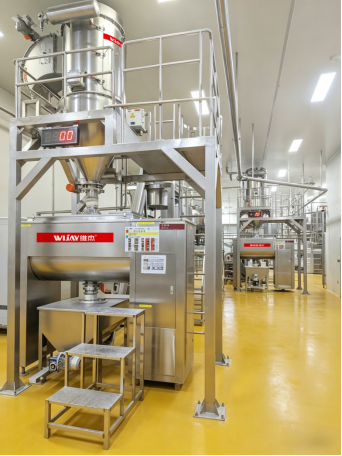
Multi-Material, Multi-Mode Flexibility
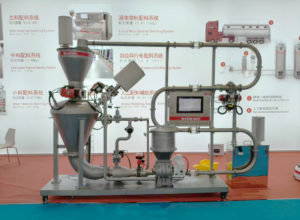
Food plants rarely run a single powder. A batching system built for food-grade retrofits should support positive-pressure, negative-pressure, and dense-phase conveying modes on the same platform, so flour, starch, and fine additive powders can all run through the same compliant line without separate equipment silos.
Retrofitting Without Shutting Down the Line
The most common objection to a batching system upgrade isn’t cost — it’s downtime risk. A well-scoped retrofit is engineered around the plant’s existing footprint and production schedule, with the conveying and control architecture pre-built before installation begins, so the changeover window is measured in days, not weeks. Turnkey delivery — from process audit through commissioning — is the difference between a retrofit that disrupts a production quarter and one that closes the compliance gap on schedule.
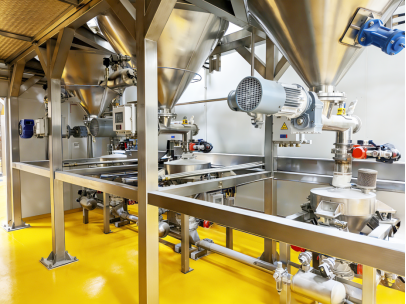
WIJAY Systems: Fifteen Years in Pneumatic Conveying, Built for Food-Grade Compliance
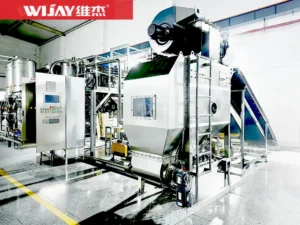
WIJAY Systems has spent over fifteen years engineering pneumatic conveying and batching systems for food and powder processing plants, backed by a 2,000 m² R&D center and more than 100 owned patents. Our batching systems are engineered specifically against food industry compliance benchmarks — fully enclosed conveying, unattended automated dosing, and automatic batch-level data logging built in as standard, not bolted on.
We’ve delivered turnkey automated batching projects across flour, starch, and food-additive powder lines, with positive-pressure, negative-pressure, and dense-phase conveying configured to each plant’s specific material characteristics and production layout. If your batching station is the segment holding back your next audit, we can walk your current line and scope what a compliant retrofit actually looks like for your facility.
Talk to a WIJAY process engineer about your batching system retrofit →
FAQ
What makes a batching system “food-grade compliant”? It needs fully enclosed material transfer (no open dust exposure), automated dosing that removes operator-to-operator variance, and automatic digital logging of batch data for traceability audits — all three, not just one.
How much material loss does open-air batching typically cause? Manual dumping and hand-scooping commonly run 1–3% ingredient loss per batch from spillage and residual dusting, which compounds significantly at high production volumes.
Can a batching system retrofit run without stopping the whole production line? Yes, when the conveying and control architecture is pre-engineered around the plant’s existing footprint before installation starts — this keeps the changeover window to days rather than weeks.
What powders can a pneumatic batching system handle? Common applications include flour, starch, and food-grade additive powders, typically configured with positive-pressure, negative-pressure, or dense-phase conveying depending on material flow characteristics.