Walk into most confectionery, bakery, or snack production lines still running manual powdered sugar handling, and you’ll see the same three things: a haze of fine white dust hanging near the dosing station, an operator eyeballing scale readouts under production pressure, and a paper batch log that nobody wants to audit too closely. If that sounds familiar, you’re not dealing with a labor problem — you’re dealing with a process design problem.
Powdered sugar is deceptively difficult to handle at scale. It’s fine, hygroscopic, prone to caking, and highly sensitive to even small dosing errors — a 2–3% variance in a sugar-to-sucrose ratio is enough to shift finished-product sweetness and mouthfeel across a batch. For plants still relying on open manual dosing, that variance isn’t an occasional glitch. It’s a structural feature of the process, and it shows up in scrap rates, customer complaints, and increasingly, in regulatory findings.
This is why an automatic batching system built specifically for powdered sugar handling has moved from “nice to have” to baseline infrastructure for any food manufacturer serious about consistency, food safety compliance, and cost control.
The Hidden Cost of Manual Powdered Sugar Handling
Dosing Drift and Batch-to-Batch Inconsistency
Manual weighing depends on operator judgment, scale calibration discipline, and consistent attention across an 8- to 12-hour shift. None of those hold steady over time. The result is measurable batch-to-batch drift in sugar content, which shows up downstream as inconsistent sweetness, texture, and shelf appearance — and as scrap and rework that rarely gets tracked as a real line item, even though it quietly erodes margin every shift.
Airborne Dust and Contamination Risk
Open dosing stations release fine powdered sugar into the air with every transfer. That dust settles on equipment, mixes with flour, starch, and other powders processed on the same floor, and creates conditions favorable to microbial growth in warm, humid production environments. For any plant working toward HACCP-aligned sanitation, an open-air dosing station is a standing liability, not an occasional risk.
Missing Data, Missing Traceability
When grinding time, batch weight, and dosing sequence exist only in an operator’s memory or a handwritten log, there is no reliable way to reconstruct what happened during a specific production run. If a quality issue surfaces after shipment, the plant has no defensible trail back to the batch, the equipment run, or the raw material lot — which turns a routine audit into a serious compliance exposure.
Rising Labor Costs and Material Loss
Manual grinding, transfer, and packing require multiple operators per line, and every manual transfer point is a place where product spills, sticks to equipment, or is discarded during cleanup. Labor costs continue climbing in most manufacturing regions, and material loss from spillage and rework compounds that pressure quietly, batch after batch, until it becomes a line item finance actually notices.
What a Modern Automatic Batching System Should Deliver
Across the industry, the manufacturers that have already solved this problem share four non-negotiables in their process design:
- Weighing accuracy tight enough to lock a formula — not just measure it
- Fully enclosed material transfer — no open dosing points, no airborne exposure
- Automated data capture — every batch traceable without manual logging
- Throughput flexibility — a system that scales with SKU mix and production volume, not just one product line
Most competing systems on the market handle one or two of these well. Few integrate all four into a single, unified line — which is exactly where the gap between “automated” and “actually solved” tends to show up.
Inside WIJAY’s Automatic Batching System for Powdered Sugar
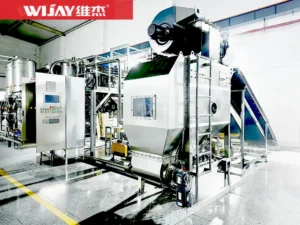
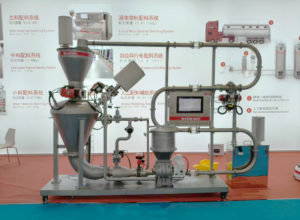
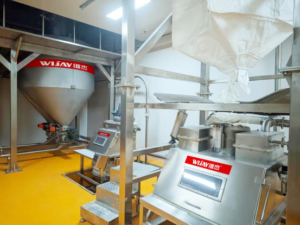
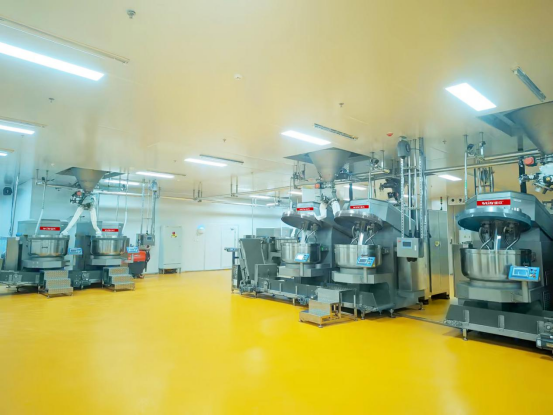
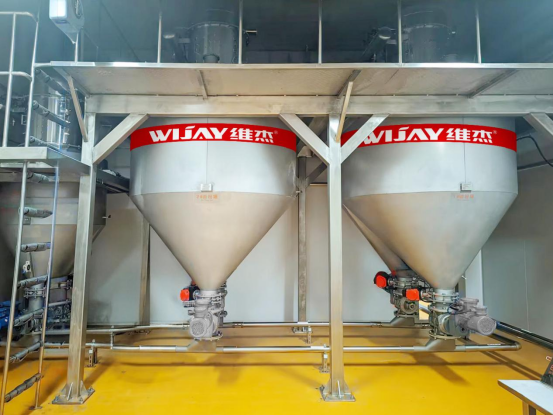
WIJAY Systems designs its automatic batching system as a single integrated line covering sugar intake, grinding, drying, storage, weighing, multi-point supply, and automated packing — not a collection of standalone modules bolted together.
High-Precision Weighing and Formula Locking
The system’s weighing module holds accuracy within a 2% tolerance, allowing a standard formula to be locked into the control system and repeated automatically across every batch. This removes operator judgment from the dosing step entirely and keeps flavor and texture consistent from the first batch of a shift to the last.
Fully Enclosed Pneumatic Conveying
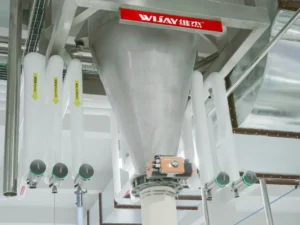
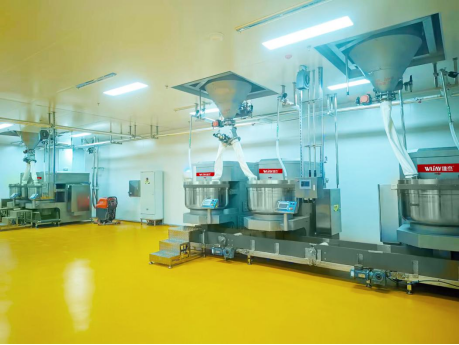
Material moves through sealed piping under positive pressure, negative pressure, or dense-phase conveying — never through open air. Combined with food-grade dust extraction and CIP (clean-in-place) cleaning, the enclosed design eliminates dust exposure, prevents cross-contamination with other powders on the same floor, and removes sanitation dead zones from the layout entirely.
Integrated Grinding, Drying, and Moisture Control
Built-in grinding and temperature/humidity control units address caking and moisture pickup directly at the source, rather than requiring separate downstream fixes — a common failure point in retrofitted or partially automated lines.
Full-Process Data Logging and Traceability
The system automatically records grinding duration, batch weight, and production sequencing at every stage, generating a complete, auditable record for each run. When a quality question comes up — internally or from a regulator — the answer is a data pull, not a guess.
Scalable Throughput and Layout
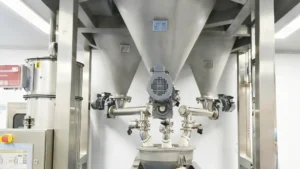
The platform handles 15 to 30 tons per hour, with conveying runs up to 300 meters horizontal and 150 meters vertical, and supports multiple storage tanks, weighing tanks, and production feed points running in parallel. That flexibility matters for plants retrofitting an existing footprint as much as for greenfield builds.
Proven in Production: 16 Years, 100+ Patents, Six Turnkey Projects
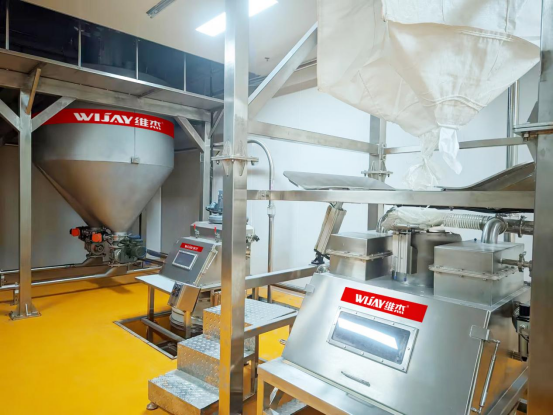
WIJAY has spent 16 years focused specifically on pneumatic conveying and powder automation, holding more than 100 material-automation patents and operating as a recognized high-tech and gazelle enterprise. That focus has produced six turnkey powdered sugar systems for leading confectionery, bakery, and snack manufacturers — including integrated multi-powder processing lines, combined grinding-and-packing lines, and dual-line sugar and flour conveying systems, several of which have run in continuous production for multiple years. That track record contributed to WIJAY being recognized as an outstanding safety-rated supplier in 2025.
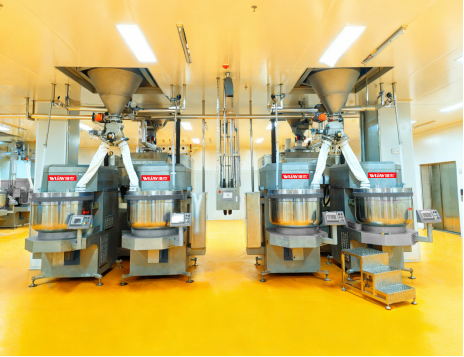
In deployed lines, plants have reported roughly 20% lower labor costs, since a single production line typically requires only 1–2 operators to monitor rather than a full manual crew, along with measurable gains in overall production efficiency and a sustained reduction in raw material loss over time.
Why Manufacturers Are Moving to Automated Batching Now
Open, manual powdered sugar handling is no longer compatible with where food manufacturing standards are heading. Regulatory scrutiny on traceability is tightening, retail buyers increasingly ask for documented process controls before onboarding suppliers, and the cost of scrap, dust-related downtime, and labor turnover keeps climbing regardless of plant size.
An automatic batching system doesn’t just remove manual error — it changes what a plant can prove about its own process, and that documentation is increasingly a condition of doing business with major retail and brand customers.
WIJAY Systems designs both full greenfield installations and partial retrofits for existing production floors, matched to a plant’s actual layout, SKU mix, and throughput targets, rather than a one-size-fits-all package.
FAQ
What accuracy can an automatic batching system achieve for powdered sugar dosing? WIJAY’s system holds weighing accuracy within a 2% tolerance, tight enough to lock a standard formula and repeat it consistently across every batch without operator input.
Does an enclosed pneumatic conveying system eliminate cross-contamination risk? Yes. Sealed positive-pressure, negative-pressure, or dense-phase conveying keeps powdered sugar isolated from other materials processed on the same floor, removing the open-air exposure point where cross-contamination typically occurs.
How much throughput can a powdered sugar batching line handle? WIJAY’s system scales from 15 to 30 tons per hour, with conveying distances up to 300 meters horizontal and 150 meters vertical, supporting multiple storage and weighing tanks in parallel.
Can an automatic batching system be added to an existing production line? Yes. WIJAY designs both partial retrofits for existing floor layouts and full-line installations for new facilities, depending on the plant’s current infrastructure and production targets.
What data does the system capture for traceability? The system automatically logs grinding duration, batch weight, and production sequencing for every run, creating an auditable record that supports HACCP compliance and simplifies regulatory inspection.
Ready to Evaluate Your Line?
If dosing variance, dust exposure, or traceability gaps are already showing up in your scrap rate or your last audit, WIJAY Systems can assess your current powdered sugar handling process and outline where an automatic batching system fits your specific layout and throughput needs. Contact WIJAY Systems to discuss a technical assessment of your production line.