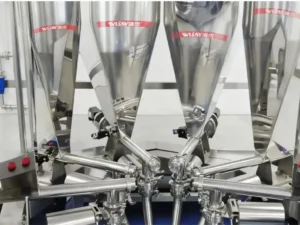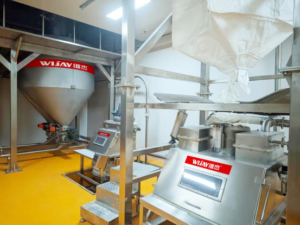
A bakery engineer troubleshooting dough temperature variation will typically examine the mixer water temperature, the fermentation room calibration, or the oven profile. These are logical starting points. They are also usually the wrong ones.
Flour accounts for the highest proportion of any bread dough formula. Its temperature at the point of mixing is the primary determinant of the dough’s starting thermal state — before water temperature, before friction heat, before fermentation. If flour arrives at the mixer at a different temperature on a July morning than on a January afternoon, no downstream adjustment will fully compensate for that upstream variance.
The industry misconception: Dough temperature control is widely treated as a mixer-stage function — adjust the water temperature, correct for ambient conditions, and the mixer handles the rest. This works when flour temperature is stable. When flour temperature swings with the seasons, changes between deliveries, or varies across storage batches, water temperature correction cannot fully compensate. The correction range is simply too narrow relative to the upstream variance.
This is the engineering reality that drives the design of Wijay’s pneumatic conveying system for bakery production. Dough temperature control — specifically, hitting and holding the DDT 24–28 °C target range — is not a function of the mixer. It is a function of the complete material handling system that precedes it.
Why traditional bakery lines cannot stabilize dough temperature
Most bakery production lines were not designed as integrated temperature-controlled systems. They were assembled from individual pieces of equipment — flour bags stacked in the receiving area, a pneumatic conveying line to move flour to day bins, a mixer, and a water chiller. Each piece optimizes its own function. None of them are designed to maintain the thermal stability of the flour from storage through to the mixing bowl.
The result is a set of temperature disturbances that compound through the material flow — each individually manageable, but together creating a level of DDT variance that batch-by-batch correction cannot reliably control.
- ↑ Seasonal flour temperature swings. Flour stored in ambient conditions absorbs heat in summer and loses it in winter. The same recipe, the same water temperature, and the same mixer settings will produce different dough temperatures in July and January because the flour’s starting temperature differs by 10–15 °C or more. This is not a mixer problem. It cannot be solved at the mixer stage.
- ↑ Open-pipeline conveying introduces heat exchange and moisture absorption. Flour conveyed through an uninsulated pipeline or transferred through open bag-tipping points exchanges heat with ambient air and absorbs moisture during transport. The thermal state of the flour changes between the storage bin and the mixer. The rate of change depends on ambient conditions — which means it varies continuously.
- ↑ Manual dosing introduces batch-to-batch heat load variation. When flour and other dry ingredients are weighed manually or dispensed without gravimetric control, the quantity of cold or warm material entering each batch varies slightly. Each gram of flour carries a thermal mass. Variation in batch quantity creates variation in the total heat load the mixer must overcome — adding another layer of DDT instability that water temperature correction cannot isolate from flour temperature correction.
The core problem: These three disturbances — storage temperature variance, in-transit heat exchange, and dosing inconsistency — combine at the mixer. By the time the operator or the water temperature algorithm tries to correct for them, the system is reacting to compounded upstream noise rather than controlling a stable baseline.
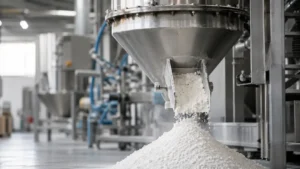
Traditional flour handling: ambient storage, manual bag-tipping, and open-air conveying — each stage introducing temperature and moisture variability that compounds at the mixer.
Wijay’s five-subsystem architecture: controlling temperature at every stage
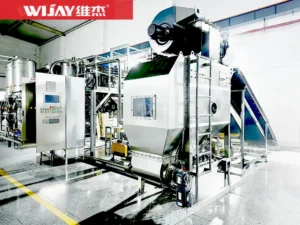
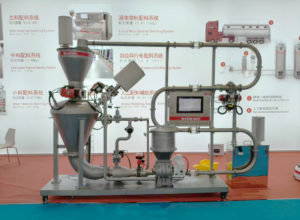
Wijay’s pneumatic conveying system for bakery production is designed as five integrated subsystems that operate together as a single thermal management chain. Each subsystem removes one category of temperature disturbance from the material flow. Together, they deliver flour to the mixer at a stable, known temperature — giving the intelligent water temperature algorithm a consistent baseline to work from rather than a moving target.
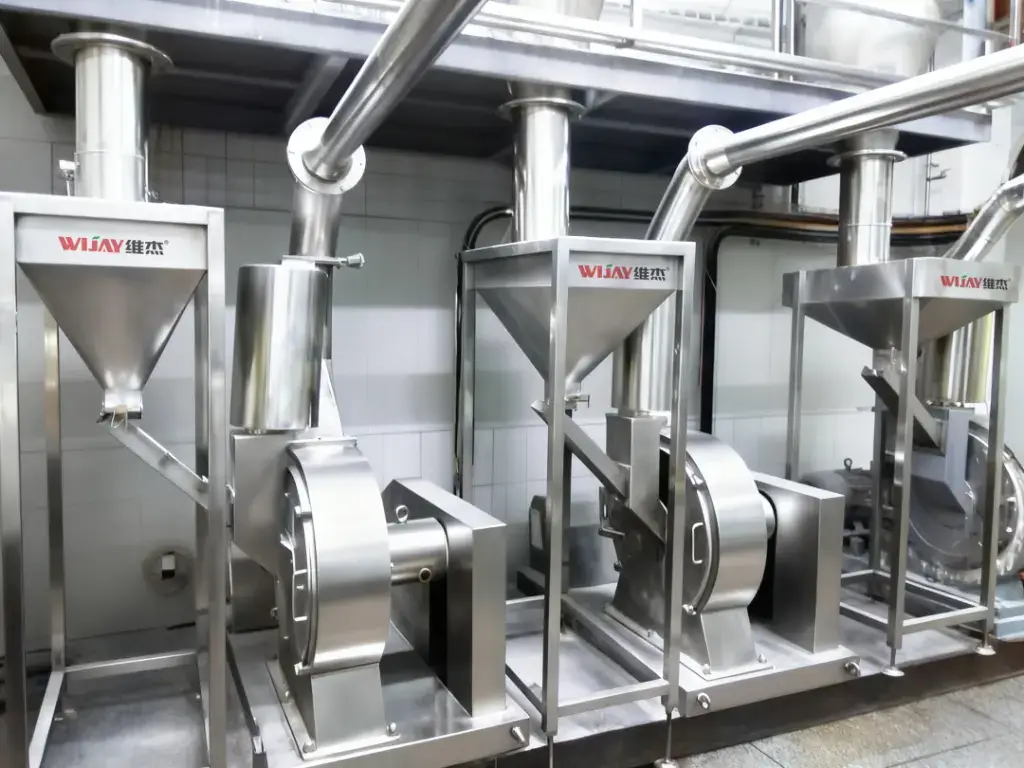
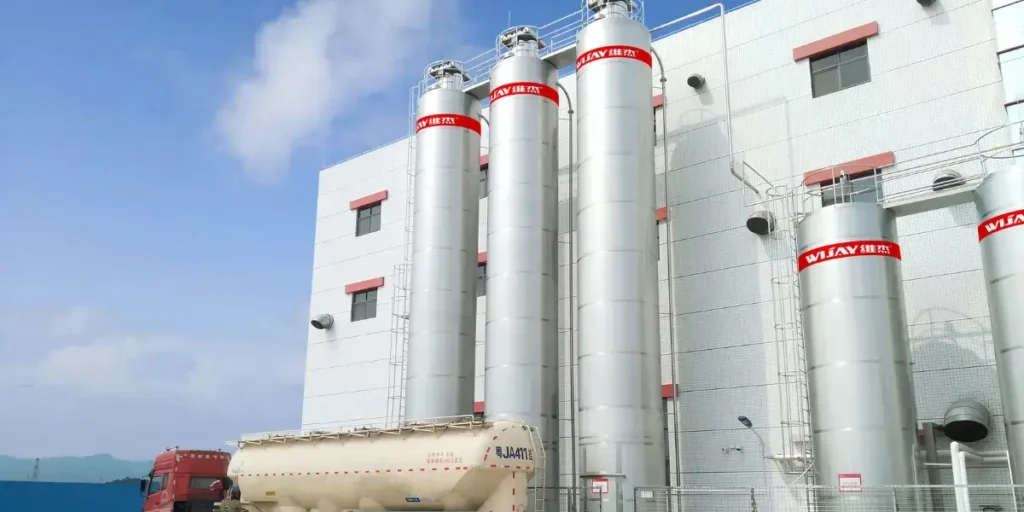
Insulated Sealed Silo Storage
Flour and dry ingredient silos are built with thermal insulation and sealed against ambient air infiltration — eliminating the contact between stored flour and external temperature, humidity, and airflow. Seasonal temperature swings in the production environment no longer translate into flour temperature variation. The flour that enters the conveying line maintains a consistent starting temperature regardless of the time of year or the ambient conditions outside the silo.
Negative-Pressure Closed-Pipeline Conveying
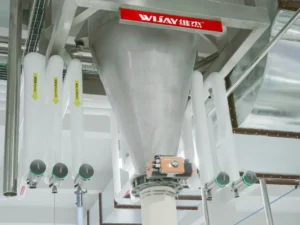
Flour, milk powder, and sugar powder travel from storage to the dosing stage through a fully sealed negative-pressure pipeline — no open transfers, no ambient air contact, no dust release. The conveying process introduces no heat exchange between the flour and the environment. The thermal state of the flour at pipeline entry is the thermal state at dosing discharge. The variance introduced by uninsulated open-air conveying is entirely removed from the system.
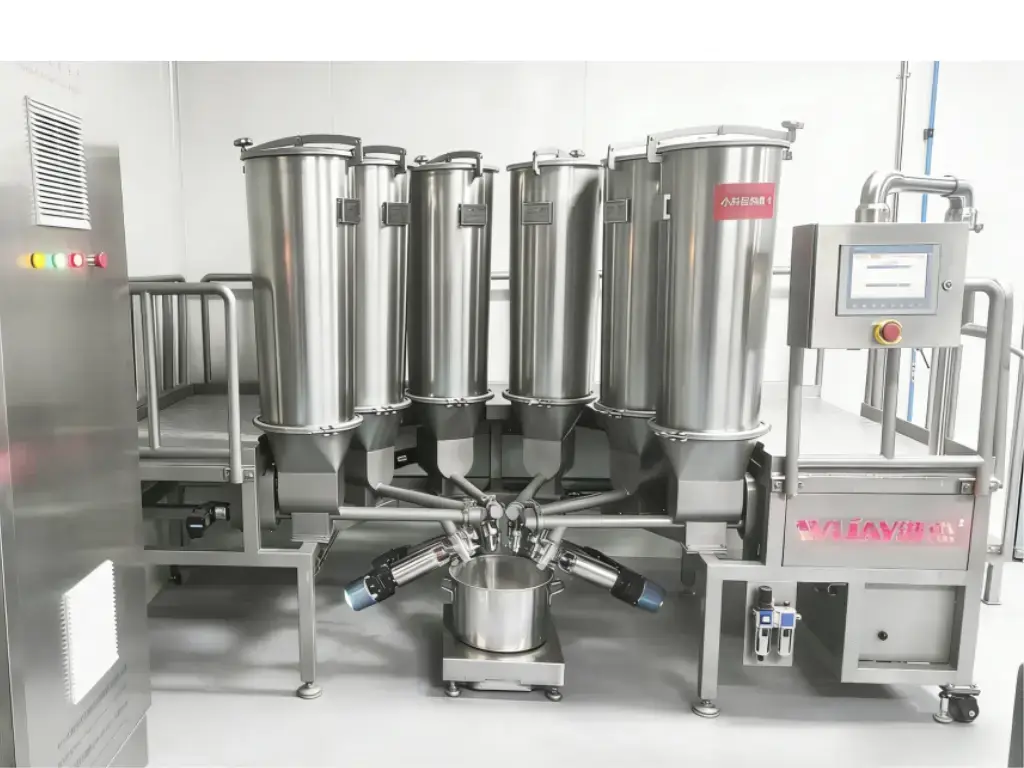
Loss-in-Weight Precision Dosing
A loss-in-weight gravimetric dosing module controls the quantity of each dry ingredient dispensed to the mixer. Multiple ingredient streams are dosed simultaneously to recipe specification, with high accuracy across all batch sizes. When the thermal mass of each ingredient batch is consistent, the mixer’s heat balance is consistent — and the water temperature algorithm has a reliable input rather than a variable it must estimate.
Integrated Intelligent Water Temperature Algorithm
This is the subsystem that closes the loop. Using real-time inputs — measured flour temperature, current batch weight, ambient temperature, and the friction heat coefficient for the specific mixer and dough type — the system calculates the exact process water temperature required to bring the finished dough to the target DDT. The algorithm does not react to temperature error after mixing. It calculates the correct water temperature before mixing begins, based on a stable upstream baseline that the other four subsystems maintain.
PLC Central Data Management
All operating parameters — conveying flow, dosing weights, flour temperature, water temperature, ambient conditions, and batch records — are logged in real time and stored for traceability. The system can connect to factory MES platforms. Every batch has a complete data record: what ingredients were used, in what quantities, at what temperatures, and what the calculated and actual dough temperature was. Quality investigations have a documented starting point.
“Dough temperature control is not a mixer function. It is the natural output of a material handling system that eliminates temperature disturbances before they reach the mixer.”
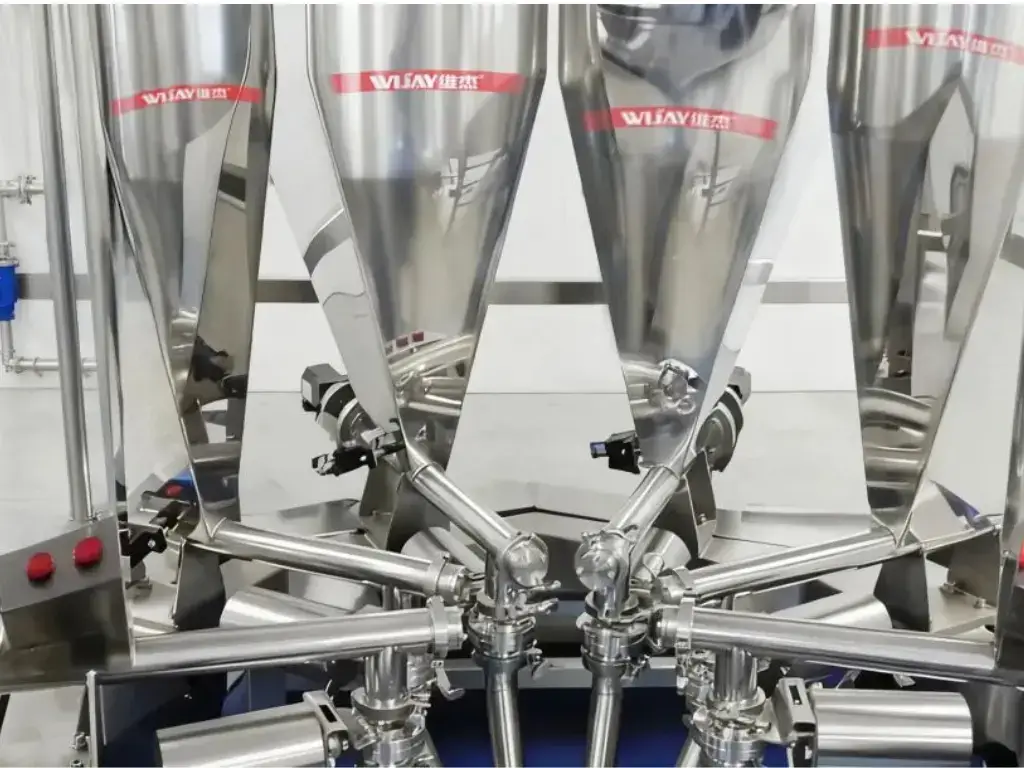
Four production installations: verified throughput and configuration
The following four case studies represent production-line implementations of Wijay’s pneumatic conveying system across different scales, facility layouts, and product requirements. All throughput figures and system specifications are from the commissioned installations.
Case Study 01 · Industrial Bread Production
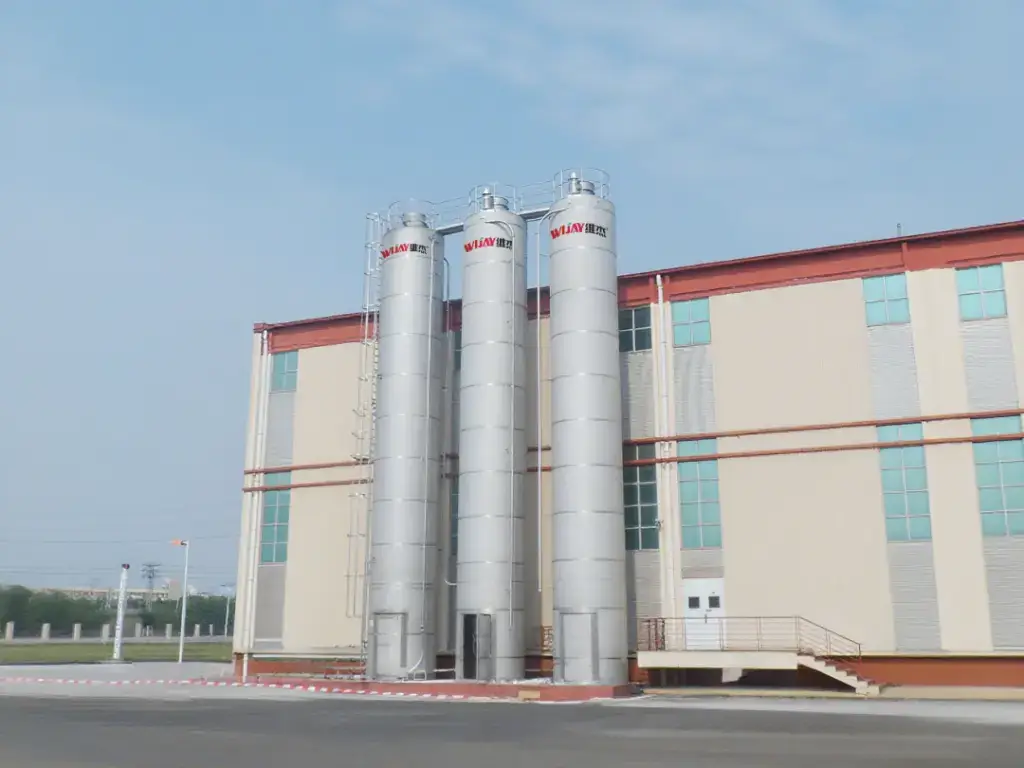
15 t/h
Multi-line simultaneous supply configuration with a combined throughput of 15 t/h. The system uses large-volume outdoor insulated silos — specifically designed to isolate flour temperature from summer ambient heat — paired with indoor sealed buffer tanks for pre-mixer staging.
The mixing stage is equipped with jacket-assisted temperature control to handle friction heat in high-speed industrial mixing. Beyond dry ingredients, the system extends multi-media temperature control to process water, sugar syrup, and liquid yeast — all conveyed at controlled temperatures to the mixing workstations.
Full pipeline insulation and CIP (Clean-In-Place) cleaning infrastructure are installed throughout, enabling both hygienic production and large-batch continuous operation with consistent dough output.
- Throughput15 t/h
- Silo typeOutdoor insulated
- Media handledFlour · syrup · liquid yeast
- Mixing stageJacket temp control
- CleaningCIP installed
Case Study 02 · Long-Distance Conveying
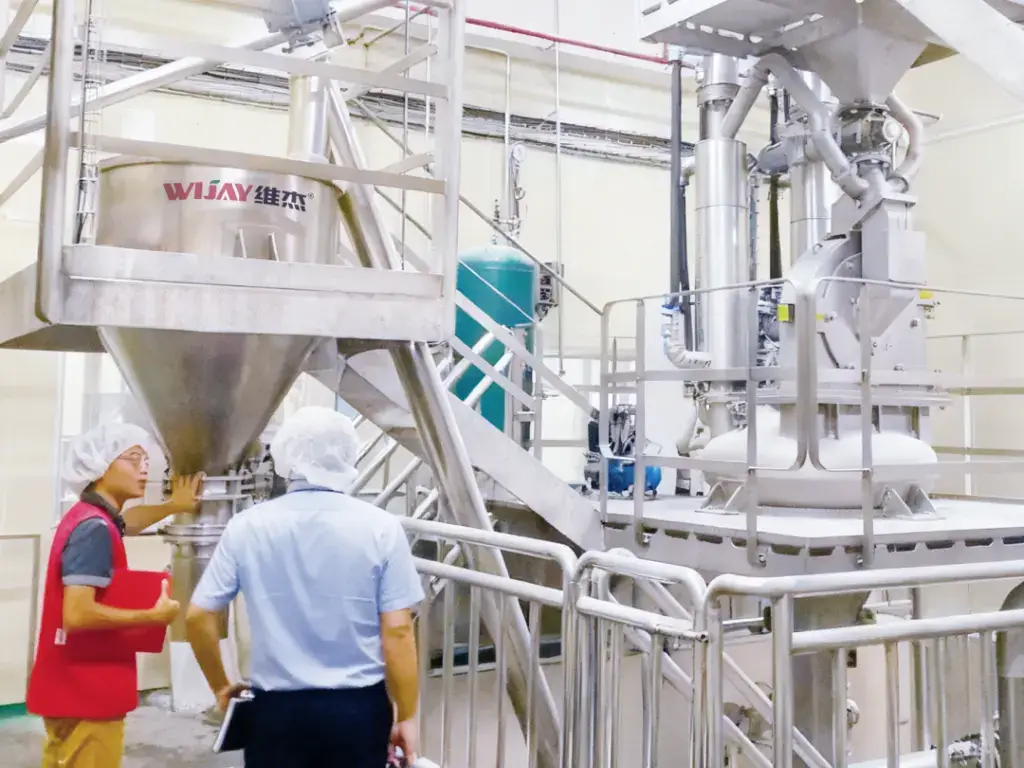
12 t/h
Designed for a facility where the flour storage area and the production floor are separated by significant horizontal and vertical distance. The system delivers 12 t/h through a pipeline spanning 70 m total length with a 30 m vertical lift — the longest combined run in this case study group.
The fully sealed and insulated pipeline ensures that no temperature change occurs along the transfer route. Flour arriving at the dosing stage has the same thermal state as flour leaving the silo, regardless of pipeline length. The chilled water temperature control system is integrated with the conveying data, allowing the water algorithm to account for the specific thermal characteristics of this extended-run configuration.
- Throughput12 t/h
- Pipeline length70 m total
- Vertical lift30 m
- InsulationFull-length pipeline
- Temp controlChilled water integrated
Case Study 03 · Powder and Liquid Unified System
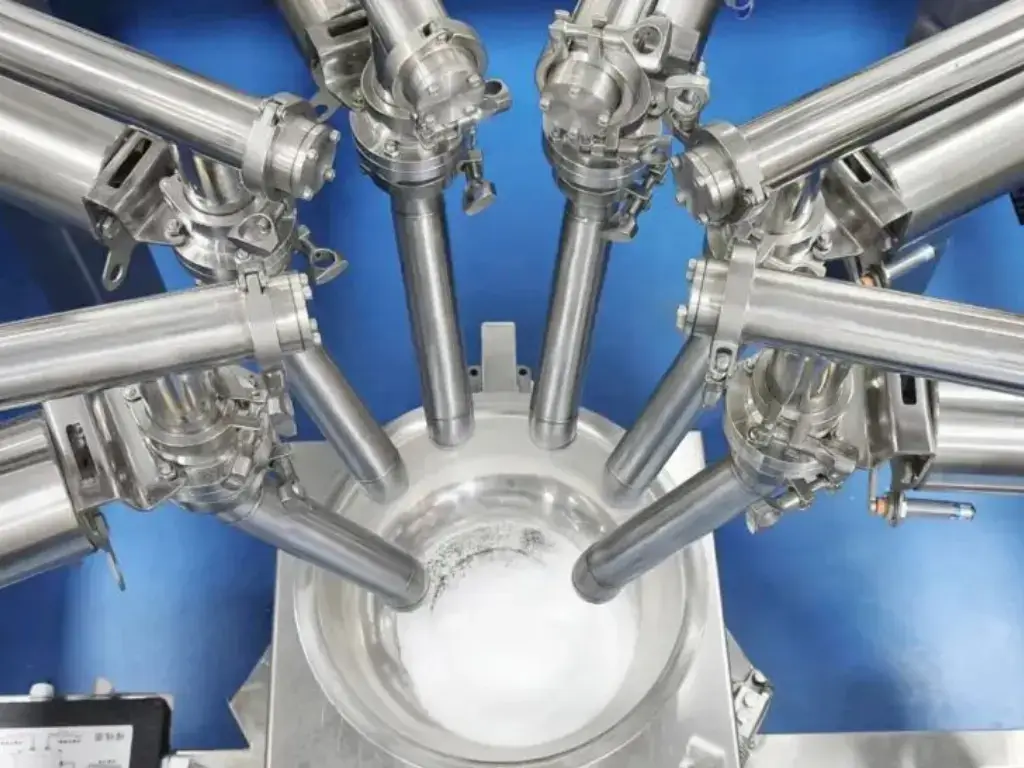
10.5 t/h
A unified 10.5 t/h system handling both dry powder ingredients and liquid process media within a single integrated architecture. The configuration includes multiple weigh-hopper storage vessels, small-ingredient dosing tanks for minor recipe components, and insulated process water holding tanks.
The dry flour and liquid process water temperature control systems operate in coordination — the chilled water algorithm uses measured flour temperature as a live input, adjusting water temperature to compensate. This single system handles supply, dosing, temperature reduction, and pressure management across multiple bread and toast product variants with rapid changeover between SKUs.
- Throughput10.5 t/h
- System typePowder + liquid unified
- Dosing vesselsWeigh-hopper + minor ingredient tanks
- FlexibilityMulti-SKU changeover
- Temp controlCoordinated powder + water
Case Study 04 · Two-Stage Precision Dosing
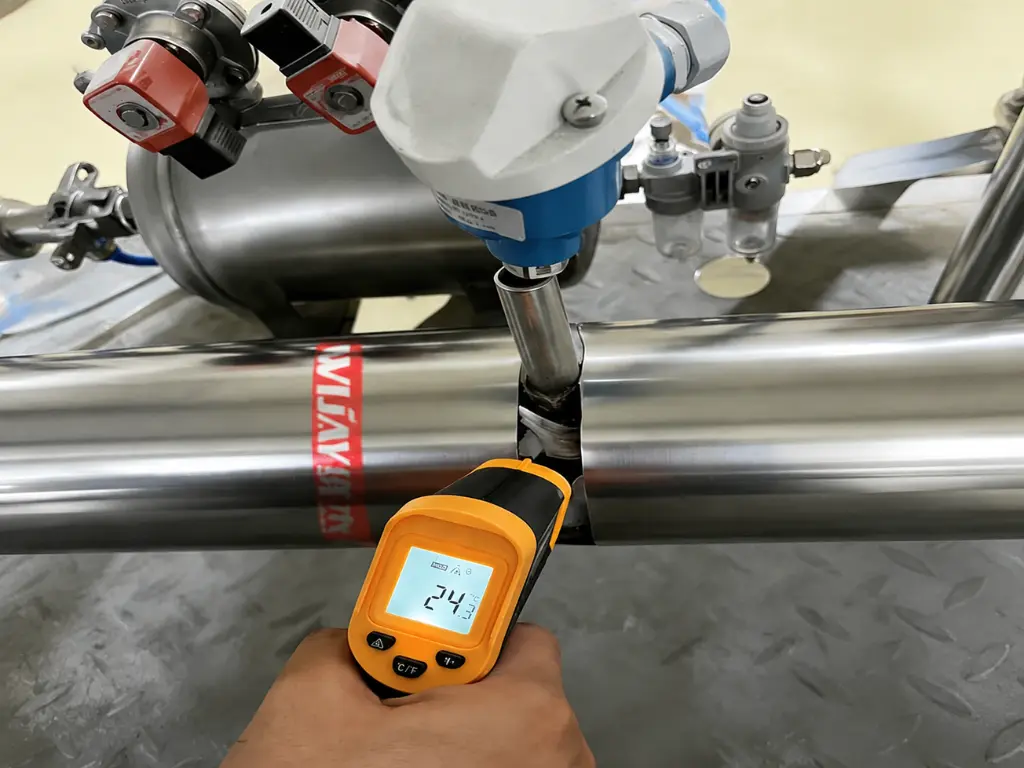
13 t/h
A 13 t/h system built around a two-stage dosing architecture: a primary stage for bulk flour storage and rough-weight batching, and a secondary stage for fine-ratio precision dosing of minor ingredients including sugar, yeast, and salt. The two-stage approach allows the system to handle both large-volume bulk flow and precise small-quantity dosing within one integrated control architecture.
Large-volume insulated process water tanks supply temperature-controlled water to every mixing workstation at a defined, consistent temperature. The result is batch-to-batch dough temperature variation that falls within a very narrow range — enabling the high-volume production consistency this facility requires.
- Throughput13 t/h
- Dosing stages2-stage (bulk + fine)
- Minor ingredientsSugar · yeast · salt
- Water supplyInsulated high-volume tanks
- DDT consistencyNarrow-range batch control
Beyond dough temperature: what the system changes across the production line
Stable DDT is the most visible outcome of a well-engineered pneumatic conveying system, but it is not the only one. The same properties that stabilize flour temperature — sealed conveying, gravimetric dosing, and full-pipeline insulation — produce operational improvements across the production environment.
🌬️Dust eliminated from the production environment
Fully sealed negative-pressure conveying produces no airborne flour dust. The production floor is cleaner, safer, and easier to maintain to food hygiene standards.
👷Manual bag-tipping and dosing labor removed
Automated conveying and gravimetric dosing replace manual bag-tipping, weighing, and ingredient transfer. Labor is redeployed to quality inspection and production oversight.
📉Ingredient waste reduced
Sealed conveying eliminates spillage at transfer points. Gravimetric dosing eliminates over-dispensing. Insulated storage eliminates rejection from moisture-damaged flour. Material utilization improves across all three loss categories simultaneously.
🔁Fermentation and oven performance stabilized downstream
When dough enters fermentation at a consistent temperature, fermentation timing is predictable. When fermentation is predictable, oven profiling is consistent. Upstream stability compounds through the production process — the quality improvements are not limited to mixing.
Questions process engineers ask before specifying
Q. How does the water temperature algorithm account for different flour delivery temperatures across seasons?
The algorithm uses measured flour temperature as a live input — not an assumed or historical value. The insulated silo significantly narrows the seasonal variation range, but the algorithm compensates for any residual difference in real time. If flour enters the conveying system at 18 °C rather than 16 °C, the calculated water temperature adjusts accordingly before the batch begins.
Q. Can the system handle multiple flour types with different protein contents and absorption rates?
Yes. The PLC system stores recipe parameters including flour type, hydration rate, and friction heat coefficient for each product. When the production schedule switches between product types, the dosing quantities and water temperature algorithm parameters update automatically. The system is designed for multi-SKU facilities where bread, toast, and rolls may run on the same line on the same day.
Q. What is the minimum viable configuration for a facility that wants temperature-stable conveying without the full five-subsystem installation?
Wijay conducts a site survey to identify which temperature disturbances are most significant for each facility’s specific conditions. Some facilities have well-controlled storage environments but problematic conveying pipelines; others have the reverse. The system is modular — the five subsystems can be implemented progressively, starting with the stages that deliver the largest DDT improvement for a given facility’s baseline.
QCan the system connect to our existing MES or production data platform?
MES integration is standard scope. The PLC data management system exports batch records — ingredient quantities, temperatures, conveying parameters, and dough temperature outcomes — in formats compatible with standard MES platforms. The specific integration protocol is confirmed during the commissioning planning stage.
Q. Does the system work for existing facilities or only new factory builds?
Both. The four case studies above include both greenfield production lines and retrofits into existing facilities. The modular architecture and the absence of structural floor modifications mean that retrofit installations can be phased around existing production schedules. Wijay’s site survey process specifically maps the integration points with existing equipment before the system design is finalized.
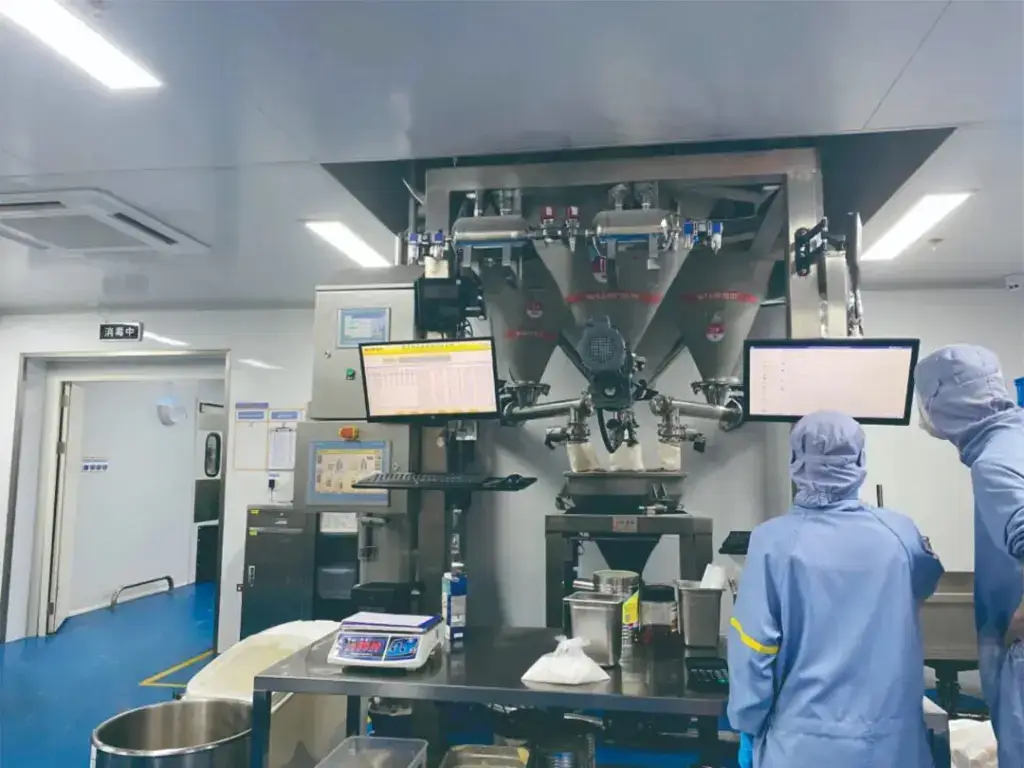
Why Wijay Systems for bakery pneumatic conveying
Wijay Systems designs and commissions complete pneumatic conveying systems for food manufacturing — not individual components. The distinction matters for a dough temperature control application: the thermal management outcome depends on every stage of the material flow working as a coordinated system. A silo upgrade without pipeline insulation, or a water temperature algorithm without stable dosing quantities, delivers partial improvements rather than systemic ones.
15yr Industry experience Pneumatic conveying and material handling for food manufacturing
2,000+ Commissioned systems Verified installations across bakery, confectionery, and food processing
×2 / ÷2 Typical outcome Production capacity doubled, manual handling labor halved — through custom system design
Five-subsystem integrated architecture — insulated storage, sealed conveying, gravimetric dosing, intelligent water temperature, and PLC data management
Multi-media temperature control — process water, sugar syrup, and liquid yeast alongside dry flour and powder ingredients
Modular design — applicable to both new factory builds and retrofit installations into existing production lines
Site survey before every system design — throughput requirements, facility layout, product formulas, and existing equipment constraints confirmed before specification
If your production line has persistent dough temperature variation that water temperature adjustment has not resolved, the root cause is almost certainly upstream of the mixer. Wijay’s site survey process identifies where in the material flow the primary temperature disturbances originate — and designs the conveying system to eliminate them at the source.
Struggling with dough temperature variation?
Wijay designs complete pneumatic conveying systems for industrial bakery production — customized to your throughput requirements, facility layout, and product formulas. Tell us about your production line and we will identify where the temperature disturbances originate.