When it comes to handling powders, pellets, and bulk solids, not every material can be treated the same. Some are toxic or explosive. Others are hygroscopic and easily damaged by moisture. Certain materials can attract pests, create dust hazards, or react poorly to oxygen exposure. It’s important for these types of materials to control the process environment and keep it separate from the ambient environment. Bulk material handling requires precision, safety, and efficiency—and that’s exactly where pneumatic conveying systems excel.
At Wijay, we specialize in designing custom-engineered pneumatic conveying solutions for a wide variety of industries. From food to chemicals, from plastics to building products, we’ve built systems that move even the most challenging materials safely and efficiently. In the following sections, we’ll look at why these systems are especially effective across different industries.
Below, we’ll explore the best industries for pneumatic conveying systems, the types of materials that benefit most, and how Wijay products provide reliable, long-term solutions.
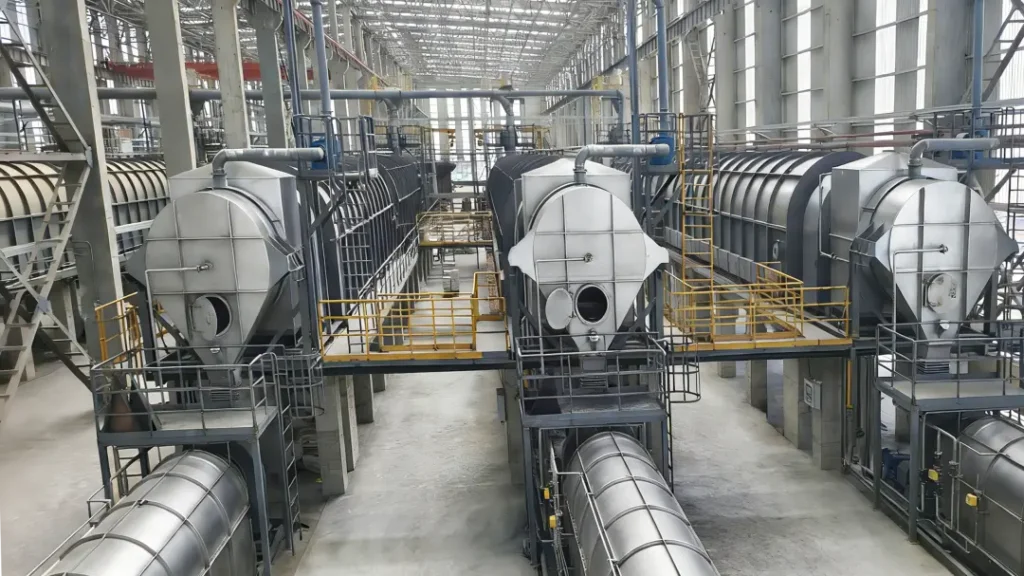
Why Pneumatic Conveying System?
Unlike mechanical conveyors, pneumatic systems use air or gas to move materials through a closed pipeline, so the process environment is controlled and separate from it. This enables precise handling and reduces material degradation or contamination.LiLayouts are flexible and adapt to existing plant requirements. Sensitive applications like food benefit from improved hygiene and safety. Existing plant footprints.
- Improved hygiene and safety in sensitive applications like food.
It’s these advantages that make pneumatic conveying the technology of choice across multiple industries, especially when dealing with problematic materials like toxic powders, fragile materials, hygroscopic ingredients, or bulk solids prone to dusting. Let’s examine how these benefits apply in key industries, starting with the food sector.
Pneumatic Conveying for the Food Industry
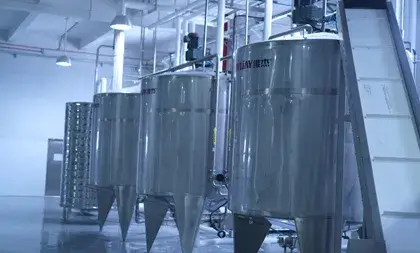
Food and Beverage deal with a wide range of powders and bulk materials, from flour and sugar to starches, milk powder, coffee, and cocoa. Many of these materials are hygroscopic, meaning they easily absorb moisture, which can lead to clumping, These systems reduce contamination with closed, sanitary transfers.l in these situations because it provides:
- Sanitary transfer with closed systems that reduce contamination risk.
- Controlled environments that prevent oxygen or moisture exposure. A typical compressed air system with a regenerative dryer produces compressed air with a pressure dewpoint (PDP) of around -40F. When expanded to the atmosphere, this air has a dew point of around -60F. So, just by using normal dry compressed air, the process environment is drier than the Sahara Desert! And for hygroscopic materials, it means we are not adding moisture to an already moisture-sensitive material.
- Pneumatic conveGentle handling protects the integrity of fragile products.enl to eliminate material oxidation, dust explosions, or fire.s.
- Gentle handling to preserve product integrity.
Wijay’s Pressure Conveying Systems and Vacuum Conveying Systems are frequently used in the food industry to move powders while protecting product quality. For example, our Dense Phase Conveying Systems can transfer fragile food ingredients without breakage, making them a perfect fit for applications like food processing powder transfer. The value of pneumatic conveying is just as evident in the plastics industry, where similar challenges appear.
Pneumatic Conveying for the Plastics Industry
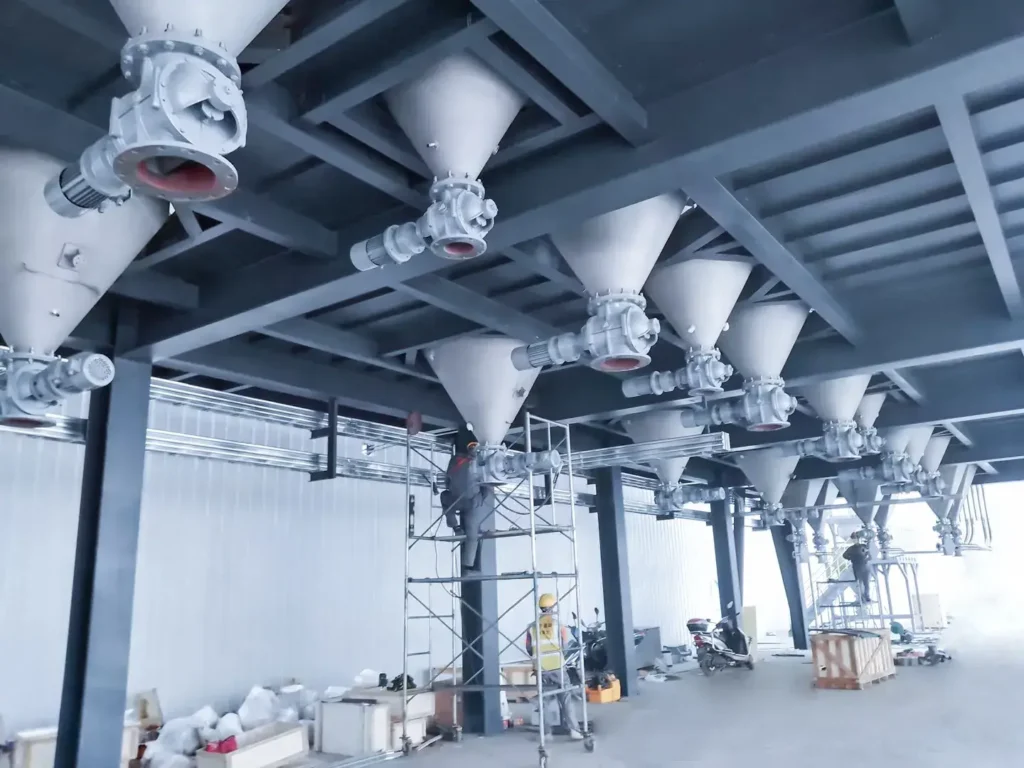
The plastics industry relies heavily on pneumatic systems for plastic pellet and powdered resin conveying. Proper handling prevents moisture absorption and degradation. Plastic pellets are transferred cleanly and dust-free for molding and extrusion. Resins move efficiently over long distances throughout large facilities. molding and extrusion processes.
- Efficient long-distance conveying for resin transport within large facilities.
- Reduced material waste, since streamers—thin, string-like fragments formed when plastic melts and re-solidifies in the conveying pipe—must be removed.
Wijay’s Pneumatic Conveying and Processing Systems are widely used in plastics manufacturing to move pellets, powders, and additives. With capacities ranging from small batch operations to continuous large-scale production, these solutions ensure that plastics processors can maintain consistent, high-quality output. The chemical industry also relies on pneumatic conveying to meet its specific handling demands.
Pneumatic Conveying for Chemicals
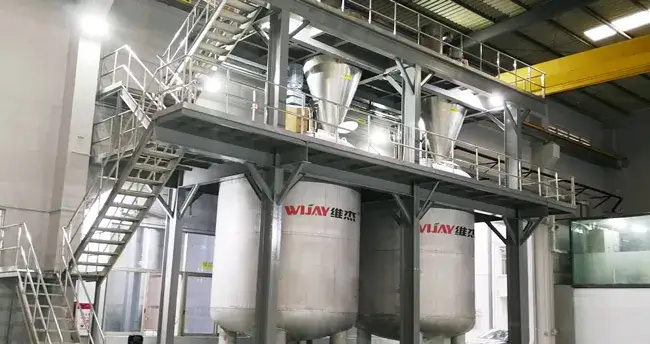
In the chemical industry, bulk powders and granular materials often bring serious challenges: many are toxic, abrasive, corrosive, or explosive. This is where chemical bulk powder transport puts safety above all else.
Wijay has decades of experience designing conveying systems for materials like:
- Citric acid
- Catalysts
- Adipic acid
- Terephthalic
- Specialty chemicals
Our systems are engineered to eliminate leakage and dusting, protecting both workers and the environment. For instance, our Dense Phase Conveying Systems allow for safe, low-velocity conveying of abrasive or explosive materials—reducing particle degradation and mitigating safety risks.
By providing a fully enclosed system, pneumatic conveying also prevents materials from being exposed to oxygen or moisture, which is critical in chemical production environments. This level of environmental control is equally vital in heavy industries such as foundries.
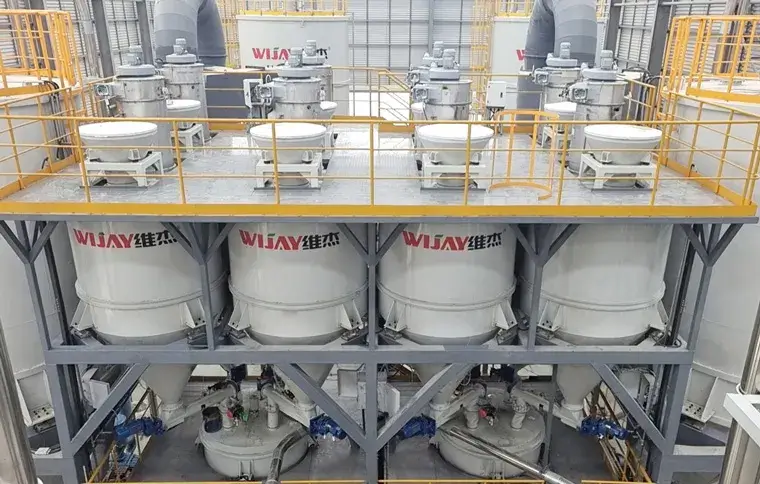
Other Industries Benefiting from Pneumatic Conveying
While food, plastics, chemicals, and new Materials products are core industries, pneumatic conveying also plays a vital role in:
- Energy – moving biomass and alternative fuels.
- Agriculture – conveying grains, herbicides, pesticides, and fertilizers safely and efficiently. By serving such a diverse set of industries, pneumatic conveying demonstrates its versatility and adaptability.
Why Choose Wijay Syetem?
Wijay is more than a system supplier; we’re a partner in solving complex material handling challenges. With over 15,000 systems in 75 countries, our solutions are built around your specific material properties, plant requirements, and industry standards.
Find Pneumatic Conveying Solutions With Wijay
The best industries for pneumatic conveying systems are those dealing with fragile, dusty, abrasive, or hazardous materials—from flour and plastics pellets to cement and chemicals. By offering clean, reliable, and efficient material transfer, pneumatic conveying with Wijay improves safety, reduces waste, and ensures long-term product quality.
Ready to Find the Right Pneumatic Conveying Solution for Your Industry?
Whether you’re exploring our pneumatic conveying solutions, bulk materials handling systems, needing support for an existing system, or simply wanting to learn more about us, we’re here to assist. Contact Wijay today!