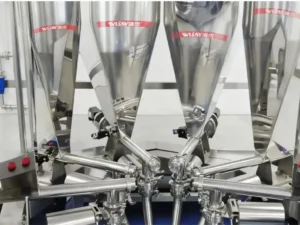
In food production, the conveying of powder materials is often a critical yet easily overlooked aspect. The efficiency, cleanliness, and stability of material conveying directly impact product quality and production costs. Guangdong Wijay Material Automation System Co., Ltd. recently completed an automated sugar powder pneumatic conveying system for Garden Food Co., Ltd. This article uses this project as an example to discuss how such a system helps businesses solve real-world problems.
Garden Food’s Sugar Powder Conveying Challenge
Garden Food is a company focused on baking goods production, requiring large quantities of sugar powder in its daily operations. Before adopting Wijay’s system, sugar powder conveying relied primarily on manual handling and basic mechanical lifting. This traditional method presented several clear pain points:
The first issue was dust. Sugar powder is a fine material, prone to generating dust during manual feeding and transfer. This not only led to material waste but also affected operators’ respiratory health, making it difficult to maintain a clean production environment. The second issue was inaccurate metering. Manual weighing and feeding inevitably introduced errors, compromising the stability of product recipes. The third issue was an efficiency bottleneck. As production capacity increased, the traditional method struggled to keep pace, becoming a limiting factor in the production line’s efficiency.
Garden Food aimed to completely resolve these issues through technological upgrades. After several rounds of technical discussions, the company ultimately chose Wijay to design a customized automated sugar powder pneumatic conveying system.
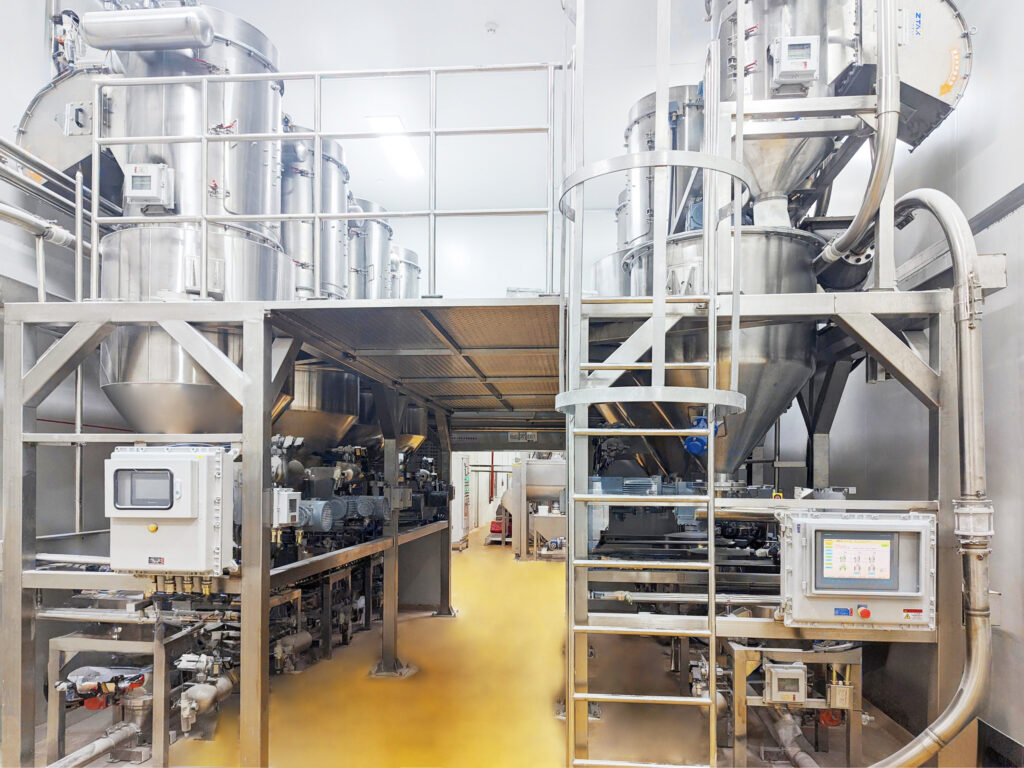
System Design: Achieving a 5 Tons/Hour Conveying Capacity
This system was specifically designed for Garden Food’s actual operating conditions. The overall conveying capacity reaches 5 tons per hour, with a conveying distance of 100 meters and a conveying height of 12 meters. While these parameters are considered medium-scale for powder conveying in the food industry, the challenge lay in the specific characteristics of sugar powder—it has a certain degree of hygroscopicity, is sensitive to temperature, and is prone to static electricity and clumping during conveying.
Wijay’s technical team structured the system with the following key components:
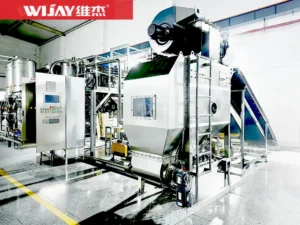
The feeding station serves as the starting point of the system. After operators pour bagged sugar powder into the station, the system uses negative pressure to draw the material into the pipeline. The dumping station is equipped with dust removal equipment to control dust emissions at the source.
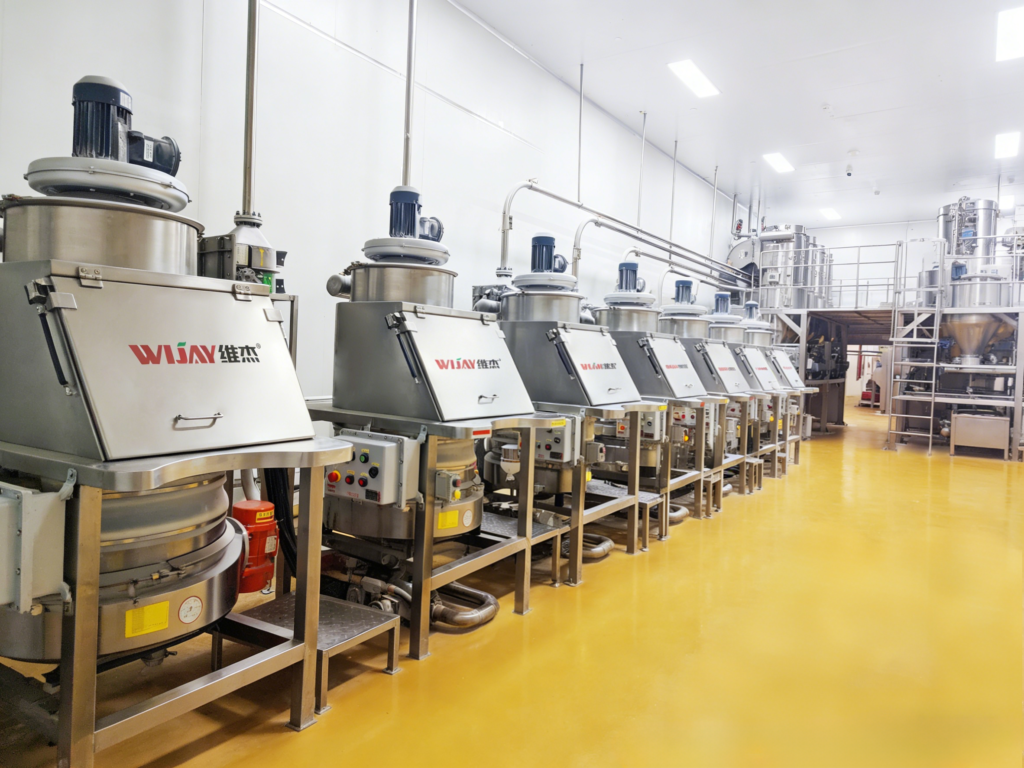
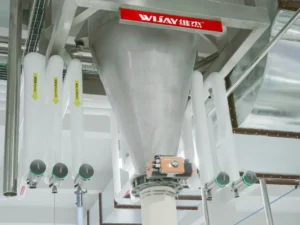
The buffer silo acts as a surge bin. Since the rhythm of upstream dumping and downstream conveying is not always synchronized, the buffer silo ensures a continuous and stable material supply, preventing interruptions in downstream production due to feeding gaps.
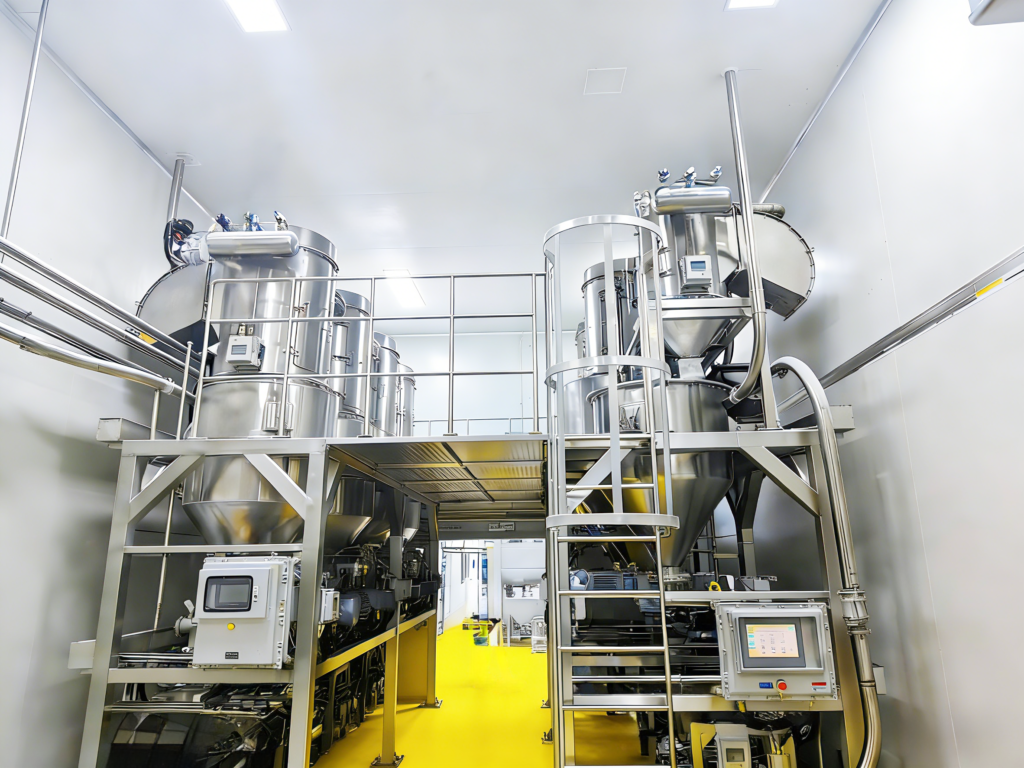
The sugar mill was included to meet Garden Food’s specific requirements for sugar powder fineness. Some raw sugar particles are too large and need to be processed by the mill before entering the conveying system, ensuring the final sugar powder meets process standards.
The drying conveying system was specially designed to address the hygroscopic nature of sugar powder. During conveying, the system controls the temperature and humidity of the conveying air to prevent the sugar powder from absorbing moisture and clumping, thereby maintaining material flowability.
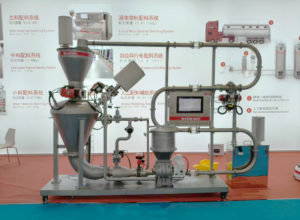
The metering system is one of the core highlights of this system. Wijay configured four automatic metering points for Garden Food, corresponding to the material requirements of different production stations. Each metering point can automatically weigh the required amount of sugar powder based on the recipe, enabling precise feeding. Additionally, one automatic metering manual bagging station was set up to automatically divide the sugar powder according to set weights, facilitating flexible use later on.
Practical Improvements Brought by the Pneumatic Conveying System
After the system was put into operation, Garden Food experienced tangible improvements in its production processes:
Significantly improved workshop environment. As the entire conveying process takes place within enclosed pipelines, and dust at the dumping station is effectively controlled, sugar powder no longer accumulates on the workshop floor or equipment surfaces. Operators now work in a cleaner, more comfortable environment.
Greatly enhanced metering accuracy. The automatic metering system replaced manual weighing, allowing precise control over the amount of sugar powder used in each batch. This ensures the stability of product recipes and significantly reduces quality variation between batches.
Notably reduced labor costs. Tasks that previously required a team of workers for dumping, transporting, and weighing can now be completed by a single operator using a simple control interface. Operators are also freed from heavy physical labor, significantly reducing their workload.
Reduced material loss. Enclosed conveying prevents spillage and dust generation during material transport. Furthermore, the dust collection equipment at the system’s endpoint recovers dust generated during conveying, further minimizing material waste.
Improved production efficiency. The conveying capacity of 5 tons per hour adequately meets Garden Food’s production demands. The system can run continuously, eliminating production rhythm fluctuations caused by variations in manual operation speed.
Why Choose Pneumatic Conveying Systems?
Pneumatic conveying systems are widely used in industries such as food, chemicals, and new energy due to their inherent technical characteristics.
Pneumatic conveying uses airflow to transport materials within enclosed pipelines. The entire process is isolated from the external environment, eliminating the risk of material contamination. This is particularly crucial for the food industry, where food safety regulations impose strict cleanliness requirements on production processes. Pneumatic conveying systems effectively meet these compliance needs.
In terms of conveying layout, pneumatic systems offer high flexibility. Pipelines can be flexibly routed according to factory layout, handling horizontal transport, vertical lifting, crossing over equipment, and bypassing obstacles without issue. For a system like the one at Garden Food, achieving a conveying distance of 100 meters and a height of 12 meters would likely require a combination of multiple pieces of equipment using traditional mechanical conveying methods. A pneumatic conveying system accomplishes this with a single integrated system.
High automation is another significant advantage of pneumatic conveying. Using a PLC control system and various sensors, automatic material feeding, conveying, metering, and batching can be achieved. Data from the entire process can be recorded and traced, providing valuable support for production management.
Wijay’s Experience in Pneumatic Conveying
Guangdong Wijay Material Automation System Co., Ltd. has accumulated extensive project experience in the field of pneumatic conveying systems. From food and beverage to plastics and chemicals, and from lithium battery new energy to fine chemicals, Wijay has provided a wide range of material automation conveying solutions for clients across different industries.
In the food industry, Wijay serves clients in various sub-sectors, including baking, dairy, seasonings, and health products. Different materials—such as sugar powder, flour, starch, milk powder, salt, and monosodium glutamate—each have unique conveying characteristics. Wijay’s technical team designs suitable conveying solutions based on material properties and client process requirements.
In the plastics and chemical industry, Wijay has managed numerous conveying projects for powders and granular materials, including PVC powder, PE pellets, calcium carbonate, and titanium dioxide. This has provided valuable experience in handling complex conditions such as high temperatures, high abrasiveness, and explosion risks.
In the lithium battery new energy sector, following the rapid development of the new energy industry, Wijay has provided automated conveying systems for cathode and anode materials to several lithium battery material companies, helping clients improve production efficiency and product consistency.
Wijay has established partnerships with many Fortune Global 500 companies. Its clients are not only spread across major industrial regions within China but also cover Southeast Asia, Europe, the Americas, and other parts of the world. For every project—from solution design, equipment manufacturing, installation, and commissioning to after-sales service—Wijay adheres to high standards and strict requirements to ensure the stable and reliable operation of its systems.
Conclusion
The automated sugar powder pneumatic conveying system project for Garden Food is just one example among Wijay’s many successful cases. This case demonstrates that a well-designed automated material conveying system can effectively help businesses address practical issues related to dust control, metering accuracy, labor costs, and production efficiency.
If your industry faces challenges with material conveying, or if you are planning to build a new production line or renovate an existing one, please feel free to contact Wijay. We are ready to share our years of accumulated experience and provide you with the right solution.