In the rapidly evolving landscape of new energy, the efficiency and reliability of production processes are paramount. For manufacturers of lithium battery anode materials, handling raw materials such as petroleum coke and calcined coke poses significant engineering challenges.
This case study examines how WIJAY successfully implemented a comprehensive powder-conveying system for a major diversified enterprise’s new-energy base in Sichuan, China, enabling it to achieve a landmark annual output of 200,000 tons.
The Challenge: Scaling Up with Complex Material Handling
Our client, a large conglomerate, identified a critical need to modernize and scale its anode material production to meet surging market demand. The Sichuan facility’s core processes involved the handling of two primary material types after grinding: raw petroleum coke and calcined coke. The project scope was divided into two main areas: the post-grinding handling system for petroleum/calcined coke and a separate system for fine powder processing.
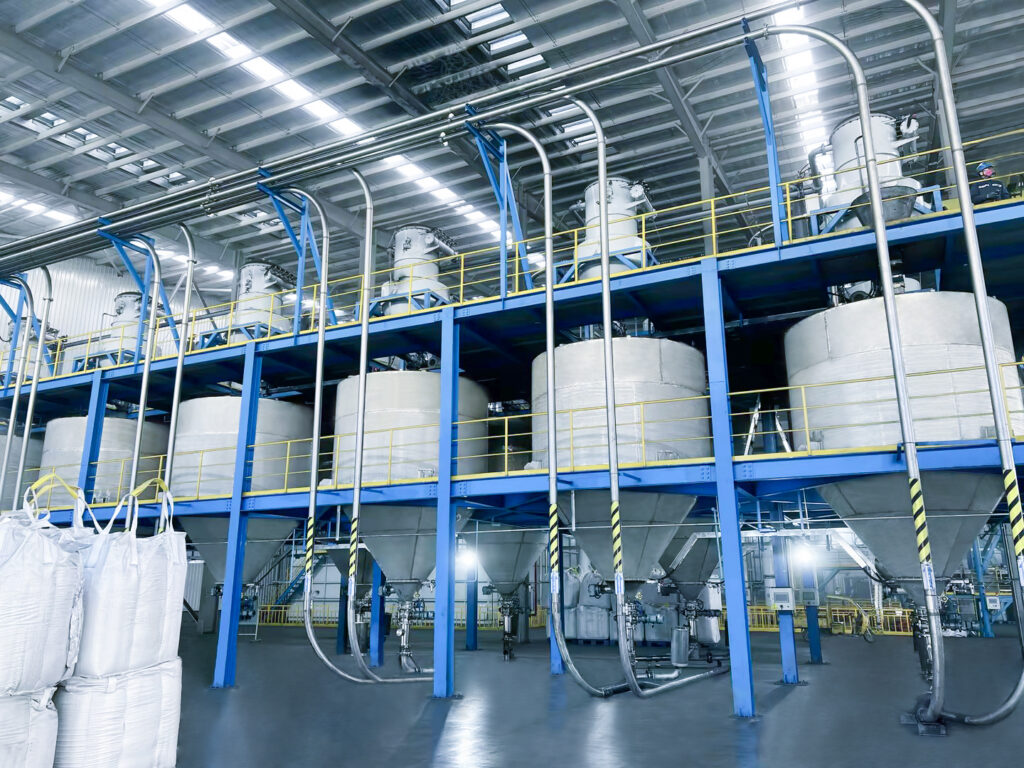
The scale of the project was immense. The post-grinding system alone required 12 production lines—9 for raw petroleum coke and 3 for calcined coke. Each line demanded a consistent conveying capacity of 8 tons per hour.
The most significant technical hurdle was one of these lines(a pneumatic conveying route stretching an unprecedented 380 meters). In the anode material industry, surpassing the 300-meter mark for negative pressure conveying was considered a pioneering endeavor, fraught with risks of line blockages, material degradation, and pressure loss.
Compounding this challenge was the fine powder handling system. With 4 dedicated production lines, each needed to convey 5 tons of ultra-fine, cohesive powder per hour over distances of up to 70 meters. Fine powders are notoriously difficult to move efficiently due to their poor flow characteristics and tendency to agglomerate or stick to pipeline walls.
The client required a solution that was not only reliable but also airtight to prevent contamination and ensure a clean, safe working environment. Their ultimate goals were clear: enhance production efficiency, lower operational costs, improve product quality, and bolster market competitiveness—all while minimizing environmental impact.
The Solution: A Tailored, High-Performance Powder Conveying System
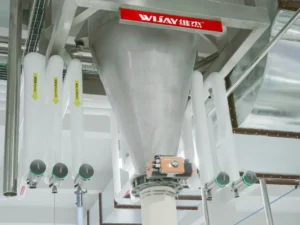
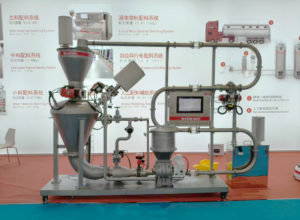
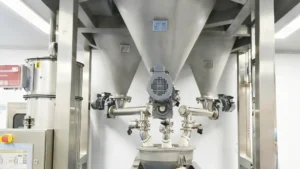
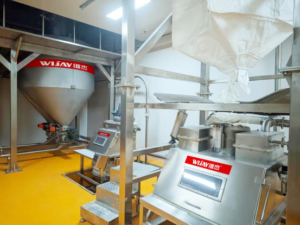
Wijay engineering team collaborated closely with the client to design and deploy a custom-engineered powder-conveying system that addressed every aspect of this complex project. Our solution was built on a foundation of modular design and precise pneumatic conveying principles, ensuring scalability and adaptability for future expansions.
1. Conquering the Long-Distance Record
For the 380-meter post-grinding line, a standard system would have been insufficient. Our engineers designed a specialized negative-pressure conveying circuit with strategically placed boosters and optimized pipeline diameters. This ensured that the petroleum coke maintained a consistent, fluidized state throughout its journey, preventing settling and blockages. The success of this record-setting line validated our design approach and demonstrated the robustness of our powder conveying system in extreme applications.
2. Mastering Fine Powder Flow
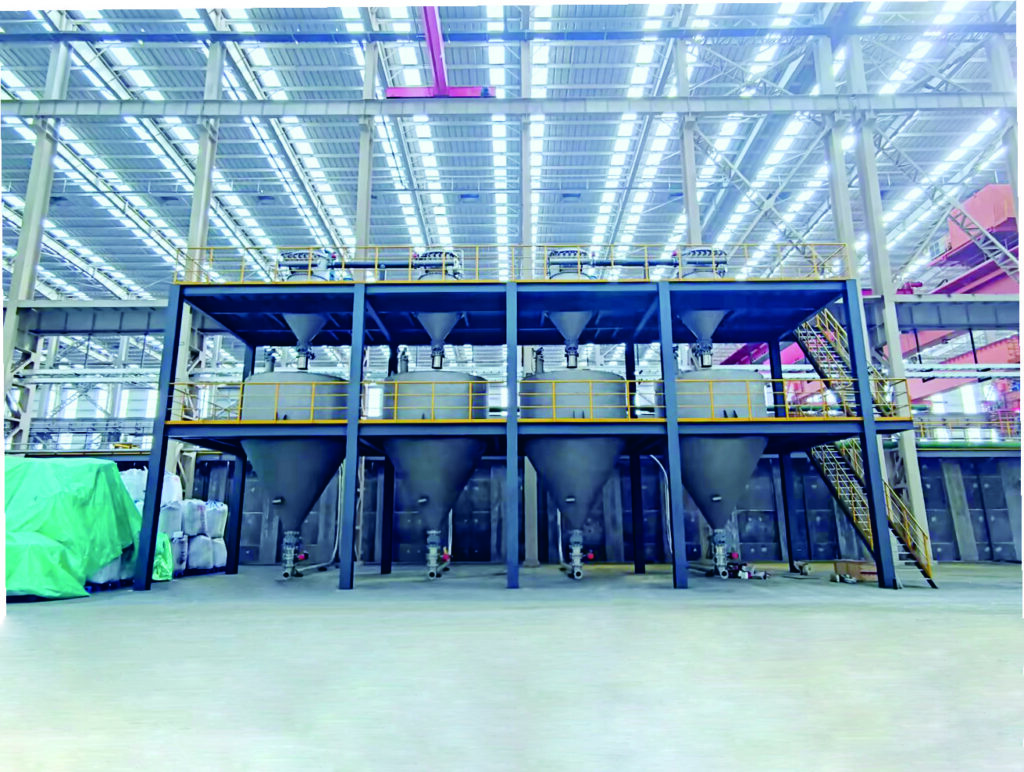
For the 4 fine powder lines, we implemented a dense-phase conveying concept. Unlike dilute-phase systems that suspend material in air, dense-phase conveying pushes material along the pipeline in slugs at lower velocities. This method is ideal for fragile or abrasive materials and significantly reduces pipeline wear. For the client’s fine powder, this approach minimized the risk of compaction and ensured a smooth, continuous flow over the required 70-meter distance. The system’s fully enclosed design eliminated dust emissions, contributing directly to the client’s sustainability goals.
3. System Integration and Control
The entire powder conveying system was integrated with a centralized PLC control system, providing the client with a single point of operation and monitoring. This allowed for precise control over conveying speeds, pressure differentials, and material flow rates across all 16 lines. The automation minimized human intervention, reduced the potential for operator error, and ensured consistent material handling, which is critical for maintaining uniform product quality in anode production.
The Results: Achieving Operational Excellence
The deployment of Wiajy powder conveying system has transformed the client’s production capabilities, delivering tangible results across their key performance indicators.
- Pioneering Efficiency: The system successfully operates the first-of-its-kind 380-meter negative-pressure line, demonstrating that large-scale, long-distance conveying is viable and efficient for the anode material industry. This has opened new possibilities for plant layout and design.
- Enhanced Production Throughput: With all 16 lines operating at or above their required capacities (8 T/H and 5 T/H), the client has successfully ramped up production to meet their 200,000-ton annual target. The system’s reliable 24/7 operation has eliminated bottlenecks in the material handling phase.
- Reduced Operational Costs: The system’s automation has significantly reduced the manual labor required for material transfer and cleaning. Furthermore, the energy-efficient design of our dense-phase conveying technology for fine powders has contributed to lower overall power consumption per ton of material produced.
- Improved Product Quality & Market Competitiveness: By ensuring a consistent, contamination-free flow of materials, the powder conveying system directly contributes to the uniformity of the final anode material. This improved quality consistency allows the client to meet the stringent requirements of top-tier battery manufacturers, strengthening their position in a competitive market.
- Sustainable and Safe Operations: The fully enclosed system has virtually eliminated dust leakage, creating a cleaner, safer working environment for plant personnel. This containment also prevents material loss and minimizes the plant’s environmental footprint, aligning with the broader industry push for sustainable manufacturing practices.
Conclusion
This project stands as a benchmark for what is achievable with advanced pneumatic conveying technology. By partnering with WIJAY, the client not only solved immediate operational challenges but also future-proofed their production facility. The successful implementation of this comprehensive Lithium Battery powder conveying system underscores our commitment to providing innovative, reliable, and efficient solutions that drive the new energy industry forward. For companies looking to optimize their own material handling processes, this case study demonstrates that with the right engineering partner, even the most complex challenges can be overcome.