Sugar and salt are two of the most widely processed bulk materials in the food, chemical, and water treatment industries. They are often handled in the same facility, sometimes even on the same production line — yet from a pneumatic conveying engineering standpoint, they could hardly be more different.
Treating them as interchangeable is one of the most common — and costly — mistakes in system specification. A system over-engineered for sugar’s explosion risk wastes budget on salt. A system under-engineered for salt’s corrosivity fails years ahead of schedule. This guide breaks down exactly where the two materials diverge, and how to specify (or select) the right system for each.
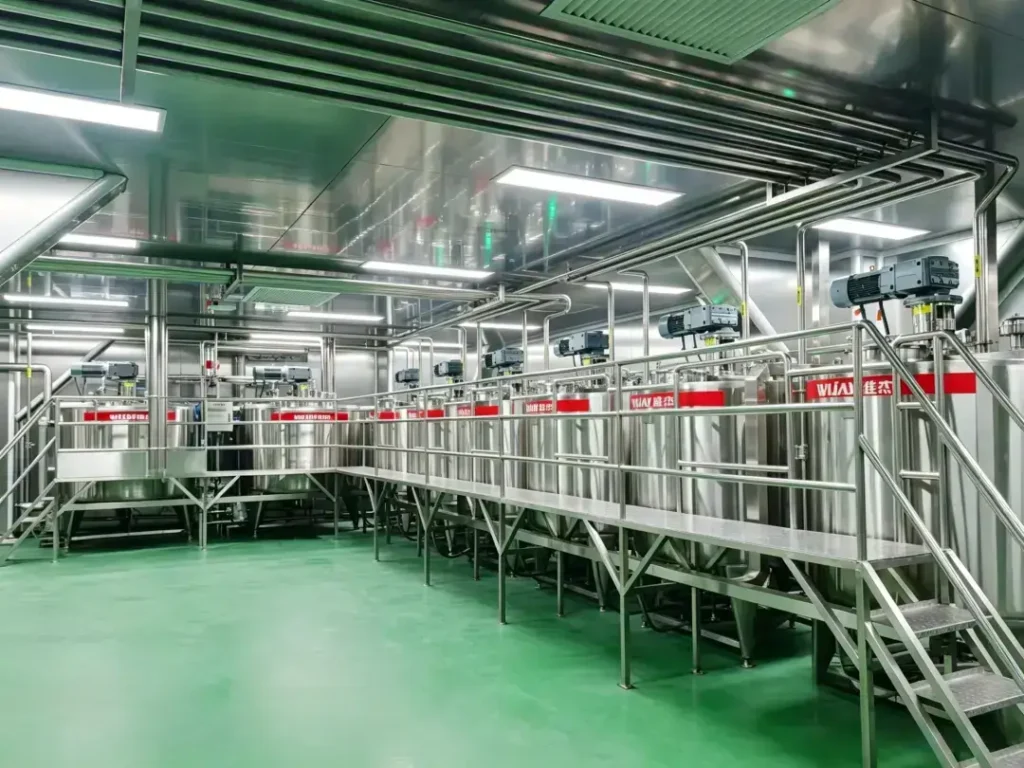
Sugar vs. Salt: Different Engineering Challenges
While sugar and salt are often handled in the same food processing environment, they behave very differently in a pneumatic conveying system. Understanding these differences is the foundation of selecting the right system.
Sugar: Combustible, Hygroscopic, and Fragile
Sugar — whether granulated, powdered, or raw cane — is classified as a combustible dust by OSHA, NFPA 61, and ATEX regulatory frameworks. Fine sugar particles suspended in the air at sufficiently high concentrations can ignite and cause a devastating dust explosion, making sugar one of the highest-risk materials in food production environments.
Beyond safety, sugar is hygroscopic: it readily absorbs ambient moisture, causing crystal surfaces to dissolve and reform as hardened lumps — a process known as caking. Sugar is also sensitive to air temperature; temperatures exceeding 40°C can soften crystal surfaces and increase caking risk.
For applications where crystal integrity matters — decorative sugar on confectionery, or specialty coarse grades — high conveying velocity causes particle attrition, breaking crystals into undersized fines. Attrition increases sharply with velocity, making speed control a critical design parameter.
For the full engineering breakdown of sugar conveying — including dust hazard analysis, explosion protection design, and dilute vs. dense phase selection — see our complete sugar conveying guide.
Salt: Corrosive, Abrasive, and Moisture-Sensitive
Salt (sodium chloride) presents a fundamentally different set of challenges. Unlike sugar, salt is not combustible — but it is highly corrosive. When salt contacts iron-rich metals in the presence of moisture, it accelerates oxidation and rust formation, leading to premature equipment failure, contamination, and costly unplanned downtime.
Salt is also moderately to highly abrasive, depending on crystal size and hardness. At high conveying velocities, salt particles erode the internal surfaces of pipelines, bends, and valves — particularly at directional changes. Abrasive wear increases sharply with particle velocity, meaning even modest speed reductions deliver significant gains in system longevity.
Like sugar, salt is hygroscopic in humid conditions, absorbing moisture and forming hard clumps that obstruct flow. Effective moisture management is therefore as critical for salt as it is for sugar — but for a different reason: salt’s hygroscopicity is primarily a corrosion accelerant, not an explosion factor.
Sugar vs. Salt Conveying Requirements
| Property | Sugar | Salt |
|---|---|---|
| Bulk density | 45–55 lb/ft³ (loose) | 70–80 lb/ft³ (loose, varies by grain size) |
| Combustibility | ✅ Combustible dust (St 1 classification) | ✗ Non-combustible |
| Corrosiveness | Low | ✅ High — accelerates iron/steel oxidation |
| Abrasiveness | Low to moderate | Moderate to high |
| Hygroscopicity | Moderate — drives caking | Moderate to high — drives caking and corrosion |
| Critical air temperature | < 40°C (prevents crystal softening) | Less temperature-sensitive; humidity control is the priority |
| Recommended construction | 304 stainless steel generally sufficient | 316L stainless steel required for prolonged contact |
| Recommended conveying mode (fine/powder grade) | Dilute phase | Dilute phase |
| Recommended conveying mode (coarse/crystal grade) | Dense phase (preserves crystal integrity) | Dense phase (reduces abrasive wear) |
| Primary engineering risk if misdesigned | Dust explosion | Premature equipment failure from corrosion/wear |
| Explosion protection required | ✅ Yes — DHA, venting, grounding, NFPA 61/ATEX compliance | ✗ Not required |
| Hygienic/food-grade design | ✅ Required | ✅ Required |
Note: bulk density and abrasiveness figures vary by specific grade, crystal size, and source. The values above reflect typical industry ranges and should be confirmed against your specific material specification during system design.
Five Criteria for Evaluating Pneumatic Conveying Systems for Sugar and Salt
When evaluating pneumatic conveying systems, procurement teams and plant engineers should assess performance across five dimensions — though what “good” looks like differs sharply between the two materials.
1. Material-Matched Conveying Mode
| Pneumatic Conveying System | For Sugar | For Salt |
|---|---|---|
| Dilute phase (high velocity, low pressure) | Suits powdered/icing sugar where throughput speed is the priority | Suits fine food-grade salt |
| Dense phase (low velocity, high pressure) | Essential when crystal integrity must be preserved (decorative/coarse grades) | Essential for abrasion-resistant pipeline life and coarse salt |
Top-rated systems are engineered with the correct mode from the outset — not retrofitted after blockages, attrition, or excessive wear emerge.
2. Corrosion-Resistant Construction (Critical for Salt)
For salt handling, 316L food-grade stainless steel is the industry benchmark for all product-contact surfaces. Standard 304 stainless steel offers insufficient chloride resistance for prolonged salt contact, especially in humid environments. Tool-free disassembly, smooth internal welds, and the elimination of dead-end crevices further reduce corrosion sites and simplify maintenance.
3. Explosion Prevention & Dust Hazard Management (Critical for Sugar)
For sugar conveying, top-rated systems integrate explosion protection as a core engineering requirement, not an optional add-on:
- Fully enclosed pipeline design to prevent airborne dust formation
- Explosion venting panels on receivers and silos, directed safely away from personnel
- Rotary airlock valves to prevent flame propagation
- Complete static grounding and bonding of all metallic components
- Compliance with NFPA 61, ATEX Directive 2014/34/EU, and Dust Hazard Analysis (DHA) requirements
4. Moisture & Temperature Control (Critical for Both — for Different Reasons)
Effective systems incorporate:
- Aftercoolers to keep air temperature below the critical 40°C threshold for sugar
- Dehumidifiers or dryers to maintain low relative humidity, preventing caking in sugar and corrosion-accelerating moisture in salt
- Silo fluidization — low-pressure air injection at silo walls to prevent material from sticking and bridging during discharge
- Flow aid devices such as air pads and vibrators for consistent material flow
5. Hygienic Design & Food Safety Compliance
Both sugar and salt are food-grade materials subject to FDA, FSMA, and international food safety regulations. Top-rated systems are designed with smooth, crevice-free internal surfaces, clean-in-place (CIP) accessibility, no lubrication points in the product contact zone, and full certification documentation to support regulatory audits.
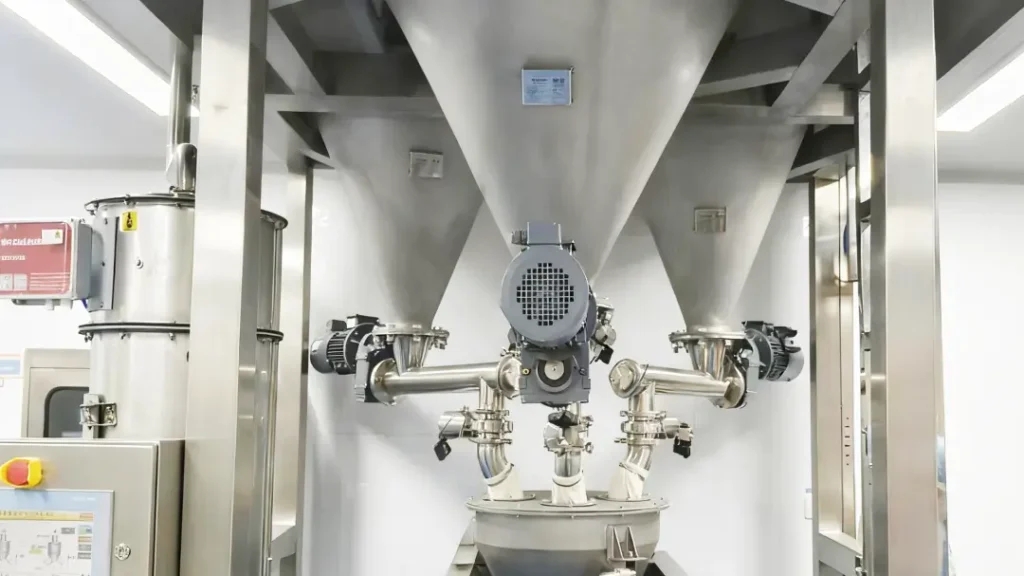
Case Reference: Designing for Two Materials in One Facility
A food seasoning manufacturer handling both sugar and salt on adjacent production lines illustrates why dedicated, material-matched systems matter. The facility had previously relied on a single shared conveying line switched between the two materials — a setup that required full system purging between runs, extended cleaning downtime between shifts, and introduced recurring risk of cross-contamination that the quality team could not fully eliminate. After implementing two parallel systems — a dense-phase, explosion-protected line for sugar and a 316L stainless steel dilute-phase line for salt — the facility eliminated inter-material changeover entirely. Cleaning cycles were reduced to material-specific routines, cross-contamination risk was removed at the system level, and both lines now run concurrently without interference.
Common Applications: Where These Systems Are Deployed
The best pneumatic conveying systems for sugar and salt are found across a wide range of industries:
Sugar Applications:
- Confectionery and candy manufacturing — transfer to mixers, depositors, enrobers
- Bakery production — bulk bag unloading and ingredient dosing to process equipment
- Beverage production — sugar dissolution and blending stations
- Sugar refinery operations — inter-process transfer and truck/railcar unloading
Salt Applications:
- Food processing — seasoning lines, brining systems, and curing operations
- Water treatment plants — salt transfer from bulk storage to softening units
- Chemical manufacturing — industrial salt handling for chlor-alkali and chemical synthesis
- Pharmaceuticals — food-grade and pharmaceutical-grade salt dosing and packaging
Why Wijay Is Among the Top-Rated Suppliers for Sugar and Salt Conveying
Selecting the right equipment partner is as important as selecting the right technology. Here is why operations across the food, chemical, and industrial sectors choose Wijay for their sugar and salt pneumatic conveying requirements:
✅ Application-Specific Engineering
Every Wijay system begins with a thorough material characterization assessment. Particle size distribution, bulk density, moisture content, abrasiveness, and flowability are all evaluated before a single component is specified. This ensures the system is engineered for your exact sugar or salt type — eliminating the costly guesswork that leads to blockages, attrition, and downtime.
✅ Integrated Explosion Protection for Sugar
Our sugar conveying systems are designed with explosion prevention as a primary engineering objective. From initial Dust Hazard Analysis through component selection, venting design, and static control, Wijay delivers systems that meet NFPA 61 and ATEX requirements, protecting your facility and workforce.
✅ Precision Moisture & Temperature Management
Wijay systems incorporate dehumidified conveying air, aftercooling where required, and silo fluidization technology — ensuring sugar and salt arrive at their destination in the correct physical condition, free from caking, clumping, or crystal degradation.
✅ Dense Phase Capability for Crystal-Critical Applications
For granulated sugar and coarse salt where particle integrity is non-negotiable, Wijay offers true low-velocity dense phase conveying — protecting crystal quality, reducing pipeline wear, and lowering compressed air consumption compared to dilute phase alternatives.
✅ Full Project Lifecycle Support
From feasibility study and material testing through system design, fabrication, installation, commissioning, and operator training — Wijay provides complete project support. Our engineers remain engaged throughout the process to ensure your system performs reliably from day one and continues to do so across its operational life.
Frequently Asked Questions
Q: Can one pneumatic conveying system handle both sugar and salt?
A: Technically possible with careful material changeover procedures, but in practice dedicated systems are preferred to avoid cross-contamination, material residue, and the conflicting design requirements of different materials.
Q: What is the most important factor when choosing between the dilute and dense phases for sugar? A: Crystal integrity. If your application requires undamaged granules — such as decorative confectionery sugar or specialty coarse grades — dense phase is essential. For powdered or icing sugar destined for dissolution, a dilute phase is typically sufficient and more cost-effective.
Q: How do I ensure my sugar conveying system is explosion-compliant?
A: A formal Dust Hazard Analysis (DHA) is the required starting point under NFPA and ATEX frameworks. Wijay’s engineering team conducts DHA as part of every sugar system design, identifying ignition sources and specifying appropriate prevention and mitigation measures.
Q: Is salt conveying subject to the same food safety standards as sugar?
A: Yes — both are food-grade materials subject to FDA, FSMA, and equivalent international standards when used in food, beverage, or pharmaceutical applications. Hygienic design requirements (smooth surfaces, CIP accessibility, no contamination points) apply equally to both.
Ready to Specify Your Sugar or Salt Conveying System?
Whether you are designing a new facility or upgrading existing bulk handling infrastructure, Wijay’s pneumatic conveying systems for sugar and salt deliver the engineering precision, food-grade quality, and regulatory compliance your operation demands.
Contact Wijay today for a free application consultation and system assessment — our engineers are ready to evaluate your material, layout, and throughput requirements and propose the optimal solution.