If your factory handles plastic pellets, food ingredients, or chemical granules, you know the daily struggles: dust coating every surface, workers hauling heavy bags, spilled material swept into the trash, and quality inconsistencies from batch to batch. These are not minor inconveniences—they directly impact your bottom line through wasted material, safety risks, and inefficient labor use.
The solution that leading manufacturers have adopted is a vacuum transfer system for pellets. This technology uses negative pressure to move materials through sealed pipelines, automating the entire process from storage to processing equipment. No dust, no spillage, and minimal manual intervention. Here is how it works, why it matters, and what the data tells us about its impact.
The Problem: Manual Handling Is Costing You More Than You Think
Before exploring solutions, let us look at the real costs of traditional material handling.
Safety hazards. Dust creates slip hazards and respiratory risks. In extreme cases, combustible dust can lead to explosions. According to industry data, enclosed pneumatic systems are now preferred because they eliminate these dangers entirely. Workers are no longer exposed to hot, heavy, or hazardous materials.
Product degradation. When pellets are transferred using mechanical methods or open handling, they can break, create “angel hair” streamers, or pick up contamination. This leads to rejected batches and unhappy customers.
Labor inefficiency. Manual handling ties up workers in repetitive, exhausting tasks. One operator with an automated system can oversee an entire plant’s material flow from a control panel, freeing skilled workers for quality control and process improvement.
Waste. Spilled pellets and torn bags become permanent losses. Over a year, these “small” losses add up to significant sums.
The Solution: How Vacuum Transfer Works
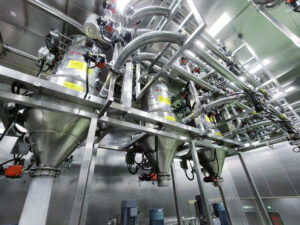
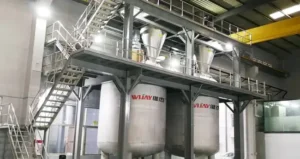
A vacuum transfer system for pellets operates on a straightforward principle: a vacuum pump creates negative pressure in a sealed pipeline, pulling pellets from a source point—a silo, drum, or Gaylord—into a receiving vessel. There, the material separates from the airstream and discharges into your process, while filters clean the air before release. The cycle repeats automatically, delivering material on demand without human intervention.
But the simplicity of the concept hides important engineering choices. Not all systems work the same way, and selecting the wrong type can damage your product or clog your lines.
Dilute Phase vs. Dense Phase: Match the Technology to Your Material
The two main types of vacuum conveying serve different purposes, and understanding the difference is critical to successful implementation.
Dilute phase conveying suspends pellets in a high-velocity airstream. It is the most common type because it handles high volumes over long distances efficiently. This method works well for rugged, free-flowing materials like general-purpose plastic resins. However, the high speed can damage soft plastics, creating streamers, or break brittle materials. If you are processing fragile or high-value pellets, a dilute phase may not be your best choice.
Dense phase conveying moves pellets in slow-moving slugs at lower velocities . This gentle handling is essential for fragile, abrasive, or high-value materials where product integrity is critical. Think breakfast cereals, glass pellets, or specialty chemicals. While transfer rates are slower, the protection of product quality makes dense phase the preferred method for sensitive applications.
Some advanced systems offer reflective vacuum conveying, which uses precision airflow control for delicate materials, and centrifugal systems for high-volume, continuous operations. The key is matching the technology to your specific material properties and production requirements.
What the Market Data Tells Us
The numbers confirm what plant managers already know: automation is no longer optional. The global market for pneumatic conveying systems continues to expand as manufacturers recognize the ROI of automated material handling.
According to industry analysis, the vacuum powder conveying system market is projected to reach a significant valuation by 2031, growing at a steady compound annual rate. This growth is driven by rising automation across industrial environments, coupled with increasing emphasis on dust-free and contamination-controlled material handling.
Asia Pacific leads this transformation, driven by rapid industrialization and the growth of advanced manufacturing sectors. Industries are phasing out mechanical conveyors in favor of pneumatic alternatives that offer operational flexibility while cutting maintenance and workplace hazards. The push toward smart factories and continuous processing lines has accelerated investments in advanced conveying architectures.
China’s manufacturing sector, in particular, has embraced these technologies. The country’s dominance in battery production, plastics processing, and chemical manufacturing has created strong demand for efficient, enclosed material handling solutions.
The Measurable Benefits of Conversion
When you switch from manual handling or mechanical conveyors to a vacuum transfer system for pellets, the benefits translate directly to measurable outcomes.
Safety and compliance. Sealed systems eliminate dust hazards, helping you comply with OSHA, ATEX, and local regulations. The enclosed design means no exposure to hazardous materials and no airborne particulates in the work environment.
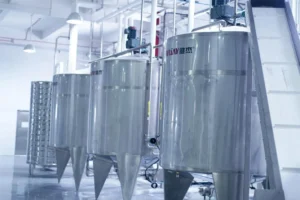
Product quality. Open handling invites moisture, dirt, and cross-contamination. A closed vacuum system protects your material from the environment. For food and pharmaceutical lines, this is non-negotiable. Stainless steel construction and sanitary designs meet GMP and FDA standards for these regulated industries.
Labor savings. One operator can manage material flow for an entire facility. The labor cost savings alone often justify the investment within months.
Waste reduction. Every gram of material reaches your process. No more swept-up spills, no more torn bags. Over a year, these savings are substantial.
Energy efficiency. Modern systems with variable frequency drives and optimized controls consume less energy than older mechanical alternatives.
Why Wijay Delivers Results You Can Measure
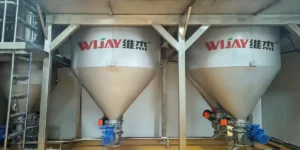
Since 2012, Wijay has focused exclusively on material automation. We are not a general machinery maker dabbling in conveying—this is our core competency. Headquartered in Songshan Lake, Dongguan, we operate over 40,000 square meters of manufacturing space plus a dedicated 2,000-square-meter R&D center. Every part of the system, from initial layout to final installation, is designed and built with our philosophy of “Minimalist Design, Ultimate Reliability.”
Our commitment to innovation is quantifiable. Wijay holds more than 100 patents and software copyrights, the result of continuous R&D and our partnership with Zhejiang University of Technology. We have earned ISO9001 quality management certification, ISO14001 environmental management certification, and intellectual property management certification—not wall decorations, but operational standards that guide everything we do.
The market recognizes our position. In the 2022 QYR global research report on automatic central supply systems, Wijay ranked among the world’s leading manufacturers. The Guangdong Electronic Information Association confirmed our domestic market share at 15.2% in 2022. These figures reflect real trust from real customers across food, plastics, chemicals, and new energy industries.
When you invest in a vacuum transfer system for pellets from Wijay, you are not just buying hardware. You are getting a decade of experience, proven engineering, and a partner who can scale with you—from a single production line to an entire digital factory.
Ready to eliminate dust, reduce labor costs, and protect your product quality?
Visit our official website to explore our solutions: wijaysystems.com