If you are involved in production management in the food, chemical, new energy, or plastics processing industries, you have likely encountered these frustrating scenarios: raw materials flying everywhere in the workshop, workers wearing masks and pushing carts back and forth to move materials; spending half a day cleaning pipelines when switching product lines; or finding that fragile granular materials have a sudden increase in breakage rate after conveying, affecting the final product’s yield.
These problems are common, but finding a real solution isn’t always straightforward. Today, let’s discuss a widely adopted material handling method—the pneumatic conveying system. What exactly is this system? What practical problems can it help you solve? What should you pay attention to when selecting and maintaining it? We’ll explain it in plain language.
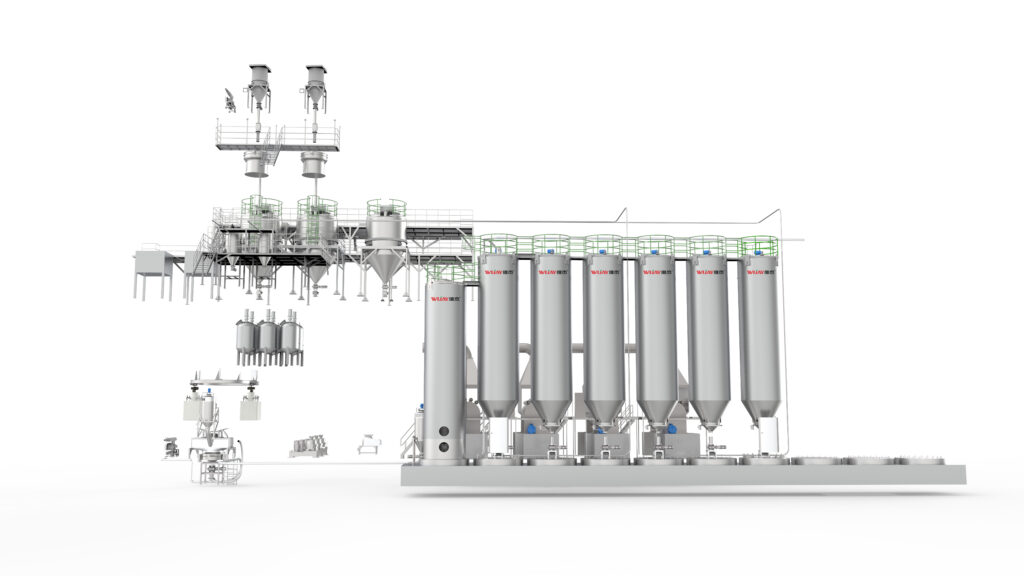
Common Pain Points on the Production Floor: How Can a Pneumatic Conveying System Solve Them?
The difficulties many companies face in material handling mainly fall into three categories. A well-designed pneumatic conveying system is precisely capable of addressing these issues.
1. Dust Dispersion and a Dirty Environment
In many powder processing workshops, dust is the biggest “invisible hazard.” It not only causes material waste and affects workers’ respiratory health but also poses a risk of dust explosion. It’s very difficult to control dust completely during manual feeding or open conveying.
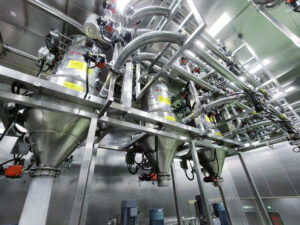
A pneumatic conveying system uses a completely enclosed pipeline network for transport. Materials are “blown” from storage silos through sealed pipes directly to downstream equipment. The entire process is isolated from the external environment, with no dust escaping, keeping the workshop clean and tidy. This not only improves the working environment but also makes it easier for companies to pass environmental and safety inspections.
2. Material Degradation and Quality Decline
For friable materials (such as plastic granules, coffee beans, pharmaceutical pellets, etc.), traditional mechanical conveying methods (like screw conveyors or bucket elevators) often involve hard contact, which easily causes material breakage. The fine powder generated from breakage can cause blockages in subsequent processes and even affect product quality.
Pneumatic conveying utilizes “low-speed” or “medium-speed” conveying modes. By precisely calculating the airflow velocity and material-to-air ratio, materials move through the pipeline in a suspended or dune-like flow, avoiding harsh mechanical compression. This is crucial for maintaining material integrity, especially in the production of high-value-added products, as it directly improves raw material utilization.
3. Cross-Contamination and Changeover Difficulties
In the food or pharmaceutical industries, when producing different formulations, the biggest concern is residual material from the previous batch left in the pipeline. If the conveying system is difficult to clean thoroughly, it can lead to cross-contamination and even trigger serious product recalls.
Modern pneumatic conveying systems consider “cleaning” requirements from the initial design stage. By incorporating well-designed discharge points and pulse backwash structures, or by using batch-type pneumatic conveying, the system can achieve nearly “zero residue” internally when changing materials. For applications with extremely high sanitary requirements, closed-loop nitrogen-protected conveying can be used, which is both safe and clean.
Key Things to Understand When Choosing a Pneumatic Conveying System
Given the obvious advantages of this system, can you just buy any set of equipment and expect it to work well? Not exactly. Many customers report issues like “system blockages,” “high energy consumption,” or “material stratification,” which often stem from a mismatch between the initial design and the actual operating conditions. If you are considering introducing or upgrading a pneumatic conveying system, it’s advisable to focus on the following points:
1. Choosing the Conveying Method: Positive Pressure or Negative Pressure?
This is the primary decision to make.
- Negative Pressure (Vacuum) Conveying: Simply put, it “sucks” the material. The advantage is that even if there’s a crack in the pipeline, it draws air in, preventing material from leaking out. It is suitable for conveying from multiple points to a single point, or for extracting materials from bulk bags or drums. For valuable or toxic materials, negative pressure is a safer option.
- Positive Pressure Conveying: This “blows” the material. It is suitable for conveying from a single point to multiple points over long distances, even hundreds of meters. However, if the pipeline leaks, material will be expelled, so high demands are placed on pipeline sealing.
Key Design Consideration: A professional engineer will make a comprehensive judgment based on your workshop layout, conveying distance, and material characteristics (such as bulk density, flowability, and moisture absorption). There is no single “best” system; only the system that best fits your specific site.
2. Balancing Flow Velocity and Energy Consumption
A common misconception is that higher airflow means faster and better conveying. In reality, excessively high velocity has several drawbacks: higher electricity consumption (fan power directly affects energy costs), faster pipeline wear (especially at elbows, which may wear through quickly), and an increased risk of material breakage.
A well-designed pneumatic conveying system aims for the “critical velocity”—the minimum speed required to convey the material without it settling. By using variable frequency drives and carefully designed pipe diameter changes, the flow velocity can be reduced while preventing blockages. This protects the material, reduces pipeline wear, and lowers energy consumption.
3. Selecting the Feeder
The feeder acts as the “throat” of the pneumatic conveying system. Common types include rotary valves, venturi feeders, and blow tanks.
- When handling fine powdery materials, the gap design of the rotary valve must be precise; otherwise, issues like air leakage or jamming can occur.
- When dealing with sticky materials, an anti-adhesion feeding structure needs to be considered.
Choosing the wrong feeder can lead to frequent system failures, even if the fan is sized correctly.
Common Operational Issues and Maintenance Tips
Even after a system is commissioned, some hidden issues can emerge over time. Understanding the right maintenance approach can help you minimize unplanned downtime.
Blockages are the most common issue in pneumatic conveying. When a blockage occurs, don’t blindly increase the air pressure to “blast” it through, as this can damage the equipment. The correct approach is to investigate the cause:
- Has the material’s moisture content increased, reducing its flowability?
- Is the filter clogged, causing insufficient airflow?
- Is there wear or a hole in a pipeline elbow, leading to pressure loss?
Practical Tip: Installing pressure sensors and inspection ports at strategic points in the system can help you pinpoint the blockage location early on, rather than having to dismantle and clear the entire pipeline after it becomes completely clogged.
Pipeline wear is also an unavoidable topic. Especially when conveying abrasive materials (like quartz sand, fiberglass, or certain mineral powders), elbows are the most prone to wear. At the design stage, using wear-resistant elbows (such as those with ceramic linings or large bend radii) may involve a higher initial investment, but it significantly reduces the frequency of future pipe replacements and maintenance costs, making it more cost-effective over the entire system lifecycle.
Why Customized Design Matters More Than Buying Standard Equipment
We’ve encountered many clients who initially thought, “I’ll just buy a standard model—it’s cheaper and faster.” However, they often found that the equipment didn’t fit their needs: either the conveying capacity was insufficient, or it kept blocking to the point of being unusable, eventually requiring a redesign.
This is because pneumatic conveying is different from pumping water; air is compressible, and the fluidization characteristics of different materials vary widely. Parameters that work perfectly for one material may be completely unsuitable for another.
For example, both starch and titanium dioxide are powders, but their suspension velocities are vastly different. Designing a system based on starch parameters to convey titanium dioxide would inevitably lead to blockages. Another example: in hot, humid southern climates, if a system conveying highly hygroscopic materials (like sugar or milk powder) doesn’t include a device for drying the conveying air, the material can easily cake on the inner pipe walls, eventually causing the system to fail.
Therefore, a reliable pneumatic conveying system must be built on a foundation of “material property testing” and “process compatibility.” A professional supplier will conduct a series of analyses on your material—including particle size distribution, bulk density, moisture content, angle of repose, and explosivity—before designing. Then, using computational fluid dynamics simulations, they can determine the most suitable pipe diameter, airflow rate, number of elbows, and fan power for your specific needs.
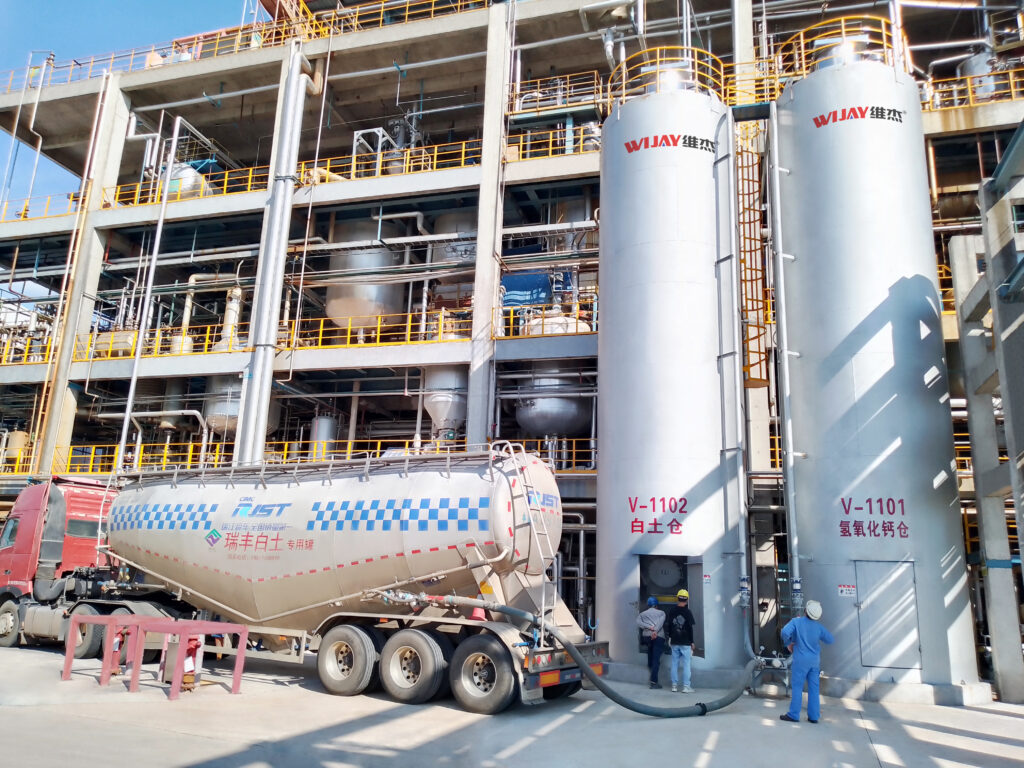
Conclusion
Although material conveying is just one link in the production line, it connects all the preceding and subsequent processes. The reliability of this system directly impacts whether your production can run smoothly, whether product quality can be assured, and whether the workshop environment remains acceptable.
Guangdong Wijay Material Automation System Co., Ltd. has been deeply involved in the pneumatic conveying field for many years. We have encountered a wide variety of materials and solved numerous on-site challenges. We don’t produce “cookie-cutter” equipment; instead, we tailor the most suitable conveying solution based on your material characteristics, site conditions, and process requirements.
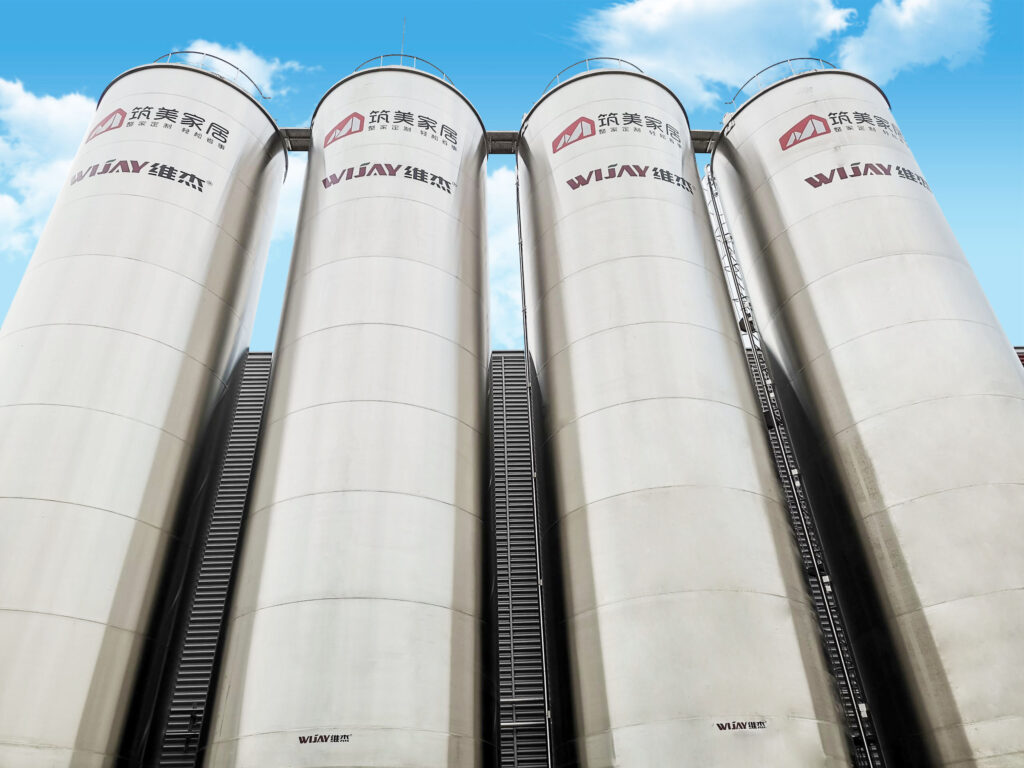
Wijay boasts numerous successful cases in the pneumatic conveying industry, backed by extensive experience and a reputation for reliability. We have maintained long-term partnerships with many Fortune 500 companies, and our customers are located all around the globe. Whether you are currently facing issues like low conveying efficiency, severe dust leakage, or high material degradation rates, we are committed to providing you with professional and practical solutions to help your production line run more smoothly and with greater peace of mind.