In a pneumatic conveying system, the conveying air velocity has a significant impact on the overall performance. Correctly calculating the required airflow rate in the pipeline is crucial for ensuring product quality, reducing component wear, and maintaining efficient operation. An incorrect airflow velocity can not only negatively affect the product and the system but can also lead to costly downtime and production stoppages.
Firstly, the conveying air velocity determines the material’s conveying speed and throughput. If the velocity is too low, the material will move slowly, reducing the conveying capacity. Conversely, if the velocity is too high, the material may become airborne and uncontrollable, preventing effective transport. Therefore, controlling the appropriate conveying air velocity ensures stable material handling and achieves optimal conveying results.
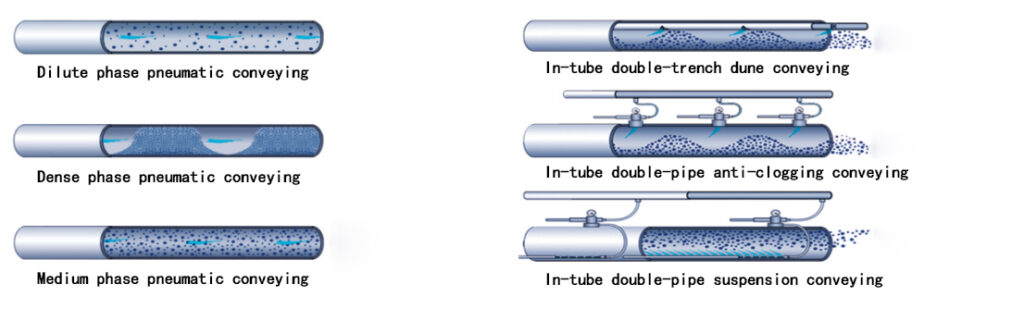
Secondly, the conveying air velocity affects the distribution and movement state of the material within the pipeline. In pneumatic conveying, materials are influenced by the airflow, which generates a certain acceleration. When the conveying velocity is too low, the material may not gain enough acceleration and tends to settle at the bottom of the pipe, potentially causing blockages. When the velocity is too high, the material experiences excessive impact force, making it prone to scattering and failing to form a stable material suspension, which can also lead to blockages. Thus, controlling the proper conveying velocity allows for a stable suspension flow, ensuring continuous material transport.
Furthermore, conveying velocity influences the degree of material degradation and system wear. If the air velocity in the pneumatic conveyor is too high, materials are more likely to degrade or break apart, resulting in poor conveying efficiency, increased wear on the pipeline, and wasted energy. Conversely, if the air velocity is too slow, the material may not be adequately entrained, leading to deposition and potential blockages. Therefore, controlling the appropriate conveying velocity ensures that materials are not damaged and prevents pipeline blockages.
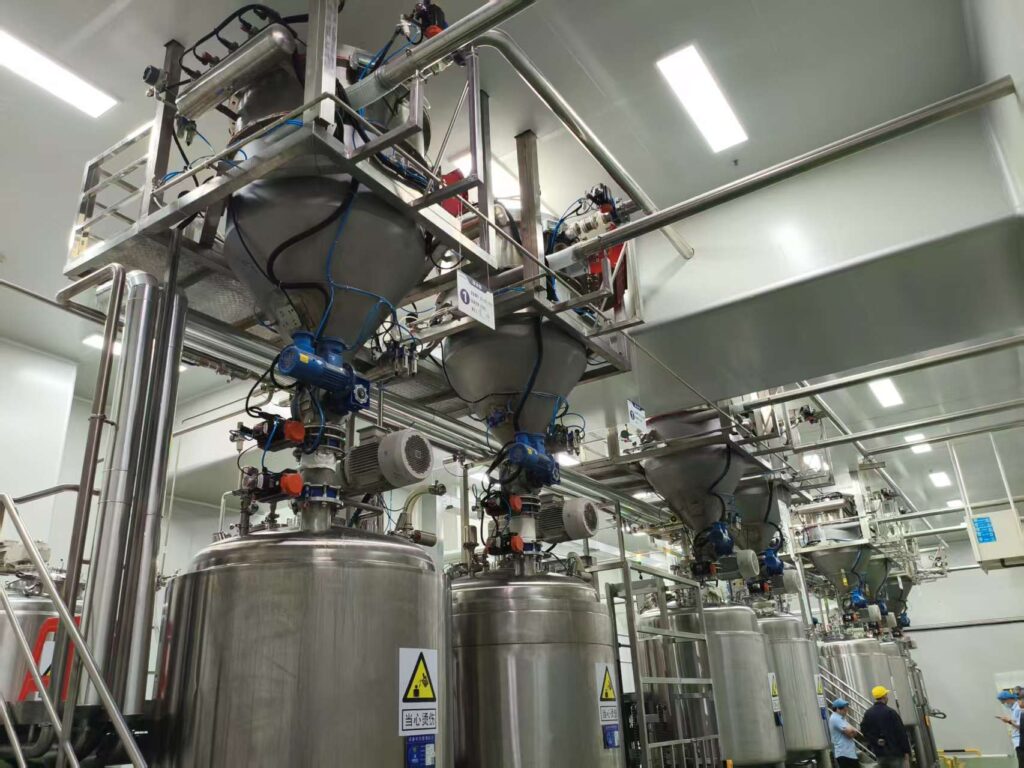
In summary, controlling the appropriate conveying air velocity has a substantial impact on the effectiveness of a pneumatic conveying system. For this reason, VIEJEE, in its actual production processes, selects the optimal conveying air velocity based on the specific conditions at the customer’s site. This approach aims to achieve the best pneumatic conveying results, enabling stable, efficient, safe, and energy-saving material transport. Customers with related needs are welcome to contact us for more information!