Intelligent Flow Control Reduces Energy Consumption 40%+, Extends Conveying Distance to 800 Meters
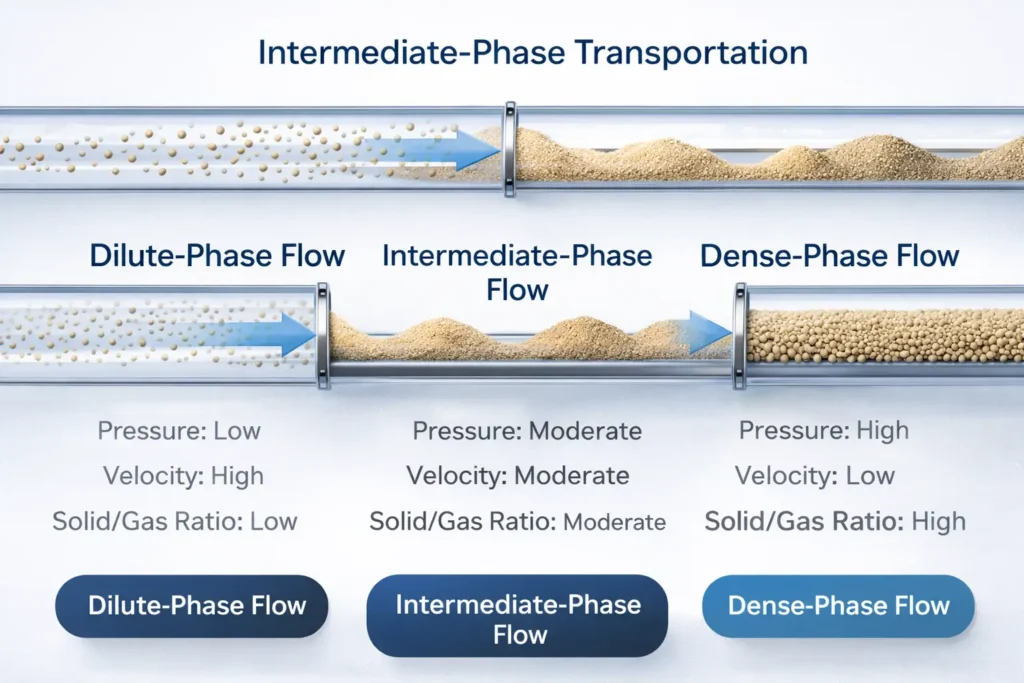
Powder conveying has long been a compromise. Dilute phase systems move material quickly but consume excessive energy and damage fragile products. Dense phase systems are gentler but risk blockages and require higher pressure. For medium to long-distance applications (300-800 meters), neither option delivers optimal performance.
This is precisely the gap Wijay Systems’ intermediate phase conveying system technology was designed to fill. Operating at medium-low pressure (0.1-0.5 MPa) and controlled low velocity (4-12 m/s), the intermediate phase conveying system creates a stable moving bed flow pattern within enclosed pipelines—achieving solid-to-gas ratios exceeding 15:1. The result is an automated material handling solution that consumes only 60% of the electricity of dilute phase systems while eliminating the pipeline blockage risks that plague dense phase installations.
For manufacturers grappling with high energy bills, product degradation, or distance limitations, this represents a fundamental rethinking of pneumatic conveying and automated material handling solutions.
Intelligent Flow Control in Intermediate Phase Conveying Systems
The breakthrough lies in adaptive flow management. Rather than suspending material in high-velocity air (dilute phase) or pushing dense plugs through pipes (dense phase), Wijay’s intermediate phase conveying system forms a controlled “dune flow” pattern along the pipeline bottom. Compressed air propels material forward in a steady, continuous stream.
Variable frequency compressors work in concert with intelligent pressure sensors to dynamically adjust airflow based on real-time material characteristics—density, particle size, moisture content. Conveying stability remains consistent even as conditions change throughout production, with fluctuation rates below 5%.
This precision control enables the intermediate phase conveying system to handle materials that challenge traditional automated material handling solutions:
Chemicals & Advanced Materials: Ternary battery materials and nano calcium carbonate require inert gas protection against oxidation. Intermediate phase conveying accommodates nitrogen protection while maintaining efficient transport.
Food & Beverage: Milk powder and sugar alcohols are notorious for hygroscopicity and fragility. Low-velocity conveying preserves particle integrity and nutritional components, while temperature-humidity control (±2°C accuracy) prevents moisture absorption.
New Energy: Lithium battery anode and cathode materials demand contamination-free handling. Anti-static design and metal-free contact surfaces eliminate contamination sources that affect battery performance.
Building Materials: Cement, fly ash, and mineral powder are highly abrasive. Ceramic-lined pipes withstand continuous wear, providing 5+ years of service life even under harsh conditions.
Four Key Performance Advantages of Intermediate Phase Conveying Systems
Energy Efficient: Medium-low velocity conveying significantly reduces airflow resistance. Total power consumption is only 60% of dilute phase systems and 80% of dense phase systems. Unit energy consumption ranges from 0.3-0.8 kWh/ton—translating directly to lower operating costs for automated material handling solutions.
Zero Material Damage: Low-velocity transport (4-12 m/s) eliminates high-speed impacts that degrade product quality. Catalyst particles maintain their structure. Brittle crystals arrive intact. Food ingredients retain their original delicate texture and nutritional components.
Dust-Free Enclosed Operation: Fully enclosed pipelines with optional inert gas circulation achieve dust leakage rates below 1 mg/m³.
Long-Distance Adaptability: Single intermediate phase conveying system coverage reaches 300-800 meters—surpassing the typical 300-meter limitation of dilute phase systems. No intermediate transfer stations required. No additional dust collection points. Simplified plant layout with fewer failure points.
Complete Modular Architecture for Automated Material Handling Solutions
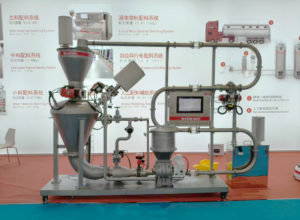
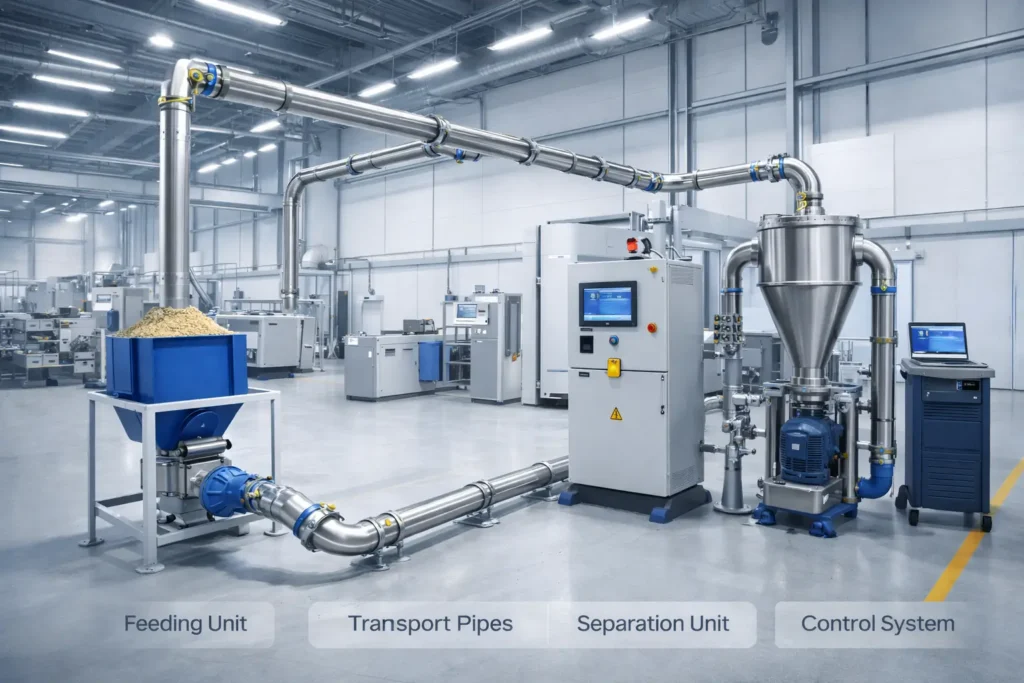
Wijay’s intermediate phase conveying system integrates four major modules into a comprehensive automated material handling solution:
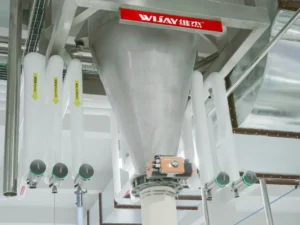
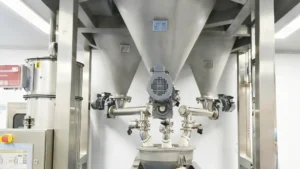
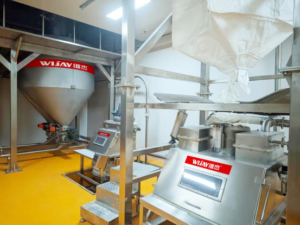
Feeding Unit: Rotary airlock valves with anti-bridging hoppers support automated bulk bag and small bag unpacking. Material flows continuously without bridging or rat-holing.
Conveying Unit: Wear-resistant ceramic pipes with optional lining materials connect to medium-pressure compressor units (0.1-0.5 MPa). Redundant Roots blower backup ensures continuous production even during maintenance.
Separation Unit: Cyclone separators with pulse jet dust collectors achieve material residual rates below 0.1%. Recovered fines return to the process, minimizing waste.
Safety Components: Flame arrestors, explosion vents, and real-time oxygen monitoring provide explosion-proof configuration for handling combustible materials.
Advanced PLC control systems enable remote operation and seamless MES integration. Real-time monitoring tracks flow, pressure, and system health. AI-driven predictive maintenance analyzes historical data to anticipate pipeline wear patterns, providing advance warnings for component replacement before operators notice any performance decline.
Technical Specifications of Intermediate Phase Conveying Systems
- Conveying Capacity: Standard 1-60 tons/hour (customizable to 200+ tons/hour)
- Operating Pressure: 0.1-0.5 MPa (medium-low pressure energy-saving range)
- Pipeline Diameter: DN80-DN300, offering ceramic/stainless steel composite options
- Power Configuration: Variable frequency compressors with redundant backup
- Distance Range: 300-800 meters single-system coverage
- Material Compatibility: Fine powders to 5mm particles across industries
Measurable Value Proposition for Automated Material Handling Solutions
The numbers tell the story:
Cost Reduction & Efficiency Gains: 90% reduction in manual intervention for feeding operations. 30%+ improvement in conveying efficiency. 40%+ reduction in energy consumption compared to dilute phase systems.
Safety & Compliance: Elimination of dust explosion hazards. Reduced occupational health risks including silicosis.
Sustainability: 15% reduction in carbon emissions per unit of material. Support for corporate ESG initiatives through measurable environmental improvements.
From sanitary-grade flour conveying in food processing to precision handling of lithium battery materials in ISO Class 7 cleanrooms, Wijay’s intermediate phase conveying system technology solves challenges that traditional pneumatic conveying cannot address.
Field-Validated Reliability of Intermediate Phase Conveying Systems
A major European chemical manufacturer replaced an aging dilute phase system with Wijay’s intermediate phase conveying system technology and documented 42% energy savings in the first year. A battery material producer eliminated product contamination issues that plagued their dense phase installation, consistently hitting 99.9% purity targets.
An Asian food processor reported zero product degradation when handling milk powder and reduced conveying time by 35% across their 650-meter production line. Low-velocity transport maintained particle size distribution and prevented the clumping issues common with high-velocity systems.
The Smart Choice for Modern Manufacturing and Automated Material Handling Solutions
As sustainability targets tighten and product quality requirements intensify, intermediate phase conveying systems represent the evolution of pneumatic conveying and automated material handling solutions. This isn’t a compromise between speed and gentleness—it’s achieving both simultaneously through intelligent flow control.
For facilities moving materials beyond 300 meters, Wijay’s intermediate phase conveying system isn’t merely an alternative to traditional conveying—it’s often the only automated material handling solution capable of delivering the required performance.
For technical consultation on intermediate phase conveying system applications, visit www.wijaysystems.com